

29 Dec 2025
- 13 Comments
Sirolimus Wound Healing Risk Calculator
Patient Risk Assessment
35
Select all risk factors to see your personalized recommendation
When a transplant patient is prescribed sirolimus, doctors don’t just hand over a prescription and say "take this." There’s a quiet, critical conversation happening behind the scenes: when to start it, and whether the risk of slow or failed healing is worth the benefit. This isn’t theoretical. It’s real. Every day, surgeons and transplant teams weigh a drug that prevents rejection against one that can turn a clean incision into a slow-oozing wound.
Why Sirolimus Slows Healing
Sirolimus, also known as rapamycin, doesn’t just suppress the immune system-it slows down the body’s natural repair process. It targets a protein called mTOR, which acts like a switch controlling cell growth. In transplant patients, that’s good: it stops the immune system from attacking the new organ. But in healing tissue, that same switch is needed to rebuild skin, blood vessels, and connective tissue. Studies in rats show that when sirolimus is given at typical human doses-2.0 to 5.0 mg per kg per day-wound strength drops by up to 40%. Collagen, the scaffolding that holds wounds together, gets cut back. Blood vessel growth, which brings oxygen and nutrients to the healing area, is suppressed because sirolimus lowers VEGF (vascular endothelial growth factor). Without VEGF, you don’t get enough new blood flow. No blood flow, no healing. And it’s not just skin. Fibroblasts-cells that make collagen-stop multiplying. Smooth muscle cells, which help close wounds, stall. The result? A wound that looks okay on the surface but is weak underneath. It can reopen under pressure. It can get infected. It can turn into a lymphocele, a fluid-filled pocket that forms when drainage pathways are disrupted.The Timing Debate: Wait or Start Early?
For years, the standard was simple: don’t give sirolimus for at least 7 to 14 days after surgery. Many centers still follow this rule. But is it still necessary? The 2007 rat study was clear: sirolimus damaged healing. But rats aren’t humans. And those doses? They were high. Human doses are lower, and we now know more about how to manage them. A 2008 Mayo Clinic study looked at 26 transplant patients who got sirolimus after dermatologic surgery. Their wound dehiscence rate was 7.7%-higher than the 0% in the control group-but the difference wasn’t statistically significant. That’s important. It means: maybe the risk isn’t as big as we thought. Especially if you’re not doing a major abdominal surgery, but a small skin procedure. Now, newer research suggests timing isn’t a one-size-fits-all rule. It’s a risk assessment. If a patient is young, thin, non-diabetic, doesn’t smoke, and had a clean, low-risk surgery, starting sirolimus at day 5 might be fine. But if they’re obese, diabetic, on steroids, and had a complex kidney transplant with a large incision? Wait. Wait longer.Who’s at Highest Risk?
Not everyone reacts the same way. Some people can tolerate sirolimus early. Others can’t. Here’s what raises the risk:- BMI over 30: Obesity doubles the chance of wound complications. Fat tissue has poor blood flow, and sirolimus makes it worse.
- Diabetes: High blood sugar already slows healing. Add sirolimus? The damage compounds.
- Smoking: Nicotine constricts blood vessels. You’re cutting off oxygen before you even start the drug.
- Protein malnutrition: Healing needs protein. If your body is already running low, sirolimus pushes you over the edge.
- High steroid use: Steroids also impair healing. Combine them with sirolimus, and you’re stacking risks.

What Can You Do to Reduce Risk?
You can’t change your age or your BMI overnight. But you can control some factors-before surgery.- Stop smoking at least 4 weeks before surgery. Studies show this alone improves healing by 30-50%.
- Control blood sugar. If you’re diabetic, aim for HbA1c below 7%. Don’t wait until after surgery to fix this.
- Boost protein intake. Aim for 1.2-1.5 grams of protein per kg of body weight daily. Eggs, lean meat, dairy, lentils. If you’re not eating enough, ask about supplements.
- Optimize vitamin levels. Vitamin C and zinc are critical for collagen formation. Low levels? Get them checked.
- Keep weight stable. Losing weight right before surgery? Don’t. It can trigger muscle loss and reduce healing capacity.
What About Other Drugs?
Sirolimus doesn’t work alone. It’s usually part of a cocktail. And other drugs in that mix also mess with healing. Mycophenolate (CellCept) can reduce white blood cell counts, making infections more likely. Steroids? They’re known to thin skin and delay healing. Antithymocyte globulin (ATG) can cause inflammation and swelling that interferes with tissue repair. So when you hear "sirolimus causes wound problems," it’s not always just sirolimus. It’s the combo. That’s why some centers switch patients from calcineurin inhibitors (like tacrolimus) to sirolimus only after the wound is fully closed-usually 4 to 6 weeks out. That’s safer. But here’s the twist: calcineurin inhibitors are nephrotoxic. They damage the very kidney you just transplanted. So if you’re young and at high risk for cancer, sirolimus might be worth the risk. You just need to manage it right.The New Standard: Risk-Based Timing
The old rule-"wait two weeks"-is fading. The new standard? Individualized timing. The American Society of Transplantation’s 2021 guidelines say this clearly: don’t use a fixed timeline. Use a risk profile. - Low-risk patient (young, normal BMI, no diabetes, non-smoker, minor surgery)? Sirolimus can start at day 5-7. - Medium-risk (BMI 28-32, controlled diabetes, mild smoking history)? Wait until day 10-14. - High-risk (BMI >35, uncontrolled diabetes, active smoker, major abdominal surgery)? Delay until day 21 or longer. And here’s a practical tip: monitor sirolimus levels. Keep trough levels below 4-6 ng/mL during the first 30 days. Higher levels? You’re asking for trouble. Lower levels? You’re still protected from rejection.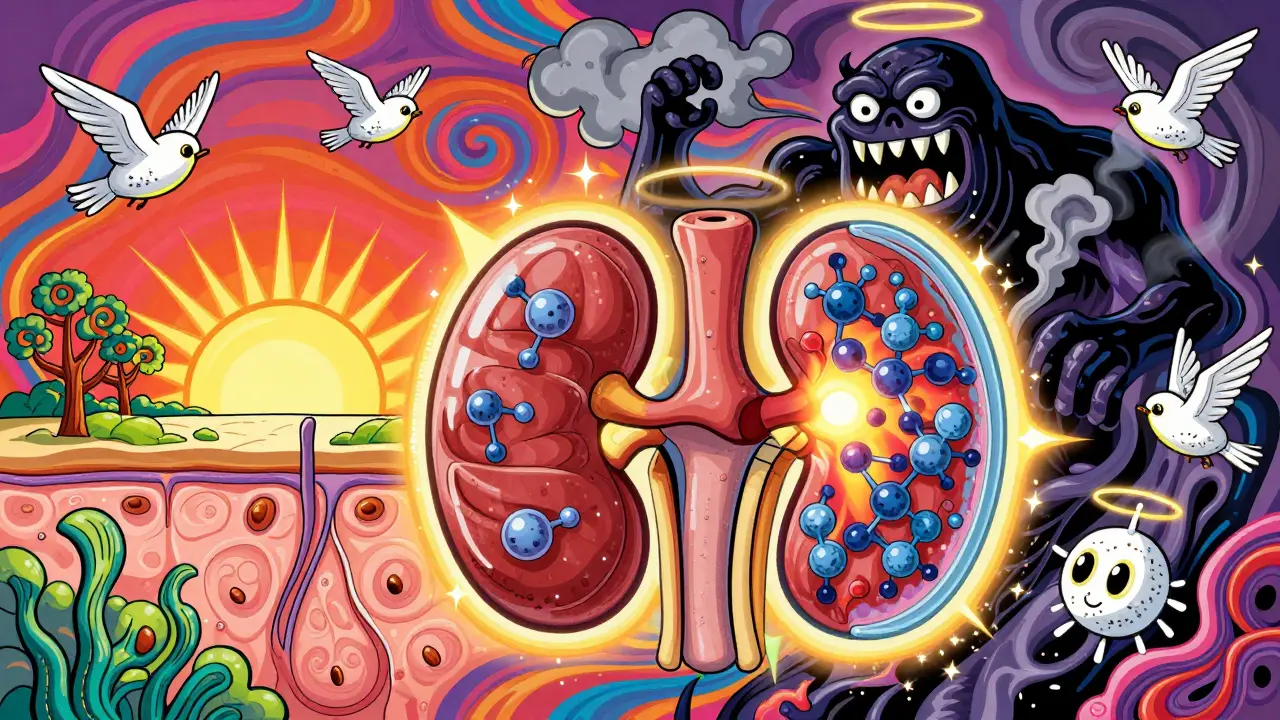
Henriette Barrows
December 29, 2025Wow, this is such a clear breakdown-I’ve been nervous about starting sirolimus after my transplant, but now I feel way less scared. The part about protein intake and stopping smoking 4 weeks out? Game changer. My nurse never mentioned that.
Fabian Riewe
December 30, 2025My cousin got sirolimus on day 6 after his kidney transplant and his incision looked like it was healing fine. No infections, no leaks. Maybe the old 14-day rule is just outdated. Doctors love their timelines, but bodies aren’t clocks.
Jasmine Yule
December 30, 2025Ugh I’m so tired of doctors acting like we’re all the same. I’m 32, BMI 26, non-smoker, no diabetes-why should I wait 2 weeks when I’ve been told my rejection risk is sky-high? This post gets it. Let’s stop treating patients like lab rats.
Greg Quinn
December 30, 2025It’s funny how we treat healing like a switch you flip on or off. But the body doesn’t work that way. Sirolimus isn’t evil-it’s just a tool that demands respect. The real question isn’t when to start it… it’s whether we’ve prepared the soil for it to grow.
Lisa Dore
December 31, 2025Big shoutout to anyone reading this who’s scared to ask their doctor about timing. You deserve to be heard. I started sirolimus on day 7 after my pancreas transplant-my wound healed perfectly. Pre-op protein prep + no sugar + no smoke = my secret sauce. You got this 💪
Sharleen Luciano
January 2, 2026Let’s be honest-most patients have no idea what mTOR even means. This article reads like a medical textbook disguised as a Reddit post. If you’re going to prescribe sirolimus, maybe don’t expect laypeople to parse VEGF suppression like it’s poetry.
Jim Rice
January 4, 2026Wait, so you’re saying if you’re fat and diabetic, you shouldn’t get sirolimus? That’s just eugenics with a stethoscope. Why not just say ‘don’t be poor and unhealthy’ and call it a day? The real problem isn’t the drug-it’s the system that lets people slip through the cracks.
Louis Paré
January 5, 2026Studies in rats? 2008 Mayo data? This is 2024. Where’s the RCT with 5000 patients? Where’s the meta-analysis? You’re cherry-picking soft data to justify a protocol that’s 15 years out of date. This isn’t medicine-it’s anecdotal wishful thinking.
Marie-Pierre Gonzalez
January 7, 2026Thank you for this thoughtful and comprehensive overview. I am a transplant recipient from Toronto, and I must say that the emphasis on preoperative nutrition and smoking cessation is absolutely critical. I wish more clinicians took this seriously. 🙏
Janette Martens
January 8, 2026US doctors think they know everything. In Canada we wait 21 days minimum. No exceptions. Your ‘risk-based’ nonsense is dangerous. We don’t gamble with organs here. You want to start early? Go to the States. We’ve got standards.
Manan Pandya
January 8, 2026As a nephrology nurse in Delhi, I’ve seen patients start sirolimus as early as day 5 with no issues-when they’re well-nourished and have good follow-up. The key isn’t the day-it’s the support system. No one should be left alone with this decision.
Aliza Efraimov
January 8, 2026I started sirolimus on day 4 after my liver transplant and my wound opened up 10 days later. I had to get a second surgery. I thought I was ‘low risk’-turns out, I wasn’t. Don’t listen to the hype. Wait. Wait longer. Your body will thank you. This isn’t a race.
Nisha Marwaha
January 10, 2026From a clinical pharmacology standpoint, the mTOR inhibition kinetics necessitate a pharmacokinetic-pharmacodynamic (PK-PD) alignment with wound healing biomarkers-particularly collagen deposition velocity and VEGF trough dynamics. Without serial biomarker monitoring, early initiation constitutes a high-risk therapeutic deviation.