
23 Feb 2026
- 9 Comments
Medication Side Effect Calculator
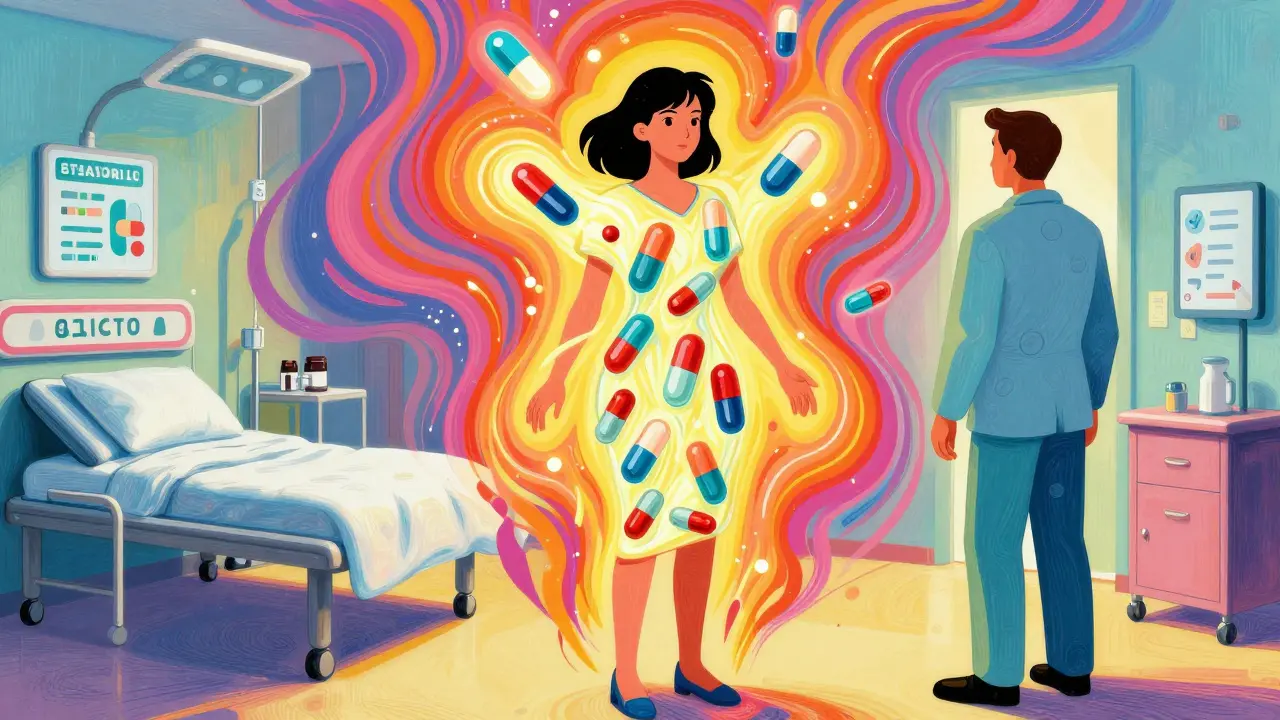
Every year, millions of women end up in emergency rooms because of side effects from medications that were never tested properly on them. It’s not because they’re fragile or overreacting. It’s because the pills they take were mostly designed for men.
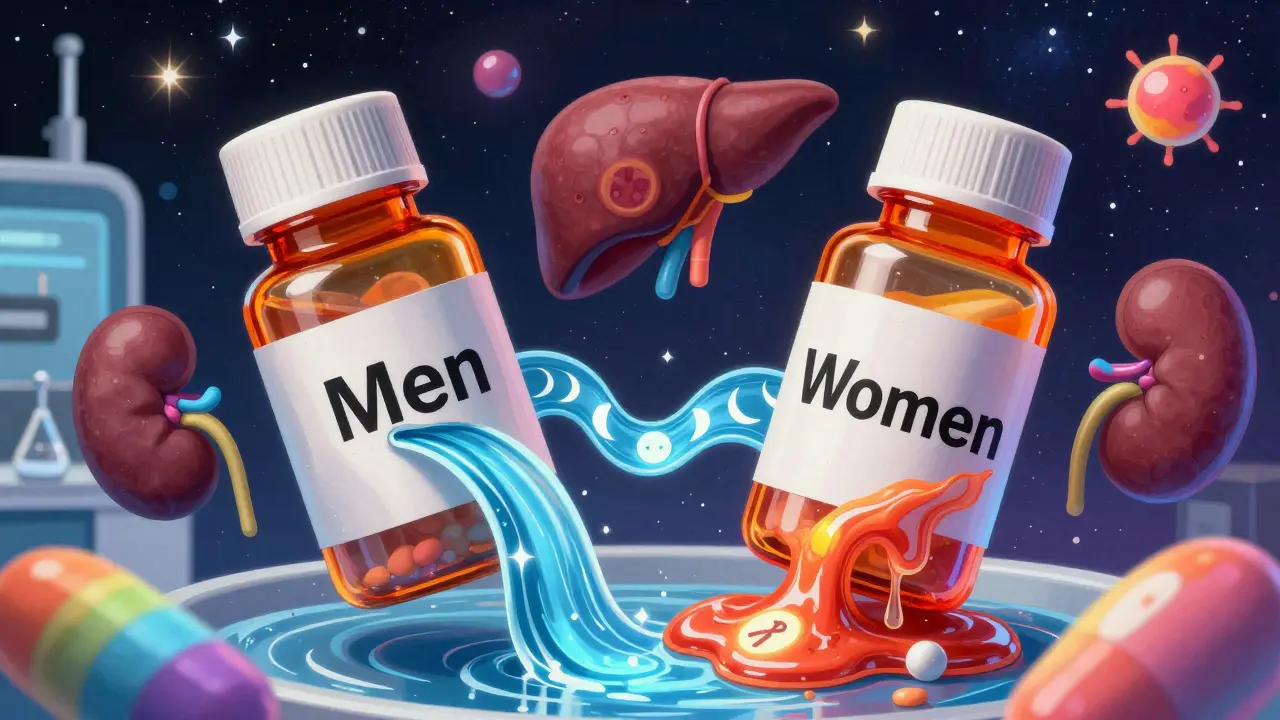
Women experience adverse drug reactions nearly twice as often as men. According to the FDA, women account for 63-70% of all severe adverse reactions - even though they make up just over half the U.S. population. Meanwhile, men report more sexual side effects and urinary issues, but nowhere near the same volume of dizziness, nausea, or life-threatening reactions. This isn’t random. It’s built into the science.
Why Women Get Hit Harder by Medications
The problem starts long before a woman even swallows a pill. For decades, clinical trials excluded women - especially those who could get pregnant. In the 1970s, the FDA officially advised against including women of childbearing age in early drug studies. The goal was to protect fetuses. But the unintended consequence was that doctors had no idea how most medications affected women.
Even today, despite a 1993 law requiring women to be included in research, the gap persists. A 2022 FDA review found that only 12% of pharmacokinetic studies - the ones that track how drugs move through the body - even look at sex differences. That means most dosing guidelines are still based on how men’s bodies process medicine.
Here’s what that actually means in practice:
- Women have 40% less of the liver enzyme CYP3A4 than men. This enzyme breaks down about half of all prescription drugs - including statins, sleeping pills, and antidepressants. Slower breakdown means drugs build up in women’s systems longer.
- Women have 10-12% more body fat on average. Fat-soluble drugs like diazepam (Valium) stick around 20-30% longer in women’s bodies.
- Women’s kidneys clear certain drugs 20-25% slower. Lithium, used for bipolar disorder, lingers longer in women, raising the risk of toxicity.
- Hormones change everything. Birth control pills can slash lamotrigine levels by 50-60%, making seizure meds less effective. And during the menstrual cycle, drug metabolism can swing up to 30% depending on the phase.
Take zolpidem (Ambien). In 1992, researchers noticed women were waking up groggy the next day - sometimes even driving while still drowsy. But it took over 20 years for the FDA to act. In 2013, they finally cut the recommended dose for women in half. Why? Because women metabolize the drug 50% slower. That’s not a small tweak - it’s a life-saving change.
Specific Drugs, Specific Risks
Some medications show dramatic differences between men and women:
- Digoxin (heart medication): Women have 20-30% higher blood levels at standard doses. That raises their risk of toxicity by 40%.
- SSRIs (like sertraline and fluoxetine): Women report 1.5-2 times more nausea and dizziness. On Drugs.com, 68% of female users described severe nausea versus 42% of men.
- Haloperidol (antipsychotic): Women are 2.3 times more likely to develop dangerous heart rhythm changes (QT prolongation).
- Sulfamethoxazole (antibiotic): Women have a 47% higher risk of severe skin reactions.
- Atenolol (blood pressure drug): Women need lower doses to avoid dizziness and fatigue - but most prescriptions still use the same standard.
Men aren’t immune to sex-based differences. They report 35% more cases of sexual dysfunction from antidepressants and 28% more urinary retention from anticholinergics. But these side effects are often seen as "normal" - not warning signs. Meanwhile, women’s reactions are dismissed as "overly sensitive."
The Data Doesn’t Lie - But It’s Not Enough
Some researchers argue the gap isn’t biological at all. Sarah Richardson from Harvard analyzed 33 million FDA reports and found that once you account for the fact that women take 56% more prescriptions than men, the sex-based difference in adverse events drops to under 5%. Her point? Women are more likely to notice symptoms, report them, and visit doctors. So maybe the numbers are inflated by behavior - not biology.
But then there’s Janine Austin Clayton from the NIH, who says both views are right. "Biological differences exist," she says. "But women are also more likely to report symptoms." The truth? It’s both.
Real-world evidence backs this up. A 2022 PatientView survey of 15,000 chronic pain patients found women were 2.1 times more likely than men to have to stop opioids because of side effects. On Reddit, nurses say they see twice as many women in the ER with reactions to standard pain meds. And when zolpidem’s dose was lowered for women, adverse event reports dropped by 38%.
That’s not coincidence. That’s proof that adjusting for sex saves lives.
Why Doctors Still Get It Wrong
Here’s the kicker: most doctors don’t even know about these differences. A 2022 AMA survey found only 28% of physicians routinely consider sex when prescribing common drugs. Two out of three didn’t even know about the FDA’s 2013 zolpidem dose change.
Drug labels? Barely helpful. Out of 200 commonly prescribed medications, only 15 have sex-specific dosing instructions. And only 4% of all drug labels mention anything about sex-based differences.
Pharmaceutical companies aren’t rushing to fix this. Why? Because it’s expensive. Developing gender-specific doses means extra trials, extra data, extra regulatory steps. And right now, there’s no mandate. The market opportunity is huge - $12.7 billion, according to Global Market Insights - but no one’s forced to take it.

What’s Changing - and What’s Still Broken
There are signs of progress. The FDA launched its "Sex and Gender Roadmap" in 2023, aiming to fix this by 2026. The European Medicines Agency now requires sex-stratified data in all Phase III trials. The NIH just funded a $12.5 million center at Harvard to study sex differences in medicine. And startups like Adyn and Womb Society are building drugs specifically for women’s physiology.
But the pace is glacial. The zolpidem case took 21 years. The JUST Dose study at UC Berkeley - using AI to build personalized dosing for 50 common drugs - won’t finish until 2026. And even then, it’s just one study.
Meanwhile, women keep taking the same pills men do - and paying the price. One study found that 63% of women had to reduce their dose or quit a medication because of side effects. That’s not just inconvenient. It’s dangerous.
What You Can Do
If you’re a woman taking medication:
- Ask your doctor: "Was this dose tested on women?"
- Check if your drug has a sex-specific recommendation - zolpidem, digoxin, and lamotrigine do.
- Track your side effects. Write down when they happen. Share it with your provider.
- If you’re on birth control and taking an antidepressant, anti-seizure, or HIV drug, ask about interactions.
If you’re a provider:
- Don’t assume a man’s dose works for a woman.
- Use the FDA’s Drug Trials Snapshots - they now include sex-disaggregated data for new drugs.
- Consider starting with a lower dose for women, especially for drugs metabolized by CYP3A4.
The system is changing - slowly. But you don’t have to wait for it to catch up.
Why are women more likely to have bad reactions to medications?
Women have biological differences that affect how drugs are absorbed, metabolized, and cleared from the body. They have less of the liver enzyme CYP3A4, higher body fat percentage, slower kidney clearance, and hormonal fluctuations that change drug processing. These factors mean the same dose can lead to higher blood concentrations in women - increasing side effect risks. Plus, women are more likely to report symptoms and seek care, which increases recorded reactions.
Is the medication gender gap getting better?
Slowly. The FDA now requires sex-disaggregated data in new drug trials since 2018, and the European Medicines Agency mandates it. The U.S. government has invested in research centers focused on sex differences. But only 4% of drug labels contain sex-specific dosing, and most doctors still don’t adjust doses for sex. Real change will take mandatory rules - not just recommendations.
What drugs have sex-specific dosing?
Only a few. Zolpidem (Ambien) is the most well-known - women get half the dose. Digoxin, lamotrigine, and lithium have guidance in their labels for sex-based adjustments. A few others, like certain antidepressants and blood pressure drugs, have hints in clinical guidelines - but rarely on the bottle. Most drugs still use the same dose for everyone.
Can I ask my doctor to lower my dose because I’m a woman?
Absolutely. If you’re experiencing side effects like dizziness, nausea, or fatigue, ask if your drug has been studied in women and whether a lower dose might be safer. Many providers aren’t aware of the science - but bringing up the topic helps push change. You’re not overreacting. You’re being proactive.
Why don’t drug companies make sex-specific versions?
It’s expensive and not required. Developing separate doses means more clinical trials, more regulatory review, and more labeling changes. Without a mandate, companies prioritize profit over precision. But the market is growing - $12.7 billion in opportunity - and with new laws being proposed, that may change soon.
The bottom line? Medication isn’t one-size-fits-all - and never should have been. Women aren’t broken. The system is. And fixing it starts with asking the right questions - and refusing to accept the status quo.
Shalini Gautam
February 25, 2026As an Indian woman who’s been on 5 different meds in 3 years, I can tell you this isn’t just science - it’s survival. My doctor prescribed me the same fluoxetine dose as my brother. I was vomiting every morning. He said, "You’re just sensitive." I switched to sertraline, cut my dose in half, and suddenly I could sleep, eat, and stop crying. Why did it take me 18 months to figure this out? Because no one told me. Not even my pharmacist.
Women aren’t overreacting. We’re just finally speaking up after being told to shut up for decades. The system doesn’t care until we scream loud enough. And now? I scream louder.
PS: If you’re on birth control and taking lamotrigine? Ask for a blood test. I almost had a seizure because no one checked.
Stop treating us like men with extra organs. We’re not broken. The pill is.
Erin Pinheiro
February 27, 2026ok but like… why do women always have to be the victim here?? like i get it, i do. but what about men who get side effects too?? like i took prozac and lost my libido for 11 months. no one cared. no one even asked. just shrugged and said "it’s normal". so why is it only women’s pain that counts??
also i read somewhere that women report more side effects because they’re more likely to go to the doctor?? like… maybe?? but what if men are just too proud to say "hey i feel weird"??
also i think the FDA should test on men too. like… they’re not robots. they get dizzy too. why is this always about women??
Brandice Valentino
February 28, 2026Oh honey. Let me break this down for you like you’re a 2010-era pharmaceutical rep who still thinks "gender-neutral dosing" is a virtue.
Women aren’t just "more sensitive." We have fundamentally different pharmacokinetics. Your liver doesn’t work like his. Your fat distribution isn’t a fashion choice. Your hormones aren’t "hormonal mood swings" - they’re metabolic regulators. And yet, 90% of drug labels still say "take 10mg daily" - as if we’re all just 180lb white men with zero ovaries.
And don’t even get me started on how SSRIs are prescribed like candy. I know a nurse who had to stop sertraline because her nausea was so bad she couldn’t keep food down. Her doctor said, "Maybe you’re just anxious."
Meanwhile, men get blamed for "not taking it seriously" when they report sexual side effects. But if a woman says she’s dizzy? She’s "emotional."
This isn’t a gender war. It’s bad science. And it’s killing us.
Also - zolpidem dose was cut in 2013. Why are we still seeing women in ERs from Ambien crashes? Because doctors don’t read labels. And that’s the real crime.
Larry Zerpa
March 2, 2026Let’s be precise. The data does not support a biological basis for increased adverse events in women. Sarah Richardson’s analysis of 33 million FDA reports shows that once you adjust for prescription volume - which is 56% higher in women - the difference drops to under 5%.
This isn’t about biology. It’s about reporting bias. Women are socialized to monitor their bodies. Men are socialized to ignore discomfort. So of course women report more. That doesn’t mean the drugs are unsafe - it means the data is skewed by cultural norms.
Also: the FDA’s 2013 zolpidem change was based on a tiny sample size. The original trial included 47 women. That’s not science. That’s anecdote dressed up as policy.
Stop conflating behavioral differences with physiological ones. You’re not helping women by infantilizing them. You’re helping them by demanding better data - not by assuming they’re inherently more fragile.
Ashley Johnson
March 2, 2026They’re hiding something. I know it. The CDC, FDA, Big Pharma - they’re all in on it. Why else would they ignore the fact that women’s bodies are completely different? I looked at the FDA database. There are 12,000 reports of women fainting after taking statins. But the label says "no sex-specific warnings."
And guess what? The same companies that make these drugs also fund the "research" that says "it’s just reporting bias."
I saw a documentary once. They said women’s hormones interfere with drug metabolism. But then they cut that part out. Why? Because they don’t want you to know.
They’re poisoning us slowly. And they’re calling it "science."
Ask your doctor: Have they tested this on women over 40? If they say yes - ask for the raw data. They won’t give it to you.
They’re afraid of what we’ll find.
tia novialiswati
March 2, 2026YOU ARE NOT ALONE. 💕
I was on 20mg of sertraline. I felt like I was underwater every day. Nausea. Headaches. Couldn’t focus. My doctor said "give it time." I cried for 3 hours after that appointment.
I switched to 10mg. Suddenly I could laugh again. I could cook. I could hug my dog without feeling like I was going to pass out.
It’s not in your head. It’s in the science. And you’re not weak for needing less. You’re smart for asking.
Keep advocating. Keep asking. Keep tracking. You’re doing better than you think. I’m rooting for you. 💪❤️
Lillian Knezek
March 2, 2026They’re putting microchips in the pills. I know it. That’s why women get worse side effects - the chip is designed to react to estrogen. I read a whistleblower report. They called it "Project Fem-Track."
And the FDA? They knew. They approved it because they want to control women’s health. That’s why they only changed zolpidem’s dose after 20 years. They were waiting for the right time.
Also - did you know lithium is used in water supplies? That’s why women are more sensitive to it. The government is slowly poisoning us. Don’t take anything unless you’ve tested it with a tinfoil detector.
And if your doctor says "it’s safe," they’re part of the program.
Save yourself. Ask for bloodwork. Ask for alternatives. Don’t trust the system.
They’re watching. They’re always watching. 😳
Christopher Brown
March 3, 2026Women take 56% more prescriptions. Of course they report more side effects. It’s math. Not magic.
Also: if you want gender-specific dosing, start with men. Men have higher rates of liver toxicity from acetaminophen. Higher rates of kidney failure from NSAIDs. But no one’s cutting their doses. Why? Because men aren’t "victims."
Stop gender-washing this. It’s not about biology. It’s about who gets to complain.
And if you think this is about justice - you’re missing the point. It’s about profit. And profit doesn’t care about gender. It cares about lawsuits.
Erin Pinheiro
March 4, 2026lol larry zerpa just said "it’s math" like that’s the end of the conversation. so if a woman takes 2x the meds because her body processes them slower… that’s not biology? that’s just "more pills"? wow.
so if i eat 2x the cake because i’m hungrier, that means the cake is fine? no. it means i need a smaller slice.
you’re not solving the problem. you’re just rebranding ignorance as logic.