
14 Mar 2026
- 0 Comments
When you pick up a prescription for a generic drug, you expect to save money. That’s the whole point. But over the past decade, what you pay at the pharmacy counter has become a lottery. One year, your $4 pill costs $5. The next, it’s $45. And there’s no warning. No notice. Just a higher bill and a confused pharmacist shrugging. This isn’t random. It’s the result of how generic drug markets actually work - and why some drugs stay cheap while others go off the rails.
How Generic Drugs Are Supposed to Work
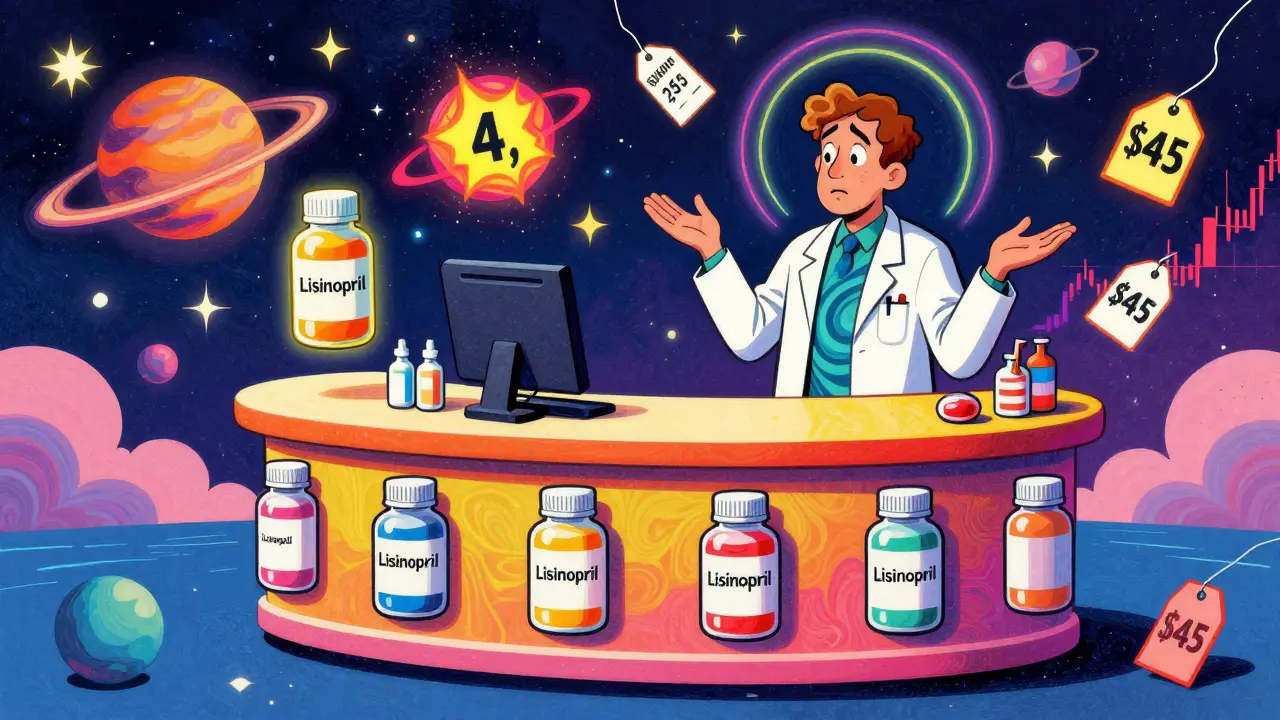
Generic drugs are copies of brand-name medications. Same active ingredient. Same dosage. Same effect. The only difference? No patent. Once a brand-name drug’s patent expires, other companies can make and sell the same drug. The idea is simple: more competition = lower prices. And for a long time, that’s exactly what happened.In 2022, generics made up 90% of all prescriptions filled in the U.S. But they accounted for only 23% of total drug spending. That’s because, on average, a generic costs 80-85% less than its brand-name version. For example, generic lisinopril - a blood pressure pill - used to cost $4 a month. Now, in some places, it’s $45. That’s not an average. That’s a spike.
The FDA says when a new generic enters the market, prices drop fast. The first generic after patent expiry cuts the price by about 50%. Add a second manufacturer? Down another 30%. By the time you have five or more companies making the same drug, the price can fall to 15% of what the brand used to charge. That’s the theory. But in practice, not all generics follow this path.
The Volatility Problem: When Prices Go Wild
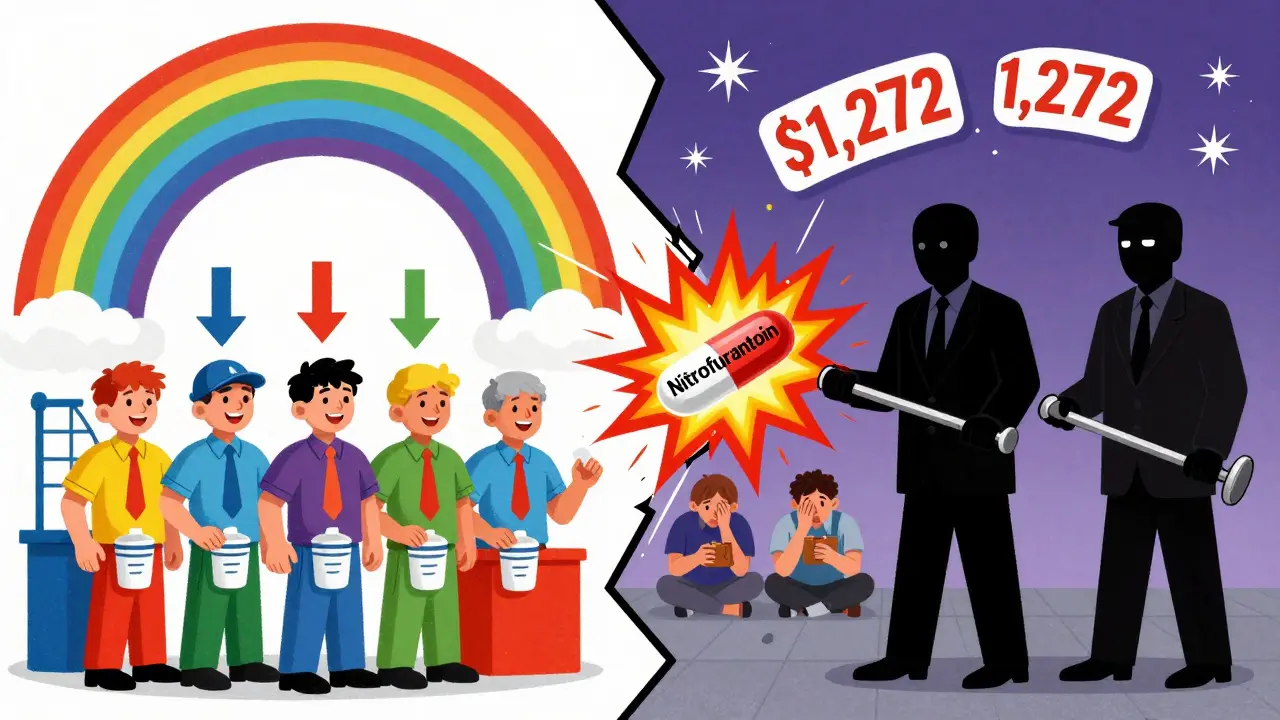
Not all generic drugs behave the same. Some stay stable. Others flip like a coin. According to analysis from ASPE in 2023, 60% of generic drugs have price changes under 5% year to year. That’s normal. But 15% of generics swing more than 20%. And some? They go nuclear.Take nitrofurantoin macrocrystals, a urinary tract infection drug. Between 2013 and 2018, its price jumped 1,272%. Meanwhile, levothyroxine - a thyroid medication taken by millions - dropped 87% over the same period. Both are generics. Both are essential. One became unaffordable. The other became dirt cheap. Why?
It’s about competition. If only one or two companies make a drug, they can control the price. If three or fewer manufacturers exist, 78% of price hikes over 100% happen, according to Harvard’s Dr. Aaron Kesselheim. That’s not coincidence. It’s market power.
In 2018, the top 10 generic drug makers controlled 70% of the market. Today, the top five control over half. That’s consolidation. Fewer players. Less pressure to cut prices. And when one of those few companies stops making a drug - due to low profit, quality issues, or supply chain problems - prices can jump overnight. The FDA found that 35% of drug shortages were linked to price increases over 50%.
Why Some Generics Cost More Than Others
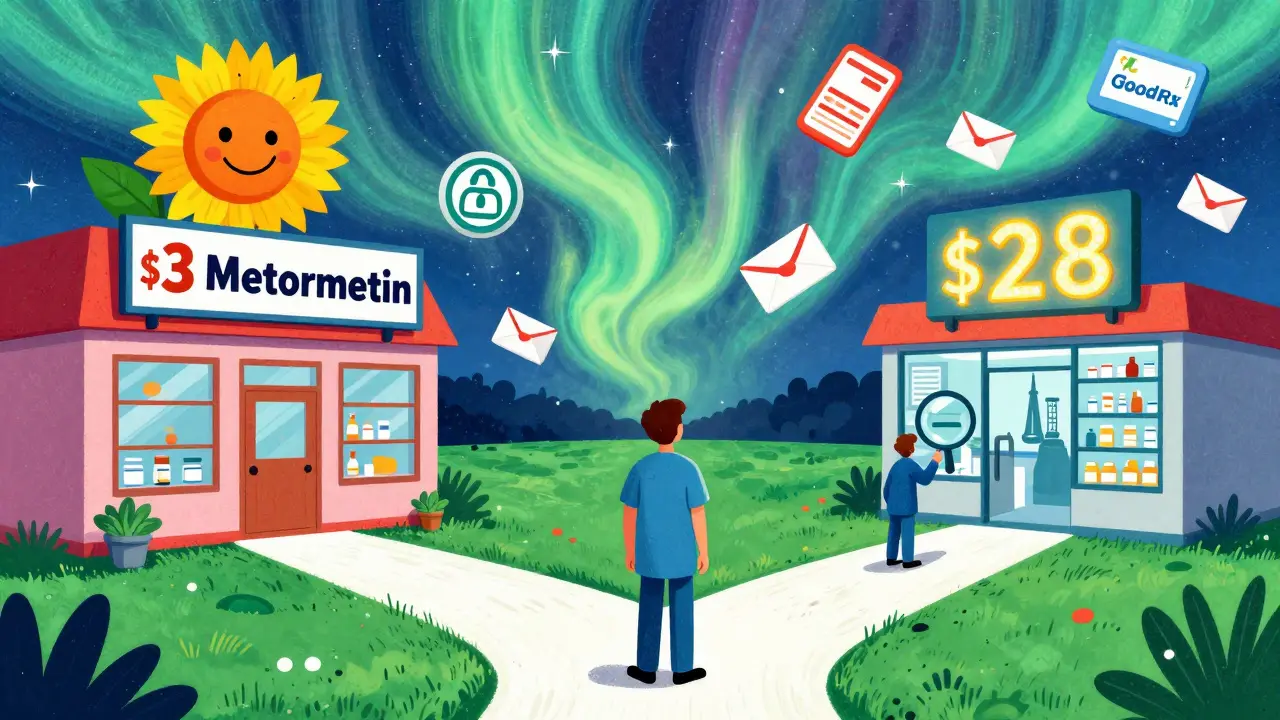
Not all therapeutic areas are equal. Some drugs have natural barriers to competition. For example, cardiovascular generics - like generic versions of Plavix or Lipitor - average just 12% of the brand’s original price. That’s because many companies can make them. But central nervous system drugs - like generic versions of Adderall or Lexapro - average 25% of brand price. Why? Because they’re harder to replicate. The chemistry is trickier. The manufacturing is more precise. Fewer companies can do it. And that lack of competition? It drives prices up.Even within the same drug class, prices vary wildly. Take metformin, a diabetes drug. One pharmacy sells it for $3. Another charges $28. Why? It depends on who makes it, where it’s made, and who’s buying it. Medicaid, Medicare, and private insurers negotiate different prices. Pharmacies get different wholesale rates. And patients? They pay whatever the pharmacy charges unless they use a coupon.
GoodRx data shows users save an average of $112.50 per generic prescription compared to cash prices at big pharmacies. That’s huge. But it also shows how broken the system is. If you don’t know to check GoodRx, you’re paying 3-4 times more than you need to.
What’s Driving the Price Changes?
There’s no single cause. It’s a mix of manufacturing, regulation, and market structure.First, manufacturing. The FDA inspects thousands of drug plants each year. In 2023, 23% of foreign generic facilities had quality issues. When a plant gets shut down, supply drops. Prices rise. That’s what happened with generic allopurinol in 2022. One factory in India failed inspection. The price jumped 300% in six months.
Second, regulations. The Medicaid Best Price rule forces manufacturers to offer the same price to every buyer - including Medicaid. That means if a company lowers its price for a big insurer, it has to lower it for everyone. That discourages price cuts. Why reduce your price if you’re forced to give the same discount to Medicaid, which pays less than private insurers?
Third, the Inflation Reduction Act. It doesn’t directly cap generic prices. But it changed how Medicare Part D works. Brand-name manufacturers now pay rebates if their prices rise too fast. That’s forced some brand drugs to drop prices. But for generics? Not so much. The law didn’t create similar rules for generics. So while brand prices stabilized, generic prices kept swinging.
Real People, Real Costs
Behind every price spike is a patient skipping doses. A senior choosing between food and medication. A pharmacy losing money on every prescription.One Reddit user posted in June 2024: “My generic lisinopril went from $4 to $45 at Walmart in 18 months. I had to switch to a different pharmacy. Now I pay $12, but I have to drive 20 miles.” That’s not rare. GoodRx found a 247% price increase for lisinopril between January 2022 and December 2023.
KFF’s 2024 survey of Medicare beneficiaries showed 37% of seniors taking generics said they skipped doses because of cost. 28% cut pills in half. That’s not just inconvenient. It’s dangerous.
Independent pharmacies are getting crushed. 42% of them reported margin compression on 15% of generic drugs. Some generics flip from profitable to loss leaders in weeks. One pharmacy owner told Drug Topics: “I bought 1,000 pills of generic furosemide for $150. Two months later, the same batch cost me $320. I had to raise the price. Patients got angry. I lost trust.”
What’s Changing in 2025 and Beyond
The government is starting to pay attention. The FDA’s 2024 Strategic Plan includes faster reviews for generics with fewer than three manufacturers. The FTC has 12 ongoing investigations into price gouging in markets with limited competition. And the Medicaid rule change in January 2024 - removing the cap on rebates - already led to price drops on 20+ brand drugs.But for generics? Progress is slow. The Congressional Budget Office expects generic prices to rise just 1.5% annually through 2030 - far slower than brand drugs. That sounds good. But it masks the reality: the 10% of generics with the worst price spikes account for 60% of all generic spending growth.
Experts like Dr. Steve Miller say the FDA’s new focus on competitive generic therapies could reduce high-volatility drugs by 25% over five years. But supply chain fragility? That’s not going away. Manufacturing is still concentrated in a handful of countries. Quality control is uneven. And when a single plant shuts down? The ripple effect is huge.
What You Can Do
You can’t fix the system. But you can protect yourself.- Use GoodRx or SingleCare: These apps show real-time prices at nearby pharmacies. You’d be shocked how much the same drug costs at CVS vs. Walgreens vs. a local independent.
- Ask about mail-order: Many insurers offer 90-day supplies at lower prices. It’s often cheaper than paying monthly.
- Call your pharmacy: Ask if they have a discount program. Some independent pharmacies offer cash discounts that aren’t advertised.
- Don’t assume your drug is cheap: Just because it’s generic doesn’t mean it’s affordable. Check prices before you refill.
- Report price hikes: If your drug suddenly costs 50% more, tell your doctor. They may be able to switch you to a similar, cheaper alternative.
The truth? Generic drugs still save the U.S. healthcare system over $250 billion a year. But those savings aren’t evenly distributed. Some people pay pennies. Others pay dollars. And the ones who pay the most? They’re the ones with the least power to change it.
Why do generic drug prices go up even when they’re supposed to be cheaper?
Generic drug prices drop when multiple companies make the same drug. But if only one or two manufacturers produce it, they can raise prices without competition. In fact, 78% of price increases over 100% happen in markets with three or fewer makers. Supply chain issues, manufacturing shutdowns, and consolidation among drug companies also contribute to sudden spikes.
Which generic drugs have the most price volatility?
Drugs with limited competition tend to spike the most. Examples include nitrofurantoin, doxycycline, and furosemide. These are often older, low-cost drugs that manufacturers don’t prioritize. When one company stops making them, supply drops, and prices jump. Cardiovascular and central nervous system generics are especially vulnerable because they’re harder to produce and have fewer competitors.
How can I find the cheapest price for my generic medication?
Use price comparison tools like GoodRx, SingleCare, or NeedyMeds. These apps show cash prices at nearby pharmacies - often lower than insurance copays. You can also ask your pharmacist about manufacturer coupons or discount programs. Some independent pharmacies offer lower cash prices than big chains. Always compare before you fill your prescription.
Are generic drugs less safe if they’re cheaper?
No. The FDA requires generics to meet the same safety, strength, and quality standards as brand-name drugs. The difference is in manufacturing and competition, not quality. A cheaper generic is not a worse generic. But if a drug suddenly becomes expensive, it’s likely due to supply shortages or lack of competition - not safety concerns.
Why do pharmacies sometimes charge more for generics than insurance covers?
Pharmacies are paid based on the Average Wholesale Price (AWP), which is often inflated. But they buy the drug at the Actual Acquisition Cost (AAC), which can be much lower - or sometimes higher if prices spike. When the AAC rises faster than the reimbursement rate, pharmacies lose money. That’s why some pharmacies raise cash prices or refuse to fill certain generics. It’s a business survival issue, not a patient issue.