
10 Apr 2026
- 0 Comments
Understanding the Genetic Split: ADPKD vs ARPKD
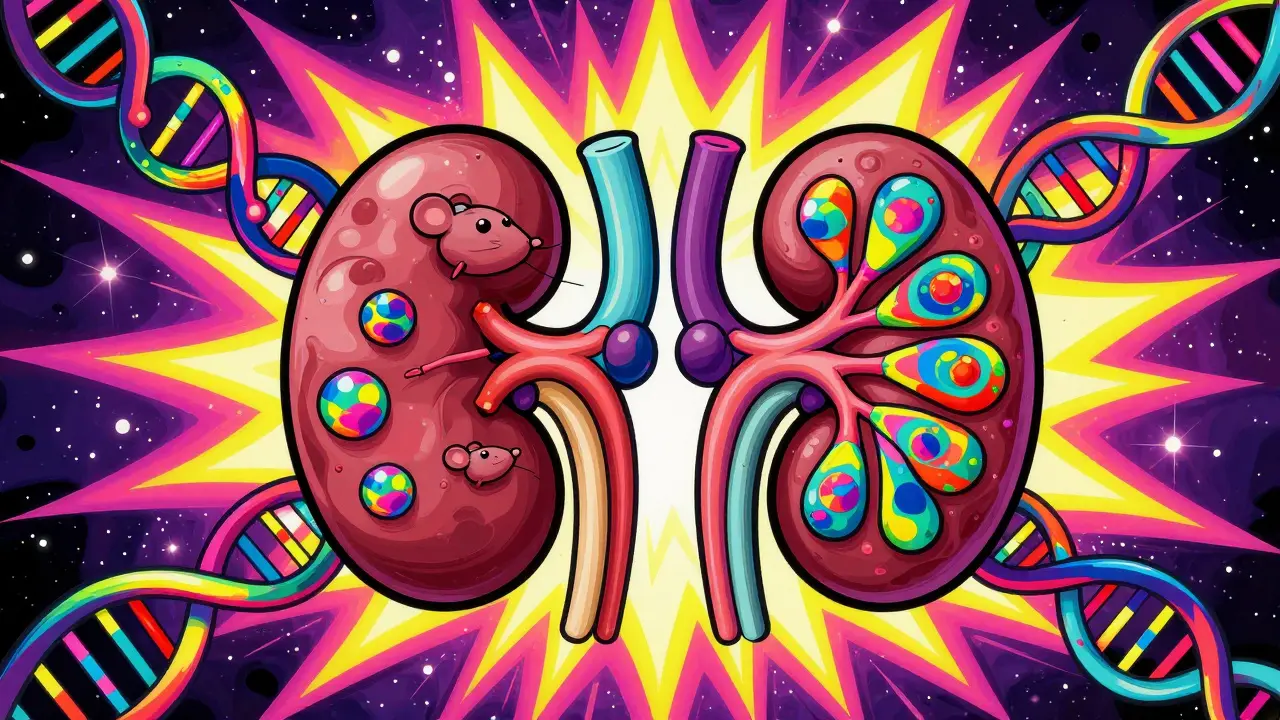
Not all cases of this disorder are the same. The way you inherit the condition determines how early it starts and how it progresses. The most common version is Autosomal Dominant Polycystic Kidney Disease (ADPKD). In this version, you only need one mutated copy of a gene from one parent to develop the disease. It accounts for over 98% of all cases. Most of these are caused by a mutation in the PKD1 gene (about 78% of cases) or the PKD2 gene (about 15%). Generally, if the PKD1 gene is the culprit, the symptoms tend to be more severe and appear earlier.Then there is the much rarer Autosomal Recessive Polycystic Kidney Disease (ARPKD). This type is different because it requires two mutated copies of the PKHD1 gene-one from each parent. This often manifests much earlier, sometimes immediately after birth or in very early childhood, whereas the dominant type usually doesn't show its face until a person is in their 30s or 40s.
| Feature | ADPKD (Dominant) | ARPKD (Recessive) |
|---|---|---|
| Prevalence | Very Common (>98% of cases) | Very Rare |
| Genetic Requirement | One mutated gene copy | Two mutated gene copies |
| Typical Onset | Ages 30-40 | Birth or early childhood |
| Primary Genes | PKD1, PKD2 | PKHD1 |
How the Disease Progresses
As those fluid-filled cysts multiply, they squeeze the healthy parts of the kidney. Over time, this leads to a drop in the estimated Glomerular Filtration Rate (eGFR), which is the standard measure of how well your kidneys are cleaning your blood. When eGFR drops below 60 mL/min/1.73m², the risk of complications increases significantly.One of the most common and dangerous complications is hypertension (high blood pressure). About 89% of ADPKD patients experience this. It creates a vicious cycle: the cysts cause high blood pressure, and high blood pressure further damages the kidney's filtering units. Beyond the internal damage, many patients deal with chronic pain due to the sheer size and weight of the kidneys, which can put immense pressure on the abdominal wall and surrounding organs.
Modern Management and Treatment Strategies
While there is currently no cure, renal health management has evolved from simply waiting for kidney failure to actively slowing the disease. The gold standard for early intervention is aggressive blood pressure control. Experts recommend keeping blood pressure below 130/80 mmHg, and some studies, like the HALT-PKD trial, suggest that even lower targets (below 110/75 mmHg) can slow the growth of the total kidney volume.For those with rapidly progressing ADPKD, there is a specific medication called Tolvaptan (brand name Jynarque). Approved by the FDA in 2018, this drug targets vasopressin receptors to slow the rate of cyst growth and the decline of kidney function. However, it is an expensive option, often costing over $100,000 annually, and requires close monitoring for liver safety.
If the disease reaches end-stage renal disease (ESRD), the options shift toward life-sustaining therapies:
- Dialysis: A process that mechanically filters the blood when the kidneys can no longer do it.
- Kidney Transplantation: The most effective long-term treatment, though wait times can range from 3 to 5 years.
The Role of Genetic Testing and Early Diagnosis
Why bother with a genetic test if there is no cure? Because knowing your specific mutation (PKD1 vs PKD2) helps doctors predict the trajectory of the disease. For example, PKD1 mutations generally lead to kidney failure sooner than PKD2. Genetic panels from labs like Invitae now cost around $1,200 and provide a roadmap for family planning and personalized monitoring.Early diagnosis is often a struggle. Some patients report spending years visiting different doctors before getting a correct diagnosis, even with a family history. This is why imaging is crucial. For adults aged 30-39 with a family history, doctors typically look for at least 10 cysts on an ultrasound, CT, or MRI to confirm ADPKD.

Daily Living and Quality of Life
Living with PKD is as much a mental battle as a physical one. Chronic pain is the most cited challenge, with over 75% of patients reporting it as a major hurdle. Anxiety regarding the eventual need for dialysis is also common. However, there is a silver lining: early intervention works. Patients who start blood pressure control in their 20s often maintain stable kidney function well into their 40s and 50s.To keep your kidneys functioning longer, focus on these practical steps:
- Hydration: Drinking plenty of water can help suppress the hormone vasopressin, which is thought to drive cyst growth.
- Low-Sodium Diet: Reducing salt helps manage hypertension and reduces the load on the kidneys.
- Regular Monitoring: Annual eGFR tests and blood pressure checks are non-negotiable.
What is the difference between ADPKD and ARPKD?
ADPKD (Autosomal Dominant) is much more common and usually appears in adulthood, requiring only one mutated gene from one parent. ARPKD (Autosomal Recessive) is rare, appears in infancy or early childhood, and requires mutated genes from both parents.
Can Polycystic Kidney Disease be cured?
Currently, there is no cure for PKD. Treatment focuses on managing symptoms, controlling blood pressure to slow progression, and eventually providing dialysis or a kidney transplant if kidney failure occurs.
How does Tolvaptan help with PKD?
Tolvaptan is a disease-modifying drug that blocks vasopressin receptors. By doing this, it slows the growth of kidney cysts and delays the decline of the glomerular filtration rate (eGFR).
What blood pressure target is recommended for PKD patients?
The general target is below 130/80 mmHg, though some intensive studies suggest targets as low as 110/75 mmHg may provide better protection against kidney volume growth.
Is genetic testing necessary for everyone with PKD?
It is highly recommended for those with atypical symptoms, a very young age of onset, or those who are planning a family and want to know the risk of passing the mutation to their children.