

13 Mar 2026
- 11 Comments
When your pharmacist hands you a pill bottle with a different name than what your doctor wrote on the prescription, it’s normal to wonder: is this the same thing? You’re not alone. Over 90% of prescriptions in the U.S. are filled with generic drugs today. But here’s the catch - there isn’t just one generic version of most medications. There are often five, ten, or even more. And not all of them are created equal.
What Makes a Generic Drug "Generic"?
A generic drug isn’t a copycat. It’s a legally required twin. The FDA demands that every generic version of a drug must have the same active ingredient, strength, dosage form, and route of administration as the brand-name version. That means if you’re taking losartan 50 mg for high blood pressure, every generic version must contain exactly 50 mg of losartan - no more, no less. The inactive ingredients? Those can change. Things like fillers, dyes, or coatings might differ. But those don’t affect how the drug works in your body.
The real test is bioequivalence. To get approved, a generic must prove it delivers the active ingredient into your bloodstream at the same rate and amount as the brand. The FDA uses two key measurements: AUC (Area Under the Curve) and Cmax (maximum concentration). The generic’s values must fall within 80% to 125% of the brand’s. That’s not a 20-25% difference in dosage - it’s a statistical range around the average absorption. Most generics land within 5% of the brand. In fact, studies show the average difference between approved generics and brand-name drugs is just 3.5%.
Not All Generics Are Created Equal - Here’s Why
Even though every generic meets FDA standards, some are more reliable than others. That’s because the 80-125% range is wide. Two generics could both be approved, but one might absorb slightly faster, while another absorbs a bit slower. For most people, this doesn’t matter. But for drugs with a narrow therapeutic index - where the difference between a helpful dose and a dangerous one is tiny - even small shifts can cause problems.
Drugs like warfarin (a blood thinner), levothyroxine (for thyroid function), and digoxin (for heart rhythm) fall into this category. A 5% change in absorption might mean your INR level spikes, your thyroid hormone drops, or your heart rhythm gets unstable. That’s why the Endocrine Society and other medical groups recommend sticking with the same manufacturer once you’ve found one that works. Switching between generics, even if they’re both AB-rated, can trigger unpredictable changes.
The FDA Orange Book: Your Secret Weapon
The FDA publishes a public database called the Orange Book. It’s not flashy, but it’s the most important tool you have. Every approved generic drug is listed here with a therapeutic equivalence (TE) code. Look for the "AB" rating. That means the generic has been proven bioequivalent and is considered interchangeable with the brand-name drug.
Some generics get a "B" rating. That doesn’t mean they’re unsafe. It means there’s limited data or slight differences in absorption that make them less predictable when switching from the brand. These are often newer generics or complex formulations like extended-release pills or topical creams. For new patients, a B-rated generic might be fine. But if you’re already stable on a brand or a specific generic, switching to a B-rated one isn’t recommended.
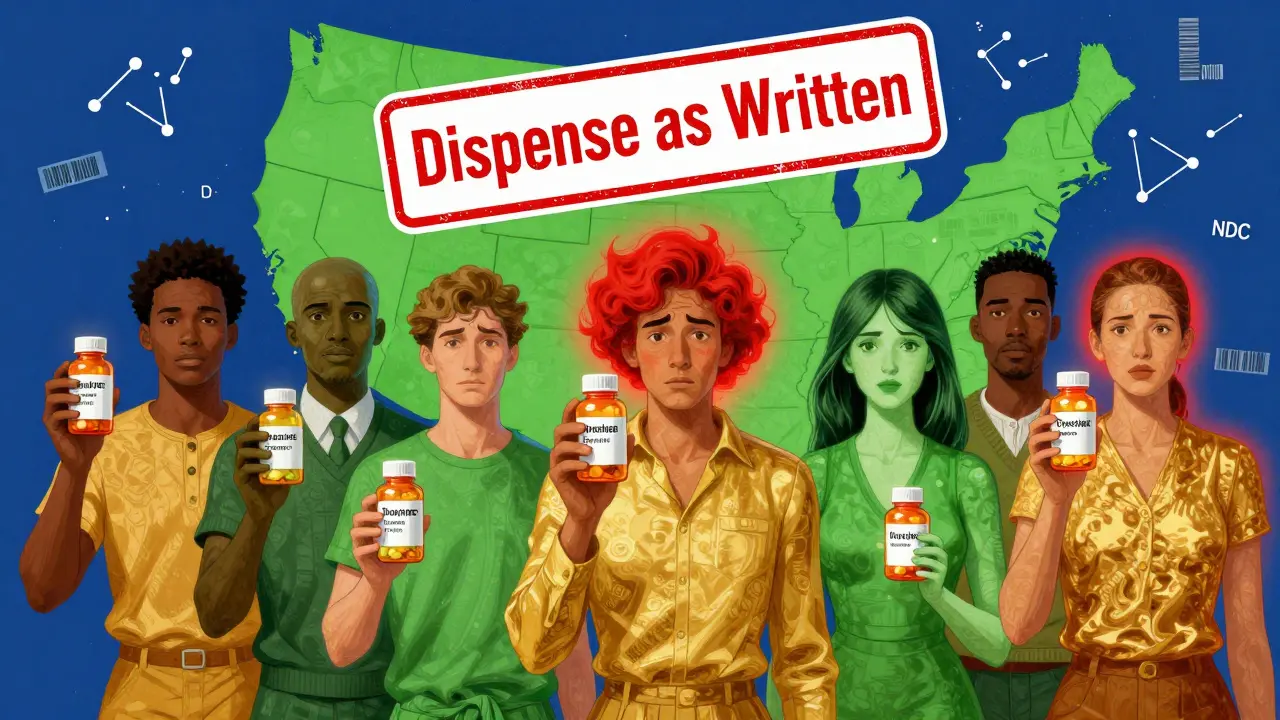
For example, if you’re on levothyroxine and your doctor writes "dispense as written," it’s not because they don’t trust generics. It’s because switching between manufacturers - even AB-rated ones - has been linked to changes in thyroid hormone levels in some patients.

When Should You Stick With One Generic?
Consistency matters more than you think. If you’ve been on a specific generic version of your medication for months - and your condition is stable - don’t switch unless you have to. Pharmacists are allowed to substitute generics unless the prescription says "dispense as written." But if you’re on a narrow-therapeutic-index drug, frequent switching can lead to:
- Unexplained changes in blood pressure or heart rate
- Fluctuations in thyroid function tests
- Increased risk of clotting or bleeding (with warfarin)
- Worsening symptoms like fatigue, dizziness, or palpitations
One 2017 study in Circulation: Cardiovascular Quality and Outcomes found that patients switching from brand-name candesartan to a generic version had a higher rate of adverse events in the first month. The risk dropped after that, but it still happened. For some, it was enough to get their blood pressure back under control - for others, it wasn’t.
What About Cost? Should You Always Pick the Cheapest?
Generics are cheaper - often 80-85% less than the brand. But the cheapest option isn’t always the best. Two generics might be the same price, but come from different manufacturers. One might have a better track record. If your insurance covers both, ask your pharmacist which one they recommend. Many pharmacists know which manufacturers consistently deliver reliable results.
For drugs with lots of generics - like metformin or atorvastatin - the differences are usually negligible. But for drugs like levothyroxine, where small changes matter, paying a little extra for a trusted brand or generic can prevent costly hospital visits down the line.
What Should You Do?
Here’s a simple checklist to help you decide:
- Check the TE code - Ask your pharmacist or look up the drug in the FDA’s Orange Book. Is it AB-rated? If yes, it’s interchangeable.
- Know your drug class - Are you on a narrow-therapeutic-index drug? If yes, avoid switching unless absolutely necessary.
- Track your symptoms - Did your blood pressure, energy, or lab results change after switching? Tell your doctor.
- Ask for consistency - If you’re doing well on a specific generic, ask your doctor to write "dispense as written" or specify the manufacturer.
- Don’t assume all generics are the same - Even two AB-rated versions from different manufacturers can behave differently in your body.
For new patients starting on a generic, cost is usually the biggest factor. Go with the cheapest AB-rated option. But if you’re switching from a brand or a different generic, pause. Talk to your doctor. Your stability matters more than saving a few dollars.
What’s Changing Right Now?
The FDA is tightening rules for complex generics - things like inhalers, patches, and extended-release pills. In 2021, they issued warnings to levothyroxine manufacturers over inconsistent bioequivalence. Since then, testing requirements have gotten stricter. New product-specific guidelines are being published every month.
There’s also talk about requiring unique barcodes (NDC codes) for each generic manufacturer. Right now, different versions of the same drug can look identical on your prescription label. That makes it hard to track which one you got. If this changes, it’ll help doctors and pharmacists spot patterns when side effects pop up.
Final Thought: Trust, But Verify
Generic drugs save the U.S. healthcare system over $370 billion a year. That’s huge. But that doesn’t mean they’re all perfect. The system works because the FDA holds them to strict standards - and most generics perform just as well as the brand.
But if you’re on a critical medication, don’t treat generics like interchangeable commodities. Your body isn’t a vending machine. It responds to small changes. If you’ve found a version that works, stick with it. If you’re switching, monitor yourself. And if something feels off - tell your doctor. That’s not being picky. It’s being smart.
Are all generic drugs the same as the brand-name version?
Yes - legally, they must contain the same active ingredient, strength, dosage form, and route of administration. They’re also required to be bioequivalent, meaning they deliver the drug into your bloodstream at the same rate and amount. But while they’re identical in function, they may come from different manufacturers with different inactive ingredients or production methods, which can lead to small differences in how your body responds - especially with narrow-therapeutic-index drugs.
Can I switch between different generic versions of the same drug?
For most drugs, yes - especially if they’re AB-rated by the FDA. But for drugs with a narrow therapeutic index - like warfarin, levothyroxine, or digoxin - frequent switching can cause unstable blood levels and side effects. Once you find a generic that works well for you, it’s safer to stick with it. If you must switch, monitor your symptoms and have lab tests done if recommended by your doctor.
What does "AB" mean on the FDA Orange Book?
"AB" means the generic drug has been reviewed by the FDA and is considered therapeutically equivalent to the brand-name drug. It has been proven bioequivalent and can be substituted without concern. This is the highest rating a generic can receive. Avoid generics with a "B" rating for critical medications unless your doctor specifically recommends them.
Why do some generics cost more than others?
Cost differences come down to manufacturing, supply chain, and competition. Some manufacturers have lower overhead, while others may use higher-quality ingredients or more consistent production methods. A more expensive generic isn’t necessarily better - but it might be more reliable. If you’re on a drug where stability matters (like levothyroxine), paying a bit more for a trusted brand can prevent complications.
Should I ask my doctor to write "dispense as written" on my prescription?
If you’re on a medication with a narrow therapeutic index - or if you’ve had problems switching generics before - yes. Writing "dispense as written" tells the pharmacist not to substitute. This is especially important for drugs like warfarin, thyroid meds, seizure medications, or heart drugs. It’s not about distrust - it’s about safety. Your doctor can help you decide if this step is right for you.
Adam M
March 13, 2026AB-rated? Yeah, fine. But I’ve switched generics three times on levothyroxine and each time my TSH spiked. Don’t play roulette with your hormones.
Noluthando Devour Mamabolo
March 14, 2026Thank you for this 🙏! As someone managing hypothyroidism + warfarin, I’ve learned the hard way that "AB-rated" ≠ "identical." The FDA’s 80-125% window is a loophole disguised as a standard. I now only take the same manufacturer-no exceptions. 📊💊
Leah Dobbin
March 15, 2026How utterly pedestrian. The notion that bioequivalence thresholds are sufficient for clinical equivalence is a relic of 20th-century pharmacology. One must consider inter-individual pharmacokinetic variance, gut microbiome modulation, and epigenetic expression patterns-none of which are captured in the FDA’s archaic AUC/Cmax paradigm. Truly, we’ve allowed corporate convenience to override biological nuance.
Ali Hughey
March 17, 2026EVERY GENERIC IS A SECRET LAB EXPERIMENT. THE FDA IS IN BED WITH BIG PHARMA. THEY KNOW SOME GENERICS CAUSE HEART ATTACKS-BUT THEY LET IT HAPPEN BECAUSE IT'S CHEAPER!! I’M ON LEVOTHYROXINE AND I’VE BEEN HAVING NIGHTMARES-AND I’M NOT THE ONLY ONE. THEY’RE HIDING THE NDC CODES ON PURPOSE. THE BARCODE SYSTEM ISN’T COMING SOON-IT’S ALREADY HERE, AND THEY’RE COVERING IT UP!!
Alex MC
March 19, 2026Appreciate the breakdown. I’ve been on atorvastatin for 8 years-switched generics twice. No change. But for someone on warfarin? Totally different story. I always tell my patients: if it ain’t broke, don’t switch. And if you do? Monitor. Log. Report. Simple.
rakesh sabharwal
March 20, 2026It’s laughable how Americans treat generics like they’re some revolutionary innovation. In India, we’ve been using generics since the 1970s-without FDA overreach. The real issue is your bloated healthcare system forcing patients to chase the cheapest option. If you can’t afford stability, that’s a societal failure-not a pharmacological one.
Aaron Leib
March 21, 2026Good summary. If you’re stable, stay put. If you’re switching, watch for changes. Simple. No need to overcomplicate it. Your body knows when something’s off-listen to it.
Stephanie Paluch
March 21, 2026I switched from brand to generic for my blood pressure med last year and felt like I was drowning in fog for two weeks. My doctor laughed. Then I showed him my logs. Now he writes "dispense as written" for everything. Thank you for validating what so many of us feel but are told to ignore.
tynece roberts
March 23, 2026so like… i got my levothyroxine from walgreens and then cvs and i swear i felt way more tired? like, i went from "ok" to "i need to nap at 2pm"? and i thought it was just stress? but now i read this and i’m like… wait. was it the pill? like. i didn’t even know you could tell the difference. so i’m sticking with walgreens now. idk if this is science but my body says no.
Hugh Breen
March 24, 2026THIS IS WHY WE NEED TRANSPARENCY. 🌍💊 Imagine if every generic had a QR code linking to its manufacturing facility, batch number, and bioequivalence data. We could track patterns. We could build a global database. Imagine if your pharmacist could say: "This batch had 97% consistency with the brand. Safe to switch." That’s not sci-fi-that’s doable. We’re not asking for luxury. We’re asking for dignity.
Byron Boror
March 26, 2026Stop whining. America makes the best drugs in the world. If you can’t handle a generic, maybe you shouldn’t be on medication. We don’t coddle our soldiers-why coddle patients? Stick with the brand if you’re too weak to handle a generic. But don’t blame the system for your weakness.