
9 Feb 2026
- 8 Comments
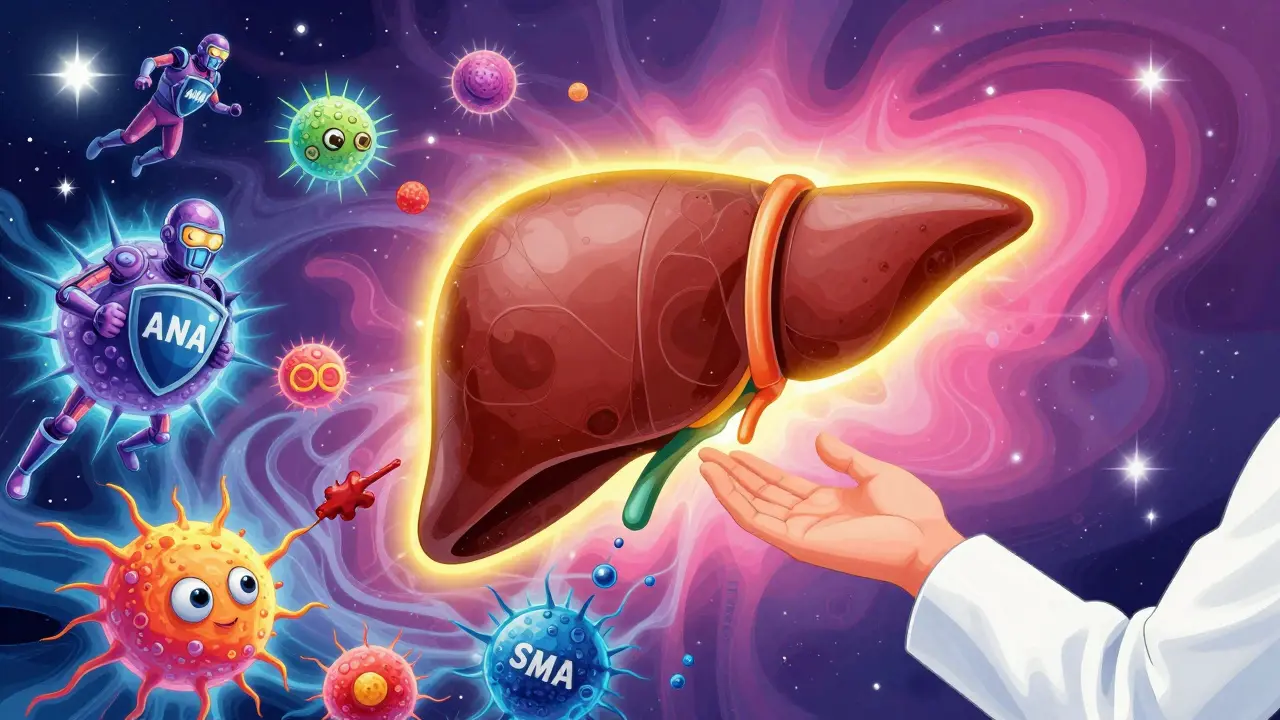
Autoimmune hepatitis isn’t something you hear about every day, but if your liver is under attack by your own immune system, it becomes the most important thing in your life. Unlike hepatitis caused by viruses like hepatitis B or C, autoimmune hepatitis (AIH) happens when your body mistakes healthy liver cells for invaders and starts fighting them. It’s not contagious. It’s not caused by drinking too much. It’s your immune system going rogue. And if left untreated, it can lead to cirrhosis, liver failure, or even the need for a transplant.
How Do You Know You Have It?
There’s no single test that says, "Yes, you have autoimmune hepatitis." Diagnosis is like putting together a puzzle. You need blood tests, a biopsy, and ruling out other causes. Most people don’t feel sick at first. Some notice fatigue, joint pain, or dark urine. Others are found during a routine blood test because their liver enzymes - ALT and AST - are sky-high. In active disease, these numbers are often 5 to 10 times higher than normal.One of the first clues is elevated immunoglobulin G (IgG). If your IgG level is more than 1.5 times the upper limit of normal, that’s a red flag. Blood tests also look for specific autoantibodies: antinuclear antibodies (ANA) or smooth muscle antibodies (SMA). These are present in about 80% of cases, known as Type 1 AIH. A smaller group has liver-kidney microsomal antibodies (LKM1), called Type 2. But here’s the key update from the 2025 European Association for the Study of the Liver (EASL) guidelines: you don’t need to know which type you have to start treatment. The treatment is the same regardless.
The real gold standard for diagnosis? A liver biopsy. A small sample of liver tissue, taken with a thin needle guided by ultrasound, shows if there’s interface hepatitis - inflammation right where the liver’s portal areas meet the main tissue. This pattern is unique to AIH. Biopsies are safe, with major complications like bleeding happening in less than 0.3% of cases. The biopsy also tells you how much scarring (fibrosis) is already there. That helps predict how urgently you need treatment.
Doctors use a scoring system - the Revised International Autoimmune Hepatitis Group (IAIHG) score - to help confirm the diagnosis. Points are added for blood test results, antibody presence, liver biopsy findings, and excluding other causes like viral hepatitis. A score over 15 means probable AIH. Over 20? Definite AIH. This isn’t just academic. Getting the diagnosis right means you avoid unnecessary treatments for other liver diseases.
Why Steroids Are the First Line of Defense
Since the 1970s, when Dr. Jay Hoofnagle first proved it worked, steroids have been the go-to treatment for AIH. Prednisone (or its active form, prednisolone) works fast. In fact, about 80 to 90% of patients start to feel better and show improved liver enzyme levels within two weeks. That’s how powerful the immune suppression is.Typical starting doses are 0.5 to 1 mg per kilogram of body weight per day - up to a maximum of 60 mg daily. That sounds high, and it is. But the goal isn’t to stay on this dose forever. It’s to bring the inflammation under control as quickly as possible. Within 6 to 8 weeks, doctors begin tapering the dose down to 10 to 15 mg daily. Why? Because long-term steroid use has serious side effects.
People on high-dose steroids for months often gain weight, especially around the face ("moon face"), belly, and neck. Fluid retention, mood swings, insomnia, and high blood sugar are common. One patient on a liver disease forum described it as "moon face that made me unrecognizable, 30 pounds of fluid weight in 3 weeks, and insomnia that felt like permanent jet lag." Over five years, 15% develop diabetes, 20% lose bone density (osteoporosis), and 10% get cataracts. These aren’t rare. They’re expected.
That’s why steroids are almost never used alone anymore.
Azathioprine: The Steroid-Sparing Partner
Azathioprine (sold as Imuran or generic azathioprine) was introduced alongside steroids because it lets doctors cut the steroid dose by 70 to 80% within six months. That means fewer side effects. Azathioprine is an immunosuppressant - it doesn’t just calm the immune system; it changes how it works over time. It’s taken daily, usually starting at 50 mg and increasing to 1 to 2 mg per kg per day (up to 150 mg).Combination therapy - steroids plus azathioprine - is now the standard. Studies show 70% fewer steroid-related side effects with combination therapy versus steroids alone. And it works better long-term. About 60 to 80% of patients achieve complete biochemical response - meaning ALT, AST, and IgG levels return to normal - within 18 to 24 months.
But azathioprine isn’t without risks. It can cause nausea, vomiting, and pancreatitis. In rare cases, it suppresses bone marrow, leading to low white blood cell counts. That’s why testing for an enzyme called thiopurine S-methyltransferase (TPMT) is now recommended before starting. About 0.3% of people have a genetic mutation that makes them unable to break down azathioprine. Without testing, they risk life-threatening bone marrow failure. Testing costs $250 to $400 in the U.S., and while 89% of academic centers now do it, only 45% of U.S. community clinics do. Don’t assume it’s automatic - ask for it.
One patient shared: "Azathioprine caused pancreatitis at 100mg, forcing switch to mycophenolate which finally stabilized my LFTs after 18 months of trial and error." That’s not unusual. Finding the right dose or switching to a different drug takes time. Patience and close monitoring are key.
Monitoring and Long-Term Management
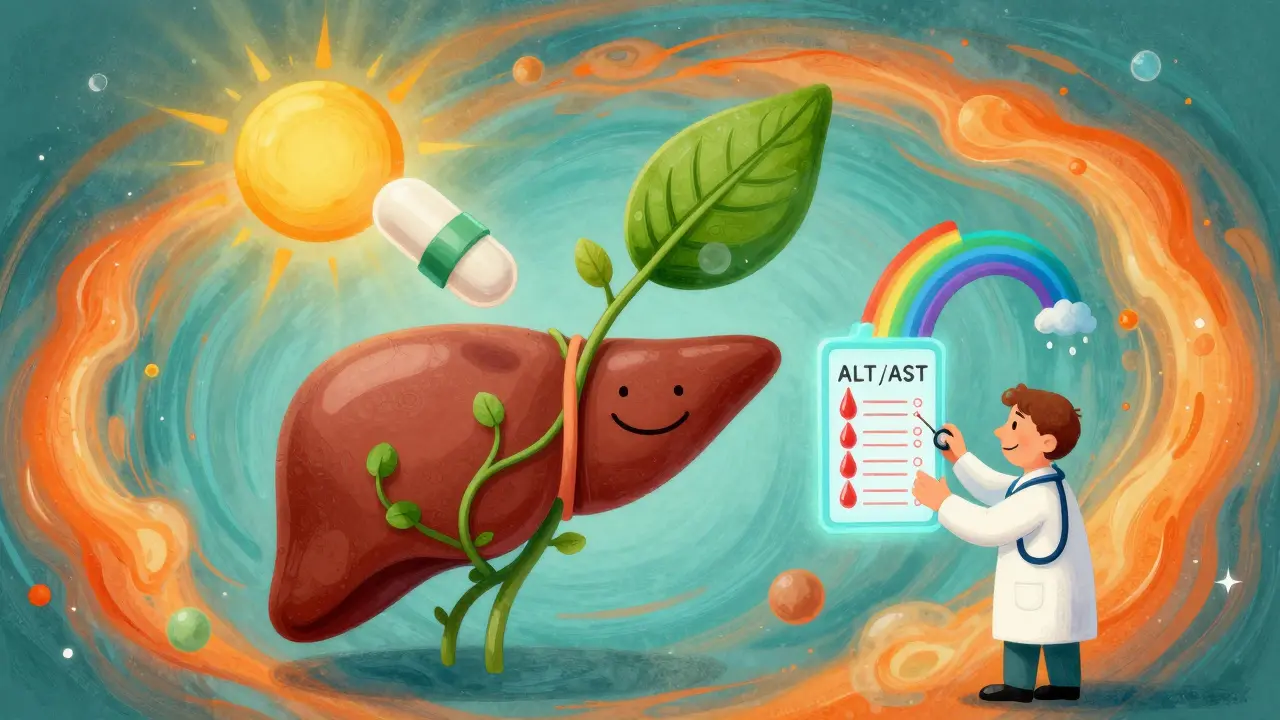
Treatment isn’t a "take it for a month and call it done" situation. AIH is chronic. Most people need treatment for years - many for life. Blood tests are checked every 2 to 4 weeks during the first few months, then every 3 months once stable. IgG levels are tracked quarterly. Liver enzyme trends matter more than single numbers.A repeat liver biopsy is recommended after 18 to 24 months of treatment. Why? Because symptoms and blood tests can improve even when inflammation is still active under the surface. A biopsy confirms whether the liver tissue has healed. In 50 to 70% of patients, the interface hepatitis disappears. That’s histological remission - and it’s the best predictor of long-term survival.
Before starting immunosuppression, you must be tested for hepatitis B. About 15 to 20% of people have hidden (occult) hepatitis B. If you start steroids or azathioprine without knowing, the virus can reactivate and cause sudden, severe liver failure. If you’re positive, you’ll need antiviral medication like tenofovir before starting AIH treatment.
Vaccinations are also critical. Hepatitis A and B vaccines are recommended before starting treatment because your immune system won’t respond as well once you’re on immunosuppressants. Vaccine effectiveness drops from 90% in healthy people to 40-60% in those on steroids.
What If Treatment Doesn’t Work?
About 10 to 15% of patients don’t respond to steroids and azathioprine. That’s called treatment failure. The next step is second-line therapy. Mycophenolate mofetil (CellCept) is the most common alternative. It’s taken twice daily and works well for those who can’t tolerate azathioprine. Calcineurin inhibitors like tacrolimus are another option.New drugs are on the horizon. Obeticholic acid (Ocaliva), originally for another liver disease, showed a 42% complete response rate in early trials for AIH - better than standard therapy. JAK inhibitors like tofacitinib and monoclonal antibodies targeting interleukin-6 (clazakizumab) are in phase 2 trials and showing promise. These aren’t available yet, but they represent a future where treatment is more targeted and less toxic.
Can You Stop Treatment?
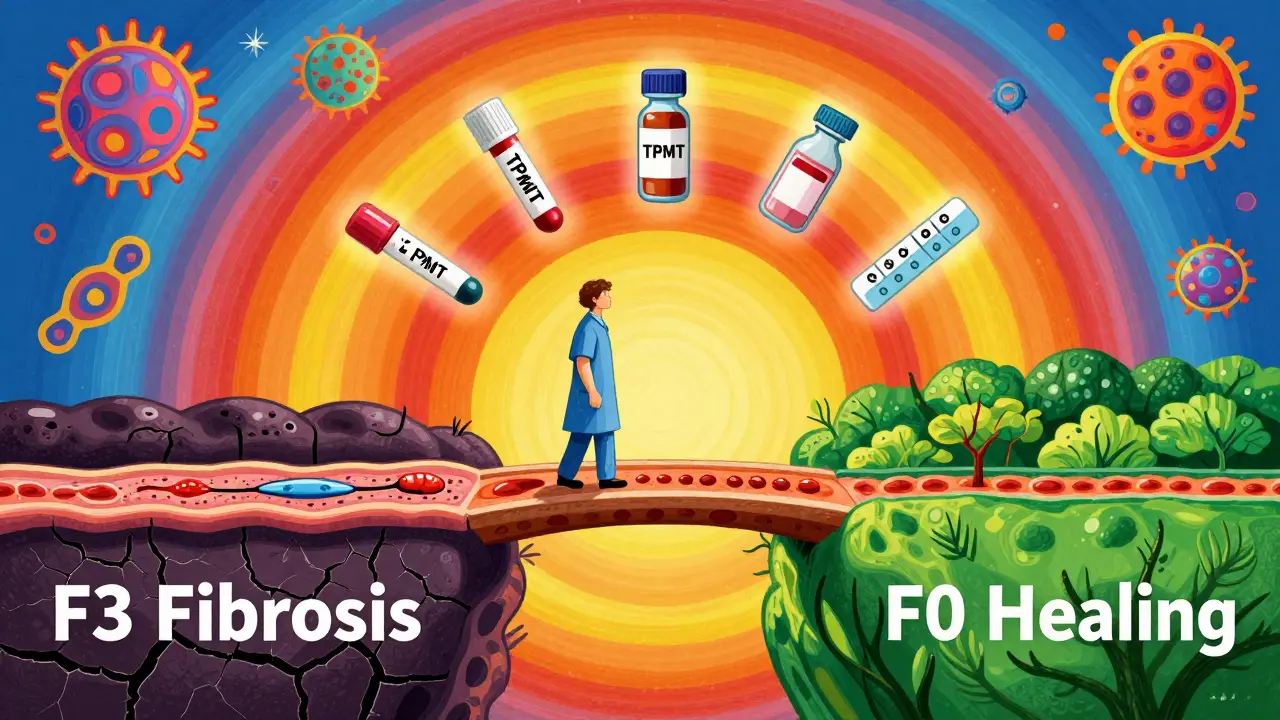
Some patients - about 30 to 50% - try to stop treatment after 2 to 3 years of remission. It’s tempting. Who wants to take pills forever? But here’s the hard truth: 50 to 90% of people relapse after stopping. The 2025 EASL guidelines say relapses usually happen within 3 months of stopping. If you try to stop, it must be done slowly - over 6 to 12 months - with close monitoring. Even then, only 45% stay in remission at 2 years.Some patients, like one on HealthUnlocked, report life-changing results: "After 2 years on 5mg prednisone + 75mg azathioprine, my biopsy showed complete fibrosis reversal from F3 to F0." That’s rare but possible. The liver can heal - if you give it time and the right treatment.
What’s Changing in 2026?
The 2025 EASL guidelines are reshaping how AIH is managed. No more subclassifying by antibodies. Longer windows for assessing treatment response (6 to 12 months instead of 6). Stronger emphasis on TPMT testing. And a push toward personalized care.Researchers are now looking at genetic markers like HLA-DRB1*03:01 and *04:01 - these alleles predict who’s likely to have severe disease. Serum microRNA panels are being tested to predict steroid response within two weeks. Imagine knowing on day 14 if your treatment will work - no more months of side effects for nothing.
The global AIH market is growing. With incidence rates rising from 1-2 per 100,000 in the 1990s to 2-18 per 100,000 today, more people are being diagnosed. Generic prednisone costs $4 to $15 a month. Generic azathioprine is $25 to $50. Branded versions? Much more. Insurance coverage matters. But access to testing and specialist care matters more.
What’s clear? AIH is manageable. It’s not curable. But with the right combination of steroids and azathioprine, monitored closely and adjusted as needed, most people live normal, healthy lives. The side effects are real. The treatment is demanding. But the alternative - liver failure - is far worse.
Random Guy
February 10, 2026so i got diagnosed with AIH last year and they put me on prednisone... holy shit that moon face is real. i looked like a confused hamster for 3 months. also my mood swings were so bad i accidentally yelled at my cat for 20 minutes because he sat on the couch. worth it? maybe. would i do it again? not unless my liver starts throwing a rave party.
Patrick Jarillon
February 11, 2026let me guess - the pharmaceutical industry *loves* this. steroids + azathioprine = lifelong revenue stream. but have you ever wondered why the liver attacks itself? maybe it’s not autoimmune… maybe it’s glyphosate. or 5g. or the fact that your tap water has fluoride AND lithium. i’ve seen 17 cases in my basement lab. the biopsy? total scam. ultrasound-guided needle? more like a government tracking chip. they don’t want you healed - they want you dependent.
Kathryn Lenn
February 12, 2026i love how this post casually mentions TPMT testing like it’s a normal thing. spoiler: your local community clinic won’t even know what that acronym means. i had to beg my GI doc for 3 months. eventually i paid $350 out of pocket because my insurance said ‘it’s not medically necessary’ - while charging me $800 for a blood draw that said ‘liver enzymes high, no idea why’. we live in a system where your liver dies slowly, but your credit score stays perfect.
Frank Baumann
February 13, 2026i’ve been on this ride for 7 years now. started with 60mg prednisone - lost 20 lbs of muscle, gained 40 lbs of belly, couldn’t sleep, cried during commercials. then azathioprine - pancreatitis at 100mg, switched to mycophenolate, still nauseous. biopsy after 2 years? fibrosis went from F3 to F1. not cured. not even close. but i’m alive. and honestly? i don’t care about the science anymore. i care that my 8-year-old doesn’t have to grow up without a mom. if this is what healing looks like? it’s ugly. it’s expensive. it’s brutal. but it’s worth every second.
Marie Fontaine
February 15, 2026hi everyone! just wanted to say i’m so proud of you all 💪🏻 i was diagnosed 3 months ago and i’m on the combo therapy now - 5mg prednisone + 75mg azathioprine. my liver enzymes dropped like a rock! i even started hiking again 🌲✨ if you’re scared? you’re not alone. we got this! anyone want to start a support group? i’ll make a discord! 🥰
Lyle Whyatt
February 16, 2026i’ve been reading up on this for weeks now and i think the real breakthrough is in the microRNA panels. imagine knowing on day 14 whether your treatment’s gonna work - no more 6 months of moon face and insomnia. the 2025 EASL guidelines are a game-changer. also, the fact that you don’t need to classify type 1 vs type 2 anymore? genius. less confusion, faster treatment. and honestly? the fact that generic prednisone costs $4? that’s a miracle. if we can get TPMT testing to 90% of clinics, we’ll cut ER visits by half. this isn’t just medicine - it’s justice.
Tasha Lake
February 18, 2026the 2025 EASL guidelines fundamentally reframe AIH as a dynamic immune dysregulation rather than a static autoimmune process. the shift away from serological subclassification reflects a growing recognition that phenotypic heterogeneity is better managed through functional biomarkers - particularly IgG kinetics and histological remission endpoints. TPMT genotyping isn’t optional; it’s a pharmacogenomic imperative. and the emerging data on HLA-DRB1*03:01 as a predictor of rapid fibrosis progression? that’s the future of precision hepatology.
Sam Dickison
February 18, 2026just a quick heads-up: if you’re on azathioprine and your WBC drops below 3.0, call your doc. not tomorrow. today. i ignored mine for 3 days. ended up in the ER with sepsis. not fun. also - get the hepatitis B screen. i didn’t. turned out i had occult HBV. steroids woke it up like a bear. don’t be me.