
1 Feb 2026
- 11 Comments
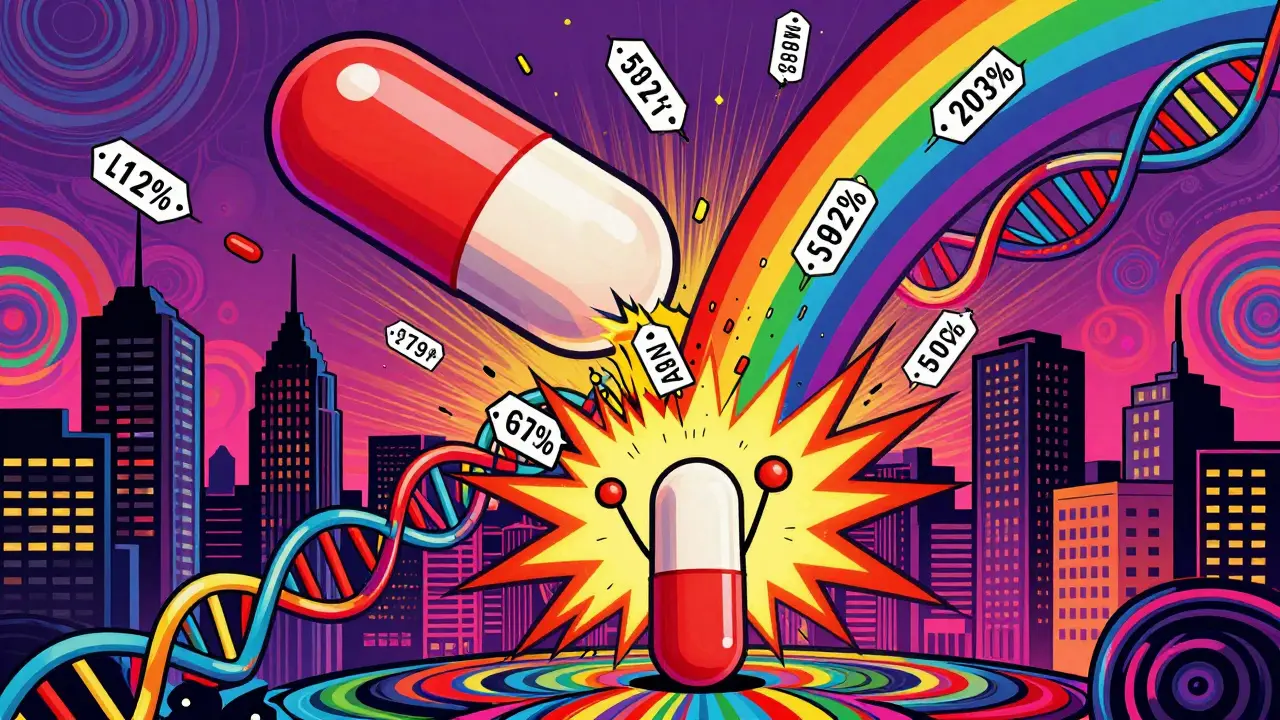
When a new drug hits the market, it doesn’t just cost a lot-it costs insane amounts. A single pill might set you back $10, $20, even $50. Then, one day, a cheaper version appears. Same active ingredient. Same results. But the price? Cut in half. Or worse-for the original company-cut to a quarter. This isn’t magic. It’s called first generic entry, and it’s the single biggest reason prices crash at launch.
People think price drops happen because of sales, holidays, or competition. But that’s not the full story. The real trigger is when someone else builds the exact same thing-without paying the R&D bill. And they sell it for 70% less. In pharmaceuticals, this isn’t rare. It’s predictable. The Congressional Budget Office found that when the first generic version of a drug enters the market, prices drop an average of 76% within six months. That’s not a discount. That’s a market reset.
How a Generic Entry Breaks the Price Ceiling
Think of it like this: a company spends $1 billion developing a new drug. They patent it. For the next 10-12 years, they’re the only ones allowed to sell it. They charge what the market will bear-because you have no choice. Then, the patent expires. Someone else looks at the formula, reverse-engineers it, and starts making it for $50 million. They don’t need to run clinical trials. They don’t need to pay for years of failed experiments. They just copy what works.
Now they sell it for $2 a pill instead of $15. Suddenly, pharmacies switch. Insurers demand the cheaper version. Patients ask for it by name. The original company can’t hold the line. They either drop their price or lose 80% of their customers. And they usually do both.
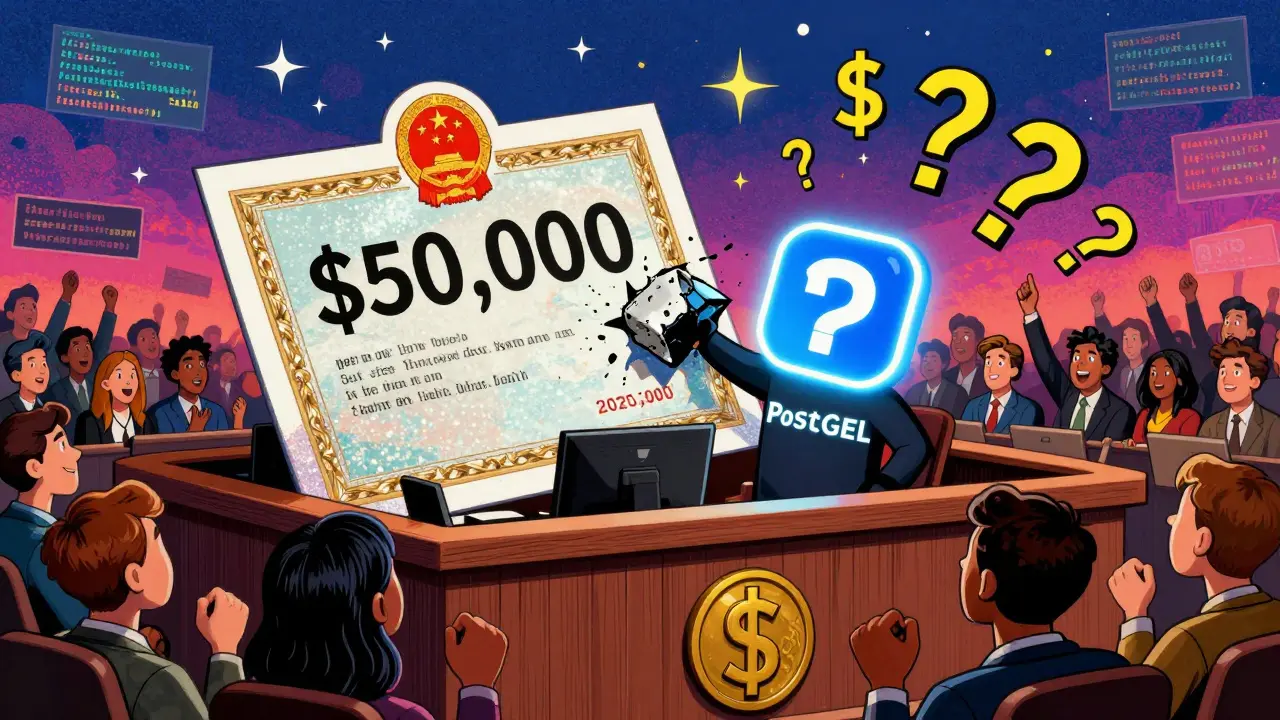
This isn’t just about drugs. It’s happening everywhere. In software, when Oracle’s database cost $50,000 per server, PostgreSQL came along-free, open-source, and just as reliable. Companies didn’t wait. They switched. Within two years, Oracle’s license fees dropped 40%. Same story with Microsoft SQL Server versus MySQL. Same with Adobe Photoshop versus GIMP. The pattern is identical: someone builds a cheaper version that does 90% of the job, and the market flips.
Why Customers Don’t Wait for the “Better” Version
You’d think people would wait for the next upgrade. Or the “improved” version. But they don’t. Why? Because they’re not buying technology-they’re buying results. If a generic version gives you the same outcome at 80% off, you don’t care if it’s not from the original brand. You care about your budget, your team’s time, and your bottom line.
On Reddit’s r/sysadmin, one user wrote: “We migrated from Oracle to PostgreSQL. Licensing costs dropped 78%. Performance? Better. Downtime? Less.” That’s not an outlier. G2, a software review site, found that 63% of users who switched to first-gen alternatives cited “massive cost savings without functionality loss” as their top reason. They didn’t need perfection. They needed affordability.
And here’s the kicker: the generic version doesn’t even need to be perfect. It just needs to be good enough. Studies show first-gen competitors deliver 80-90% of the original’s features at launch. That’s all it takes. You don’t need the fancy dashboard or the 17 integrations. You need the data to load. The report to run. The system to stay up. Generic entrants nail those basics-and that’s all most businesses need.
The Hidden Cost of Holding On
For the original company, refusing to lower prices isn’t a stand for quality. It’s a death sentence. PTC’s research shows that if you delay responding to a generic competitor by even 9-12 months, you lose up to 50% of your projected revenue. Why? Because customers move on. They train their teams on the cheaper tool. They build workflows around it. They sign contracts. And once they’re locked in, they won’t switch back-even if the original product gets better.
That’s why companies like Microsoft and Adobe didn’t just sit back. They changed their entire pricing model. Microsoft shifted Azure SQL Database from fixed licenses to pay-as-you-go. Adobe moved from one-time purchases to subscriptions. Why? Because they had no choice. The generic alternatives were eating their lunch. And if you don’t adapt, you become irrelevant.
Even Apple, the king of premium pricing, got caught. When the iPod launched in 2001 at $399, it was a luxury. But within three years, dozens of cheaper MP3 players flooded the market. By 2007, you could buy a functional music player for under $50. Apple didn’t win by holding the line. They won by shifting to services-iCloud, Apple Music, the App Store. The hardware became a gateway, not the product.
Why This Keeps Getting Worse
The pace of generic entry is accelerating. In 2010, it took an average of 18 months after a patent expired for the first generic version to appear. Today? Six months. Why? Because tools have gotten cheaper. Cloud computing lets startups spin up servers for pennies. Open-source code is free. AI helps reverse-engineer systems faster. Developers in India, Ukraine, or Brazil can build a clone of a $100K enterprise tool for $10K in labor.
And regulators are helping. The EU’s Digital Markets Act now forces big tech to make their systems interoperable. That means switching from one vendor to another isn’t a nightmare anymore-it’s a click away. Companies that used to lock you in with proprietary formats now have to play nice. That’s another nail in the coffin for premium pricing.
By 2027, ARK Invest predicts open-source alternatives will capture 35% of the enterprise software market. That’s not a guess. That’s a projection based on current trends. And it’s not just software. It’s hardware, medical devices, even industrial tools. The model is universal: if it can be copied, it will be. And when it is, prices collapse.

What This Means for You
If you’re a buyer: wait. Don’t rush to buy the latest, priciest version. Let the market settle. Wait for the first generic entry. You’ll save 50-80%. Most enterprise tools have a 6-12 month window before the first viable alternative appears. Use that time. Test the free versions. Talk to users on forums. You’ll find that the “premium” product isn’t worth the premium.
If you’re a seller: adapt or die. Don’t count on patent protection. Don’t rely on brand loyalty. Your pricing model needs to be flexible. Offer a free tier. Go subscription. Go usage-based. Build value around support, training, and integration-not just the software itself. The days of charging $100K for a license are over. Customers know they can get 90% of the value for $10K.
The truth is simple: no product is safe from a generic version. Not drugs. Not software. Not gadgets. The only thing that survives is value-not price tags. And if you’re still selling on scarcity, you’re already behind.
What to Watch For
Here’s how to spot the next price crash before it happens:
- Look for open-source alternatives to any paid tool. If it’s on GitHub and has 1,000+ stars, it’s a threat.
- Check forums like Reddit, Hacker News, or Stack Overflow. If people are asking “Is there a cheaper version of X?”, the writing’s on the wall.
- Track patent expirations. For drugs, use the FDA’s Orange Book. For software, watch for when a company stops updating its licensing terms.
- Watch for cloud-native versions. If a tool becomes available as a managed service (like AWS or Azure offering it), the price will drop fast.
The next time you see a product launch at a high price, don’t assume it’s worth it. Assume it’s bait. And wait for the real deal to come along.
Why do generic products always launch at a fraction of the original price?
Because they don’t have to pay for research, development, clinical trials, or marketing. The original company spent years and millions building the product and convincing the market it was worth the price. The generic version skips all that. They just copy the core functionality and sell it at cost-plus. That’s why they can undercut by 70-90%-they’re not trying to recoup investment. They’re just trying to get market share.
Do generic products work as well as the originals?
In most cases, yes. First-gen generics typically deliver 80-90% of the original’s features. For most users, that’s more than enough. You don’t need the extra bells and whistles. You need the core function to work reliably-and that’s exactly what generics are built to do. In pharma, the FDA requires generics to be bioequivalent. In software, users report near-identical performance. The difference isn’t in quality-it’s in branding and support.
Is it risky to switch to a generic product?
There’s always some risk, but it’s usually manageable. Early adopters sometimes report integration issues or less polished documentation. But those problems shrink fast. Community support, forums, and third-party consultants quickly fill the gaps. Most companies that switch find their ROI hits within 6-9 months. And once they’re in, they rarely go back. The bigger risk is staying with the original product while everyone else moves on.
Why don’t companies just lower prices before the generic arrives?
They can’t-or won’t. Lowering prices early means admitting their product isn’t worth the premium. It also cuts into their profits during the monopoly period. Most companies believe they can hold out until the last possible moment. But that’s a gamble. By the time they react, customers have already moved. The market doesn’t wait. It reacts instantly to cheaper alternatives. Waiting too long means losing not just sales-but loyalty.
Will this trend keep getting worse?
Absolutely. Cloud computing, open-source tools, AI-assisted development, and global talent pools have made it faster and cheaper than ever to copy products. The time between patent expiry and first generic entry has dropped from 18 months in 2010 to just 6 months today. And with regulations forcing interoperability, switching costs are falling. The next decade will see even more categories disrupted. The only winners will be those who embrace competition instead of resisting it.
phara don
February 3, 2026So basically, if you wait 6-12 months, you get the same thing for 1/5th the price? Sign me up. 😅
Ellie Norris
February 4, 2026Ohhh i totally get this! i switched my team from adobe to gimp last year and wow-no more monthly bills and the files still open fine! only thing? my boss kept asking if it was "secure"... like, it’s a photo editor, not a bank. 🤦♀️
Marc Durocher
February 4, 2026Let me get this straight-companies spend billions to create something, then get wrecked by a guy in Bangalore who coded it in his basement over a weekend? Classic capitalism. The original company didn’t lose to competition-they lost to their own greed. And now they’re charging $15/month for "cloud support" like we’re all idiots. 🤡
larry keenan
February 6, 2026While the phenomenon of generic entry is well-documented in economic literature, particularly in the context of patent cliff dynamics, one must also consider the structural inertia of enterprise procurement systems. Legacy vendors often maintain entrenched relationships through SLAs, compliance certifications, and training ecosystems that are non-trivial to migrate from-despite functional parity. The cost of disruption may outweigh the marginal savings in certain verticals.
Nick Flake
February 7, 2026THIS. THIS IS THE FUTURE. 🌍🔥
We’re not just watching a price drop-we’re witnessing the death of artificial scarcity. For centuries, we paid for exclusivity. Now? We pay for convenience, support, and trust. The product? It’s a commodity. And the people who still think branding = value? They’re the ones buying vinyl records in 2024 while the world moves on. The real luxury isn’t the price tag-it’s the freedom to choose. And guess what? We’ve got it now. 🙌
Chinmoy Kumar
February 7, 2026Actually i think this is amazing! in india we use a lot of open source tools because we dont have money for expensive software. but its not just about cost-its about learning. when i used postgresql instead of oracle, i actually learned how databases work better. its like learning to cook with basic spices before buying fancy ones. 😊
Vatsal Srivastava
February 7, 2026Generic entry? More like generic entitlement. The original creators built this. The copycats just stole it. And now you’re all celebrating theft like it’s a virtue. Pathetic.
Brittany Marioni
February 9, 2026Wait-so you’re saying that if I wait, I can get the same thing for less? And that’s... bad? No. No, no, no. That’s brilliant. I’ve been doing this with my SaaS tools for years. I waited 9 months after Notion launched, then switched to ClickUp. Saved 70%. My team is happier. My accountant is crying tears of joy. You’re not being a cheapskate-you’re being smart. Please, please, please, keep doing this. 🙏
Akhona Myeki
February 9, 2026As a South African, I must say: this is why the West is collapsing. You reward theft. You celebrate copying. In my country, we build. We innovate. We don’t wait for someone else to do the hard work and then jump on the bandwagon. This is not progress-it is moral decay.
clarissa sulio
February 9, 2026My company switched from Microsoft Teams to Mattermost last year. Zero complaints. Same features. 90% cheaper. And now we don’t have to listen to IT scream about "compliance" every time someone uses a GIF. Best decision ever.
Bridget Molokomme
February 9, 2026So you're telling me the entire tech industry is just one giant pyramid scheme where the first guy gets rich and everyone else just gets to use the blueprint? ...Wow. I feel both clever and deeply cynical. 🤔