
4 Dec 2025
- 10 Comments
When a life-saving drug disappears from the pharmacy shelf, it’s not just a supply chain problem-it’s a patient crisis. In 2023, nearly 300 medications were in short supply across the U.S., with heart drugs and cancer treatments among the most affected. Patients show up for their refill, only to be told, "It’s not available." No warning. No explanation. No plan. That’s not just poor service-it’s a breach of trust. And healthcare providers are the ones who bear the responsibility to fix it.
Why Communication Isn’t Optional
The World Health Organization defines a medicine shortage as when demand outstrips supply. But behind that clinical definition are real people. Someone on blood pressure medication might go days without their pill. A cancer patient could face delays in treatment. A parent might panic when their child’s asthma inhaler is gone. Studies show that 70% of serious medical errors in hospitals are tied to communication failures. When a drug shortage hits and providers don’t speak up, patients are left guessing. They might skip doses. They might switch to unsafe alternatives. They might lose faith in their doctor entirely. The American Medical Association found that patients who aren’t told about shortages in advance report 41% more anxiety. That’s not just emotional-it’s clinical.What Providers Are Required to Do
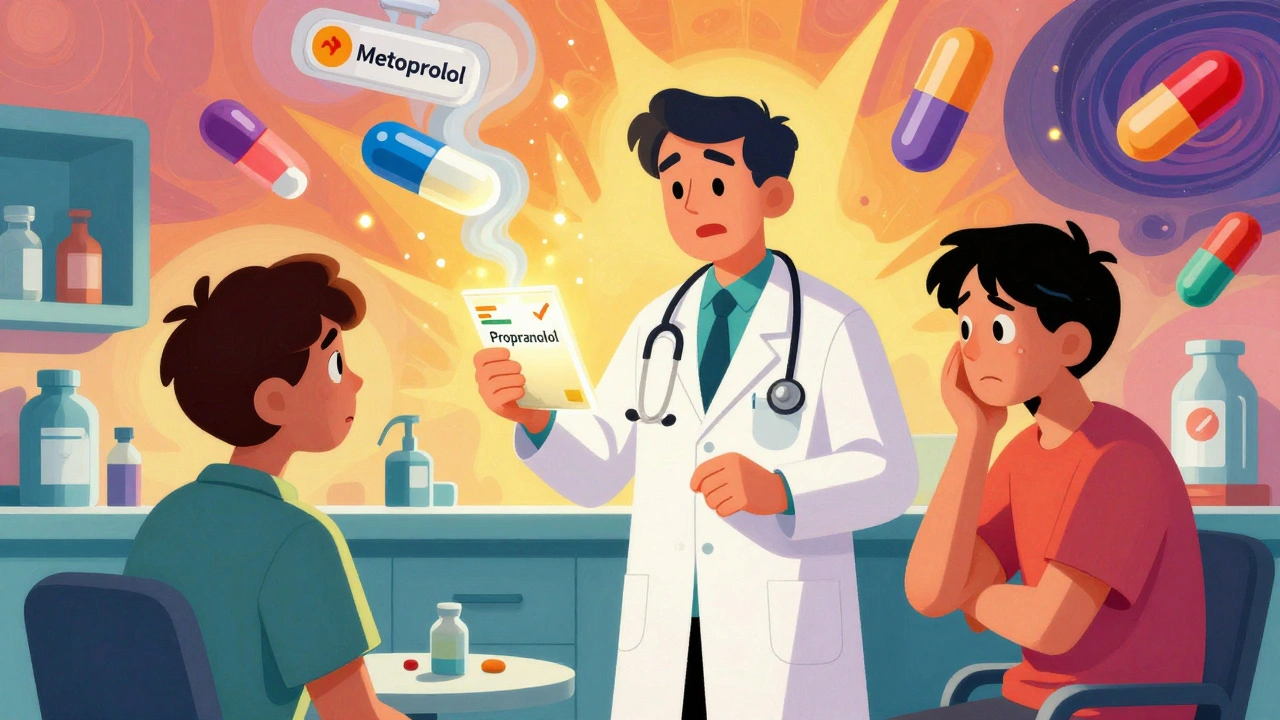
Regulations are catching up. In the U.S., the FDA Safety and Innovation Act of 2012 requires manufacturers to report potential shortages six months in advance. But that’s only the start. The Joint Commission now mandates, as of January 2025, that every healthcare facility have a structured, empathetic communication process for drug shortages-or risk losing accreditation. So what does that look like in practice?- Name the drug clearly: Don’t say "your heart pill." Say "metoprolol succinate 25 mg extended-release." Include brand and generic names. Patients need to recognize it.
- Explain the scope: Is it 20% short? 80%? Will it be gone for weeks or months? Vague answers breed panic.
- Offer alternatives with evidence: Don’t just hand over a different pill. Explain why it’s safe. Cite studies. Say, "This alternative has been used in over 12,000 patients with similar results. Here’s the data."
- Give a timeline: Even if it’s uncertain, say, "We expect restocking by mid-March, but we’ll update you every two weeks."
- Provide contact info: Who can they call if they’re confused? A nurse? A pharmacist? A hotline? Make it easy.
The Plain Language Rule
The CDC says all shortage communication must be written at a 6th- to 8th-grade reading level. No jargon. No Latin terms. No "therapeutic equivalence." If you say "bioequivalent," you’ve already lost half your patients. A 2021 study in JAMA Internal Medicine found that patients with limited health literacy-nearly half of all U.S. adults-understood shortage information 3.2 times worse when it was written in medical language. That’s not a small gap. It’s life-threatening. Instead of saying, "We’re transitioning you to a propranolol ER formulation," say: "We’re switching you to a different version of the same medicine that works the same way, but lasts longer. You’ll take it once a day, just like before."How to Check If They Understand
You can’t assume they got it. Teaching back is the gold standard. Ask: "Can you tell me in your own words how you’ll take this new medication?" If they say, "I think I take it at night?"-you haven’t succeeded. If they say, "I take one pill every morning, same as before, but this one’s blue instead of white. If I feel dizzy, I’ll call you,"-you’ve done your job. Studies show clinics using this method achieve over 90% patient comprehension. Those that don’t? Only 47%. That’s the difference between safety and risk.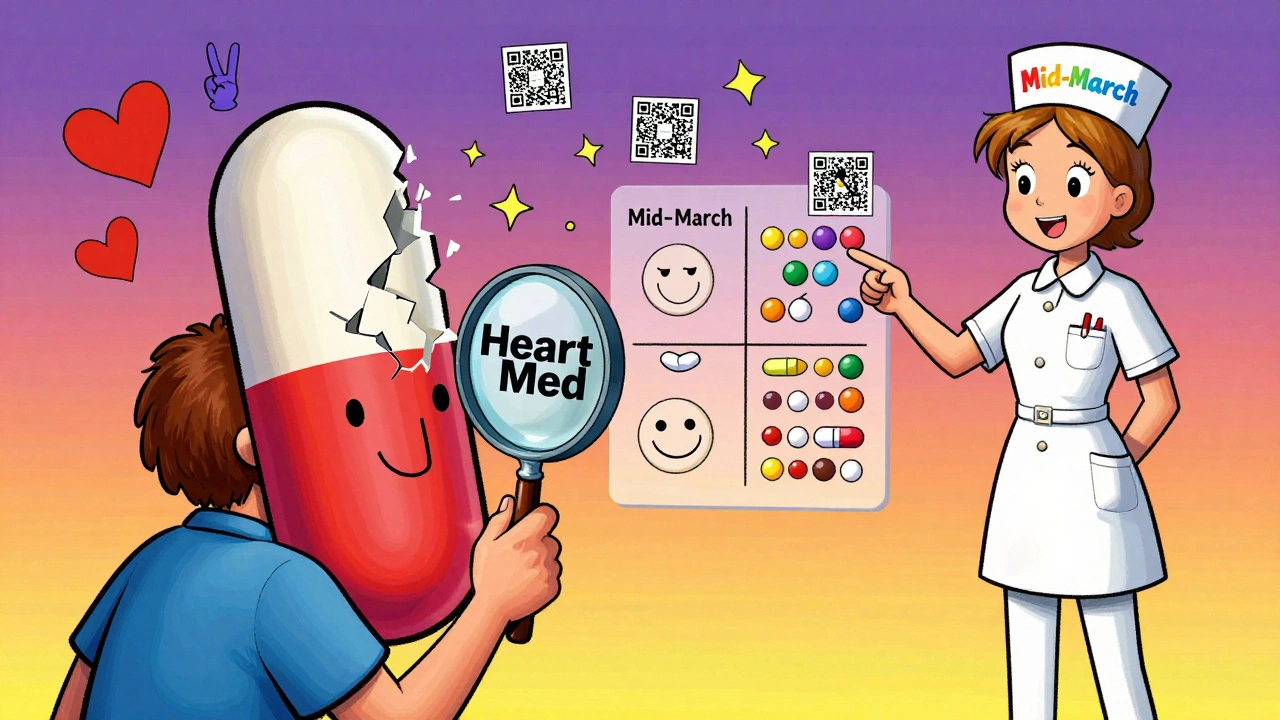
What Works: Real Examples
At Mayo Clinic, they use a system called SHIP-Shortage Handling and Information Protocol. When a drug is in short supply, their EHR auto-flags every patient on that medication. Nurses call them within 48 hours. They send printed charts showing old vs. new meds side by side. They even include QR codes linking to short videos explaining the switch. Result? 87% patient satisfaction. Only 3% of patients stopped their treatment. Compare that to rural clinics where 68% of providers say they get no real-time shortage alerts. Patients there are left to figure it out themselves. Some drive hours to find the drug. Others go without. One Reddit user wrote: "My doctor handed me a different pill. Didn’t say why. Didn’t say if it was safe. I Googled it and found out it’s used for depression. I thought I was being treated for something else entirely." That’s not a mistake. That’s a failure.Emotion Matters More Than You Think
A 2022 study from Johns Hopkins found that patients who felt their provider was emotionally present during a shortage conversation were 73% more likely to trust them-even if the alternative wasn’t perfect. It’s not just about facts. It’s about tone. A simple, "I know this is scary. I’d be upset too. Let’s work through this together," changes everything. Dr. Ahmed Khan from the WHO says providers should spend 37% more time on empathetic statements during shortage talks. That’s not a luxury. It’s part of the treatment.What Doesn’t Work
Avoid these common mistakes:- "The pharmacy ran out. I don’t know when it’ll be back." → Too vague. Feels dismissive.
- Handing a prescription for a new drug without explanation → Feels like a swap, not a solution.
- Waiting for the patient to ask → Patients often won’t. They’re scared, overwhelmed, or think it’s normal.
- Using email or text alone → Many patients, especially older ones, don’t check them regularly.
Tools That Help
Some clinics are using tech to make this easier:- Automated EHR alerts: Systems like Intermountain Healthcare auto-fill shortage info into visit notes so providers don’t have to remember everything.
- Visual comparison charts: Side-by-side images of pills, dosing schedules, and side effects.
- Trained communication specialists: At Memorial Sloan Kettering, dedicated staff handle all cancer drug shortage conversations-freeing up doctors to focus on care.
What Patients Really Want
A 2022 survey of 2,400 patients found three things matter most:- Why the original drug is gone (78% said this was critical)
- Proof the alternative works (72%)
- When the original might come back (65%)
The Bottom Line
Drug shortages aren’t going away. In fact, they’re getting worse. The market for communication tools is projected to grow to over $300 million by 2027 because healthcare systems are finally realizing: communication isn’t a nice-to-have. It’s a core part of care. Providers who treat shortage communication like an afterthought will lose trust. Patients will leave. They’ll go to clinics that explain things clearly. They’ll stay with providers who listen. The responsibility isn’t just legal. It’s moral. You’re not just prescribing medicine. You’re managing fear. You’re holding someone’s health in your hands-even when the system fails. Start today. Talk to your next patient about their meds like their life depends on it-because it does.What should I do if my medication is suddenly unavailable?
Don’t stop taking your medication without talking to your provider. Call your doctor or pharmacist immediately. Ask: Why is it gone? What’s the alternative? Is it safe? When will the original be back? Write down the answers. If you’re unsure, ask them to explain it again using the teach-back method: "Can you help me explain this back to you?"
Are generic alternatives really the same as brand-name drugs?
Yes, by law, generics must have the same active ingredient, strength, dosage form, and effect as the brand name. The FDA requires them to meet the same quality and safety standards. The only differences are inactive ingredients (like color or filler), which rarely affect how the drug works. If your provider says a generic is safe, they’re following science-not cutting corners.
Why don’t pharmacies tell me about shortages ahead of time?
Pharmacies often find out too late. Manufacturers don’t always notify them in advance, and many don’t have systems to track shortages in real time. That’s why the responsibility falls on your provider-they have access to national shortage databases and are trained to act before you walk in for your refill. If your pharmacy doesn’t warn you, ask your doctor to notify you directly.
Can I switch to a different brand if my drug is on shortage?
Sometimes, but not always. Different brands of the same drug may have different release patterns or inactive ingredients that affect how your body absorbs it. For example, with some seizure or heart medications, even small differences matter. Always check with your provider before switching brands-even if they’re both generics. Never self-switch.
What if I can’t afford the alternative medication?
Tell your provider. Many drug manufacturers have patient assistance programs. Some nonprofits offer free or low-cost medications during shortages. Your provider can help you apply. Don’t skip doses because of cost. There are options-you just need to ask.
How can I know if my provider is following best practices for shortage communication?
Look for these signs: They name the drug clearly, explain why it’s unavailable, offer a safe alternative with evidence, give a timeline, and check your understanding. If they hand you a new prescription without talking through it, or seem rushed and dismissive, ask for more time. You have the right to understand your care.
Stephanie Bodde
December 5, 2025Just wanted to say this hit me right in the chest 🥺 My mom had to switch heart meds last year and no one told her why-she thought she was being poisoned. We found out weeks later it was a shortage. Please, providers: just talk to people like humans. You’re not just prescribing pills-you’re holding their peace of mind.
Michael Dioso
December 6, 2025Oh here we go again with the feel-good medical theater. You think telling patients their drug is out of stock is gonna fix the broken supply chain? The real problem is Pharma lobbying, FDA red tape, and China controlling 80% of API production. Stop pretending communication is the solution-it’s just damage control for a system that’s collapsing.
Jennifer Patrician
December 7, 2025Let’s be real-this whole shortage thing is a scam. Big Pharma and the FDA are *letting* drugs disappear so they can push expensive generics. I’ve seen it. My cousin got switched to a ‘generic’ that made her hallucinate. They don’t care if you live or die-only if you pay. This ‘communication’ is just PR to make you feel better while they steal your money.
Mark Curry
December 9, 2025I’ve been a nurse for 18 years. The teach-back method works. Every time. Even with dementia patients. You say it, they say it back, you fix it. Simple. No apps needed. Just care. I wish more docs would try it instead of rushing out the door.
Laura Saye
December 10, 2025It’s fascinating how we’ve outsourced empathy to protocols. The WHO definition is clinical, but the human cost is visceral. We measure drug availability in percentages, but patients measure it in sleepless nights, panic attacks, and silent tears in pharmacy parking lots. Communication isn’t a checklist-it’s the last tether between clinical detachment and moral responsibility. We’re not just managing shortages. We’re managing despair. And despair doesn’t respond to bullet points-it responds to presence.
Jimmy Jude
December 11, 2025Let me just say this: if your doctor can’t tell you why your medicine is gone, they’re not a doctor-they’re a corporate cog. I’ve seen providers hand out prescriptions like they’re vending machine snacks. No eye contact. No warmth. Just a clipboard and a sigh. That’s not healthcare. That’s dehumanization with a stethoscope.
Philip Kristy Wijaya
December 13, 2025Communication protocols are meaningless without systemic reform. The FDA requires six months notice but manufacturers routinely lie about timelines. The Joint Commission mandates empathy but doesn’t audit it. We’ve created a bureaucracy that demands compassion but rewards compliance. You can’t fix a moral failure with a PowerPoint slide. This is a crisis of integrity not information
Rupa DasGupta
December 13, 2025My cousin in Delhi got her insulin cut off for 3 weeks. No one told her. No one cared. Why should US providers care more? Global supply chains are broken. This isn’t about ‘empathy’-it’s about privilege. You want to fix this? End patent monopolies. Stop outsourcing to India and China. Or at least pay nurses enough to actually call patients. 🙃
Mellissa Landrum
December 15, 2025Yall act like this is new. The government knew about these shortages for years. They just let it happen so they could push those new $2000 pills. I saw a doc get fined for not reporting a shortage but the CEO of the pharma company got a bonus. Wake up. This ain't about communication. This is about who owns your life.
Mark Ziegenbein
December 16, 2025It is not hyperbole to assert that the current paradigm of pharmaceutical communication represents a grotesque failure of medical ethics-a performative gesture masquerading as patient-centered care. The proliferation of visual charts QR codes and automated alerts is not innovation but distraction. The core issue remains unaddressed: the commodification of human life under the neoliberal medical-industrial complex. A patient does not require a side-by-side pill comparison-they require dignity. They require a provider who sees them as more than a data point in a shortage dashboard. And until we dismantle the profit-driven architecture of modern healthcare no amount of teach-back protocols will suffice. The alternative is not merely suboptimal-it is morally indefensible