
11 Jan 2026
- 10 Comments
Most people don’t think about their kidneys until something goes wrong. But by the time you feel tired, swollen, or notice changes in your pee, up to half your kidney function might already be gone. That’s why kidney function tests-like creatinine, GFR, and urinalysis-are some of the most important blood and urine checks you can get. They don’t need to be scary. In fact, they’re simple, quick, and can catch problems long before you feel sick.
What Your Kidneys Actually Do
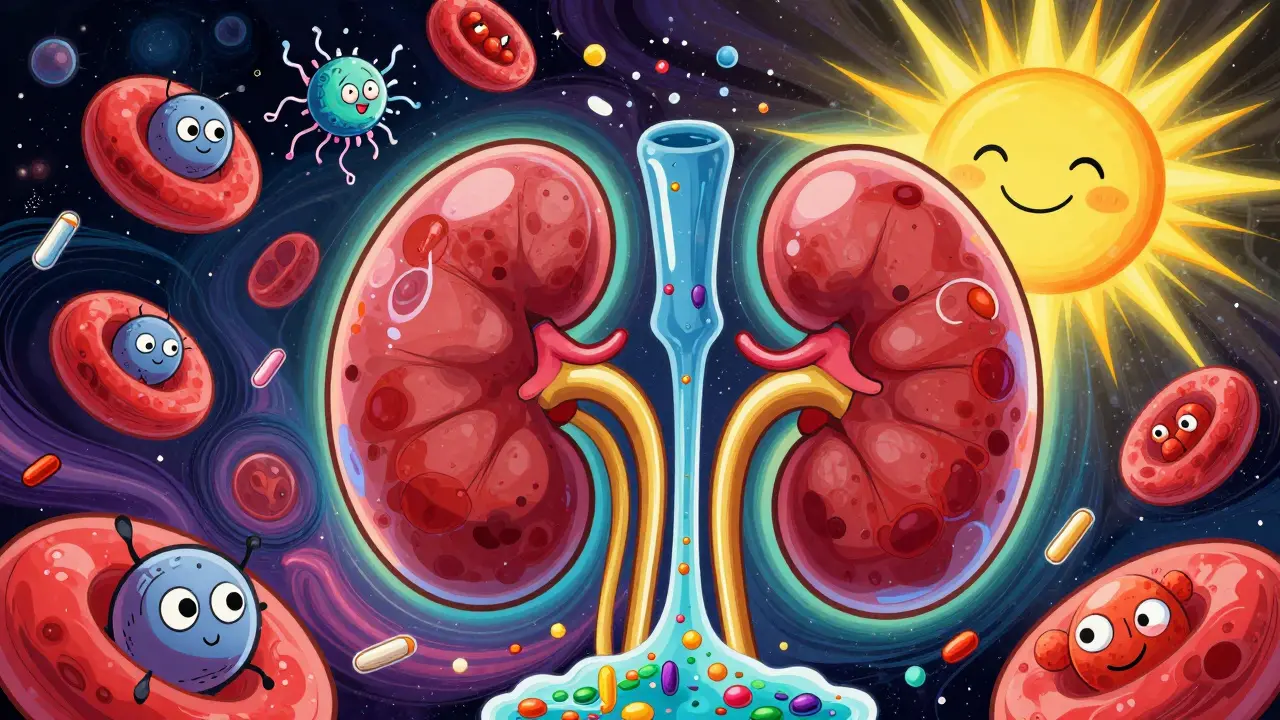
Your kidneys aren’t just filters. They’re busy, 24/7 maintenance crews. They clean about 120 to 150 quarts of blood every day, turning waste into about 1 to 2 quarts of urine. They also balance your salt and water, control blood pressure, make red blood cells, and keep your bones strong by activating vitamin D. When they start to slow down, it’s not always obvious. That’s why tests matter.
Creatinine: The Waste Product That Tells a Story
Creatinine is a chemical your muscles make as they work. It’s harmless-until your kidneys can’t flush it out. When kidney function drops, creatinine builds up in your blood. That’s the basic idea behind the creatinine blood test.
But here’s the catch: creatinine doesn’t rise until you’ve lost about 50% of your kidney function. That’s why it’s called a late marker. Two people can have the same creatinine level but very different kidney health. A muscular 30-year-old might naturally have higher creatinine than a frail 70-year-old. That’s why doctors don’t look at creatinine alone. They use it to calculate something more useful: eGFR.
eGFR: The Real Measure of Kidney Performance
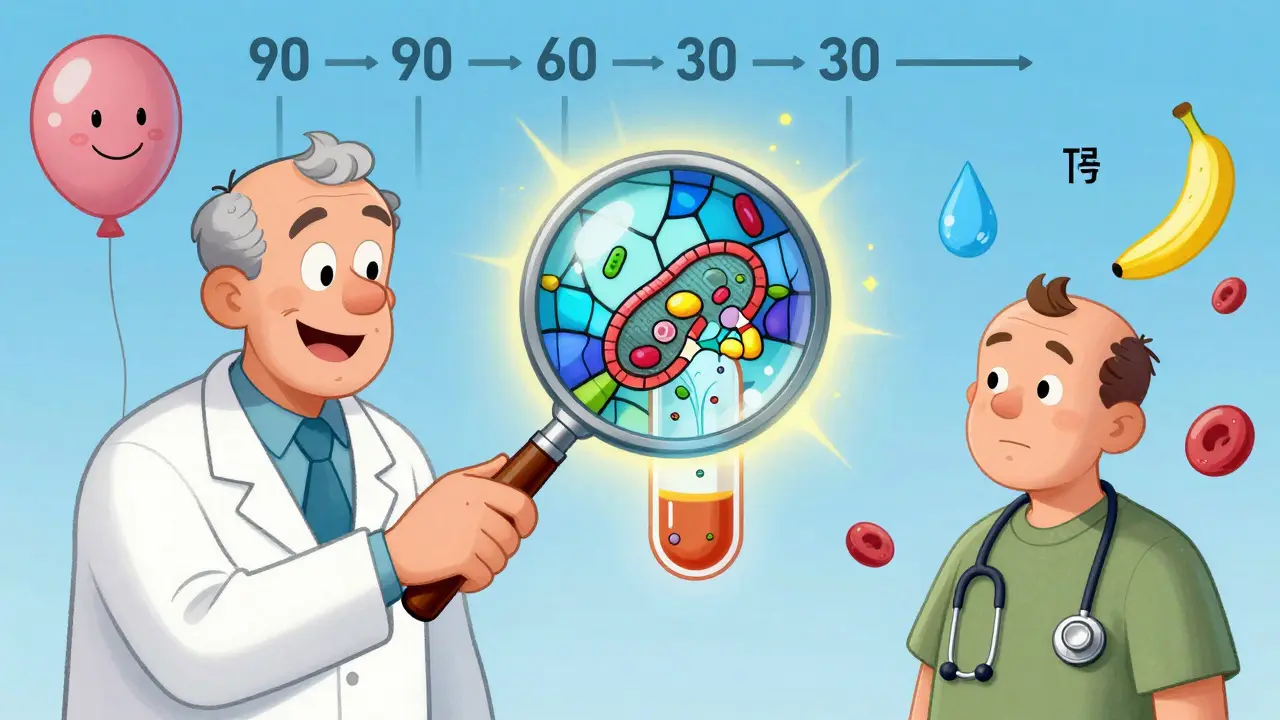
eGFR stands for estimated Glomerular Filtration Rate. It’s not measured directly-it’s calculated using your creatinine level, age, sex, and sometimes race. It tells you how well your kidneys are filtering blood, in milliliters per minute per 1.73 square meters of body surface area.
Here’s what the numbers mean, based on current guidelines:
- 90 or higher: Normal kidney function
- 60 to 89: Mildly reduced function
- 45 to 59: Moderately reduced
- 30 to 44: Severely reduced
- 15 to 29: Very severely reduced
- Below 15: Kidney failure (dialysis or transplant likely needed)
These stages are used worldwide. In Australia, the UK, and the US, labs now report eGFR automatically when you get a creatinine test. You don’t have to ask for it. If your eGFR is below 60 for three months or more, it’s considered chronic kidney disease-even if you feel fine.
Why eGFR Isn’t Perfect
eGFR is great-but it’s not foolproof. It can be inaccurate if you’re:
- Under 18
- Pregnant
- Very muscular (bodybuilders, athletes)
- Very overweight
- On a very low-protein diet
In those cases, doctors might order a cystatin C test. It’s another blood marker, less affected by muscle mass or diet. Some hospitals now use cystatin C to cross-check eGFR, especially for high-risk patients.
Urinalysis: The Hidden Clue in Your Pee
One of the earliest signs of kidney damage? Protein leaking into your urine. Healthy kidneys don’t let protein pass through. But if the filters are damaged-like a torn sieve-albumin (a type of protein) slips out.
That’s why urinalysis is just as important as blood tests. The most accurate test isn’t the old dipstick you might remember from school. It’s the Albumin-to-Creatinine Ratio, or ACR. This test measures how much albumin is in your urine compared to creatinine. It’s done on a single morning sample-no 24-hour collection needed.
Here’s what ACR levels mean:
- Less than 3 mg/mmol: Normal
- 3 to 70 mg/mmol: Mild to moderate proteinuria (needs repeat test)
- Above 70 mg/mmol: Significant kidney damage
Doctors don’t diagnose based on one test. If your ACR is high, they’ll ask you to repeat it in a few weeks. One high result could be from dehydration, infection, or even intense exercise. Two or three high results over time? That’s a red flag.
What About 24-Hour Urine Tests?
You might hear about collecting all your urine for 24 hours. It sounds extreme, and it is. But it’s still used sometimes-for example, if you have heavy protein loss or need to measure other substances like sodium, potassium, or oxalate. Most people don’t need it. ACR gives the same info for kidney damage with way less hassle.
Who Needs These Tests?
You don’t need to wait for symptoms. If you have any of these, you should be tested at least once a year:
- Diabetes (type 1 or 2)
- High blood pressure
- Heart disease
- Obesity
- Family history of kidney failure
- Age over 60
- Previous acute kidney injury
Even if you’re healthy, getting a basic metabolic panel (which includes creatinine and eGFR) once a year during your check-up is smart. The CDC recommends it for everyone over 50. In Australia, Medicare covers these tests for people with chronic conditions.
What Happens If the Tests Show a Problem?
Early kidney disease doesn’t always need drugs. Often, it just needs lifestyle changes:
- Control your blood sugar if you have diabetes
- Keep your blood pressure under 130/80
- Reduce salt and processed foods
- Stay hydrated-but don’t overdo water
- Quit smoking
- Avoid NSAIDs like ibuprofen or naproxen unless prescribed
If your eGFR drops below 45 or your ACR stays high, your doctor might refer you to a nephrologist. They’ll look for the cause-maybe it’s glomerulonephritis, polycystic kidney disease, or something else. Treatment depends on the root problem, but the goal is always the same: slow the damage.
What Doesn’t Work
There’s a lot of misinformation out there. Don’t believe these myths:
- “Drinking lots of water cures kidney disease.” Water helps, but it won’t fix damaged filters.
- “Herbs or detox teas clean your kidneys.” Some herbs can actually harm your kidneys. Avoid unregulated supplements.
- “If my creatinine is normal, I’m fine.” Not true. eGFR and ACR tell the full story.
- “I don’t need tests if I feel fine.” That’s exactly when you need them most.
What to Ask Your Doctor
If you’ve had a kidney test, here’s what to ask next:
- What’s my eGFR? Is it trending up or down?
- What’s my ACR? Was it checked?
- Do I need a repeat test? When?
- Should I be tested for cystatin C?
- What lifestyle changes should I make right now?
Don’t leave the appointment without knowing your numbers. Write them down. Keep track. Small changes now can keep you off dialysis later.
Final Thought: Early Detection Saves Kidneys
Kidney disease doesn’t come with a warning siren. It sneaks in quietly. But with just two simple tests-eGFR from blood and ACR from urine-you can see what’s happening before it’s too late. If you’re at risk, get tested. If you’re not, ask your doctor if you should start. Your kidneys won’t tell you they’re in trouble. But these tests will.
What’s the difference between creatinine and eGFR?
Creatinine is a waste product in your blood. eGFR is a number calculated from your creatinine level, age, sex, and sometimes race. It estimates how well your kidneys filter blood. Creatinine tells you something’s off; eGFR tells you how off it is.
Can I check my kidney function at home?
No reliable home test exists for eGFR or ACR. Some apps claim to estimate kidney health from blood pressure or weight, but they’re not accurate. Only lab tests from a doctor can give you real numbers. Home dipstick kits are outdated and not recommended for screening.
Why is ACR better than a regular urine dipstick?
Dipsticks only tell you if protein is present-yes or no. They can’t measure how much. ACR gives an exact number: milligrams of albumin per millimole of creatinine. That lets doctors track changes over time and catch early damage before it becomes serious.
Is a high creatinine level always serious?
Not always. Athletes, bodybuilders, or people with high muscle mass often have naturally higher creatinine. That’s why doctors always check eGFR and ACR too. A high creatinine with a normal eGFR and normal ACR is usually not a kidney problem.
How often should I get tested?
If you’re at risk-diabetes, high blood pressure, or over 60-get tested once a year. If your eGFR is below 60 or ACR is elevated, your doctor will likely want you tested every 3 to 6 months. If you’re healthy and under 50 with no risk factors, ask your doctor if you need a baseline test.
Monica Puglia
January 12, 2026Just got my eGFR back and it’s 58… was freaking out until I read this. Now I know it’s not a death sentence. 😅 I’m cutting back on salt, drinking more water, and actually gonna ask my doc about ACR. Thanks for making this feel less scary!
Cecelia Alta
January 12, 2026Ugh. So many people think their kidneys are ‘detoxing’ with lemon water and kale smoothies. Newsflash: your kidneys don’t need ‘cleanses.’ They’re not clogged pipes. They’re precision instruments. And if your eGFR is below 60 for 3 months? Yeah, you’ve got CKD. No amount of turmeric tea fixes that. Stop believing influencers and start listening to labs.
steve ker
January 13, 2026Creatinine means nothing alone. eGFR is the real metric. ACR even better. Stop overcomplicating. Doctors know. You dont. Read the report. Move on
George Bridges
January 14, 2026I’m a nurse in rural Kansas and I see so many patients ignore kidney health until they’re in dialysis. This post is one of the clearest explanations I’ve seen. I’m printing it out for my clinic waiting room. The part about ACR vs dipstick? Game changer. Thank you for writing this with so much clarity.
Faith Wright
January 14, 2026Oh wow. So the ‘drink 3 liters of water daily’ meme is actually harmful? I thought I was being healthy. 😅 Also… why does everyone act like eGFR is this big mystery? It’s literally on every lab report. If you don’t know your numbers, that’s on you. Not the system.
Rebekah Cobbson
January 16, 2026My dad’s eGFR dropped to 42 last year. He was scared to death. We started tracking his numbers monthly, cut out processed food, and he’s now at 48. It’s not magic. It’s consistency. Small changes. No fancy supplements. Just sleep, salt control, and showing up for appointments. You got this. One day at a time.
Audu ikhlas
January 17, 2026USA doctors over test everything. In Nigeria we know kidney fail when you swell and cant walk. No need for eGFR or ACR. Just go to clinic. They give you pill. You feel better. Why make simple thing complicated with numbers? Your system is broken
Sonal Guha
January 19, 2026This post is 90% fluff. Creatinine and eGFR are basic. Anyone who doesn’t know this is either lazy or uneducated. ACR is standard. Stop acting like this is groundbreaking. Also cystatin C? Only used in academic hospitals. Most places don’t even have it
TiM Vince
January 19, 2026Just wanted to say I’m 72, diabetic, and I’ve been getting my eGFR and ACR every 6 months since 2020. My numbers are stable. I don’t take meds for kidneys-just metformin and blood pressure pills. The key? I write down every number in a little notebook. I don’t trust my memory. You should too.
Jessica Bnouzalim
January 20, 2026YES!! This!! I just told my mom to stop drinking those ‘kidney cleanse’ teas after she bought 3 boxes! She thought they’d fix her 55 eGFR. I showed her this post-she cried. Then she made a doctor’s appointment. 💪 We’re going to track this together. No more myths. Just facts. And maybe a little more sleep. And less soda. And more walks. We got this!! 🙌❤️