
29 Nov 2025
- 8 Comments
When your kidneys stop working, it doesn’t happen overnight. It’s a slow leak - often silent until it’s too late. For millions, the path to kidney failure starts with three quiet enemies: diabetes, hypertension, and glomerulonephritis. These aren’t just buzzwords on a lab report. They’re the top reasons people end up on dialysis or waiting for a transplant. And the worst part? Many don’t see it coming until their kidneys are already failing.
Diabetes: The Silent Kidney Killer
More than 4 in 10 new cases of kidney failure in the U.S. come from diabetes. That’s not a coincidence. High blood sugar doesn’t just hurt your nerves or eyes - it tears apart your kidneys from the inside.
Here’s how it works: When blood sugar stays too high, your kidneys work overtime. They filter too much blood, stretching the tiny filters (glomeruli) until they leak. Protein starts showing up in your urine - a red flag most people ignore. Over time, the filter walls thicken, the cells that hold them together die off, and scar tissue builds up. By the time symptoms like swelling, fatigue, or foamy urine appear, up to 70% of kidney function may already be gone.
Studies show that 30% of people with type 1 diabetes and 40% with type 2 will develop kidney damage. And the damage starts early - within the first year of diagnosis. The good news? Catching it early changes everything. Keeping HbA1c below 7% in the first five years cuts kidney failure risk by over half. Medications like SGLT2 inhibitors (empagliflozin, dapagliflozin) don’t just lower blood sugar - they protect your kidneys. In one trial, they reduced the risk of kidney failure by 32%.
Hypertension: The Pressure That Crushes Your Kidneys
High blood pressure is the second biggest cause of kidney failure. And it’s sneaky. You might feel fine. No headaches. No dizziness. But inside your kidneys, the small arteries are slowly narrowing, hardening, and clogging.
Every time your blood pressure spikes above 140/90, it’s like a hammer hitting your kidney’s blood vessels. Over five years, that constant pressure causes the walls to thicken and stiffen. Blood flow drops by 15-25%. The filters starve. They shrink. They scar. By the time kidney function drops below 30%, you’re already in late-stage disease.
Here’s the dangerous twist: diabetes and high blood pressure often go hand-in-hand. In fact, 75% of people with diabetes also have hypertension. Together, they don’t just add up - they multiply. People with both conditions lose kidney function 3.2 mL/min/year faster than those with diabetes alone. That’s like losing 10 years of kidney health in just 3 years.
The fix? Blood pressure control. But not just any target. For people with kidney damage, the goal is <120/80 mmHg - tighter than what’s recommended for most adults. ACE inhibitors and ARBs are the first-line drugs because they don’t just lower pressure - they reduce protein leakage and slow scarring. And yet, only 58% of patients stick with these meds after a year. Missing doses isn’t just risky - it’s a direct path to dialysis.
Glomerulonephritis: When Your Immune System Attacks Your Kidneys
Unlike diabetes and hypertension, glomerulonephritis isn’t caused by lifestyle. It’s an immune system betrayal. Your body mistakes your kidney filters for invaders and sends antibodies to attack them.
The most common form is IgA nephropathy. It affects 2.5 to 4.5 people per 100,000 worldwide - more in Asia. It often starts with blood in the urine after a cold or sore throat. Many patients see 7 doctors over 18 months before getting diagnosed. That delay is costly. Without treatment, 20-40% will need dialysis within 20 years.
Other types, like lupus nephritis, hit harder. If you have lupus, you have a 10-30% chance of kidney failure within 10 years. The most aggressive form (Class IV) leads to kidney failure in nearly 30% of cases. The damage shows up as immune deposits in the glomeruli - visible only under a microscope.
Treatment is different here. You don’t just control blood pressure or sugar. You need immunosuppressants - drugs like rituximab or cyclophosphamide that calm down the immune system. One study showed rituximab cuts kidney failure risk by nearly half compared to just supportive care. But it’s not simple. Older patients face higher infection risks. Some doctors argue aggressive treatment isn’t worth it for seniors. Others say it buys you years without dialysis. There’s no one-size-fits-all.
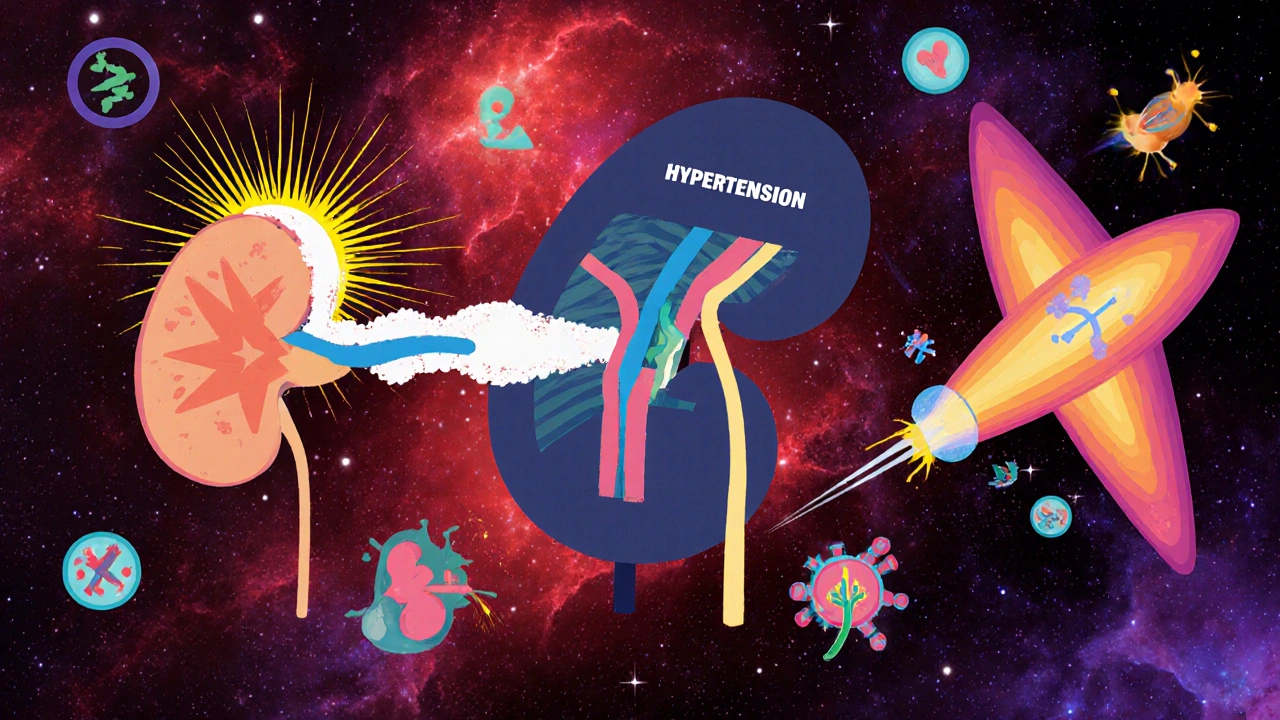
How Fast Do These Conditions Destroy Kidneys?
Not all kidney failure moves at the same speed.
- Diabetic kidney disease: Takes about 8.7 years on average to reach end-stage. Progression is predictable - once you have heavy protein in your urine (macroalbuminuria), you have a 44% chance of kidney failure in 5 years.
- Hypertensive kidney disease: Slower. Around 12.3 years from diagnosis to failure. But it’s often caught late because it has no symptoms.
- Glomerulonephritis: Wildly unpredictable. Some people stay stable for decades. Others crash in 2-3 years. Your risk depends on biopsy results, protein levels, and how fast you act.
That’s why testing matters. If you have diabetes or high blood pressure, you need two simple tests every year: a urine test for albumin (UACR) and a blood test for eGFR. These tell you if your kidneys are leaking or slowing down. Most people never get them.
What Works - And What Doesn’t
Medications have changed the game.
SGLT2 inhibitors (like empagliflozin) were developed for diabetes. Now we know they protect kidneys even in people without diabetes. They reduce kidney failure risk by 32%. Finerenone, a newer drug approved in 2023, cuts risk by 18% in diabetic patients with proteinuria.
For glomerulonephritis, sparsentan - a new dual-action drug - reduced proteinuria by nearly 50% in trials, far better than older options. It’s expected to be approved in 2024.
But drugs alone won’t save you. Diet matters. Too much salt spikes blood pressure. Too much protein strains damaged kidneys. Most patients struggle to stick to the recommended 0.8 grams of protein per kilogram of body weight. And 63% say it’s too hard to follow.
Adherence is the real bottleneck. Half of people stop their blood pressure meds within a year. Why? Side effects, cost, forgetfulness, or just thinking they feel fine. But kidneys don’t feel pain until it’s too late.
What You Can Do Right Now
If you have diabetes or high blood pressure:
- Get a urine test for albumin (UACR) and a blood test for eGFR - every year.
- If your UACR is above 30 mg/g, ask about SGLT2 inhibitors or finerenone.
- Keep blood pressure below 120/80. Use a home monitor. Log it.
- Reduce salt. Avoid processed foods. Cook at home.
- Don’t wait for symptoms. If you’re tired, swollen, or urinating more at night - get checked.
If you’ve been told you have protein in your urine or blood in your urine:
- Don’t brush it off as a ‘fluke’.
- Ask for a nephrologist referral.
- Get a kidney biopsy if recommended - it tells you exactly what’s happening and how to treat it.
There’s no magic pill. But there’s a clear path: early detection, the right meds, and sticking with them. People who act fast often avoid dialysis entirely.
Why This Matters Beyond the Numbers
Behind every statistic is a person. A man in Sydney who skips his meds because he doesn’t feel sick. A woman who ignores blood in her urine, thinking it’s just a UTI. A teenager with type 1 diabetes who thinks dialysis is something that happens to ‘other people’.
Diabetes and hypertension are manageable. Glomerulonephritis is rare - but treatable if caught early. The system isn’t perfect. Many can’t afford tests. Some live where dialysis isn’t available. But for those of us who can access care - we owe it to ourselves to use it.
One patient told me: ‘I thought my kidneys were fine until I passed out on the toilet from fatigue.’ That’s not normal. That’s your body screaming. Don’t wait for the scream to become a cry.
Can kidney failure be reversed?
Once kidney damage reaches end-stage (ESRD), it can’t be reversed. But early damage - especially from diabetes or high blood pressure - can be slowed or even stabilized. Starting SGLT2 inhibitors or ACE inhibitors within months of detecting protein in your urine can prevent progression. The key is catching it before scarring becomes permanent.
Do I need a kidney biopsy if I have protein in my urine?
Not always. If you have diabetes and protein in your urine, your doctor may assume it’s diabetic kidney disease and start treatment without a biopsy. But if you don’t have diabetes, or if your symptoms are unusual (like blood in urine, sudden swelling, or high blood pressure without prior history), a biopsy is often needed. It tells you whether it’s glomerulonephritis, which requires completely different treatment.
Are SGLT2 inhibitors safe for people without diabetes?
Yes. Studies now show SGLT2 inhibitors protect kidneys even in people without diabetes who have chronic kidney disease and proteinuria. The EMPA-KIDNEY trial included patients with eGFR as low as 20 mL/min and showed clear kidney and heart benefits. Side effects like genital yeast infections are manageable. They’re no longer just diabetes drugs - they’re kidney protectors.
How often should I test my kidney function?
If you have diabetes or high blood pressure, get tested every year. That means a simple urine test (UACR) and a blood test (eGFR). If you’ve already been diagnosed with kidney damage, your doctor may want tests every 3-6 months. Waiting longer than a year is risky - damage can advance silently.
Can lifestyle changes alone prevent kidney failure?
Lifestyle helps - but it’s rarely enough on its own. Cutting sugar, salt, and processed food lowers your risk. Losing weight and exercising improve blood pressure and blood sugar. But if you already have kidney damage, you’ll likely need medication too. Drugs like SGLT2 inhibitors, ACE inhibitors, or immunosuppressants are proven to slow progression. Lifestyle is the foundation. Medication is the shield.
What Comes Next
The future of kidney care is personal. New blood and urine biomarkers - like TNF receptor-1 - can predict who’s most likely to fail within five years, even before protein shows up. That means we’ll soon be able to target treatment before damage begins.
But right now, the tools we have work - if you use them. Don’t wait for swelling, fatigue, or nausea. Test early. Treat early. Stick with it. Your kidneys don’t ask for much. Just a little attention, before it’s too late.
Sullivan Lauer
November 30, 2025Man, I never realized how quietly diabetes was wrecking my uncle’s kidneys until he ended up on dialysis. He was checking his sugar, thought he was doing fine - but he didn’t know about the protein in the urine, didn’t get tested for albumin-to-creatinine ratio until it was too late. I swear, if he’d known about SGLT2 inhibitors five years ago, he might’ve avoided the whole mess. These meds aren’t just for blood sugar - they’re kidney armor. My cousin’s on dapagliflozin now, her eGFR’s holding steady, no swelling, no fatigue. It’s wild how much science has shifted. We used to just say ‘control your sugar’ - now we’ve got drugs that actually save organs. Why isn’t this front-page news? Why aren’t doctors pushing this like it’s oxygen?
And don’t get me started on how hypertension sneaks in like a ghost. My dad’s BP was always ‘a little high’ - until his nephrologist showed him the CT scan of his shrunken kidneys. He cried. He said he thought ‘high blood pressure’ meant you got headaches. No. It means your kidneys are slowly getting crushed under the weight of your own circulation. It’s not dramatic - it’s mechanical. And we’re all just walking around like it’s not happening.
Richard Thomas
December 2, 2025The epidemiological data presented is statistically robust, yet the pedagogical framing remains alarmingly reductive. To attribute renal pathology solely to diabetes and hypertension neglects the confounding influence of genetic predisposition, epigenetic modulation, and socioeconomic determinants of care access. The assertion that SGLT2 inhibitors confer a 32% risk reduction is derived from post-hoc analyses of the EMPA-REG OUTCOME and DAPA-CKD trials - both of which excluded patients with eGFR below 30 mL/min/1.73m². Thus, generalizability to advanced CKD populations remains unproven. Furthermore, the conflation of correlation with causation in the hypertension-diabetes synergy metric (3.2 mL/min/year) lacks adjustment for BMI, sodium intake, and medication adherence - critical covariates in renal trajectory modeling. One must interrogate not merely the mechanism, but the methodological validity of the conclusions drawn.
Matthew Higgins
December 3, 2025Been there. My grandma had type 2, high BP, and never said a word about it until she started swelling like a balloon. We thought it was just ‘getting old.’ Turns out, her kidneys were screaming. Now I check my urine with those test strips every few months - cheap as hell on Amazon. If you’re diabetic or hypertensive, don’t wait for symptoms. Get an ACR test. It’s like a smoke alarm for your kidneys. And yeah, those SGLT2 drugs? They’re not magic, but they’re the closest thing we’ve got. My doc put me on empagliflozin last year - no side effects, I feel better, my numbers are stable. Why isn’t everyone on this? It’s not even that expensive. We’re letting people die quietly because we don’t talk about it. Let’s change that.
Sara Shumaker
December 4, 2025It’s strange how we treat kidneys like they’re disposable. We’ll go to the gym, eat kale, meditate - but if we’re diabetic or hypertensive, we assume the kidneys will just ‘handle it.’ They don’t. They’re not a backup system. They’re a fragile, intricate filter that’s been working nonstop since birth. And we don’t thank them. We don’t test them. We don’t protect them - until it’s too late.
What if we started thinking of kidney health like heart health? Routine screenings. Early intervention. Lifestyle as medicine, not just a suggestion. We don’t wait for a heart attack to tell someone to lower their cholesterol. Why do we wait for kidney failure to tell someone to control their blood sugar? It’s not just medical - it’s cultural. We’ve normalized silent organ failure because we’re afraid of the truth: prevention requires daily discipline, not a miracle drug.
Scott Collard
December 5, 2025Diabetes doesn’t cause kidney failure. Poor compliance does.
Steven Howell
December 6, 2025It is imperative to underscore that the progression of diabetic nephropathy follows a well-documented histopathological sequence: hyperfiltration, microalbuminuria, macroalbuminuria, and ultimately, declining glomerular filtration rate. The efficacy of SGLT2 inhibitors is mediated not only through glycemic control but also through intraglomerular pressure reduction via tubuloglomerular feedback modulation. Furthermore, the synergistic effect of hypertension and diabetes on renal outcomes is corroborated by the United Kingdom Prospective Diabetes Study (UKPDS) and the Action to Control Cardiovascular Risk in Diabetes (ACCORD) trial, both of which demonstrate accelerated decline in renal function when blood pressure exceeds 130/80 mmHg in diabetic cohorts. The clinical imperative remains: early, aggressive, and sustained intervention at all stages of disease.
Robert Bashaw
December 7, 2025Imagine your kidneys as a pair of silk socks - delicate, intricate, doing all the heavy lifting while you binge pizza and soda. Now imagine someone stomping on them every day with steel-toed boots labeled ‘high sugar’ and ‘high pressure.’ That’s not medicine. That’s a horror movie. And the worst part? The socks are whispering, ‘I’m fine, I’m fine,’ while they’re unraveling thread by thread. You don’t feel it until they’re just frayed threads on the floor. And then you’re stuck wearing socks made of plastic tubes hooked to a machine. I’m not scared of diabetes. I’m scared of how normal it all feels. We’re not sick. We’re just slowly dying in slow motion - and nobody’s talking about it until the machine beeps.
Brandy Johnson
December 8, 2025These statistics are a direct consequence of America’s moral decay. We’ve replaced discipline with pharmaceutical crutches. People don’t control their diet - they pop pills. They don’t exercise - they blame genetics. This isn’t a medical crisis - it’s a cultural surrender. If you can’t manage your blood sugar or blood pressure, you shouldn’t be allowed to burden the system. The solution isn’t more drugs - it’s personal responsibility. Stop blaming the kidneys. Blame the laziness.