
7 Feb 2026
- 10 Comments
Every year, thousands of people accidentally take expired medication-not because they’re careless, but because they simply didn’t know. A pill bottle tucked in a medicine cabinet, a patch in a drawer, a syringe in an emergency kit: these aren’t just forgotten items. They’re silent risks. And in hospitals, nursing homes, and even ambulances, the consequences can be deadly. The good news? You don’t have to rely on handwritten labels or memory anymore. Technology now makes it possible to track medication expiration dates with near-perfect accuracy-and it’s already changing how healthcare works.
Why Tracking Expiration Dates Matters
Medications don’t suddenly turn toxic on their expiration date. But they do lose potency. A study from the FDA found that some antibiotics and insulin can drop below 90% effectiveness months before their labeled date. In emergency situations, that drop can mean the difference between life and death. In long-term care, expired painkillers or anticoagulants can lead to avoidable hospitalizations. And then there’s the cost: hospitals throw away an estimated $100 million worth of expired drugs each year in the U.S. alone. Technology doesn’t just prevent waste-it saves lives.
RFID: The Game-Changer in Medication Tracking
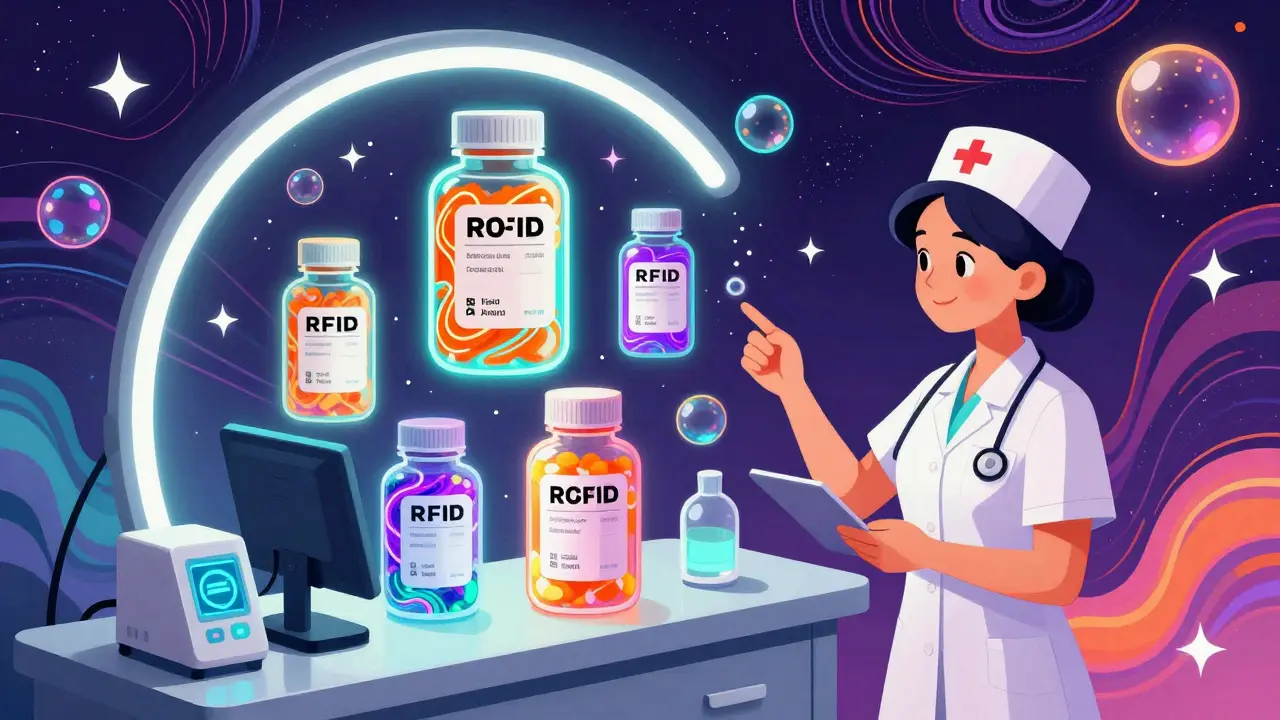
Radio Frequency Identification (RFID) is no longer science fiction. It’s in use at over 900 hospitals across the U.S., including major systems like Texas Children’s Hospital and UF Health Shands. Here’s how it works: each medication package gets a tiny RFID tag-no bigger than a sticker. When you scan a tray, cabinet, or crash cart, a reader picks up all the tags at once. No more manually checking each bottle. No more typos in handwritten logs. The system instantly tells you what’s in stock, where it is, and when it expires.
KitCheck, one of the leading RFID platforms, can scan 100% of medications in under 30 seconds. Compare that to the 45 minutes it used to take for a single nurse to count a full cart. And the accuracy? Manual methods get you about 65-75% correct. RFID? Close to 100%. Hospitals using this system report a 15-20% drop in expired medication waste. That’s not just savings-it’s safety.
Electronic Medication Administration Records (eMAR)
If RFID tracks the physical inventory, eMAR tracks the patient. This isn’t just a digital version of a paper chart. eMAR systems like eVero link directly to pharmacy databases, automatically pulling in expiration dates, lot numbers, and recall alerts. When a nurse goes to give a pill, the system checks the medication’s expiry in real time. If it’s within two days of expiration, the system blocks the dose and flags it for replacement. It doesn’t just warn-you can’t proceed until it’s fixed.
eMAR is especially powerful in settings like intellectual and developmental disability (IDD) agencies, where patients often take multiple medications daily. Staff used to spend hours each week manually verifying expiration dates. Now, that work is automated. One agency in Ohio reported cutting their medication review time by 70% after switching to eVero’s platform. And because it integrates with biometric logins and electronic prescribing, there’s zero room for human error in who gave what, when.
Automated Dispensing Cabinets (ADCs) and Smart Storage
Think of ADCs as smart vending machines for medicine. Used by closed-door pharmacies and hospital units, these cabinets don’t just hold pills-they log every interaction. When a nurse pulls a vial of epinephrine, the system records:
- Who took it
- When they took it
- The lot number
- The expiration date
And if the next dose is due to expire in less than 72 hours? The cabinet won’t let them take another until they’ve replaced it. TouchPoint Medical’s data shows that 85% of pharmacists become fully proficient with ADCs within six weeks. These systems are especially critical in operating rooms and emergency departments, where every second counts. No more guessing whether that adrenaline syringe is still good.
Mobile Solutions for Field Use
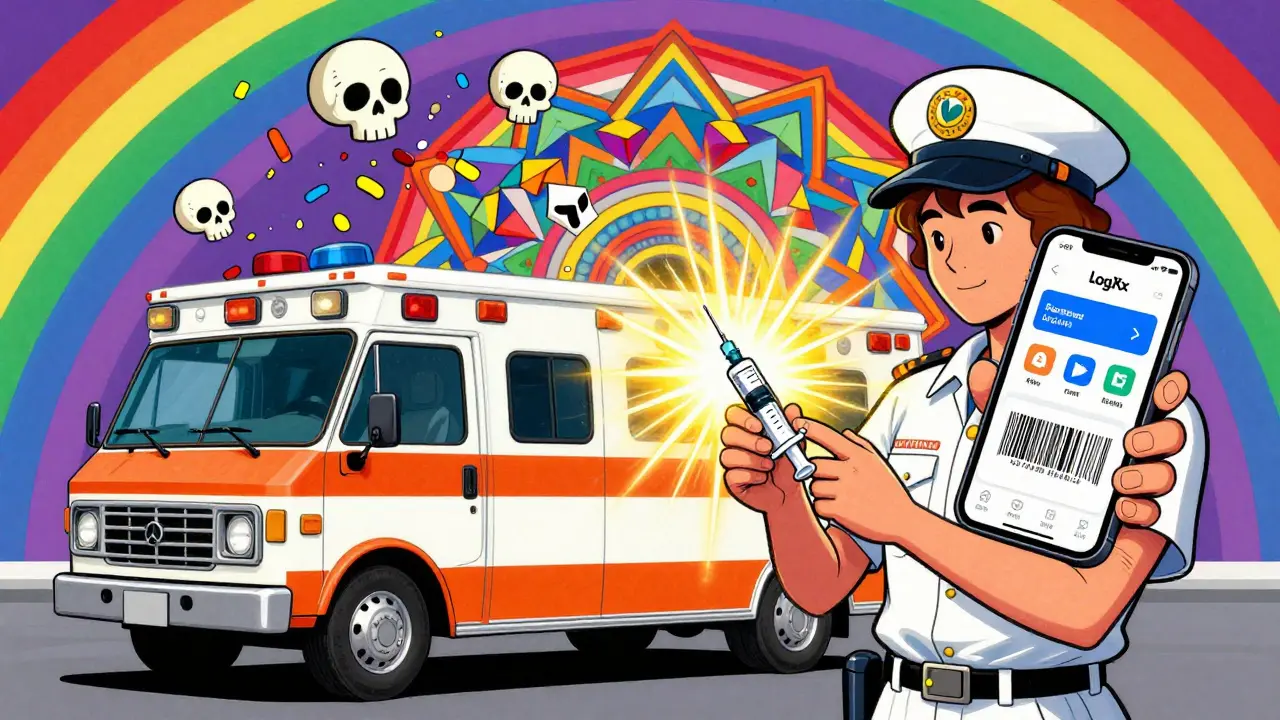
Not every medication tracker needs to be installed in a hospital. For EMS teams, fire departments, and home care providers, mobile apps like LogRx make all the difference. LogRx runs on standard iPhones and Android phones-no extra hardware needed. Paramedics scan barcodes on medications during shifts. The app checks expiration dates, flags expired or recalled items, and even sends automated alerts to the pharmacy for replacement.
Portland Fire & Rescue started using LogRx in 2023. Within months, they cut their DEA compliance audit time in half. “We went from scrambling to find expired meds to knowing exactly what we had-every shift,” said one paramedic. For agencies with limited budgets, this is a game-changer. No $100,000 installations. Just a phone, an app, and a barcode scanner built into the device.
How These Systems Compare
| System Type | Best For | Accuracy | Implementation Cost | Key Advantage | Limitation |
|---|---|---|---|---|---|
| RFID (e.g., KitCheck) | Hospitals, large pharmacies | 99-100% | $50,000-$200,000 | Scans hundreds of items at once | Requires pre-tagging all meds |
| eMAR (e.g., eVero) | Long-term care, IDD agencies | 98% | $20,000-$80,000 | Blocks expired doses at point of care | Needs pharmacy system integration |
| ADCs (e.g., TouchPoint) | ER, ICU, operating rooms | 97% | $30,000-$150,000 | Logs every access automatically | Only works with compatible cabinets |
| Mobile Apps (e.g., LogRx) | EMS, home care, small clinics | 95% | $500-$5,000/year | No hardware needed, uses existing phones | Limited to barcode scanning |
| DrugXafe | Supply chain tracking | 99% | Varies by scale | Tracks from manufacturer to patient | Requires industry-wide adoption |
What You Need to Get Started
Choosing the right system depends on your setting. If you’re running a small clinic, start with a mobile app. If you’re managing a 500-bed hospital, RFID or ADCs make more sense. But no matter the size, here’s what every implementation needs:
- Assessment - Map out where medications are stored, how many types you handle, and how often they’re used.
- Hardware/Software - Pick the system that fits your budget and workflow. Don’t overbuy.
- Tagging - RFID requires every item to be labeled. This takes time. A mid-sized pharmacy might need 60 hours of staff time to tag everything.
- Training - Staff resistance is real. One hospital reported 62% of employees pushed back at first. Don’t skip the hands-on demos.
- Integration - The system must talk to your pharmacy software, EHR, and inventory tools. If it doesn’t, you’ll have data silos-and more errors.
Most full implementations take 8 to 17 weeks. But the payoff? Within six months, most users report saving 75% of the time they used to spend on manual checks.
What’s Next? AI, Blockchain, and the Future
The next wave is even smarter. Intelliguard Health is already testing AI that predicts which meds are most likely to expire soon based on usage patterns. Instead of just reacting, the system will tell you: “Order more of this insulin next week-you’ll run out before the new batch arrives.”
Blockchain is being piloted to track medications from the factory floor to the patient’s hand. If a recall happens, you’ll know instantly which vials are affected-and which patients got them.
And here’s the biggest shift: manufacturers are starting to pre-tag medications before they leave the factory. That means hospitals won’t have to do the tagging themselves. It’s a small change, but it could cut implementation time in half.
Final Thoughts: It’s Not About the Tech. It’s About the Safety.
Technology doesn’t replace good judgment-it enhances it. A nurse still needs to know what they’re giving. But now, the system is there to catch the mistakes before they happen. Whether you’re managing a hospital pharmacy, a fire truck, or a home care kit, the goal is the same: no one should be harmed because a pill was too old to work.
The data is clear. Systems like RFID, eMAR, and mobile apps reduce waste, save time, and prevent errors. The cost of not using them? Far higher than the cost of adopting them. And with 45% of U.S. hospitals expected to use RFID tracking by 2027, this isn’t a luxury anymore. It’s the new standard.
Can I use technology to track expiration dates at home?
Yes. While hospital-grade systems like RFID are designed for large facilities, there are consumer-friendly apps like Medisafe and MyTherapy that let you scan prescription labels and set reminders for expiration dates. They sync with your phone calendar and send alerts before the medication expires. These aren’t as precise as hospital systems, but they’re far better than guessing.
Are expired medications dangerous to take?
Most expired medications aren’t toxic-but they often lose effectiveness. Antibiotics, insulin, epinephrine, and nitroglycerin are especially risky. The FDA says some drugs can degrade into harmful compounds over time, but this is rare. The bigger danger is taking a pill that no longer works. A weakened antibiotic can lead to treatment failure, and a weak EpiPen might not save a life during an allergic reaction.
Do all medications have expiration dates?
By law, manufacturers must assign expiration dates to prescription and over-the-counter drugs. These dates are based on stability testing under controlled conditions. Some drugs, like certain antibiotics and insulin, are more sensitive and expire faster. Others, like aspirin or antihistamines, may remain effective for years beyond the printed date-but you can’t rely on that. Always follow the label.
How do hospitals decide which system to use?
They look at three things: volume, budget, and risk. High-volume, high-risk areas like operating rooms and ICUs use RFID or ADCs. Smaller units or pharmacies with limited IT budgets use eMAR or mobile apps. The goal is to match the tech to the need-not the other way around. A small clinic doesn’t need a $150,000 RFID system. But a trauma center can’t afford to risk missing an expired EpiPen.
Is this technology only for hospitals?
No. EMS teams, hospice providers, home health agencies, and even pharmacies serving rural communities use these tools. LogRx, for example, is used by fire departments in Australia, Canada, and the UK. The technology is scalable. What matters is whether the system fits the workflow-not the size of the building.
What happens if a system fails?
Every reputable system has a backup. RFID systems often include manual override modes. eMAR platforms allow staff to proceed with a documented override reason. Mobile apps sync data to the cloud, so even if a phone dies, the info is saved. Most hospitals also keep a printed log as a final failsafe. Technology reduces risk-but doesn’t eliminate the need for human oversight.
Andy Cortez
February 9, 2026Look i get it tech is cool but yall act like these systems are magic. i worked in a hospital for 5 yrs and half the time the RFID scanners were down or gave false positives. nurses were still manually checking meds because the system lied. and dont even get me started on the $200k price tag. for what? so we can spend 3 hours fixing glitches instead of helping patients? this is snake oil with a barcode.
Jacob den Hollander
February 10, 2026I just want to say… thank you. Seriously. As someone who’s watched a loved one nearly overdose because a patch was expired and no one caught it, this article hit deep. The part about eMAR blocking doses? That’s not just tech-that’s compassion built into code. I know it’s not perfect, but systems like this are the quiet heroes no one talks about. You did good.
John Sonnenberg
February 11, 2026RFID? eMAR? ADCs? All this overcomplicated nonsense. The real solution is simple: label everything in bold red ink. Put a sticky note on every bottle. Train staff to check. That’s it. No $100k systems. No IT headaches. Just common sense. We used to do it right before we turned healthcare into a tech demo.
glenn mendoza
February 11, 2026It is with profound respect and unwavering commitment to patient safety that I acknowledge the transformative potential of these technological advancements. The integration of RFID, eMAR, and automated dispensing systems represents not merely an operational upgrade, but a moral imperative. The reduction in human error, the preservation of therapeutic efficacy, and the mitigation of financial waste are not incidental-they are foundational to the ethical practice of medicine. One must approach implementation with diligence, humility, and rigorous oversight.
John Watts
February 13, 2026Let’s be real-this isn’t about gadgets. It’s about not letting someone die because we were too busy or too lazy to check a date. I’ve been on EMS for 12 years. I’ve seen EpiPens that were 18 months expired get used because ‘it’s better than nothing.’ It’s not. These tools? They’re not optional anymore. They’re the difference between ‘we tried’ and ‘we saved.’ Start small. Use LogRx on your phone. Scan one box. See what happens. You’ll be hooked.
Randy Harkins
February 13, 2026This is incredible. 🙌 I love how every solution is tailored-no one-size-fits-all. Mobile apps for EMS, RFID for hospitals, eMAR for long-term care. It’s like building the right tool for the right job. And the fact that manufacturers are starting to pre-tag meds? That’s the future we need. I’m so proud of how far we’ve come. Keep pushing forward-this matters.
Tori Thenazi
February 15, 2026Wait… so you’re telling me the government and Big Pharma are secretly using this tech to track us? RFID tags… embedded in pills… syncing with your phone… isn’t this just the first step before they start controlling your meds? I read a guy on a forum who said the FDA’s real goal is to make sure you only take what they approve. And what about the $100M they ‘save’? Where does that money go? Hmm? Hmm?!
Angie Datuin
February 16, 2026Interesting read. I work in a small clinic and we use Medisafe. It’s not perfect, but it’s helped us cut down on expired meds by about 40%. Still, staff forget to scan sometimes. Maybe a reminder system inside the app would help?
Karianne Jackson
February 17, 2026My grandma took expired pills once. She got sick. We didn’t know. This should be mandatory. Like seatbelts. Everyone. No excuses.
Tom Forwood
February 17, 2026Man, I work in a VA clinic. We use LogRx and it’s been a game-changer. No more panic before audits. No more guessing if that insulin is still good. One thing though-some of the older vets don’t trust the app. So we print out a weekly list and hang it up. Tech helps, but people still need to feel it. Keep it simple. Keep it human.