
16 Feb 2026
- 11 Comments
Most people check the expiration date on their medicine bottle and toss it out the moment that date passes. But what if that date isn’t the whole story? You might be throwing away perfectly good medication - and spending money unnecessarily - because you don’t know how to store it right. The truth is, medication doesn’t suddenly turn useless on its expiration date. In fact, under the right conditions, many drugs stay safe and effective for years beyond that label.
Why Expiration Dates Aren’t the Whole Story
Expiration dates aren’t magic deadlines. They’re more like manufacturer guidelines based on testing under ideal conditions. The U.S. Food and Drug Administration (FDA) and the Department of Defense have been running the Shelf-Life Extension Program (SLEP) since 1986. They’ve tested over 3,000 lots of drugs from military stockpiles. The results? 88% of those medications were still stable and effective years after their labeled expiration dates. Some, like naloxone and fentanyl, showed no loss of potency even after five extra years. This isn’t just about stockpiles. It’s about real-world storage. If your medicine is kept in a cool, dry, dark place - away from heat, moisture, and sunlight - it’s far more likely to last. Many people store pills in the bathroom medicine cabinet, where steam from showers and fluctuating temperatures degrade them faster. That’s why your aspirin might lose its punch long before the date on the bottle.What Storage Conditions Actually Matter
Not all medications need the same care. The key factors are temperature, humidity, light, and packaging.- Temperature: Most solid pills - tablets and capsules - are stable at room temperature (15-25°C). But some, like insulin or certain antibiotics, need refrigeration (2-8°C). Never freeze them unless the label says so. Freezing can break down the structure of some drugs.
- Humidity: Moisture is one of the biggest enemies. If your medicine bottle feels damp or the pills stick together, they’ve been exposed to too much humidity. Keep them in a dry place, like a bedroom drawer or kitchen cabinet away from the sink or stove.
- Light: Some medications, like nitroglycerin or tetracycline, break down when exposed to sunlight. That’s why they come in dark amber bottles. If yours doesn’t, store it in an opaque container or inside a closed cabinet.
- Original packaging: Keep pills in their original blister packs or bottles. Those containers are designed to protect against air, moisture, and contamination. Don’t transfer them to pill organizers unless you’re using them for daily doses and plan to refill them weekly.
Which Medications Last Longer - and Which Don’t
Some drugs hold up incredibly well. Solid oral forms - like ibuprofen, amoxicillin, or metformin - tend to remain stable for years if stored properly. Studies show that even after 10 years, many retain over 90% of their original potency. But not all medicines are built the same. Liquid forms, eye drops, and reconstituted antibiotics are much more fragile. Once you mix a powder with water, the clock starts ticking fast. Most reconstituted suspensions last only 7-14 days in the fridge. After that, bacteria can grow, and potency drops sharply. Insulin is another tricky one. Even if it’s within its expiration date, if it’s been left out of the fridge too long, it can lose effectiveness. If your insulin looks cloudy or has particles in it, don’t use it - even if the date hasn’t passed. And then there’s tetracycline. Older studies found that degraded tetracycline can become toxic to the kidneys. While modern formulations are safer, experts still advise against using any tetracycline past its expiration date. The risk isn’t worth it.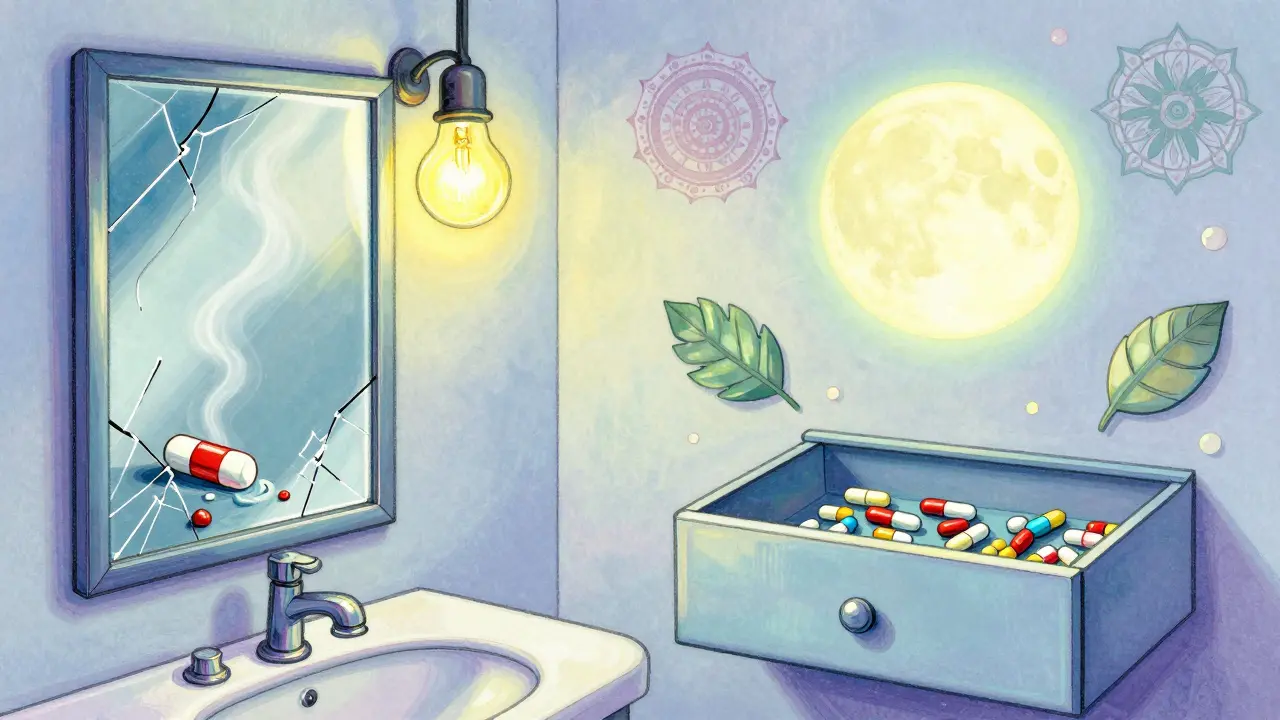
What Happens When You Store Medicine Wrong?
Storing medicine in a hot car, a humid bathroom, or near a window can cause real harm. Heat and moisture can change the chemical structure of a drug. This doesn’t always make it dangerous - but it can make it less effective. If you take an expired asthma inhaler that’s lost potency, it might not open your airways when you need it most. Temperature excursions during shipping are a major issue. A 2021 WHO report found that 23% of medication storage failures happened during the final leg of delivery - from the pharmacy to your home. That’s why some pharmacies now use insulated packaging with cold packs for temperature-sensitive drugs. If your insulin arrives warm, call the pharmacy. Don’t use it.How to Check If Your Medicine Is Still Good
Before you take anything past its expiration date, look for signs of degradation:- Change in color - pills turning yellow or brown
- Unusual smell - a strong, sour, or chemical odor
- Change in texture - tablets crumbling, capsules sticking together
- Cloudiness or floating particles in liquids
What’s Changing in the Industry
Pharmaceutical companies are starting to move away from fixed expiration dates. More than two-thirds of the top 50 drugmakers now use real-time stability monitoring. That means they track how each batch performs under different conditions and adjust shelf life accordingly. Packaging is also getting smarter. New containers have built-in time-temperature indicators. If your medicine was exposed to too much heat during transit, the label changes color. This helps pharmacists and patients make smarter decisions. In Australia, the Therapeutic Goods Administration (TGA) follows similar standards to the FDA. While they don’t officially endorse using expired drugs, they recognize that proper storage can extend stability. Many hospitals here now use centralized cold storage systems to keep emergency meds ready for years.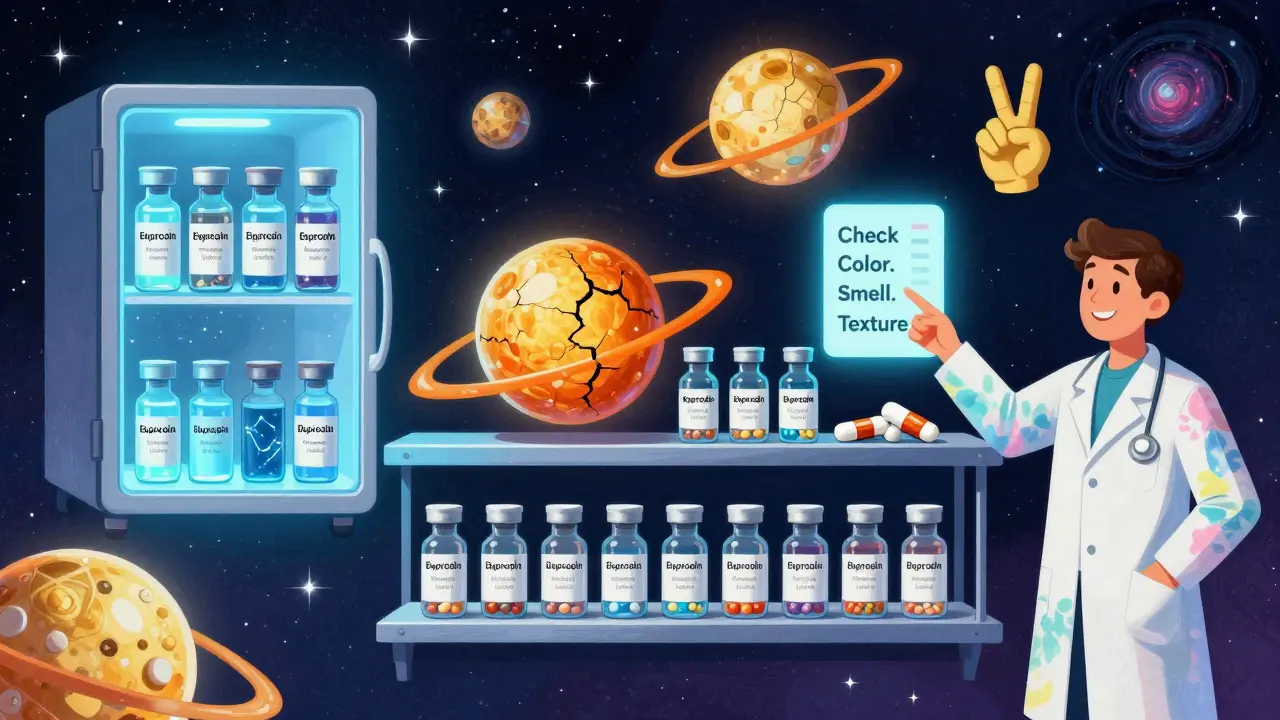
What You Can Do Right Now
Here’s a simple checklist to keep your meds safe and effective:- Keep all medications in a cool, dry place - not the bathroom.
- Use original containers. Don’t mix pills into random containers.
- Check for signs of damage: color, smell, texture.
- Store insulin and other refrigerated drugs in the fridge - not the door, where temperatures fluctuate.
- Keep medicines out of reach of kids and pets.
- Dispose of expired or damaged meds properly. Don’t flush them. Take them to a pharmacy drop-off point.
What About Emergency Situations?
In a disaster - power outage, natural disaster, or supply shortage - using an expired medication might be your only option. The FDA has stated that in emergencies, many expired drugs can still be used safely if they’ve been stored properly and show no signs of damage. For example, during Hurricane Katrina, the government distributed expired Tamiflu from stockpiles. Studies later confirmed that the drugs were still effective. The same goes for epinephrine, antibiotics, and painkillers in crisis scenarios. But here’s the catch: this only applies if you have no other choice. Never plan to rely on expired meds. Always try to replace them before they expire. But if you’re stuck, and the drug looks and smells normal - it’s likely safe to use.Final Thoughts
Expiration dates are useful, but they’re not gospel. Proper storage matters more than the printed date. If you store your medications right, you can save money, reduce waste, and ensure you have what you need when you need it. The science is clear: most pills last longer than we think. But that only holds true if you treat them with care. Keep them cool, dry, and dark. Check them before you use them. And don’t be afraid to ask your pharmacist - they’re trained to know what’s safe and what’s not.Can I still use medication after its expiration date?
Yes, many medications remain safe and effective well past their expiration date - especially solid oral forms like tablets and capsules - if they’ve been stored properly in a cool, dry, dark place. Studies show that 88% of drugs tested in government stockpiles retained potency for years beyond their labeled date. However, liquid medications, reconstituted antibiotics, insulin, and eye drops are more sensitive and should not be used past their expiration. Always check for signs of degradation like discoloration, unusual odor, or changed texture.
Where is the best place to store medications at home?
The best place is a cool, dry, dark cabinet - like one in a bedroom or kitchen away from heat sources and humidity. Avoid bathrooms, windowsills, and cars. Temperature swings and moisture from showers or steam can break down the active ingredients. For refrigerated drugs like insulin, store them in the main compartment of the fridge, not the door, where temperatures fluctuate.
Which medications are most likely to degrade quickly?
Liquid medications, reconstituted antibiotics, eye drops, insulin, and nitroglycerin degrade faster than solid pills. Once opened, most liquid antibiotics last only 7-14 days in the fridge. Eye drops typically expire 28 days after opening due to bacterial risk. Insulin loses potency if exposed to heat or left unrefrigerated too long. Tetracycline can break down into harmful compounds - never use it past its expiration.
Is it safe to use expired epinephrine or asthma inhalers?
If you have no other option during an emergency, using an expired epinephrine auto-injector or asthma inhaler is better than not using it at all. Studies show that even years past expiration, these devices often retain significant potency - especially if stored properly. But don’t rely on them long-term. Replace them before they expire. In non-emergency situations, always use current, unexpired medication for maximum safety and effectiveness.
Do pharmacies offer services to check if my meds are still good?
Many pharmacies in Australia and other countries offer medication review services where pharmacists can check expiration dates, storage conditions, and signs of degradation. Some even provide free disposal of expired drugs. Ask your local pharmacist - they can help you decide what to keep and what to discard. This is especially useful for seniors managing multiple medications.
Can I extend the shelf life of my medication with special packaging?
Yes, advanced packaging like moisture-barrier blister packs, amber glass bottles, and vacuum-sealed containers can significantly extend shelf life by protecting drugs from air, light, and humidity. Some newer packaging even has built-in temperature indicators that change color if the drug was exposed to unsafe heat. While you can’t easily replicate this at home, keeping medications in their original packaging - and avoiding transfer to plastic bags or pill boxes for long-term storage - gives you the best protection.
Philip Blankenship
February 16, 2026Man, I never thought about how much bathroom steam ruins my pills. I’ve been storing my ibuprofen next to the shower since college. No wonder sometimes it feels like I’m taking placebo pills. I just moved everything to a drawer in my bedroom - way drier, way cooler. My headaches are way more predictable now. Honestly, this post should be mandatory reading for every adult who owns a medicine cabinet.
Geoff Forbes
February 17, 2026So you’re telling me the FDA’s 88% statistic is somehow more valid than the manufacturer’s expiration date? Please. That’s a military stockpile study under controlled conditions - not your attic in Texas during July. And you’re suggesting people just *guess* whether their pills are still good? That’s not science - that’s Russian roulette with your health. If it’s expired, it’s trash. Period. No exceptions. I’m not risking kidney failure because I wanted to save $12.
Jonathan Ruth
February 18, 2026Look I get it you wanna save money but dont be dumb. I work in pharma logistics. I’ve seen meds get shipped in unrefrigerated trucks for 72 hours in Arizona. They still work. But that’s because the active ingredients are stable. The packaging matters more than the date. If it looks like a dried-up raisin or smells like old socks toss it. No one’s saying to keep expired insulin in your sock drawer. But amoxicillin? Yeah it lasts. I’ve got bottles from 2018 still good. No joke.
Linda Franchock
February 19, 2026Oh honey I love how you’re all suddenly experts on drug chemistry. I’m a nurse. I’ve seen people take expired epinephrine during anaphylaxis. Guess what? It saved lives. The FDA says so. The WHO says so. But you? You’d rather pay $400 for a new EpiPen than risk a *maybe* working one. Meanwhile your kid’s asthma inhaler from 2020 is in the medicine cabinet collecting dust. Wake up. Storage matters. Common sense matters. Fear doesn’t.
Kancharla Pavan
February 21, 2026You people are dangerously naive. The pharmaceutical industry doesn’t care about your savings. They profit from you throwing away perfectly good drugs. The FDA’s SLEP program was buried because it threatened billions in revenue. Why do you think they push expiration dates so hard? Because if you knew your 10-year-old metformin still worked, you’d stop buying new bottles. This isn’t about safety - it’s about corporate greed. And now you’re all here, nodding along like good little consumers. Shameful.
Oliver Calvert
February 22, 2026Key point missed here - temperature fluctuation is worse than heat alone. A fridge door is worse than room temp because it cycles. I keep all my meds in a sealed container in the back of the fridge. Even my aspirin. The humidity in my house is 60% in summer. That’s enough to degrade coatings over time. Also - never store in plastic bags. Even if it’s in the original bottle. Air exposure over months kills stability. Use silica packs if you can. They’re cheap.
PRITAM BIJAPUR
February 23, 2026Isn’t it beautiful how we’ve turned medicine into a transaction? We treat our health like a commodity - buy, use, discard, repeat. But the body doesn’t work like Amazon’s inventory system. A pill isn’t a product - it’s a bridge between chemistry and biology. When we store it right - cool, dry, dark - we honor that bridge. And when we toss it because of a date stamped by a corporation? We forget that healing isn’t about consumption. It’s about care. 🌿🩺✨
James Lloyd
February 23, 2026Just had a pharmacist tell me this last week - they keep a log of meds that get returned because they look off. Color, smell, texture - 90% of the time, if it looks wrong, it is. I used to keep my nitroglycerin in my wallet. Yeah. Bad idea. Now it’s in its original bottle, tucked into a metal tin inside a drawer. No light. No moisture. No drama. I’ve got two bottles from 2019. Still fine. No expiration date is a license to ignore common sense.
Prateek Nalwaya
February 24, 2026Back home in Kerala, we’ve always stored medicines in copper jars - cool, naturally antimicrobial, and keeps things dry. My grandmother swore by it. Turns out, copper ions inhibit microbial growth and stabilize some compounds. Maybe we’re not so far behind after all. Modern packaging is fancy, but ancient wisdom had its own logic. I’ve been using the same jar for my multivitamins for five years. Still potent. No expiry date needed, just a good jar and a quiet shelf.
Tony Shuman
February 25, 2026Oh so now we’re all supposed to be amateur pharmacists? The government tests drugs in climate-controlled vaults. You’re storing yours in a humid apartment with a cat that knocks over bottles. You think your 2018 amoxicillin is still good? What if it’s degraded into something toxic? What if your kid finds it? What if you’re allergic to the breakdown products? You’re not saving money - you’re gambling with your life. And then you wonder why healthcare costs are so high. Because people like you are too lazy to replace a $12 bottle.
Logan Hawker
February 27, 2026Look - I get it. You’re trying to be a hero. You’re trying to save the world. But let’s be real: the only reason this post exists is because Big Pharma is quietly lobbying for longer shelf-life labels to reduce regulatory burden. And now you’re all here, high-fiving each other like you’ve cracked some secret code. Let me break it to you - your 2019 Zpack? It’s not ‘still good’. It’s just not *immediately* dangerous. But it’s also not 100% effective. And in a world where antibiotic resistance is already a ticking time bomb, you think you’re doing the right thing? You’re not. You’re part of the problem.