
4 Feb 2026
- 9 Comments
Isoniazid Hepatotoxicity Risk Calculator
This tool estimates your individual risk of liver damage while taking isoniazid for tuberculosis treatment. Based on current medical guidelines, we'll calculate your risk level and provide personalized recommendations for monitoring and safety.
How This Works
Based on the World Health Organization guidelines and recent studies, your risk assessment considers:
- Genetic factors (NAT2 acetylator status)
- Medication interactions
- Alcohol consumption
- Age and pre-existing conditions
Isoniazid is a first-line medication used to treat tuberculosis (TB). Developed in the early 1950s, it remains a cornerstone of TB therapy worldwide. However, this drug can cause serious liver damage, especially when combined with other medications. Understanding these interactions is crucial for safe treatment.
Understanding Isoniazid and Its Role in TB Treatment
Isoniazid is a key part of standard TB treatment protocols. The World Health Organization (WHO) includes it in all first-line regimens for both active TB and latent TB infection (LTBI). For active TB, it's typically used with rifampin, pyrazinamide, and ethambutol for two months, followed by isoniazid and rifampin for four more months. In latent TB, isoniazid alone is given for six to nine months. This drug works by stopping the bacteria that cause TB from building their cell walls. Without this, the bacteria can't survive. It's effective and affordable, especially in low-income countries where it costs just pennies per dose. However, its use requires careful monitoring due to potential liver issues.
How Isoniazid Causes Liver Damage
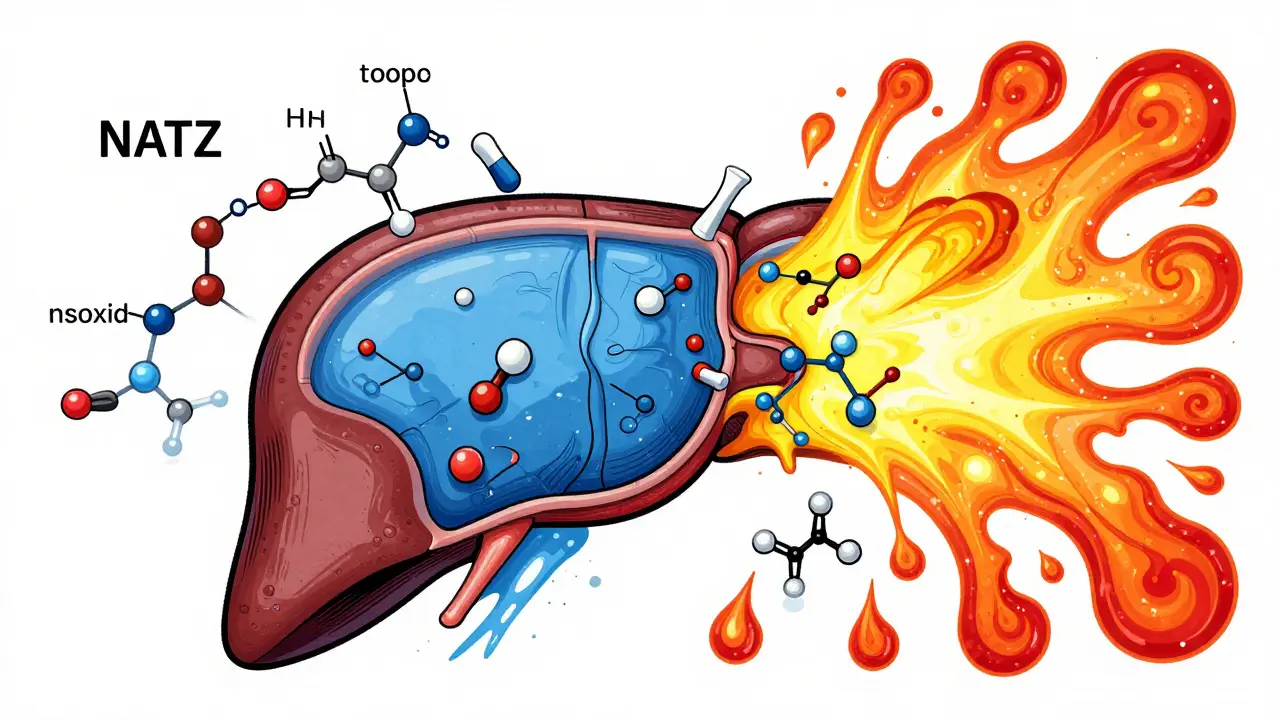
Isoniazid itself isn't toxic. The problem comes from how the body processes it. Once absorbed, the liver breaks it down using enzymes. The main enzyme involved is NAT2 (N-acetyltransferase 2), which converts isoniazid into acetyl isoniazid. This then breaks down further into reactive compounds like hydrazine and acetyl hydrazine. These compounds bind to liver proteins and cause oxidative stress. They also interfere with mitochondria, the energy factories inside liver cells. This damage can lead to cell death and inflammation. A 2016 study by Cojutti et al. in the Journal of Antimicrobial Chemotherapy looked at 85 TB patients. They found that slow acetylators-those with genetic variations that slow down NAT2 activity-accounted for 96% of hepatotoxicity cases. Slow acetylators have higher levels of isoniazid in their blood, increasing the chance of toxic metabolites forming.
Key Drug Interactions That Increase Hepatotoxicity Risk
Combining isoniazid with other drugs can dramatically increase liver damage risk. Rifampin is a common partner in TB treatment. It speeds up the metabolism of isoniazid by activating CYP3A4 and CYP2E1 enzymes. This creates more toxic metabolites like acetyl hydrazine. The American Thoracic Society (ATS) states that combination therapy raises hepatotoxicity risk to 5-15%, compared to 2-5% with isoniazid alone. Pyrazinamide also contributes. The CDC reports that the standard HRZE regimen (isoniazid, rifampin, pyrazinamide, ethambutol) has a 10-20% hepatotoxicity rate, while the shorter HR regimen (without pyrazinamide) is 5-10%. Even non-TB drugs can interact. Isoniazid inhibits CYP2E and CYP2C enzymes, which can raise levels of medications like phenytoin and carbamazepine. This increases the risk of liver damage from those drugs too. For example, patients on isoniazid and phenytoin may see phenytoin levels spike by 55-57%, according to ATS guidelines.
Who Is at Highest Risk for Isoniazid Liver Damage?
Not everyone on isoniazid faces the same liver risks. Genetics play a major role. About 40-70% of Europeans and North Americans are slow acetylators, but this jumps to 86.8% in South Africans. Slow acetylators have higher isoniazid exposure and more toxic metabolites. Other risk factors include alcohol use-more than 14 drinks per week for men or 7 for women. Pre-existing liver disease also matters. If your ALT levels are already more than 3 times the upper limit of normal before starting treatment, your risk skyrockets. Older adults and those with malnutrition or diabetes are also more vulnerable. In the Cojutti study, 70% of hepatotoxicity cases occurred in patients with at least one risk factor. Even with no symptoms, regular liver tests are essential for these high-risk groups.
Monitoring and Managing Isoniazid-Induced Liver Injury
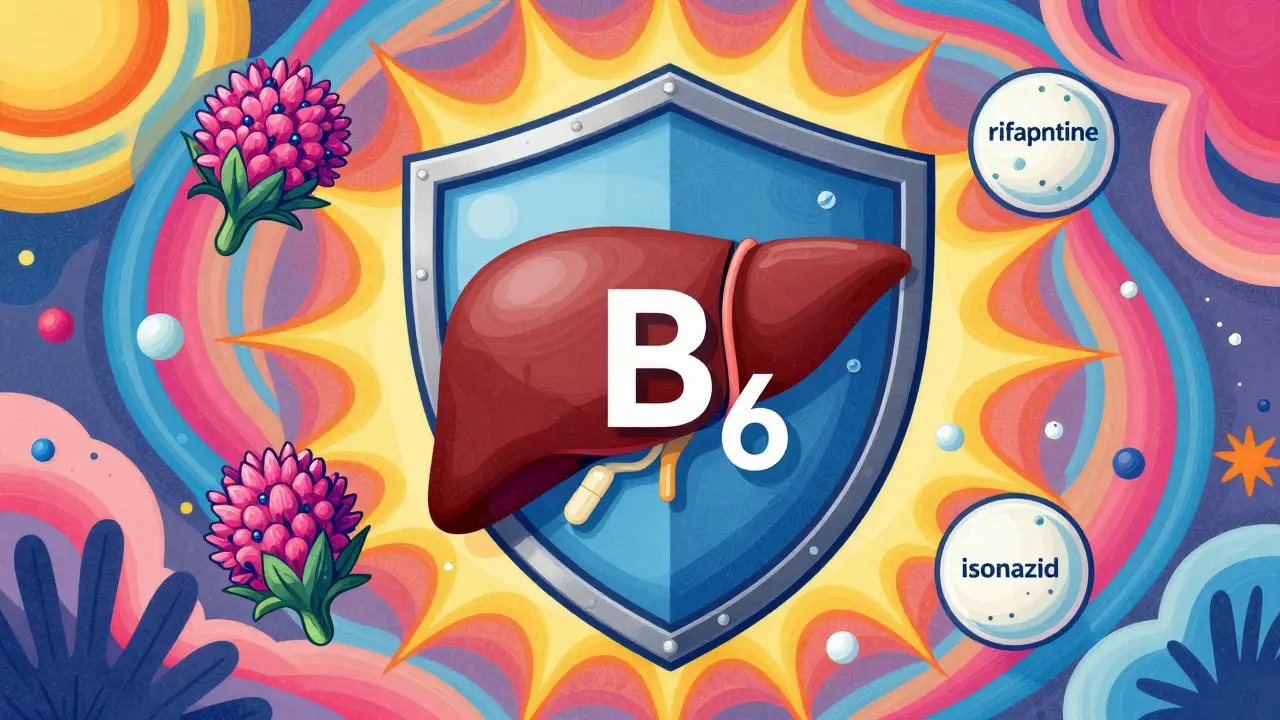
Early detection is key to preventing serious liver damage. The CDC recommends baseline liver function tests (LFTs) before starting isoniazid. For asymptomatic patients, monthly LFTs during treatment are standard. If you experience nausea, vomiting, abdominal pain, or yellowing of the skin, get tested immediately. Doctors follow specific guidelines for when to stop treatment. If ALT levels exceed 5 times the upper limit of normal with symptoms, or 8 times without symptoms, isoniazid should be discontinued. Most patients recover fully within 4-8 weeks after stopping. To prevent peripheral neuropathy-a common side effect affecting 10-20% of users-pyridoxine (vitamin B6) at 25-50 mg daily is recommended. This is especially important for slow acetylators, alcohol users, and those with diabetes or kidney disease. Regular check-ins with your healthcare provider ensure any issues are caught early.
Recent Advances in TB Treatment to Reduce Liver Risks
New TB treatment regimens are emerging to minimize hepatotoxicity. The WHO's 2022 guidelines introduced a 4-month rifapentine-moxifloxacin regimen for drug-susceptible TB. This reduces isoniazid exposure from 6-9 months to just 4 months, potentially lowering liver damage risk by 30-40%. For drug-resistant TB, the TB Alliance's BPaLM regimen (bedaquiline, pretomanid, linezolid, moxifloxacin) eliminates isoniazid entirely. Early trials show this approach is safer for the liver. Researchers are also exploring protective agents like silymarin (milk thistle extract). A 2021 Chinese study found silymarin reduced hepatotoxicity incidence by 27% in patients on isoniazid therapy. While these innovations are promising, isoniazid remains essential in many settings due to cost. Generic isoniazid costs $0.03 per dose in low-income countries, making it indispensable despite its risks.
Frequently Asked Questions
Can Isoniazid Cause Liver Damage Even at Low Doses?
Yes, even low doses of isoniazid can cause liver damage. The American Thoracic Society notes that up to 20% of people taking isoniazid for latent TB infection experience mild transaminase elevation. However, most of these cases are temporary and don't progress to serious injury. The risk increases significantly with higher doses or when combined with other hepatotoxic drugs like rifampin. Regular monitoring is essential regardless of dose.
What Should I Do If I Experience Symptoms of Liver Damage?
If you notice symptoms like nausea, vomiting, abdominal pain, yellowing of the skin or eyes, dark urine, or unusual fatigue, contact your healthcare provider immediately. Do not stop taking isoniazid without medical advice. Your doctor will likely order liver function tests. If ALT levels are elevated beyond specific thresholds (5x ULN with symptoms or 8x without), treatment may be discontinued. Most patients recover fully after stopping the drug, but early intervention is critical to prevent severe damage.
How Does NAT2 Genetic Variation Affect Isoniazid Toxicity?
NAT2 gene variations determine how quickly your body processes isoniazid. Slow acetylators-people with certain NAT2 variants-break down isoniazid more slowly, leading to higher drug levels and more toxic metabolites. Studies show slow acetylators have a 2.6-3.7 times higher risk of hepatotoxicity compared to fast acetylators. In the Cojutti study, 76.4% of participants were slow acetylators, and they accounted for 96% of liver injury cases. Genetic testing for NAT2 can help identify high-risk patients, though it's not yet standard practice everywhere.
Are There Alternatives to Isoniazid for TB Treatment?
Yes, newer regimens are reducing reliance on isoniazid. For drug-susceptible TB, the WHO recommends a 4-month regimen using rifapentine and moxifloxacin instead of isoniazid and pyrazinamide. For drug-resistant TB, the BPaLM regimen (bedaquiline, pretomanid, linezolid, moxifloxacin) eliminates isoniazid entirely. These alternatives lower hepatotoxicity risk but may not be available everywhere due to cost or regulatory approval. In resource-limited settings, isoniazid remains essential because of its low cost and proven efficacy.
Why Is Pyridoxine Recommended with Isoniazid?
Pyridoxine (vitamin B6) prevents peripheral neuropathy, a common side effect of isoniazid. Isoniazid interferes with vitamin B6 metabolism, leading to nerve damage. Taking 25-50 mg of pyridoxine daily counteracts this. It's especially important for high-risk groups like slow acetylators, alcohol users, diabetics, and those with kidney disease. Most healthcare providers prescribe pyridoxine routinely alongside isoniazid to avoid this complication.
Pamela Power
February 6, 2026Isoniazid's hepatotoxicity risks are being grossly understated.
Doctors ignore NAT2 genetic testing, leading to slow acetylators getting destroyed.
The Cojutti study shows 96% of liver damage cases are slow acetylators, yet they don't screen.
This is negligent.
I've seen patients with no warning signs crash into liver failure.
It's a systemic failure.
The FDA and WHO are in cahoots with Big Pharma to keep costs down.
They don't care about patient safety.
Every single TB patient should get a genetic test before starting treatment.
But instead, they just say 'monitor liver function' and hope for the best.
That's not monitoring, that's gambling with people's lives.
It's like they want people to get sick so they can sell more liver meds.
This has to stop.
The medical community is failing us.
We need real change, not just lip service.
The WHO's guidelines are outdated and ignore the latest research.
They need to update protocols to include mandatory NAT2 testing.
Until then, thousands will continue to suffer needlessly.
This is a travesty of medical ethics.
Andre Shaw
February 7, 2026Wait, this is oversimplified. WHO guidelines mandate baseline and monthly LFTs, which catches most issues early. The Cojutti study's 96% figure is accurate, but with proper monitoring, it's manageable. People who skip checkups are at risk, not the drug itself. I've seen patients do fine with regular tests. Stop exaggerating.
Carol Woulfe
February 8, 2026This is clearly a coordinated effort by pharmaceutical companies to maintain profits. They suppress data on NAT2 testing because it would increase costs. The WHO guidelines are complicit in this cover-up. It's all about money, not health. Wake up people.
Lisa Scott
February 8, 2026Andre's 'manageable' is a dangerous oversimplification. CDC's monitoring protocols are woefully inadequate for low-income populations. Hepatotoxicity risk is not just 'caught early'-many cases progress silently. The data shows 30% of cases are asymptomatic until severe. This is institutional negligence.
Joyce cuypers
February 9, 2026Hi Carol, I think you're right about big pharma but maybe the issue is more complex. The NAT2 testing is availible but not always covered by insurance. Also, the WHO is working on better regimens. Maybe we should push for better coverage instead of just blaming. I'm a nurse and see this daily. Typos are my fault 😅
Kieran Griffiths
February 9, 2026I've been treating TB patients for years, and while isoniazid does have risks, the benefits outweigh them when monitored properly. The key is regular LFTs and pyridoxine for neuropathy. It's not perfect, but it's still the best option for most. We need better access to testing, not to stop using it.
Samantha Beye
February 9, 2026Kieran's right. Regular monitoring makes a huge difference. I've seen patients do well with just pyridoxine and check-ups. It's about working with the patient, not just the drug. Small changes can prevent big problems.
Kate Gile
February 11, 2026This is such an important topic. I'm glad we're discussing it. The new 4-month regimens are promising, but access is still an issue. Let's focus on making treatment safer for everyone. Collaboration is key.
anjar maike
February 12, 2026This is huge 🤯