
31 Dec 2025
- 12 Comments
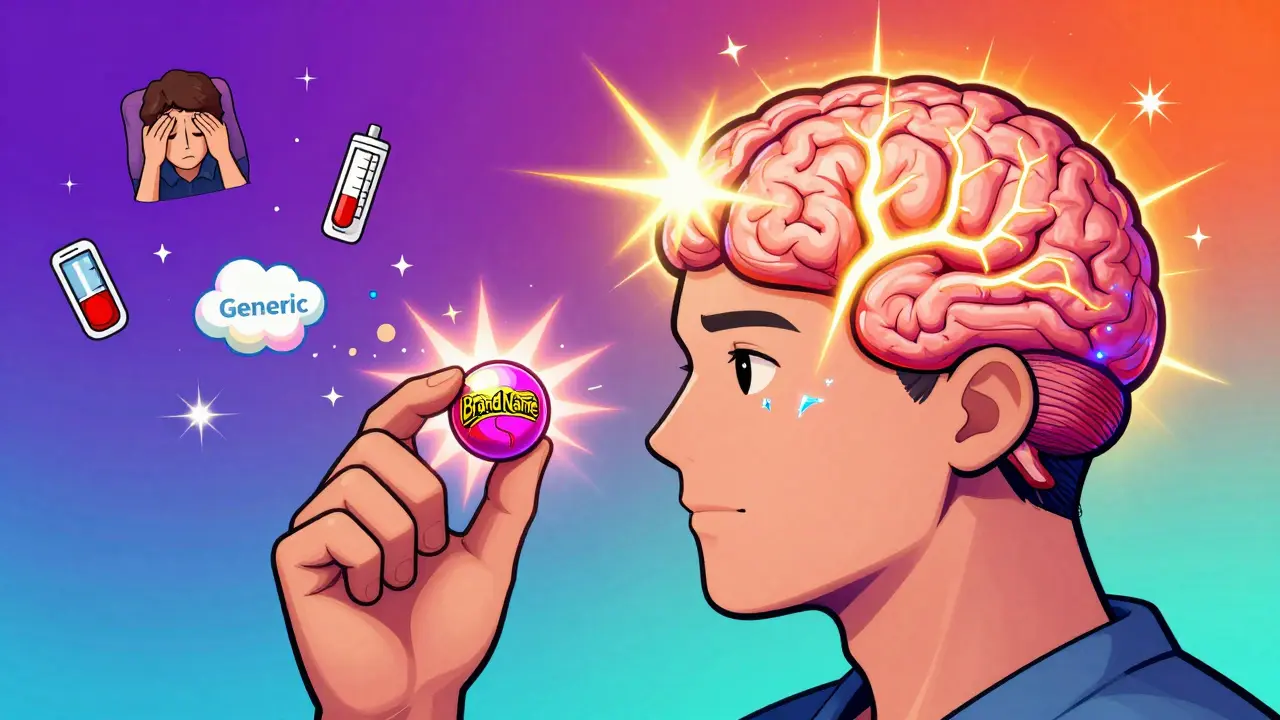
Switching from a brand-name drug to a generic feels like a smart move-cheaper, same active ingredient, approved by the FDA. But for many people, it doesn’t feel the same. You might notice your headaches aren’t gone as fast, your blood pressure seems higher, or your anxiety creeps back in. It’s not all in your head-but your head plays a bigger role than you think.
Why a Generic Might Feel Less Effective
Let’s be clear: generics are chemically identical to their brand-name counterparts. The FDA requires them to deliver the same amount of active ingredient into your bloodstream within the same time frame. That’s not a guess-it’s a strict, tested standard. So why do so many people report feeling worse after switching?
The answer lies in the placebo effect-and its darker cousin, the nocebo effect. The placebo effect happens when your brain expects a treatment to work, and your body responds accordingly. Studies show that when people are given a sugar pill labeled as a brand-name drug like Advil, they report pain relief just as strong as if they’d taken real ibuprofen. But if that same sugar pill is labeled as a generic, the relief drops by nearly 40%.
It’s not magic. Brain scans reveal that brand-name labels activate the dorsolateral prefrontal cortex-part of your brain tied to expectation and reward-27% more than generic labels. That extra activation translates into real, measurable pain reduction. Your brain doesn’t just think it’s working. It actually changes how your body feels.
It’s Not Just Painkillers
This isn’t limited to headaches or muscle aches. In antidepressant trials, patients switched from branded sertraline to generic versions reported feeling less effective-even though the pills were chemically identical. Dropout rates jumped 22% because people believed the generic wasn’t working. One patient described it like this: “I took the same dose. My doctor swore it was the same. But I felt like I was slipping back into depression.”
Even statins, used to lower cholesterol, show the same pattern. When patients were told they were getting a generic version, reports of muscle pain jumped from under 3% to over 11%. That’s not a side effect of the drug-it’s a side effect of the label. The brain, expecting trouble, starts noticing normal aches and calling them symptoms.
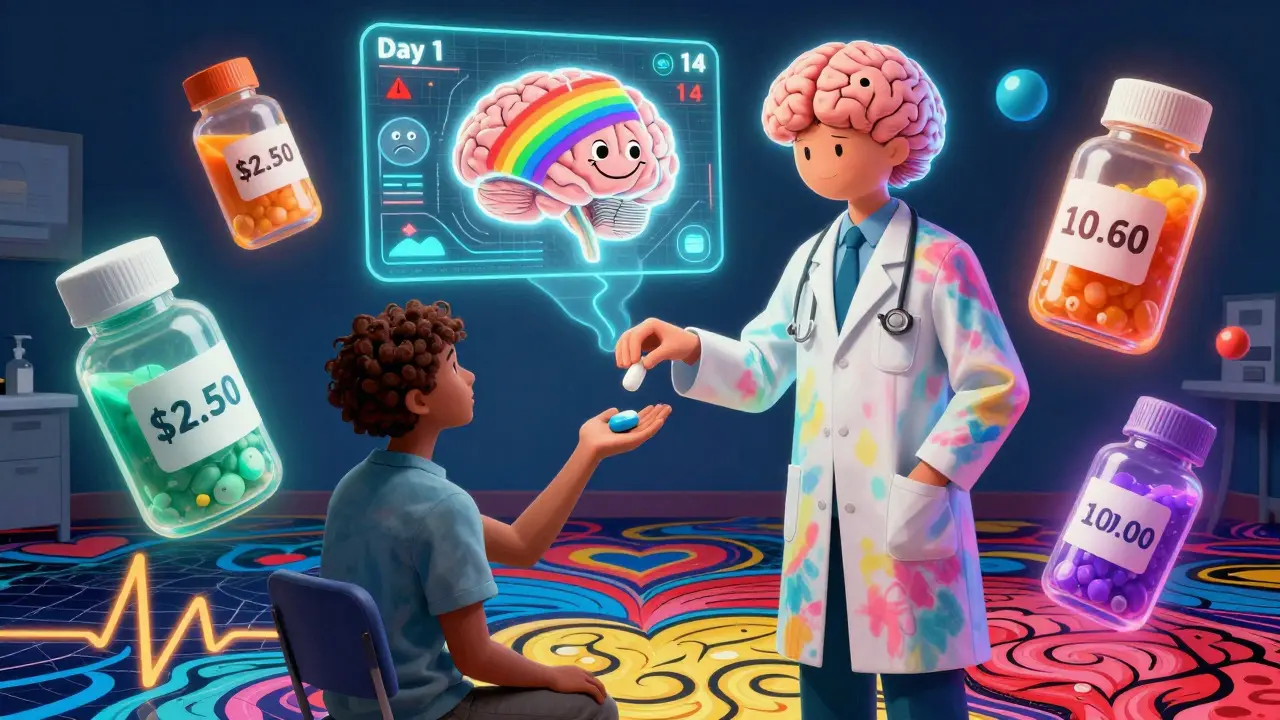
And here’s the kicker: the price tag matters too. In one study, people given placebo pills labeled as $2.50 each felt significantly more pain relief than those given identical pills labeled as 10 cents. The brain equates cost with quality-even when cost has zero bearing on the actual medicine inside.
Who’s Most Affected?
This effect isn’t the same for everyone. People with higher health literacy-those who read labels, ask questions, and understand medical terms-are more likely to feel the placebo effect. That’s because they have stronger expectations. Meanwhile, older adults over 65 show a 41% weaker response. Why? Less exposure to marketing, fewer assumptions about brand value, and sometimes less emotional attachment to a specific pill shape or color.
But here’s the real problem: chronic conditions. If you’re taking medication every day for high blood pressure, thyroid issues, or depression, your brain starts to associate the pill’s appearance, size, and even taste with relief. When that changes-even if the drug doesn’t-you feel like something’s wrong. One patient switching from brand-name levothyroxine to generic reported her blood pressure climbing from 130/80 to 145/92. Blood tests showed identical hormone levels. Her body didn’t change. Her expectation did.
What Doctors Are Doing About It
Some providers are catching on. A 2021 study in JAMA Internal Medicine found that a simple 3-minute conversation before switching a patient to a generic cut nocebo responses by nearly half. What did they say?
- “This generic is the same medicine.” Not “similar.” Not “almost the same.” Same. The FDA requires generics to be within 80-125% of the brand’s absorption rate. That’s not a loophole-it’s a tight, science-backed range.
- “You might feel different at first.” Not “you might think it’s less effective.” Not “don’t worry, it’s just in your head.” Instead: “Your brain is used to the old pill’s shape, color, or even the way it used to make you feel better. That feeling might stick around for a couple of weeks.”
- “Give it two weeks.” Then check in. Most people adjust. But if symptoms persist, it’s not because the drug failed. It’s because the brain needs time to rewire its expectations.
Doctors who use this script see 32% higher adherence rates to generics. That’s not just about trust-it’s about managing the invisible force shaping how the medicine works.
What You Can Do
If you’ve switched to a generic and feel like it’s not working:
- Don’t stop taking it. Stopping abruptly can be dangerous, especially for blood pressure or mental health meds.
- Check your pill. Is it a different color? Shape? Size? Sometimes, manufacturers change the appearance. That alone can trigger the nocebo effect. Ask your pharmacist: “Is this the same generic as before?”
- Track your symptoms. Write down how you feel before and after the switch. Use a simple scale: 1 to 10. Do it daily for two weeks. Often, the “worse” feeling fades.
- Talk to your doctor. Say: “I switched to the generic, and I feel like it’s not helping as much. I know they’re supposed to be the same. Could this be psychological?” That opens the door to real help-not judgment.
Some people still do better on brand-name drugs. That’s okay. But it’s not because the generic is inferior. It’s because their brain needs the familiar cues to feel safe. If cost is a barrier, ask about patient assistance programs. Many manufacturers offer discounts-even for brand-name drugs-if you qualify.
The Bigger Picture
This isn’t just about individual patients. It’s about the entire healthcare system. In the U.S., generic drugs make up 90% of prescriptions but only 23% of drug spending. That’s a win-unless people stop taking them because they think they’re less effective. One study estimated that placebo-driven non-adherence to generics costs the U.S. system $1.4 billion a year in unnecessary brand-name prescriptions, ER visits, and hospitalizations.
The FDA is starting to act. Since 2023, manufacturers must keep generic pills looking the same as the brand-same color, same shape, same markings-unless there’s a medical reason to change. Why? Because changing the appearance alone increased patient dropout rates by nearly 20%.
Across Europe, a €2.4 million project is now developing standardized patient education materials to help people understand that a cheaper pill isn’t a weaker one. In Australia, where direct-to-consumer drug ads are banned, the placebo effect is smaller-but still present.
What’s Next?
Researchers are testing a 12-minute digital tool that walks patients through the science of expectation and medication. Early results show it reduces nocebo responses by over 50%. It’s not a magic app-it’s a reset button for your brain. Think of it like a software update for how you think about medicine.
The truth? Your brain is the most powerful drug delivery system you have. When it believes in the treatment, it amplifies the effect. When it doubts, it shuts it down-even if the pill is perfect.
Switching to generics saves money. But it shouldn’t cost you your health. Understanding the psychology behind it isn’t about dismissing your experience. It’s about giving you the tools to make sure your body gets the full benefit of what’s inside that pill.
Do generic drugs work as well as brand-name drugs?
Yes, generics are required by the FDA to have the same active ingredient, strength, dosage form, and route of administration as the brand-name version. They must also be absorbed into the bloodstream at the same rate and to the same extent. The only differences allowed are in inactive ingredients-like color, flavor, or filler-which don’t affect how the drug works.
Why do I feel worse on a generic medication?
You’re not imagining it. The difference isn’t chemical-it’s psychological. Your brain associates the brand-name pill’s shape, color, or even the cost with effectiveness. When that changes, your brain may reduce its natural pain relief or mood-boosting responses. This is called the nocebo effect. Most people adjust within two weeks, especially if they understand why they’re feeling this way.
Can the placebo effect make a generic drug actually work better?
Yes. Studies show that when patients believe they’re taking a brand-name drug-even if it’s a placebo-they report better results than when told it’s generic. This isn’t deception-it’s how the brain works. Expectations trigger real biological changes. The same drug can feel more effective simply because you expect it to be.
Should I ask my doctor to keep me on the brand-name drug?
If you’ve tried the generic and still feel worse after two weeks, yes-talk to your doctor. But don’t assume the generic is broken. Ask: “Could this be a psychological response?” Your doctor may suggest staying on the brand if cost allows, or they may help you reframe your expectations. There’s no shame in needing the familiar cues to feel better.
Is it ethical for doctors to use branding to boost placebo effects?
It’s a gray area. Some experts argue that telling a patient they’re getting a brand-name drug when they’re not is deceptive. Others say it’s no different than a doctor saying, “This will really help,” when they can’t guarantee results. The ethical approach is transparency: explain the science of expectations, acknowledge that perception matters, and let patients make informed choices-not manipulated ones.
Do generic drugs cost less because they’re less effective?
No. Generics cost less because their manufacturers don’t spend money on advertising, fancy packaging, or funding expensive clinical trials. The active ingredient is the same, and the FDA requires the same quality controls. The price difference reflects marketing and development costs-not potency or safety.
What should I do if I think my generic isn’t working?
Don’t stop taking it. Track your symptoms for two weeks. Talk to your pharmacist-ask if the generic changed manufacturers or appearance. Then schedule a quick chat with your doctor. Say: “I think my body is reacting to the change, not the drug.” Most cases resolve with time and understanding. If not, you and your doctor can explore options, including staying on the brand if it’s affordable.
Final Thought
Medicine isn’t just chemistry. It’s biology, psychology, and expectation-all working together. A pill doesn’t work in a vacuum. It works inside your mind as much as your body. Understanding that doesn’t make your experience less real. It makes it easier to fix.
Andy Heinlein
January 1, 2026man i switched to generic lexapro last year and thought i was gonna crash hard but honestly? after two weeks i felt *better*. like my brain just stopped overthinking the pill shape. weird right? but it worked. dont sleep on the nocebo thing, its real.
Ann Romine
January 2, 2026My grandma’s on generic levothyroxine now. She didn’t say anything for weeks until i asked if the pills looked different. Turns out the new ones are blue instead of white. She said she ‘just didn’t trust them.’ We went back to the old brand-same generic, different manufacturer. She’s fine now. It’s all in the packaging.
Todd Nickel
January 4, 2026The placebo/nocebo effect here is not just about branding-it’s about embodied expectation. The brain’s dopaminergic pathways are wired to associate visual and tactile cues with therapeutic outcomes. When you’ve taken a white oval pill with ‘Pfizer’ stamped on it for five years, your somatosensory cortex has created a predictive model of relief. Switching to a yellow capsule with ‘Mylan’ triggers prediction error, which downregulates endogenous opioid release. It’s not ‘in your head’-it’s your head literally changing neurochemistry. The FDA’s absorption standards are irrelevant to this neural adaptation. This is why the 2-week adjustment window works: it’s neuroplasticity, not compliance.
Austin Mac-Anabraba
January 5, 2026Of course it’s psychological. You think Big Pharma doesn’t *want* you to believe generics are inferior? They spent billions making you think your brand-name drug is a sacred artifact. Now they’re milking the nocebo effect to keep you hooked on $200 pills while they sell the same chemistry for $3. This isn’t science-it’s psychological warfare disguised as healthcare.
Phoebe McKenzie
January 7, 2026STOP lying to people. If you feel worse on a generic, it’s because it’s NOT the same. The FDA doesn’t even test the *inactive* ingredients properly. Those fillers? They can be toxic. And don’t tell me it’s ‘just in your head’-I’ve seen people go into seizures after switching. This isn’t psychology, it’s corporate negligence wrapped in a lab coat.
gerard najera
January 7, 2026Expectation shapes biology. That’s all.
Stephen Gikuma
January 9, 2026Who’s really behind this? The WHO? The UN? They want us on cheap meds so they can control the population. You think they care if your anxiety comes back? They want you docile. Generics are step one. Next they’ll make you swallow your pills in water from the public fountain. Wake up.
Bobby Collins
January 11, 2026ok but what if the generic is made in china?? i heard they use rat poop as filler?? i switched back to brand and my panic attacks stopped. no cap. 🤮
Layla Anna
January 13, 2026i had the same thing with my antidepressant 😔 i thought i was failing myself but it was just the pill color changing... i cried for a week thinking i was backsliding. then my pharmacist said ‘it’s the same stuff, just a different factory’ and i felt so seen. thank you for writing this. ❤️
Heather Josey
January 14, 2026This is an exceptionally well-researched and compassionate overview of a critical but under-discussed issue in patient care. The psychological component of medication adherence is not a fringe concept-it is foundational to therapeutic efficacy. I encourage all clinicians to adopt the three-point script mentioned in the article. Transparency, not manipulation, builds trust. And trust, in this context, is the most potent active ingredient we have.
Olukayode Oguntulu
January 16, 2026Let us not conflate pharmacokinetic equivalence with phenomenological fidelity. The Hegelian dialectic of pharmaceutical identity is sublated by the capitalist commodification of bodily experience. When the pill becomes a signifier divorced from its brand-sign, the subject experiences ontological dislocation. The nocebo effect is not merely psychological-it is a symptom of late-stage medical alienation. The FDA’s standards are bourgeois illusions masking a deeper epistemic crisis in biomedicine.
jaspreet sandhu
January 16, 2026People say generics are the same but they forget one thing-manufacturing. In the U.S., brand-name drugs are made in clean rooms with German machines. Generics? Made in some basement in India where workers don’t even wear gloves. Same chemical? Maybe. But the dust, the moisture, the way it breaks down in your stomach? Totally different. I’ve seen people get sick after switching. And doctors just shrug and say ‘it’s in your head.’ No. It’s in the factory. And nobody’s testing it. The FDA is a joke. They approve pills based on paperwork, not real human bodies. I’ve been on generics for 10 years. I’ve had three hospital stays. Coincidence? I don’t think so.