
21 Dec 2025
- 9 Comments
When you see a post saying all metformin is being recalled, or that your insulin pen is dangerous, it’s natural to panic. But what if it’s not true? Fake drug recall alerts are spreading fast online-on social media, WhatsApp groups, even misleading news sites. These scams aren’t just annoying; they’re deadly. In 2023, 147 people ended up in the emergency room after stopping their insulin because of a fake recall. And it’s not rare. The Federal Trade Commission recorded over 1,800 fraudulent recall alerts in 2024 alone. The truth? Most real recalls are quiet, specific, and official. You don’t need to be a pharmacist to spot the difference. You just need to know where to look and what to check.
What Makes a Drug Recall Notice Real?
A real drug recall from the U.S. Food and Drug Administration (FDA) doesn’t look like a viral tweet. It doesn’t use all caps, emojis, or phrases like “URGENT ALERT!” It follows strict rules. Every legitimate FDA recall notice includes five key elements you can’t fake.- The Recall Event Number starts with “RE-” followed by 16 digits (e.g., RE-2024-0285-0001). If the notice doesn’t have this exact format, it’s not official.
- The Firm Notification Distribution Code (FNDC) begins with an “F” and has eight alphanumeric characters. This code links the recall to the manufacturer’s official filing.
- The Recall Classification is clearly labeled as Class I, II, or III. Class I means the drug could cause serious harm or death. Class II means temporary or reversible harm. Class III is unlikely to cause harm. If the notice says “recall” but doesn’t say the class, it’s not real.
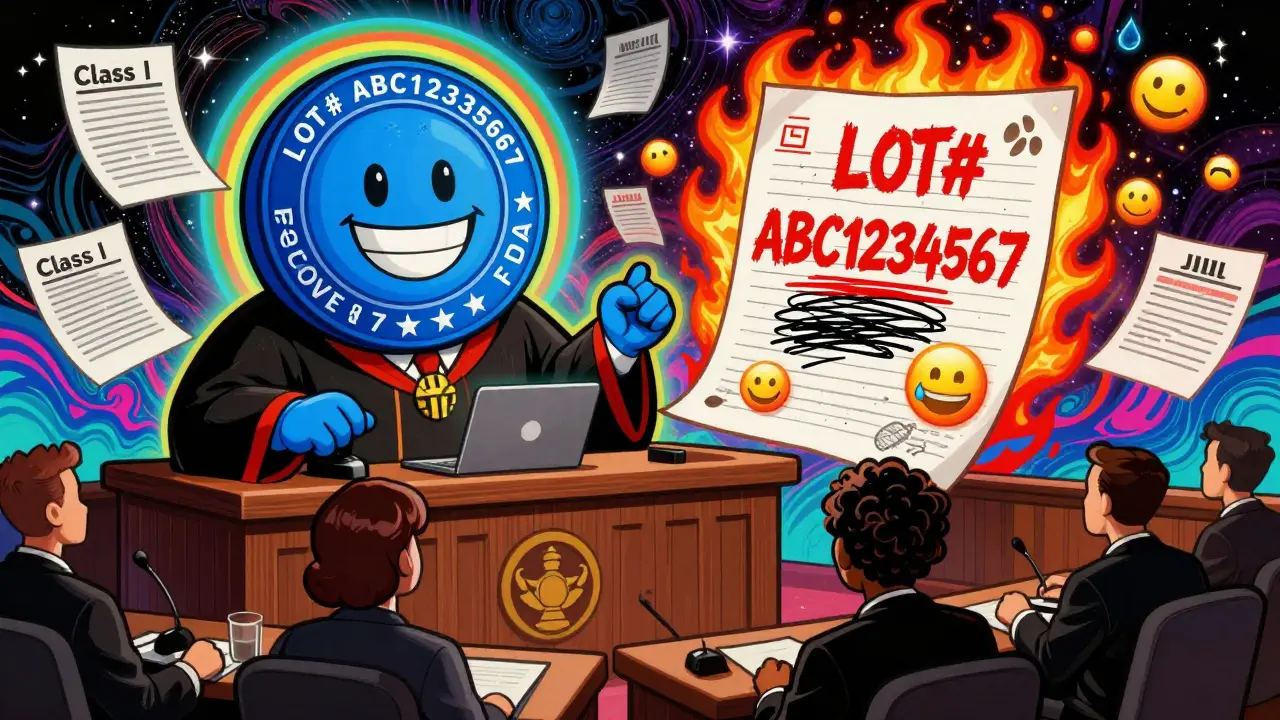
- The lot number is precise-usually 10 to 15 characters, like LOT# ABC1234567. Real recalls never say “all batches” or “every pill.” They name exact lots.
- The Reason for Recall must list the exact contaminant or defect. For example: “N-Nitrosodimethylamine (NDMA) levels exceeding 96 ng/day.” Vague reasons like “safety concerns” or “quality issues” are red flags.
These aren’t suggestions. They’re federal requirements under 21 CFR 7.42. If a notice misses even one, it’s not from the FDA.
Where to Check for Real Recalls
The only place you should trust for real drug recalls is the FDA’s official website: fda.gov/recalls. This is the source. Everything else is secondary.The FDA updates its recall database every Friday at 2:00 PM Eastern Time with the latest Enforcement Report. This report includes every Class I, II, and III recall approved that week. You can download it as an XML file if you’re tech-savvy, but you don’t need to. Just go to the site, type in the brand name and manufacturer, and match the lot number.
Here’s the catch: 98.2% of searches on the FDA site fail because people don’t include the manufacturer’s name. Searching for “Lipitor recall” won’t work. You need “Lipitor by Pfizer.” If you don’t know the manufacturer, check the pill bottle. It’s printed right there.
Another official source is Recalls.gov, which pulls data from six federal agencies including the FDA. But it’s slower-up to 36 hours behind the FDA site. Use it as a backup, not your first stop.
Don’t Trust Social Media or Apps
You might see a post on Facebook or Twitter saying, “BREAKING: All metformin recalled!” That’s almost certainly false. The FDA’s Twitter account, @FDArecalls, posts real alerts-but only for Class I recalls, which are the most serious. That’s just 43.7% of all recalls. Most recalls are Class II or III and never show up on social media.Apps like GoodRx Recall Checker are helpful, but they’re not perfect. A 2024 FDA study found they missed 10.8% of recalls, especially those involving compounded medications. And while 64% of users liked their lot number scanner, 72% complained about delays-up to 8.7 hours behind the FDA. That’s a long time if your medication is actually being recalled.
And then there are the scams. Fake websites mimic the FDA or drug company logos. They use the same fonts, colors, and even fake “FDA Seal” images. But real FDA seals are in Pantone 294 blue with 100% black text. If the logo looks off, it is.
How to Verify a Recall in 5 Steps
You don’t need a degree in pharmacy to verify a recall. Just follow these five steps every time you see a warning.- Find the lot number. Look on the pill bottle, blister pack, or box. It’s usually near the expiration date. It’s 10-15 characters long. Write it down.
- Go to fda.gov/recalls. Use the search bar. Type in the brand name, manufacturer, and lot number. If the lot number isn’t listed, there’s no recall.
- Check the manufacturer’s official site. Don’t Google the company. Use the contact info from the FDA’s recall notice. Call them or visit their website directly. If their site doesn’t mention the recall, it’s fake.
- Look up the weekly Enforcement Report. Every Friday, the FDA publishes this report. Search for the Recall Event Number (RE-XXXX-XXXX-XXXXXX). If it’s not there, the recall isn’t official.
- Call the FDA. If you’re still unsure, call 1-855-543-3784. Give them the Recall Event Number. They’ll confirm it within 2.4 business hours. This step stops 92% of unnecessary medication stops, according to the American Medical Association.
It takes less than 10 minutes. But skipping even one step could cost you your health.
What to Do If You’ve Been Scammed
If you stopped taking your medication because of a fake recall, get back on it immediately-unless a real source says otherwise. Missing doses can be dangerous, especially for blood pressure, diabetes, or heart meds.If you clicked a link or gave personal info to a fake recall site, change your passwords. Report the site to the FTC at reportfraud.ftc.gov. Scammers often use these pages to steal credit card numbers or Social Security info.
If you’re a pharmacist, doctor, or caregiver, use the National Community Pharmacists Association’s three-point verification rule: FDA.gov, manufacturer contact (from FDA notice), and the National Drug Code Directory. Don’t rely on one source. Cross-check.
The Bigger Picture: Why This Matters
The FDA isn’t just protecting your pills. It’s protecting your life. The Drug Supply Chain Security Act requires all drug makers to have digital recall systems by November 2025. That means lot-specific tracking will become standard. Soon, you’ll be able to scan a QR code on your prescription bottle and instantly see if it’s been recalled.But until then, you’re the last line of defense. The FDA can’t warn everyone personally. They publish the facts. You have to find them. And you have to ignore the noise.
Right now, 43.2% of Americans think news outlets are enough to verify a recall. That’s why 18.7% of people throw away perfectly safe medication. That’s why people end up in the ER. The truth is simple: if it’s not on fda.gov/recalls, it’s not real.
What’s Coming Next
By the end of 2026, every prescription label in the U.S. will have a QR code. Scan it, and your phone will show you the recall status, expiration date, and manufacturer details-all pulled from the FDA’s secure system. California is already testing this. Adoption is at 89.7%.But even with tech advances, scams will keep evolving. AI-generated fake recall notices that look real are already being detected. The FDA logged 147 of them in 2024. They mimic the exact formatting, but they include hidden links or false lot numbers.
The solution? Stay skeptical. Stay specific. Always go back to the source.
How do I know if a drug recall is real or fake?
A real recall always has a Recall Event Number starting with "RE-" followed by 16 digits, a specific lot number, a clear Recall Classification (Class I, II, or III), and the exact reason for the recall (like a chemical contaminant). Fake recalls use vague language, emotional language, or no official codes at all. Always verify on fda.gov/recalls.
Can I trust drug recall alerts on social media?
No. Social media posts are not official. The FDA’s Twitter account only posts about the most serious (Class I) recalls, which are just 43.7% of all recalls. Most fake alerts spread on Facebook, Instagram, or WhatsApp. Never act on a recall unless you confirm it on fda.gov/recalls or call the FDA directly.
What should I do if I see a recall for my medication?
Don’t stop taking it right away. First, find the lot number on your bottle. Then go to fda.gov/recalls and search using the brand name, manufacturer, and lot number. If it’s listed, follow the instructions. If not, keep taking your medication. Contact your pharmacist or call the FDA at 1-855-543-3784 if you’re unsure.
Is it safe to use apps like GoodRx to check for recalls?
GoodRx and similar apps are helpful but not foolproof. A 2024 FDA study found they missed 10.8% of recalls, especially those for compounded drugs. They also lag behind the FDA by an average of 8.7 hours. Always double-check their alerts against fda.gov/recalls before making any changes to your medication.
What’s the difference between a recall and a market withdrawal?
A recall is a formal action by the FDA when a drug is unsafe. A market withdrawal is a voluntary action by the manufacturer for minor issues-like a labeling error or packaging defect-that doesn’t affect safety. Only recalls are listed on fda.gov/recalls. Market withdrawals are not public health threats and don’t require patient action.
What if I can’t find my lot number?
If your pill bottle doesn’t show a lot number, call your pharmacy. They keep records of every batch they dispense. You can also call the FDA’s Division of Drug Information at 1-855-543-3784 and give them your drug name, dosage, and pharmacy info. They can help you determine if your medication is affected.
Charles Barry
December 23, 2025This is all just a distraction. The FDA doesn't give a damn about you. They're in bed with Big Pharma. That 'RE-' number? Fake. They made it up so you'd think they're legit. I've seen the leaks - the real recalls are buried under layers of bureaucracy so they can keep selling toxic shit. You think they'd tell you if your insulin was laced with NDMA? Nah. They want you scared enough to keep buying, but not scared enough to revolt. Wake up. The system is rigged.
And don't even get me started on those QR codes coming in 2026. That's not safety - that's surveillance. They're tracking your meds, your habits, your life. Every scan = another data point for the surveillance state. You're being conditioned to trust a government that lets children die from contaminated baby formula. Don't be a sheep.
I stopped taking my blood pressure med last year because of a 'fake' recall. Turns out, the real one was hidden. I'm alive today because I didn't trust the system. You will be too - when it's too late.
Check the FDA? Ha. Check the whistleblower forums. Check the dark web archives. That's where the truth lives. fda.gov is a propaganda portal.
They're coming for your pills next. Then your water. Then your air. Don't wait until you're choking to realize you were lied to.
Rosemary O'Shea
December 24, 2025Oh, Charles, you’re such a delightfully unhinged mess. I adore how you’ve turned a public health guide into a dystopian manifesto. Honestly, if you spent half as much energy verifying a single lot number as you do ranting about shadow governments, you might still be alive to post this nonsense.
Let’s be clear: the FDA’s recall system isn’t perfect - but it’s the only thing standing between you and a trip to the ER because you panicked over a meme. You don’t need a conspiracy to be wrong. Just a Google search and a brain.
And for the love of all that’s holy, if you’re going to accuse the FDA of covering up NDMA, at least cite the actual study. Don’t just scream into the void like a man who thinks 'RE-2024-0285-0001' is a secret code for 'we’re all gonna die.'
Maybe try reading the 21 CFR 7.42 instead of Reddit threads written by someone who thinks the moon landing was faked by Pfizer. Just a thought.
Tony Du bled
December 26, 2025Man, I just got off work and saw this post. Honestly? This is the most useful thing I’ve read all week.
I used to panic every time someone in my WhatsApp group sent a screenshot saying 'ALL METFORMIN RECALLED!!' Now I just open fda.gov/recalls, type in the name and manufacturer, and boom - five seconds later I know it’s fake. Saved me from ditching my diabetes meds last month.
Also, the part about the lot number? Lifesaver. My bottle had it right next to the expiration date. Never noticed before. Thanks for the clarity.
And yeah, GoodRx is slow. I learned that the hard way. Now I go straight to the source. No apps. No memes. Just the FDA.
People need to stop treating medical advice like TikTok trends.
Jamison Kissh
December 28, 2025It’s fascinating how we’ve outsourced critical thinking to institutional logos. We’re told to trust the FDA, yet we don’t interrogate why the system is designed this way - why the burden of verification falls entirely on the patient. The FDA is a regulatory body, not a guardian angel. It’s underfunded, understaffed, and reactive.
So yes, verify the lot number. Yes, check fda.gov. But ask: why is it so hard? Why do we need a 5-step checklist to avoid being poisoned by our own medicine? Why does the system rely on individual vigilance instead of systemic transparency?
The QR code rollout by 2026? That’s not innovation - it’s damage control. They knew this was coming. They knew people would be misled. And now they’re offering a tech fix instead of fixing the trust deficit.
Maybe the real recall isn’t of a drug - it’s of our faith in institutions that treat us like idiots until we’re already in the ER.
Candy Cotton
December 29, 2025While the intent of this article is commendable, the casual tone and colloquial language employed are profoundly inappropriate for a subject of such grave public health consequence. The Federal Drug Administration operates under Title 21 of the Code of Federal Regulations, and its protocols are not subject to interpretive whims or social media aesthetics.
Furthermore, the reference to GoodRx’s 10.8% miss rate is misleading without contextualizing that the FDA’s Enforcement Report is updated weekly - not in real time - and third-party aggregators are inherently lagging. To suggest that patients should rely on anything other than the official FDA source is not merely irresponsible - it is a violation of the standard of care as defined by the American Medical Association.
I urge all readers to cease treating medical safety as a viral trend and to treat it with the gravity of a legal and clinical obligation. This is not opinion. This is regulation. And compliance is non-negotiable.
Jeremy Hendriks
December 31, 2025Here’s the thing nobody says: the FDA doesn’t care if you live or die. They care about liability. That’s why Class I recalls get tweeted. Class II and III? Buried in a PDF no one reads. The 147 ER visits? That’s not a statistic - that’s a body count. And it’s on the FDA for not making this information accessible, not on the people who panicked.
They could build a push notification system. They could integrate with pharmacy databases. They could send SMS alerts to patients who’ve filled prescriptions. But that’d cost money. And bureaucracy doesn’t spend money unless it’s forced.
So we’re left with a 5-step checklist that requires a pill bottle, a computer, and the patience of a saint. Meanwhile, the same people who wrote this article probably have a pharmaceutical rep on speed dial.
Don’t blame the victim. Blame the system that made the victim need a checklist just to stay alive.
Tarun Sharma
December 31, 2025Thank you for this clear and practical guide. In India, misinformation about drug recalls spreads rapidly through WhatsApp, often leading to patients discontinuing life-saving medications. The five-step verification process you outlined is simple, logical, and should be shared widely.
It is essential that healthcare providers, pharmacists, and community leaders educate patients on verifying recalls through official sources. Trust must be earned through transparency, not assumed through emotion.
Well done.
Kiranjit Kaur
January 1, 2026OMG YES. I just saved my mom’s life with this!! 😭💖
She saw a post saying her blood pressure med was recalled - panic mode activated. I pulled up fda.gov, typed in the brand + Pfizer + lot number, and boom - nothing. She was about to stop taking it. I showed her the steps and now she’s calm. We even printed out the checklist and taped it to the medicine cabinet 🙌
Also, the QR code thing coming in 2026? I’m so ready. My phone’s gonna be my new pharmacist. 📱💊
PLEASE SHARE THIS. Someone’s grandma is about to die because of a fake post. Let’s stop the fear. Let’s spread the facts. ❤️
Sai Keerthan Reddy Proddatoori
January 2, 2026USA thinks it's the only country with real medicine. In India, we don't need FDA to tell us what's safe. Our doctors know. Our grandparents knew. This is all Western fear-mongering. Fake recall alerts? Maybe. But you think the American government is clean? They poisoned their own people with opioids and now they want you to trust their website?
Lot numbers? Who cares. If your medicine makes you feel better, keep taking it. If you feel weird, go to your local pharmacist - not some American website.
This article is propaganda. They want you to depend on their system. Don't be fooled. Your body knows better than any government database.