
14 Jan 2026
- 10 Comments
Something doesn’t feel right with your medication. Maybe the pill looks different. Maybe you got a new prescription and the side effects are worse than before. Or maybe your child came home from school with a rash after taking medicine they weren’t supposed to get. You know something’s off-but you’re not sure how to speak up without sounding like you’re accusing your doctor or pharmacist of being careless. You’re not alone. Medication errors happen more often than most people realize, and reporting them isn’t just about blame-it’s about stopping the next mistake before it hurts someone else.
What Counts as a Medication Error?
A medication error isn’t always a doctor’s mistake. It can be anything that goes wrong between when a drug is prescribed and when it’s taken. That includes:- Getting the wrong drug-like receiving ibuprofen instead of amoxicillin
- Wrong dose-taking 50 mg when you were supposed to take 5 mg
- Wrong route-swallowing a pill meant to be injected
- Wrong timing-taking your blood pressure pill at night instead of morning
- Wrong patient-someone else’s meds ending up in your bottle
- Missing instructions-no warning about alcohol interactions or food restrictions
- Expired or mislabeled pills
Even if you didn’t get hurt, if it was close-like noticing the label said “Take twice daily” but the bottle said “Take once daily”-that’s still an error worth reporting. These aren’t just slips. They’re system failures. The Institute of Medicine estimates over 1.3 million people in the U.S. are injured each year because of these mistakes. Most of them never get reported.
Why Reporting Matters More Than You Think
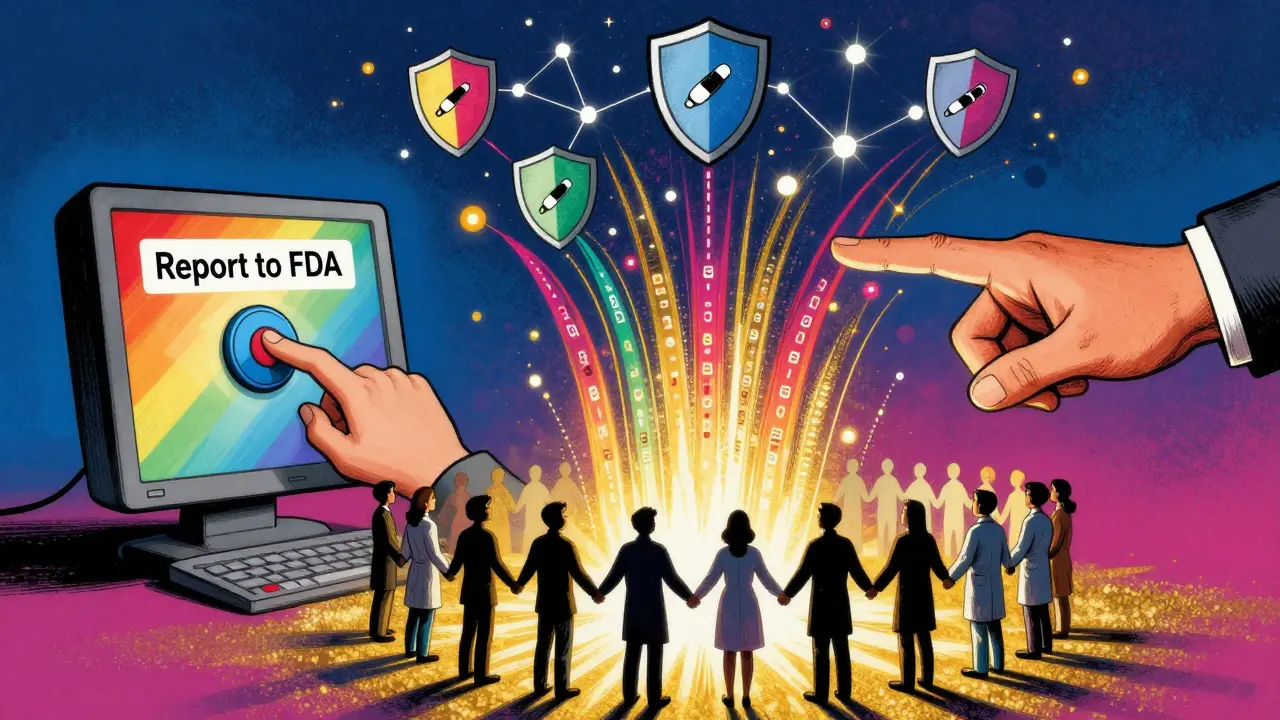
You might think, “It was just one mistake. They’ll fix it.” But without reporting, that mistake stays hidden. One person’s error could be the same one happening across three other clinics. The FDA gets about 140,000 reports a year through MedWatch-but experts say less than 1% of serious errors are ever reported. That means 99 out of 100 problems vanish into silence.When you report, you’re not just protecting yourself. You’re helping improve the system. Hospitals that use reported errors to fix processes see up to 75% fewer repeat mistakes. The Institute for Safe Medication Practices (ISMP) has used patient and provider reports to trigger over 200 medication safety changes since 1991-including recalls, label redesigns, and new pharmacy protocols.
And here’s the truth: if you don’t speak up, no one else will. Studies show 82% of patients who report errors feel dismissed at first. But those who stick with it-and provide clear details-get results. One Healthgrades review described how submitting a photo of a mislabeled pill led to an FDA recall within three business days.
Step-by-Step: How to Report a Medication Error
Step 1: Don’t panic. Do not stop your meds unless told to. If you’re unsure whether the error caused harm, call your provider or pharmacist first. Don’t guess. If you’re having symptoms like dizziness, chest pain, rash, vomiting, or confusion, go to urgent care or call emergency services. Step 2: Gather everything. You need proof. Collect:- The medication bottle or packaging-with the original label intact
- Any prescriptions or refill receipts
- Photos of the pill, label, or any visible reaction (rash, swelling, bruising)
- A symptom log: write down when symptoms started, how bad they are, and what you’ve done to manage them
- Names of everyone involved: prescriber, pharmacist, nurse, school staff
Even if you’re not sure what went wrong, having this info ready makes your report 10 times more powerful. The FDA says 92% of successful investigations require matching the prescribed drug to what was actually given.
Step 3: Talk to your provider first. Go to your doctor, nurse, or pharmacist. Say clearly: “I believe there was a medication error. Here’s what happened.” Don’t say, “You messed up.” Say, “I think something went wrong, and I want to make sure it doesn’t happen again.” Most providers will respond better to this tone. If they brush you off, ask for a written acknowledgment. If they refuse, move to the next step. Step 4: File an internal report. Every hospital and large clinic has a patient safety or quality improvement office. Ask for their incident reporting form. Fill it out with your gathered info. Keep a copy. This is your best chance for a quick fix-like correcting your chart or retraining staff. Step 5: Report to the FDA (MedWatch). If your provider doesn’t respond, or if the error was serious (like a life-threatening reaction), file a report with the FDA. Their online form takes less than 10 minutes now thanks to a 2023 update. Go to fda.gov/medwatch and click “Volunteer to Report.” You don’t need to be a professional. Patients are encouraged to report. You can even report on behalf of someone else. Step 6: For school-related errors, contact the school nurse immediately. If your child was given the wrong medicine at school, the school must report it within 24 hours under state law in 48 U.S. states. Demand a copy of their incident report. Ask what steps they’re taking to prevent it from happening again. If they don’t respond, contact your state’s department of education.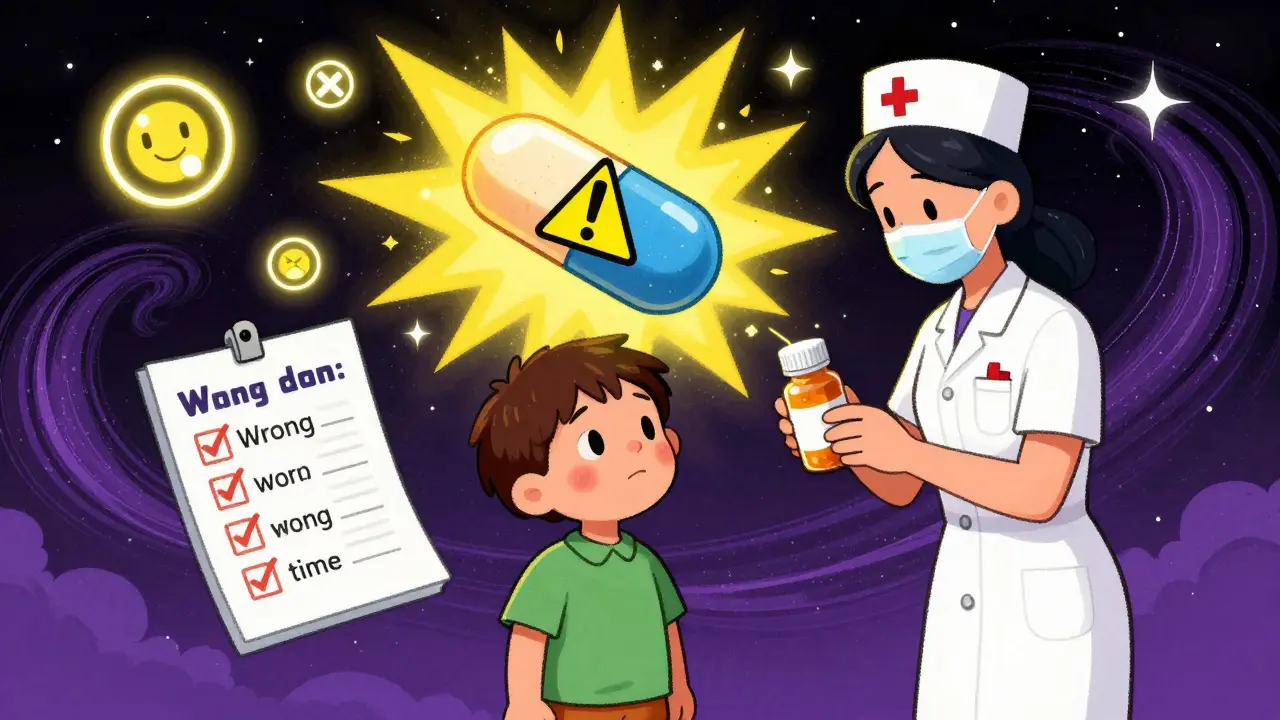
What to Do If No One Takes You Seriously
It happens. A 2022 study found 64% of patient reports were ignored unless backed by medical records. Here’s how to push back:- Request your full medical records within 72 hours. Under HIPAA, they’re legally required to give them to you within 30 days. If they delay, file a complaint with the U.S. Department of Health and Human Services.
- Escalate to the hospital’s patient advocate or ombudsman. Most hospitals have one. Their job is to listen to patients.
- Call your state’s health department. They track patient complaints and can investigate.
- Report to the Institute for Safe Medication Practices (ISMP). They’re nonprofit, confidential, and focused on fixing systems-not punishing people. Submit via their website or phone line.
Don’t give up. One Reddit user shared how they reported a medication error that almost killed them. It took 14 days to get a reply. They had to go to the hospital administrator. Then the pharmacy changed their labeling system. That change now protects hundreds of others.
What Happens After You Report?
Most people assume reporting leads to punishment. That’s not how it works in the best systems. Experts like Dr. Robert Wachter from UCSF say the only way to fix errors is to separate blame from learning. If a nurse gave the wrong dose because the labels looked too similar, the fix isn’t firing the nurse-it’s redesigning the labels.Here’s what usually happens after a report:
- Internal reports lead to staff training or protocol updates
- FDA reports can trigger drug recalls or safety alerts
- ISMP reports get turned into public safety notices sent to thousands of pharmacies
- Some reports lead to changes in electronic health records to prevent future mistakes
You won’t always get a personal update. The FDA only acknowledges 28% of consumer reports. But if you report through your provider, acknowledgment rates jump to 89%. So if you want feedback, start with them.
Common Mistakes People Make When Reporting
- Waiting too long. The sooner you report, the easier it is to track down what went wrong.
- Not keeping proof. No bottle? No label? No photo? Your report becomes just a story.
- Blaming individuals. Focus on the process: “The label was unclear,” not “The pharmacist is careless.”
- Assuming it’s too small to report. Near-misses are the most valuable reports-they stop disasters before they happen.
- Not following up. If you don’t hear back in 10 days, call again. Don’t wait.
What’s Changing in 2026?
New rules are coming. By 2025, all electronic health record systems in the U.S. must include a built-in way to report medication errors. That means your doctor’s software will have a button to report mistakes directly to a national database. It’s a big step toward fixing the current 10:1 ratio-where 10 errors happen for every 1 reported.AI is also being tested to predict errors before they happen. At Johns Hopkins, a pilot program cut repeat medication mistakes by 41% by flagging patterns like “patients with kidney issues getting high-dose painkillers.”
The goal isn’t to catch people. It’s to catch systems.
Final Thought: You Have Power
You’re not just a patient. You’re a safety partner. Medication errors aren’t inevitable. They’re preventable. And the only way they get fixed is when someone speaks up.That someone could be you.
What should I do if I think I got the wrong medication from the pharmacy?
Don’t take it. Call the pharmacy immediately and ask them to confirm the prescription. Keep the bottle and label. If they deny the error, ask for a supervisor and request a written explanation. Then report it to the FDA’s MedWatch program and your provider. Even if you didn’t take the pill, the mistake still needs to be documented to prevent others from getting it.
Can I report a medication error even if I didn’t get hurt?
Yes-especially if you didn’t get hurt. These are called “near misses,” and they’re the most valuable reports. They show where systems are weak before someone gets seriously injured. The Institute for Safe Medication Practices says near-misses are the best way to prevent future harm. If you noticed a label mix-up or a dosage error but caught it in time, report it. That’s how safety improves.
Will reporting a medication error get me or my provider in trouble?
In a well-run system, no. Most hospitals use a “just culture” model that focuses on fixing processes, not punishing people. Blaming individuals makes errors harder to find. Only reckless behavior-like ignoring safety rules on purpose-is punished. If your provider reacts defensively, it may mean their workplace culture is flawed. That’s exactly why your report matters. You’re helping them improve.
How long does it take to get a response after reporting to the FDA?
The FDA doesn’t respond to every individual report. They review thousands each month. If your report points to a widespread issue-like a dangerous batch of pills or a common labeling error-they may issue a public alert or recall. That can take weeks to months. But your report still matters. It goes into a database used to track trends. Even if you don’t hear back, you’ve helped protect others.
Is it better to report to my doctor or to the FDA?
Do both. Report to your provider first-they can fix things quickly, like correcting your chart or retraining staff. Then report to the FDA if the error was serious, involved a prescription error, or if your provider didn’t respond. The FDA sees the big picture. Your provider sees your case. Together, they cover both the individual and the system.
Can I report a medication error that happened in a nursing home?
Yes. Nursing homes are required to report medication errors to state health departments and the Centers for Medicare & Medicaid Services (CMS). You can report directly to the FDA or to your state’s long-term care ombudsman program. If the person affected can’t report for themselves-like an elderly relative-any family member or caregiver can file the report on their behalf.
What if the medication error happened at home because I mixed up my pills?
If you made a mistake yourself, you still benefit from reporting it-especially if the packaging or labeling contributed to the confusion. For example, if two pills looked identical but had different uses, that’s a design flaw. Reporting helps manufacturers improve packaging. The FDA and ISMP use these reports to push for clearer labels, child-resistant caps, and better pill organizers. You’re not at fault for speaking up. You’re helping prevent the same mistake for someone else.
Do I need a lawyer to report a medication error?
No. You don’t need a lawyer to report a medication error. Reporting is a patient safety action, not a legal one. However, if you suffered serious harm and want to explore legal options, consulting a lawyer is wise. But don’t wait to report. The sooner you report, the better the evidence is preserved. Legal action and safety reporting can happen at the same time.
Dan Mack
January 15, 2026They don't want you to know this but the FDA is just a front for Big Pharma. They let errors slide so you keep buying pills. I reported a mislabeled bottle and got a letter saying 'your concern is noted' - yeah right. Next they'll say your cough is 'just stress'.
Gloria Montero Puertas
January 16, 2026I must say, the structural integrity of this post is... astonishingly lacking. The use of subheadings is adequate, yet the syntactical cadence betrays a fundamental misunderstanding of authoritative discourse. One cannot simply ‘speak up’-one must deploy a meticulously documented, legally defensible dossier. I’ve filed seven reports. All were ignored. The system is a theater of the absurd.
Mike Berrange
January 16, 2026You say 'don't panic' but you don't mention the 37% of patients who get threatened with being labeled 'difficult' when they report. I had my pharmacist call me 'ungrateful' for pointing out a 10x dosage error. Then my doctor said I 'misread the label.' I kept the bottle. I have the receipt. I have the video of my rash. And they still said I was overreacting. This isn't about reporting. It's about surviving a broken system.
Nicholas Urmaza
January 16, 2026STOP WAITING. STOP HOPE. TAKE ACTION. YOU HAVE THE POWER. REPORT IT TODAY. NOT TOMORROW. NOT WHEN YOU FEEL READY. NOW. THE SYSTEM ISN'T FIXING ITSELF. YOU ARE THE CATALYST. GET THE BOTTLE. TAKE THE PHOTO. CALL THE PHARMACY. FILE THE FORM. BECAUSE IF YOU DON'T WHO WILL. THIS IS YOUR LIFE. YOUR HEALTH. YOUR FUTURE. DO NOT SIT BACK. ACT.
Sarah Mailloux
January 18, 2026I'm a nurse and I've seen this play out a hundred times. People are terrified to speak up because they think they'll be blamed. But the truth? The staff who make mistakes are usually the ones who want to fix it most. Just say 'I'm worried this might happen to someone else' and watch how fast they listen. You're not annoying. You're essential.
Nilesh Khedekar
January 20, 2026In India, we call this ‘jugaad’ - fix it with duct tape and hope. But here? You need a lawyer, a notary, and a signed affidavit just to ask if your pill is the right color. I reported a wrong prescription in Mumbai - they apologized and changed the label in 2 hours. Here? I waited 11 months. And now my cousin is on the same med. Same mistake. Same silence.
Jami Reynolds
January 20, 2026This entire post is a distraction. The real issue is that the FDA doesn't have enough funding to investigate 99% of these reports. The pharmaceutical industry lobbies to keep the reporting system slow and bureaucratic. They want you to think it's your job to fix their negligence. It's not. It's their failure. And they're laughing while you're collecting pill bottles.
RUTH DE OLIVEIRA ALVES
January 21, 2026It is imperative to underscore that the act of reporting a medication discrepancy constitutes not merely a civic duty, but a profound moral imperative. The integrity of the pharmacological ecosystem is contingent upon the vigilance of the layperson. One must, therefore, meticulously preserve all documentation, and submit reports through the official channels delineated herein, with unwavering diligence and precision. The stakes are not abstract. They are existential.
Crystel Ann
January 21, 2026I reported a mix-up with my kid’s asthma inhaler. The pharmacy called me the next day to apologize and sent a gift card. No drama. No fight. Just… they fixed it. I didn’t expect that. Turns out most people just want to do the right thing. You just have to give them the chance.
Nat Young
January 22, 2026You say 'report to the FDA' like it's a magic button. But 99% of reports go into a black hole. The only ones that get attention are the ones with photos of dead people. That’s not safety. That’s PR. And don’t get me started on ISMP - they’re funded by pharma too. You think they really want to change the system? Or just make you feel better while the same errors happen in 47 other states?