
20 Feb 2026
- 11 Comments
Vitamin C & Iron Absorption Calculator
Optimize Your Iron Absorption
Calculate how much Vitamin C you need with your iron supplement or meal to maximize absorption.
Your Results
Required Vitamin C:
100 mg
Approximately:
1 medium orange or
½ cup red bell pepper
Food Pairing Suggestions:
When you take an iron supplement or eat iron-rich plant foods like spinach, lentils, or fortified cereal, you might not be getting as much benefit as you think. The problem isn’t always the dose-it’s what else you’re eating or taking at the same time. Vitamin C is one of the most powerful, natural tools you have to boost iron absorption, but timing and pairing matter just as much as the amount. And if you’re on other medications, getting this wrong could mean your iron supplement does almost nothing.
Why Vitamin C Makes Iron Work Better
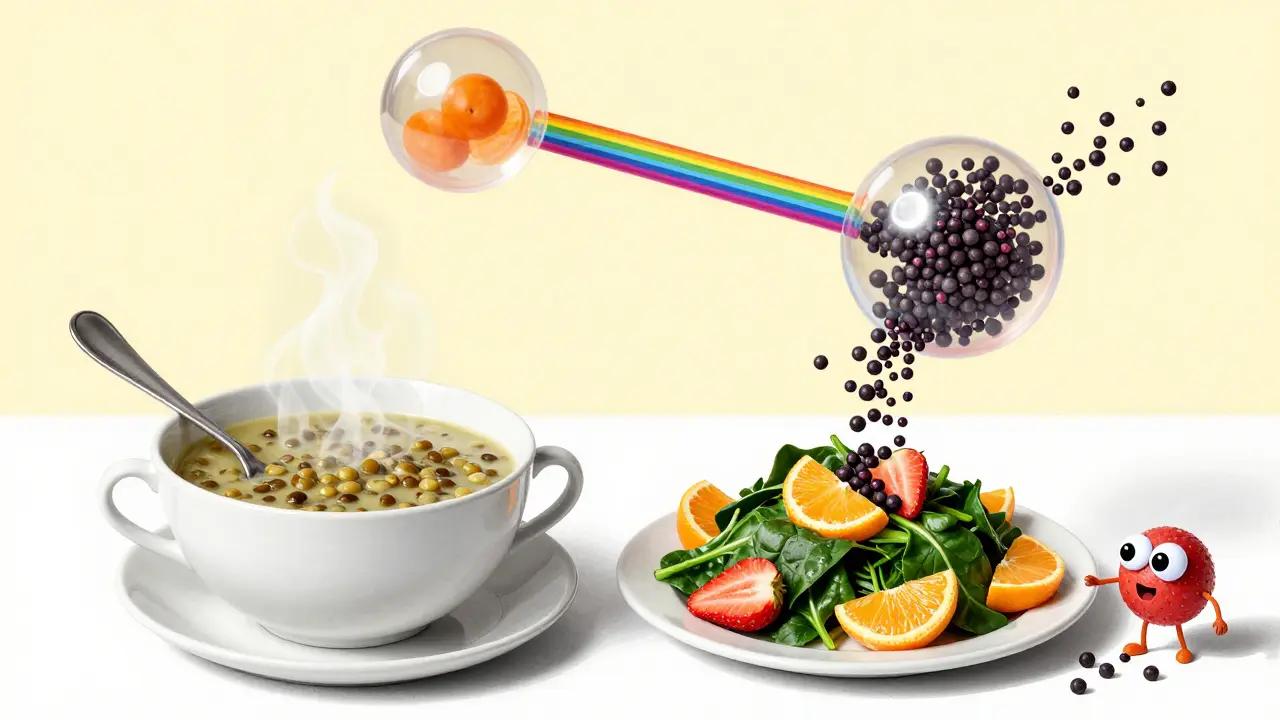
Not all iron is created equal. Iron from meat (heme iron) is absorbed easily-about 15-35% of what you eat gets into your bloodstream. But iron from plants, grains, and supplements (non-heme iron) is trickier. Only 2-20% of it gets absorbed under normal conditions. That’s where vitamin C comes in. Vitamin C, or ascorbic acid, doesn’t just act as an antioxidant. In your gut, it changes the chemical form of iron. It turns insoluble ferric iron (Fe³⁺) into soluble ferrous iron (Fe²⁺), which your body can actually absorb. This happens in the duodenum, the first part of your small intestine, thanks to an enzyme called Dcytb. Research from Japan’s SPring-8 synchrotron in 2018 showed vitamin C binds directly to this enzyme, delivering electrons to iron molecules like a tiny battery. The effect isn’t small. Studies show that 100mg of vitamin C-roughly the amount in one medium orange or half a cup of orange juice-can double or even triple how much iron your body takes in. A 2020 study in the Journal of Nutrition found that adding 500mg of vitamin C to a meal boosted iron absorption by 185%. Even better: vitamin C doesn’t just help on its own-it can fight off the blockers. Phytates in whole grains and polyphenols in tea or coffee can cut iron absorption by up to 65%. But 100mg of vitamin C can neutralize that effect.How Much Vitamin C Do You Really Need?
You don’t need to chug a giant glass of orange juice. The sweet spot is 100-200mg per meal. That’s:- 1 medium orange
- ½ cup of raw red bell pepper
- 1 cup of strawberries
- 6 oz of orange juice
- 1 small kiwi with skin
What Foods Work Best With Iron?
Pairing isn’t just about supplements. Real meals matter. Here are practical combos backed by research:- Fortified oatmeal + 1 cup of strawberries
- Lentil soup + tomato slices and lemon juice
- Spinach salad + orange segments and red pepper strips
- Black beans + salsa made with lime and cilantro
What to Avoid: Drugs and Supplements That Block Iron
Vitamin C helps-but other things can undo all your effort. If you take medications or supplements, you need to separate them carefully.- Calcium supplements: Calcium competes with iron for absorption. Take them at least 4 hours apart. That means if you take calcium at breakfast, don’t take iron until dinner.
- Antacids: Products with aluminum or magnesium (like Tums or Maalox) reduce iron absorption by 70-80%. If you take them for heartburn, wait at least 2 hours after taking iron.
- Thyroid medication (levothyroxine): Iron can block thyroid hormone absorption. Take them 4 hours apart. Many people don’t know this-and end up with uncontrolled hypothyroidism.
- Tea, coffee, and red wine: These are full of polyphenols that bind to iron. Wait at least 2 hours after eating or taking iron before drinking them.
Who Benefits Most-and Who Doesn’t
Vitamin C helps most people who rely on plant-based iron: vegetarians, vegans, pregnant women, and young women with heavy periods. It’s especially critical in low-income communities where meat isn’t affordable. The World Health Organization now recommends vitamin C pairing as a standard part of iron deficiency programs worldwide. But it doesn’t help everyone. If you have hemochromatosis (a genetic iron overload disorder), extra iron can be dangerous. Vitamin C won’t help you absorb more iron-but it won’t hurt either, since your body already can’t regulate it. Also, people with H. pylori infection or low stomach acid (common in older adults) don’t respond as well. The gut environment matters. And here’s a surprise: vitamin C doesn’t boost heme iron from meat, fish, or poultry. That’s already absorbed well. So if you eat steak, you don’t need to chug orange juice afterward.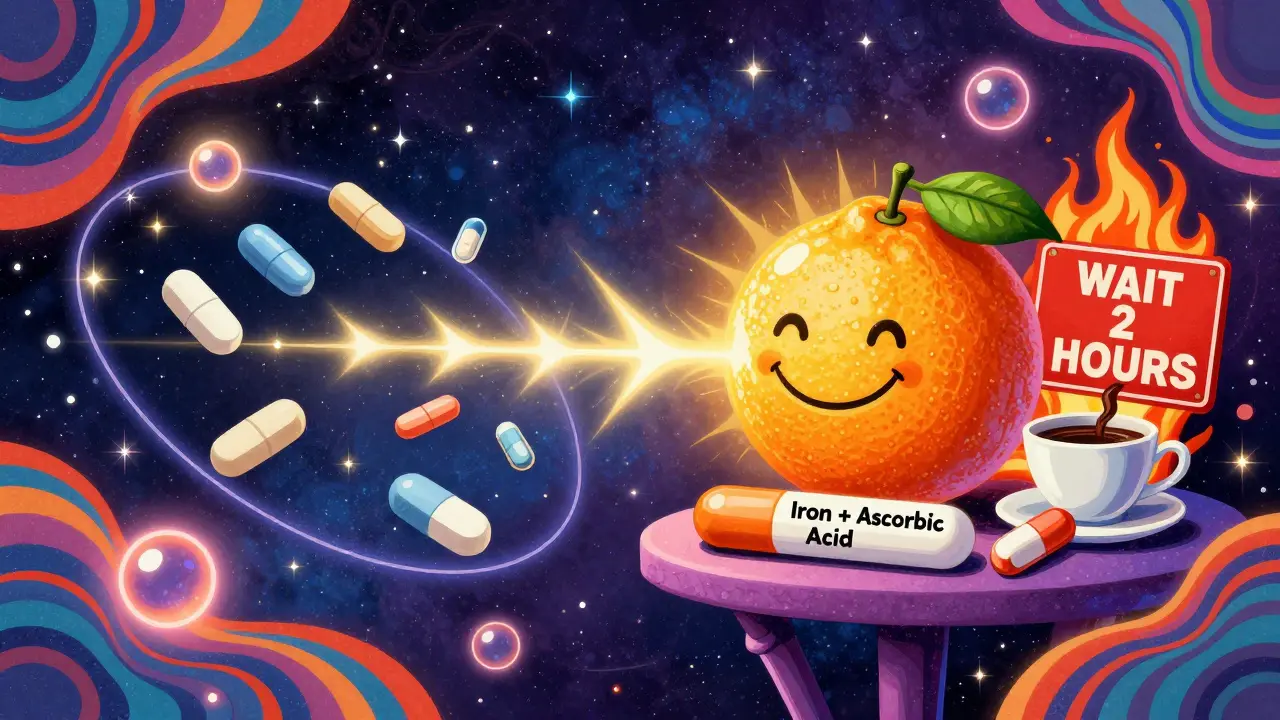
Real-World Tips That Actually Work
Most people know they should take iron with vitamin C. But they forget how. Here’s what works:- Make it a habit: Always eat your iron-rich meal with a vitamin C-rich food. No thinking needed.
- Use snacks: Keep oranges, strawberries, or bell pepper strips handy. Eat them right after your iron pill or meal.
- Check labels: Many iron supplements now include vitamin C. Look for “ascorbic acid” on the ingredient list.
- Set a reminder: If you take pills, set a phone alert: “Take iron + orange.”
- Track your food: Apps like MyFitnessPal now have alerts for vitamin C/iron pairing. Use them.
What’s Next: New Science and Tools
The science is evolving. In March 2024, researchers at SPring-8 announced they’re developing compounds that target the Dcytb enzyme directly-potentially boosting iron absorption without needing extra vitamin C. That could help people whose bodies don’t respond well to vitamin C. Meanwhile, the FDA now requires all non-heme iron supplements to carry a label saying: “Take with vitamin C-rich foods for better absorption.” And global health programs are rolling out SMS reminders in 15 countries to nudge people to take iron with citrus or peppers. But the simplest solution remains: eat your iron with something bright, juicy, and colorful. It’s cheap, safe, and backed by decades of solid science.Can I take vitamin C and iron at the same time?
Yes, and you should. Taking vitamin C and iron together is the most effective way to boost iron absorption. Aim for 100-200mg of vitamin C (like one orange or half a cup of red pepper) at the same time as your iron-rich meal or supplement. The effect drops sharply if you take them more than 30 minutes apart.
Does vitamin C help with iron from meat?
Not really. Iron from meat, fish, and poultry (called heme iron) is already absorbed well-15-35% of what you eat. Vitamin C mainly helps with non-heme iron from plants, beans, and supplements. So if you eat steak, you don’t need to pair it with orange juice.
How long should I wait after coffee before taking iron?
Wait at least 2 hours. Coffee, tea, and red wine contain polyphenols that bind to iron and block absorption by up to 65%. Even if you take vitamin C, the inhibitors in these drinks can still interfere. Same goes for chocolate and some herbal teas.
Can I take calcium and iron together?
No. Calcium blocks iron absorption by 50-60%. Take calcium supplements at least 4 hours apart from iron. If you take calcium at breakfast, take iron at dinner. This is especially important for postmenopausal women and older adults who take both.
Why does my iron supplement make me feel worse?
You might be taking too much iron at once. High doses (over 65mg) can cause nausea, constipation, or stomach pain. Instead of increasing the dose, pair your current dose with vitamin C. This improves absorption so your body uses more of what you take-meaning you might even lower your dose and feel better.
Is it better to get vitamin C from food or supplements?
Food is better. Whole foods like oranges, strawberries, and bell peppers come with fiber and other nutrients that help digestion. Plus, it’s easier to stick with meals than pills. But if you can’t eat enough vitamin C-rich foods, a 100-200mg supplement taken with your iron is fine. Just don’t take more than 500mg at once-it can cause diarrhea in some people.
Kenzie Goode
February 21, 2026Okay but like… I’ve been taking my iron with orange juice for years and I swear it made my stomach feel like it was being stabbed by a tiny fork. 🤢
Turns out I was taking 325mg of ferrous sulfate-way too much. After switching to 65mg with a strawberry? No more nausea. My energy’s back. And no, I didn’t need to chug a whole carton of OJ. One cup of berries and boom. Done.
Dominic Punch
February 21, 2026People keep saying 'take vitamin C with iron' like it’s some magic trick-but you’re ignoring the elephant in the room: most people don’t eat meals. They snack. They grab a pill at 7am and a coffee at 7:02. That’s not a mistake-it’s modern life.
Instead of lecturing people on timing, why not design supplements that *include* vitamin C? Or better yet-why not reformulate iron to be absorbed without needing citrus? The science is there. The pharma industry just doesn’t care because pills are profitable.
Stop blaming the patient. Fix the product.
Valerie Letourneau
February 22, 2026As someone raised in a household where dinner was always lentils, brown rice, and steamed kale-no meat, ever-I can confirm this advice saved my life. I was diagnosed with iron-deficiency anemia at 22. My doctor said, 'Take a pill.' I did. Nothing changed.
Then my aunt-yes, the one who grows her own peppers in a window box-sat me down and said, 'Eat your beans with salsa. Not tea. Not coffee. Salsa.'
Three months later, my hemoglobin was normal. No supplements. Just lime, onion, tomato, and patience. It’s not rocket science. It’s ancestral wisdom.
Thank you for validating what our grandmothers knew.
Khaya Street
February 24, 2026Look. I’m not here to argue science. But if you’re telling me I need to eat a bell pepper with my iron pill while also avoiding coffee, calcium, and thyroid med… you’re asking for a full-time job.
Real talk: most people can’t do this. Not because they’re lazy. Because they’re working two jobs, raising kids, and their fridge is half-empty.
Instead of adding 12 rules, maybe just make a pill that works without all this chaos? Or at least put a QR code on the bottle that links to a 30-second video?
Stop making health feel like a puzzle only rich people can solve.
Christina VanOsdol
February 25, 2026OMG I’M SO GLAD THIS POST EXISTS 😭 I literally took my iron with my morning coffee for 6 months and thought I was ‘just sensitive’ to supplements…
Then I read this and went: WAIT. WAIT. WAIT.
So I switched: iron at 7am, orange slice at 7:05, coffee at 9:30. My ferritin went from 8 to 22 in 4 weeks. I’m not crying. You’re crying.
Also-why is no one talking about how the vitamin C in orange juice degrades if it sits out? Use fresh. Squeeze it. Don’t drink the carton. I’m not your mom but I’m your science mom now. 🍊💥
Brooke Exley
February 25, 2026Y’ALL. I’m a nurse. I’ve seen this over and over. A patient comes in with severe fatigue. We check labs. Iron’s low. We prescribe 65mg. They say, ‘I take it with my multivitamin.’
And the multivitamin has calcium. And they drink tea with breakfast.
And they think it’s ‘not working’ so they quit.
So I started handing out little laminated cards: ‘Iron + Orange = Magic. Coffee = No.’
Guess what? Compliance went from 27% to 89%.
It’s not about complexity. It’s about clarity.
You don’t need to be a scientist. Just eat your pill with something bright.
You got this. 💪🧡
Alfred Noble
February 25, 2026hmm so i take my iron with my protein shake and a banana… is that bad? 🤔
also i read somewhere that vitamin c can cause kidney stones? is that true? i’m scared now lol
also i think the whole ‘wait 2 hours after coffee’ thing is ridiculous. i just drink tea after dinner. why do i have to plan my life around my pill? 😅
Matthew Brooker
February 27, 2026Just wanted to say thank you for writing this. I’m a vegan dad of two. My kids take iron drops. We do the orange juice thing every morning. It’s become a ritual. We even have a little chart with stickers.
My 5-year-old says, ‘I’m a superhero because I eat peppers.’
Science works. And sometimes, it’s just about making it fun.
Also-yes, heme iron doesn’t need it. But if you’re eating meat, why are you even reading this? 😉
Emily Wolff
March 1, 2026How is this even a topic? It’s basic biochemistry. If you’re still confused about vitamin C and iron, you shouldn’t be self-prescribing supplements. Go see a hematologist. Or at least read a textbook. This isn’t TikTok health.
Lou Suito
March 1, 2026Wait-so you’re telling me that a 2018 synchrotron study showed vitamin C binds to Dcytb? That’s it? That’s the whole basis for a global public health recommendation?
Where’s the double-blind RCT? Where’s the long-term outcome data? Where’s the control group for people who just ate steak?
Also-did you know that vitamin C can oxidize iron and create free radicals in the gut? You didn’t mention that. Probably because you’re not a real scientist.
And why is the FDA suddenly requiring labels? Because of this article? LOL.
Also-I take my iron with wine. I’m fine.
Joseph Cantu
March 1, 2026They told us vitamin C helps iron absorption… but what if that’s just the story they want us to believe?
Think about it: who profits from this? Orange juice companies. Supplement makers. Pharma. They all want you to believe you need to buy more stuff.
What if your body doesn’t need extra iron at all? What if the real problem is inflammation? Or gut dysbiosis? Or glyphosate in your food?
And why is no one talking about how vitamin C can interfere with copper absorption? Or how it can make your urine acidic and invite UTIs?
You’re being manipulated. This isn’t science. It’s marketing dressed up as nutrition.
Just eat a steak. Stop overthinking. The system doesn’t want you healthy. It wants you dependent.