
13 Jan 2026
- 14 Comments
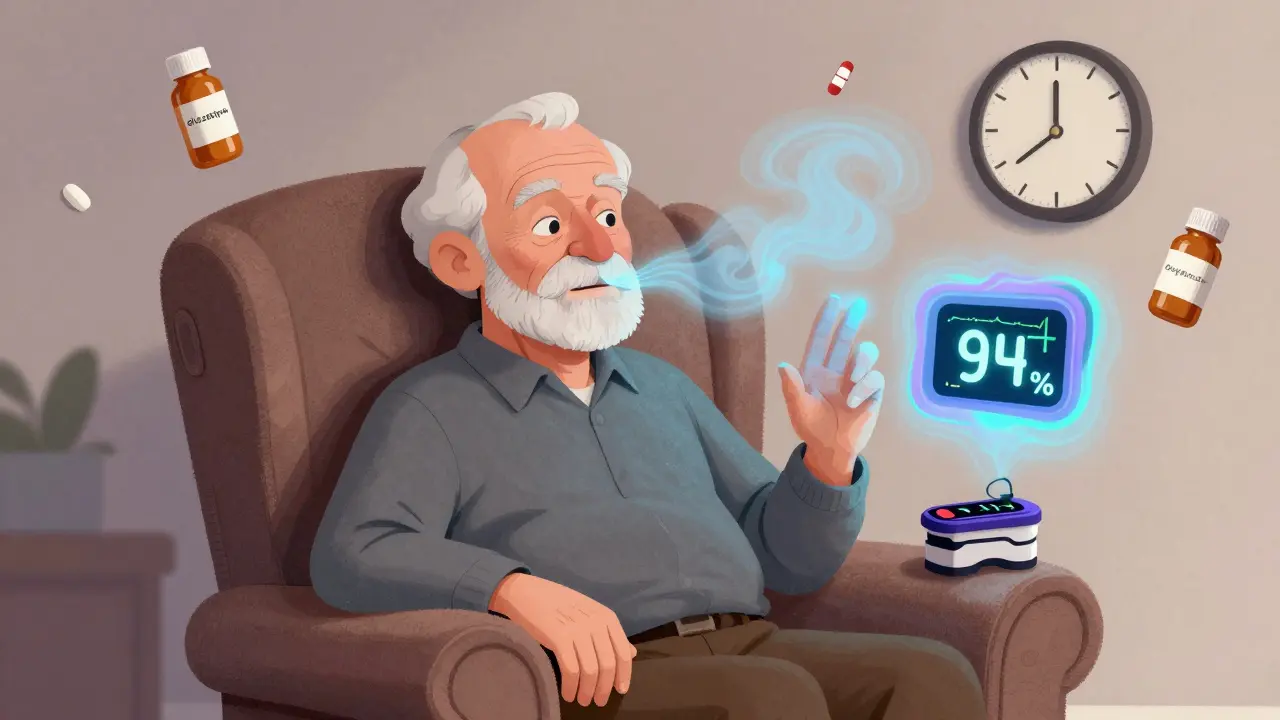
When seniors take pain meds, sleep aids, or anxiety drugs, their bodies don’t process them the same way they did at 30. By 70, liver and kidney function slow down by nearly half. That means a dose that was safe at 50 can become dangerous at 75. Over-sedation doesn’t always look like someone passed out on the couch. Sometimes it’s quiet - a slower breath, a glazed look, fingers turning blue. And if you’re not watching closely, it can turn deadly before anyone realizes what’s happening.
Why Seniors Are at Higher Risk
People over 65 are 3.5 times more likely to suffer serious side effects from sedatives and opioids than younger adults. It’s not because they’re taking too much - it’s because their bodies change. Their brains become more sensitive to these drugs. Their lungs get weaker. Their kidneys can’t flush out the medicine fast enough. Even a small amount of morphine, oxycodone, or diazepam can build up and cause breathing to slow to a dangerous crawl.
One of the biggest dangers? Supplemental oxygen. If a senior is on oxygen, their oxygen levels might still look normal on a pulse oximeter - even when they’re not breathing enough. This is called silent hypoxia. The machine says 94%, but their CO2 is rising. Their brain isn’t getting the signal to breathe. By the time their oxygen drops, it’s often too late.
What to Watch For - The Early Warning Signs
You don’t need a hospital monitor to spot trouble. Look for these five red flags:
- Slowed breathing - fewer than 8 breaths per minute, or long pauses between breaths (more than 10 seconds).
- Unusual drowsiness - not just tired, but hard to wake up. If they don’t respond to their name or a gentle shake, that’s a red flag.
- Confusion or slurred speech - sudden changes in thinking or talking, especially after taking a new or increased dose.
- Blue lips or fingertips - a sign their body isn’t getting enough oxygen.
- Low blood pressure - feeling cold, clammy, or dizzy. Their heart may be struggling to pump.
These signs don’t always happen together. One alone can be enough. A 2023 study found that 63% of overdoses in seniors were missed because caregivers only checked for one symptom - like drowsiness - and ignored the others.
Monitoring Tools That Actually Work
Hospitals use a mix of devices, but you don’t need to buy expensive gear to stay safe. Here’s what matters most:
- Pulse oximeter - A small clip on the finger that measures oxygen levels. Set the alarm to go off at 90% or lower. But remember: if they’re on oxygen, normal readings can lie.
- Capnography - This device measures carbon dioxide in breath. It’s the best tool for catching breathing problems before oxygen drops. In seniors, it catches danger 12-14 minutes earlier than pulse oximetry alone. Many home care agencies now offer portable versions.
- Respiratory rate counter - A simple watch and timer. Count breaths for 30 seconds and double it. If it’s under 8, call for help.
- Richmond Agitation-Sedation Scale (RASS) - A free, easy-to-use tool. Score from +4 (agitated) to -5 (unresponsive). A score of -3 or lower means moderate to deep sedation. If your loved one hits -3, stop giving meds and get medical help.
Some newer systems combine all these into one device - like the Integrated Pulmonary Index (IPI). It gives a single number from 1 to 10. Below 7 means trouble. One nurse in Sydney used this during a home visit and caught a 79-year-old’s breathing slowing down 11 minutes before his oxygen dropped. He got help in time.
Medication Dosing - The Hidden Killer
Doctors often give seniors the same dose they’d give a 40-year-old. That’s a mistake. The right formula for adjusting dose is simple: take the standard adult dose and reduce it by 5% for every year over 60.
Example: If the standard dose of oxycodone is 10mg, a 75-year-old should get no more than 6.25mg (10mg × [1 - 0.005 × 15]).
Many prescriptions aren’t adjusted this way. Ask your pharmacist or doctor: “Is this dose safe for someone over 70?” If they say “it’s standard,” push back. There’s no such thing as a one-size-fits-all dose for seniors.

What to Do If You Suspect an Overdose
If you see any of the warning signs, act fast:
- Stop giving any more sedatives or painkillers.
- Try to wake them. Shake gently, call their name. If they don’t respond, call emergency services immediately.
- If they’re not breathing, start CPR. Don’t wait.
- If you have naloxone (Narcan), use it. It reverses opioid overdoses. Keep it in your medicine cabinet - it’s available without a prescription in Australia.
Naloxone isn’t dangerous. It won’t hurt someone who hasn’t taken opioids. If you’re unsure, use it. It can save a life.
Home Care Tips to Prevent Problems
Most overdoses happen at home, not in hospitals. Here’s how to make it safer:
- Use a pill organizer with alarms. Many seniors forget they already took a pill and take another.
- Keep a log - write down what was taken, when, and how they looked afterward.
- Check in every 2 hours during the first 24 hours after a new dose or change.
- Don’t mix meds - alcohol, sleeping pills, and opioids together are deadly. Even one glass of wine can triple the risk.
- Train family members - don’t assume everyone knows what to look for. Show them the RASS scale. Practice counting breaths.
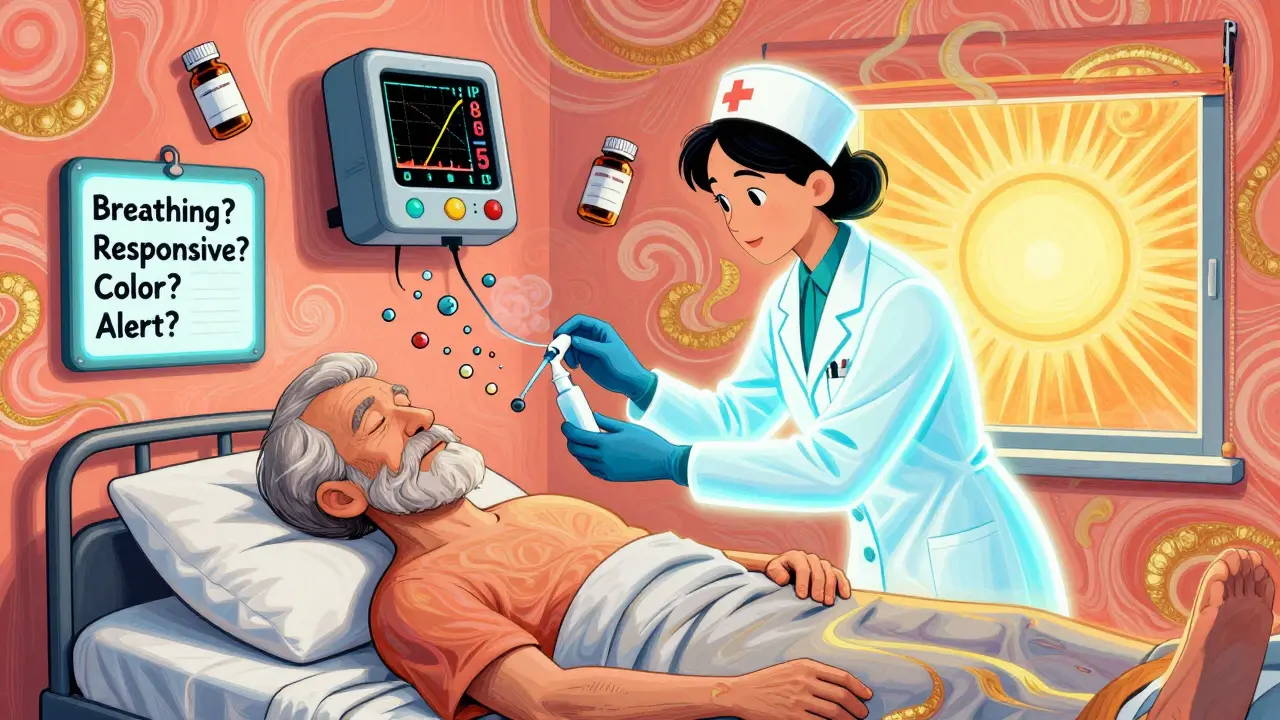
One family in Melbourne started using a simple checklist: “Breathing? Responsive? Color? Alert?” They checked every 90 minutes. Within two weeks, they caught their 81-year-old mother’s breathing slowing after a new pain patch. They called the doctor. The dose was lowered. She stayed safe.
When to Call for Help
You don’t have to wait for a crisis. If you’re worried, call. Here’s when:
- Respiratory rate is below 8 for more than 5 minutes.
- They can’t be woken up with normal stimulation.
- They’re blue, cold, or sweaty.
- They’re confused or acting strangely after taking a new drug.
- You’re unsure - and that’s enough.
Emergency services don’t mind being called. Better to be safe than sorry. In 2022, 47% of seniors who survived an overdose were saved because a family member called early - even if they weren’t sure.
Technology Can Help - But It’s Not a Replacement
Devices like capnography and IPI monitors are powerful. But 28% of monitoring failures happen because staff trust the machine more than their eyes and ears. A pulse oximeter showing 92% doesn’t mean everything’s fine. A quiet room doesn’t mean everything’s okay.
The best system is technology + human attention. Use the tools. But also watch. Listen. Feel. Touch. If something feels off, it probably is.
What’s Changing in 2026
Smart systems are now being rolled out in Australian aged care homes. Some use AI to analyze breathing patterns overnight and alert staff if danger is building. Others link to pill dispensers that pause delivery if breathing slows. But these aren’t magic. They still need trained staff to respond.
The biggest shift? Reimbursement rules. Medicare and private insurers now require proof of proper monitoring before paying for sedation procedures. That’s pushing clinics and home care services to adopt better practices. It’s not perfect - but it’s moving in the right direction.
Final Thought: You’re the Most Important Monitor
No machine will notice if your parent’s eyes look glassier than usual. No app will tell you their voice sounds thinner. Only you - the person who sees them every day - will catch the small changes that come before the big crisis.
Know the signs. Keep a log. Ask questions. Don’t be afraid to push back on a doctor’s order. And if something feels wrong - act. Because in the case of senior sedation, early action doesn’t just help. It saves lives.
Can seniors overdose on over-the-counter sleep aids?
Yes. Medications like diphenhydramine (Benadryl, Sominex) and doxylamine (Unisom) are common causes of over-sedation in seniors. These drugs build up in the body because kidneys can’t clear them efficiently. A single 50mg tablet - often labeled “safe for adults” - can cause confusion, slowed breathing, and falls in someone over 70. Always check with a pharmacist before giving any OTC sleep aid to an older adult.
Is it safe to give my elderly parent melatonin?
Melatonin is generally safer than prescription sleep drugs, but seniors still need lower doses. Studies show 0.3mg to 1mg is effective for sleep regulation in older adults. Doses over 3mg can cause next-day drowsiness, dizziness, and even breathing suppression in those with lung disease. Always start low - and watch for signs of excessive sleepiness during the day.
How do I know if my parent is on too many sedating meds?
If they’re taking three or more medications that cause drowsiness - like painkillers, anxiety meds, sleep aids, or antihistamines - they’re at high risk. This is called polypharmacy. Ask their doctor for a “medication review.” Many hospitals offer free reviews for seniors. Bring all bottles - including supplements - to the appointment. You might be surprised how many are unnecessary.
Can I use a smartwatch to monitor breathing in seniors?
Some smartwatches claim to track breathing rate, but they’re not reliable for medical use. They often misread movement as breathing, especially in seniors who move less. Pulse oximeters and capnography devices are clinically validated. Smartwatches can help track heart rate or sleep patterns, but they shouldn’t replace proper monitoring tools when sedation is involved.
Where can I get naloxone in Australia?
Naloxone (Narcan) is available without a prescription at most pharmacies in Australia. Ask the pharmacist for the nasal spray version - it’s easy to use. Keep one at home and one in your car or bag. Training videos are free on the Australian Government’s Health website. Knowing how to use it could be the difference between life and death.
What should I do if my parent refuses to be monitored?
Respect their autonomy, but explain why it matters. Say: “I’m not trying to control you - I’m trying to keep you safe so you can stay home longer.” Show them the signs you’ll watch for. Offer to check in every few hours - no machines, just you. Many seniors agree to simple checks once they understand it’s about comfort and independence, not control. If they’re in a care facility, ask for a care plan that includes regular, non-intrusive observation.
Alvin Bregman
January 13, 2026Man i just read this and i gotta say i never thought about how slow breathing could be the only sign
my grandma was on oxycodone and we thought she was just tired
turns out she was almost gone and we had no clue
Sarah Triphahn
January 14, 2026Of course the government wants you to buy gadgets. They dont want you to actually think for yourself. Just rely on machines. Classic control tactic.
Vicky Zhang
January 14, 2026Oh my god this is so important i cried reading this
my mom is 78 and takes three different meds and i never knew about the 5% per year rule
i just checked her pill bottle and she's on 10mg of oxycodone
i'm calling the pharmacy right now and i'm so grateful for this post
thank you thank you thank you
Allison Deming
January 15, 2026It is both tragic and profoundly irresponsible that our healthcare system continues to prescribe standard adult dosages to geriatric patients without regard for physiological decline. The normalization of polypharmacy in elderly populations represents a systemic failure of medical ethics and clinical diligence. One must question the integrity of providers who fail to adjust for renal clearance, hepatic metabolism, and neuroreceptor sensitivity. This is not merely negligence-it is institutionalized harm.
Susie Deer
January 16, 2026Australia gives naloxone for free but we cant even get it here without a prescription
this is why america sucks
TooAfraid ToSay
January 17, 2026you all are missing the real issue
what if the meds are being given against their will
what if theyre being drugged to keep them quiet
look at the nursing homes
its not about overdose its about control
Dylan Livingston
January 17, 2026How quaint. You think a pulse oximeter is the solution? The real tragedy is that we've outsourced human care to $20 gadgets while ignoring the fact that most seniors are lonely, neglected, and medicated into compliance. The machine says 92%? Good. Now go back to scrolling TikTok. At least someone's breathing.
Andrew Freeman
January 17, 2026capnography is cool but most families cant afford it
why not just teach people to count breaths like they did in the 80s
no tech needed just eyes and hands
says haze
January 19, 2026The RASS scale is elegant in its simplicity, yet its underutilization speaks volumes about the epistemological poverty of contemporary geriatric care. We privilege quantifiable metrics over phenomenological observation, reducing human vulnerability to algorithmic thresholds. The true diagnostic instrument remains the caregiver's intuition-a faculty systematically devalued by institutional medicine.
Sarah -Jane Vincent
January 20, 2026They're lying about the 5% rule. It's a corporate scam to sell more devices. The real dose reduction is 10% per year. I read it on a forum from a retired anesthesiologist who got fired for speaking out. The FDA knows. They just don't care.
Henry Sy
January 20, 2026my uncle took a 10mg oxycodone and just sat there like a statue for 6 hours
we thought he was meditating
turns out he was half-dead
we called 911 and they said "oh yeah that happens all the time"
like its normal to almost lose your grandpa because some doc thought he was 40
Anna Hunger
January 21, 2026This is an exceptionally well-researched and urgently needed guide. I commend the author for synthesizing clinical evidence with practical, actionable steps. The inclusion of the Richmond Agitation-Sedation Scale and the emphasis on human observation over technological dependence reflects a nuanced understanding of geriatric pharmacology. This should be distributed to every family caregiver in the United States.
Jason Yan
January 22, 2026what struck me most is how we've turned caregiving into a checklist instead of a relationship
we're so busy watching for blue lips we forget to hold their hand
the real monitor isn't the pulse oximeter
it's the person who notices their voice sounds different when they say good morning
that's the one who saves lives
not the machine
shiv singh
January 24, 2026you people are naive
they are doing this on purpose
the government wants old people to die so they can save money on social security
look at the numbers
they push these meds so the elderly die quietly and the system wins
its not an accident its a plan