
10 Jan 2026
- 11 Comments
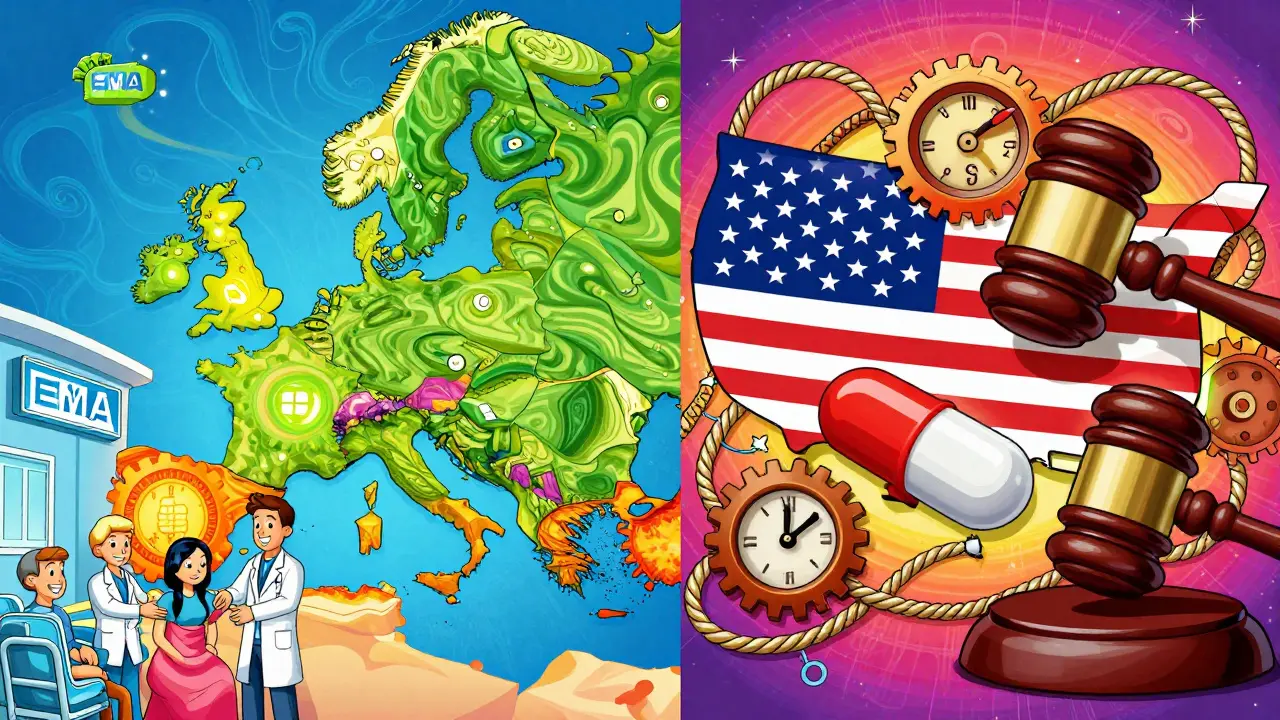
When you hear the word biosimilar, you might think it’s just another generic drug. But it’s not. Generics copy simple chemical pills. Biosimilars copy complex living-cell medicines-like those used to treat cancer, rheumatoid arthritis, and diabetes. These aren’t just copies. They’re scientifically engineered to match the original biologic drug so closely that there’s no meaningful difference in how safe or effective they are. And yet, across the Atlantic, Europe and the United States have taken wildly different paths to bring them to patients.
Europe Was First-and It Showed the Way
Europe didn’t wait. In 2006, the European Medicines Agency (EMA) approved the world’s first biosimilar, Omnitrope, a version of the growth hormone somatropin. That wasn’t a fluke. It was the start of a structured, science-backed system. The EMA created clear rules: prove similarity through rigorous lab tests, animal studies, and a few targeted human trials-not dozens of new clinical trials. They focused on the totality of evidence, not just one type of data.
That clarity changed everything. Hospitals in Germany, France, and the UK started using biosimilars in their tenders. Payers encouraged them because they cut costs by 15% to 30%. By 2024, Europe’s biosimilar market hit $13.16 billion, according to Precedence Research. In some countries, over 80% of patients with autoimmune diseases like rheumatoid arthritis now get a biosimilar instead of the original biologic. That’s not just adoption-it’s normalization.
Germany became the manufacturing hub. Companies like Sandoz, Fresenius Kabi, and Amgen built facilities there because the regulatory path was predictable. Doctors trusted them. Pharmacists substituted them without hesitation. Patients didn’t even notice the switch. That’s the power of a unified system: clear rules, early trust, and coordinated pricing.
The United States Started Late-and Got Stuck
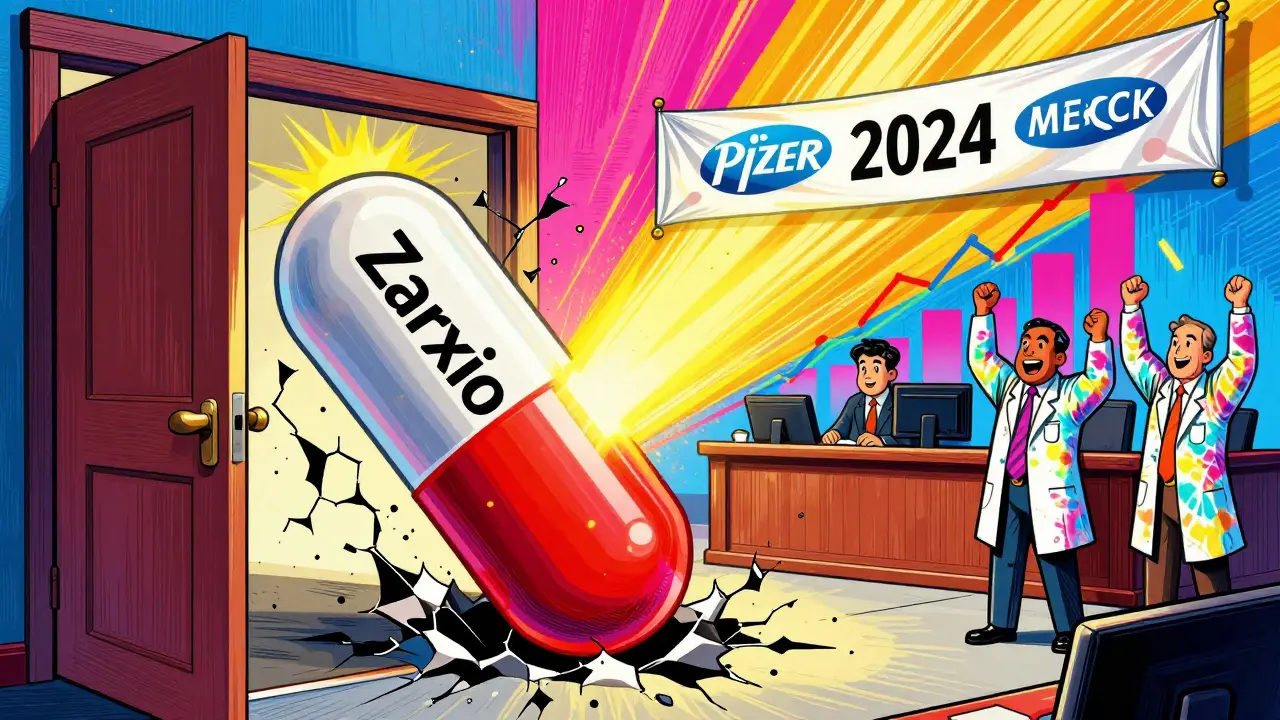
The U.S. passed the Biologics Price Competition and Innovation Act (BPCIA) in 2009, but it took six years just to approve the first biosimilar: Zarxio, a version of filgrastim, in 2015. Why the delay? It wasn’t science. It was legal.
Big pharma companies used patent thickets-layered, overlapping patents-to block competitors. They dragged companies into court for years over something called the “patent dance,” a complicated legal process under BPCIA that often led to lawsuits instead of market entry. Even when biosimilars were approved, many stayed off shelves because of settlement deals that delayed launch.
By 2024, the U.S. had approved just over 20 biosimilars, while Europe had approved over 100 since 2006. Only six of the 14 approved Humira biosimilars were actually available in the U.S. because of legal holdups. The market was $10.9 billion in 2024-big, but far behind where it could’ve been.
And then there was interchangeability. In the U.S., a biosimilar needed to prove it could be switched back and forth with the original drug without risk. That meant extra clinical trials-switching studies-that Europe never required. Those studies cost millions and took years. Many companies just gave up.
The Turning Point: FDA’s 2024 Rule Change
In June 2024, the FDA dropped the requirement for switching studies to get interchangeable status. That was a game-changer. Suddenly, the U.S. regulatory path looked a lot more like Europe’s. No more extra trials. No more delays. Just proof of similarity-analytical data, non-clinical studies, and one clinical trial to confirm safety and effectiveness.
It’s not just about rules. It’s about momentum. With Humira’s patents expiring, 14 biosimilars rushed in. Now that interchangeability is easier, more companies are jumping in. Pfizer, Merck, and Samsung Bioepis are all expanding their U.S. pipelines. The market is projected to hit $30.2 billion by 2033, growing at 18.5% annually-faster than Europe’s projected 17.34%.
The Inflation Reduction Act of 2022 helped too. It closed the Medicare Part D coverage gap, meaning seniors pay less out-of-pocket for biosimilars. That gave payers the financial incentive to push them harder.
Why Europe Still Leads in Adoption, But the U.S. Is Catching Fast
Europe still has more approved biosimilars. It has more market share. It has deeper physician trust. But the U.S. has something Europe doesn’t: a massive, untapped biologics market.
Over 118 biologic drugs are set to lose patent protection between 2025 and 2034. That’s a $232 billion opportunity, according to IQVIA. These include top-selling drugs like Enbrel, Remicade, and Keytruda. When those come off patent, the U.S. market won’t just grow-it will explode.
Europe’s growth is steady. The U.S.’s is explosive. By 2027, North America could overtake Europe as the largest biosimilar market, with Grand View Research projecting $17.2 billion in revenue compared to Europe’s slower climb.
And the therapeutic areas are shifting. The U.S. started with supportive care drugs like filgrastim. Now it’s moving into oncology and immunology-the most expensive areas. That’s where the real savings happen.
Manufacturing and Supply Chain: Europe’s Hidden Edge
While the U.S. plays catch-up on regulation, Europe still owns the manufacturing backbone. Germany, in particular, has become the global center for biosimilar production. Why? Because the regulatory clarity attracted investment. Companies didn’t have to guess if their product would be approved. They knew the path.
Today, companies from Japan, South Korea, and the U.S. are setting up manufacturing sites in Germany-not just to sell in Europe, but to export globally. The supply chain is mature. Quality control is baked in. The U.S. is building its capacity, but it’s still playing catch-up.
What’s Next? Convergence, Not Competition
The two markets are no longer opposites. They’re converging. The FDA’s 2024 rule change mirrors the EMA’s approach. Both now accept similar data packages. Both recognize that biosimilarity doesn’t require endless trials-it requires smart science.
The big difference now? Speed. Europe built its system over 15 years. The U.S. is trying to do it in five.
Patients will win. Costs will drop. Biologics that once cost $20,000 a year are now available for $10,000 or less. That’s not just savings-it’s access. A child with juvenile arthritis, a woman with breast cancer, an elderly man with diabetes-all of them can now get life-changing treatment because biosimilars exist.
The U.S. still has hurdles: fragmented payer systems, lingering physician skepticism, and complex supply chains. But the momentum is real. The regulatory barriers are falling. The patents are expiring. And the money is flowing in.
By 2030, both markets will be giants. But the story isn’t about who’s bigger. It’s about how two different systems-one patient-first, one profit-first-ended up doing the same thing: making life-saving drugs affordable.
What This Means for Patients and Providers
If you’re a doctor: don’t wait for patients to ask. Know which biosimilars are approved and interchangeable in your state. Talk to your pharmacy about substitution policies. Many biosimilars are just as effective-and far cheaper.
If you’re a patient: ask if a biosimilar is an option. It’s not a downgrade. It’s a smarter choice. The science is solid. The safety data is strong. And the cost difference can mean the difference between staying on treatment or dropping out.
If you’re a policymaker: look at Europe’s playbook. Clear rules. Early trust. No unnecessary barriers. That’s how you scale innovation without sacrificing safety.

Key Differences at a Glance
| Factor | Europe | United States |
|---|---|---|
| First biosimilar approved | 2006 (Omnitrope) | 2015 (Zarxio) |
| Total biosimilars approved | Over 100 | Over 20 |
| Market size (2024) | $13.16 billion | $10.9 billion |
| Interchangeability requirement | Not required | Required until June 2024 |
| Regulatory approach | Totality-of-evidence, minimal clinical trials | Now aligned, but historically stricter |
| Primary therapeutic focus | Oncology, rheumatology | Initially supportive care, now expanding to oncology |
| Market growth (CAGR 2025-2034) | 17.34% | 17.5-18.5% |
| Major manufacturers | Sandoz, Fresenius Kabi, Amgen | Pfizer, Merck, Samsung Bioepis |
Frequently Asked Questions
Are biosimilars the same as generics?
No. Generics are exact chemical copies of simple, small-molecule drugs like aspirin or metformin. Biosimilars are copies of complex, large-molecule biologic drugs made from living cells-like antibodies or hormones. Because they’re made from living systems, biosimilars can’t be identical, but they’re proven to be highly similar with no meaningful difference in safety or effectiveness.
Why are biosimilars cheaper than the original biologics?
Biologics cost billions to develop and require years of clinical trials. Biosimilars don’t need to repeat all that work. They use the original drug’s data to prove similarity, cutting development costs by 50-70%. That savings gets passed on-typically 15-30% lower than the original price.
Can I be switched from a biologic to a biosimilar without my doctor’s permission?
It depends on your state and insurance. In Europe, many countries allow automatic substitution. In the U.S., only biosimilars with “interchangeable” status can be substituted without a doctor’s note-and only if your state allows it. Most states still require prescriber approval, even for interchangeable biosimilars.
Are biosimilars safe?
Yes. Every biosimilar must meet the same high safety and quality standards as the original biologic. The EMA and FDA require extensive analytical testing, animal studies, and at least one clinical trial to confirm safety and effectiveness. Millions of patients worldwide have used biosimilars with no increase in adverse events compared to the original drugs.
Why did it take so long for the U.S. to catch up?
Legal and financial barriers slowed things down. Patent lawsuits, complex reimbursement rules, and the old requirement for switching studies made it risky and expensive for companies to enter the market. The FDA’s 2024 rule change removing the switching study requirement is the biggest step toward catching up with Europe.
What’s the biggest barrier to biosimilar use today?
Lack of awareness. Many doctors still think biosimilars are less effective or riskier. Patients are often told “stick with the brand.” Education is the final hurdle. Once providers and patients understand the science, adoption skyrockets-as it already has in Europe.
What to Watch Next
The next wave of biosimilars will target the biggest-selling biologics: Humira, Keytruda, Enbrel, and Rituxan. If the U.S. keeps its current pace, we could see 50+ new biosimilars enter the market by 2030. That’s not just competition-it’s a revolution in how we pay for medicine.
Europe showed it could be done. The U.S. is proving it can be done faster. And patients? They’re the ones who win.
Ben Kono
January 10, 2026Europe got it right from the start no nonsense just approve the science and let the market work why did we make it so damn complicated
Rinky Tandon
January 11, 2026The FDA's 2024 rule change is nothing short of revolutionary the entire biosimilar paradigm is being rewritten in real time the old model was a regulatory quagmire built on patent litigation theater and bureaucratic inertia now we're seeing true convergence with EMA standards and frankly it's about time the science doesn't care about your legal loopholes
Cassie Widders
January 13, 2026I've been on a biosimilar for my arthritis for two years now. No issues. Cheaper. Same results. My pharmacist switched me without asking. I didn't even notice.
Konika Choudhury
January 14, 2026USA still thinks it can outsmart the world with lawsuits and patents while Europe just gets the medicine to people who need it we are not behind we are just too busy protecting profits not people
Darryl Perry
January 16, 2026The data is clear. The regulatory alignment is significant. The market dynamics are shifting. The economic implications are profound. The patient outcomes are improved. The question is not whether the U.S. is catching up. The question is why it took so long.
Windie Wilson
January 17, 2026So Europe had a 9-year head start and still didn't figure out how to make a profit off it? Meanwhile the U.S. turned biosimilars into a legal thriller with a side of corporate espionage. We're not behind. We're just doing it with more drama.
Daniel Pate
January 17, 2026It's fascinating how two systems built on different philosophical foundations-Europe's precautionary consensus versus America's litigation-driven innovation-ended up converging on the same scientific truth. The real question isn't who did it better, but why we needed two entirely different paths to reach the same conclusion about safety and accessibility.
Jose Mecanico
January 19, 2026I work in hospital pharmacy. The switch from originator to biosimilar has been smooth. Nurses don't even blink anymore. Patients ask if it's the same. We show them the data. They're relieved. It's simple.
Monica Puglia
January 20, 2026I just got my Humira biosimilar refill and I'm so happy 😊 My copay dropped from $500 to $80. I didn't know I could ask. Doctors need to talk more about this. This isn't just savings-it's dignity.
steve ker
January 22, 2026Europe's system is outdated. Slow. Bureaucratic. The U.S. is catching up not because it was behind but because it was always smarter. Innovation doesn't wait for paperwork
George Bridges
January 22, 2026The fact that patients in both regions are now getting the same life-saving treatments at a fraction of the cost is what matters. It doesn't matter if one region moved faster or slower. What matters is that the science won. And that's something we can all agree on.