
18 Nov 2025
- 14 Comments
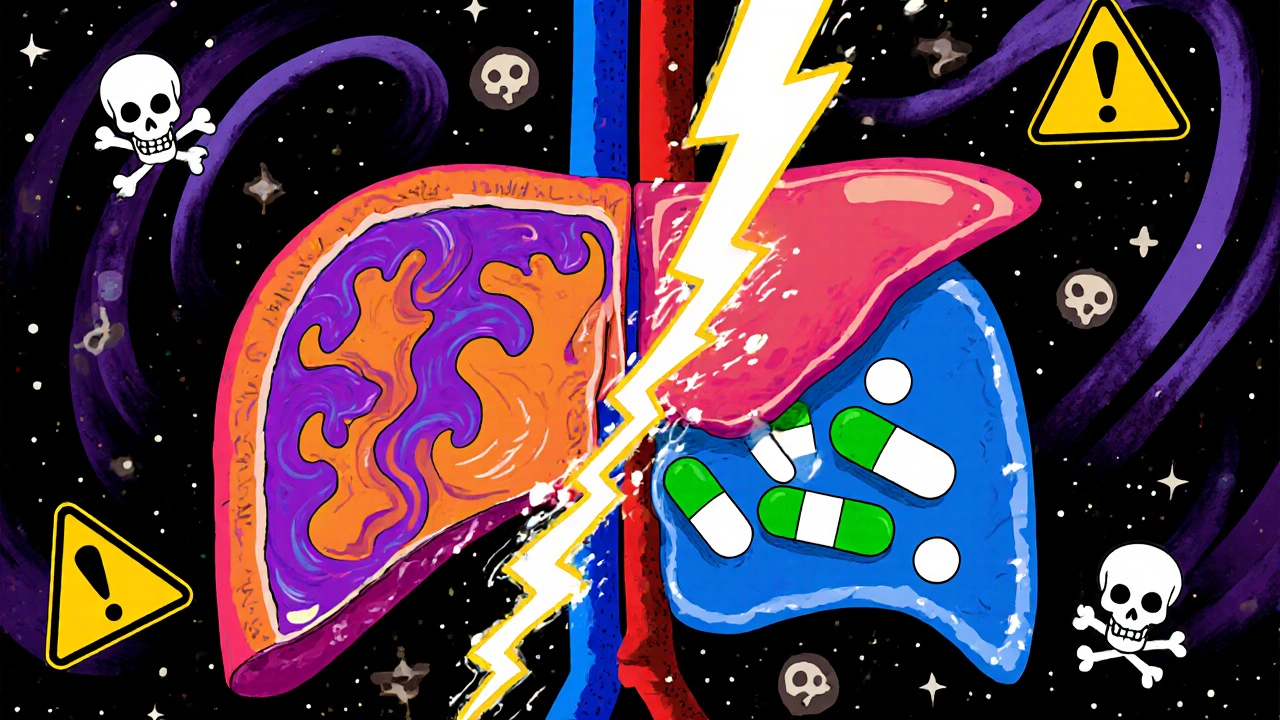
Drinking alcohol while taking medication might seem harmless-after all, many people have a glass of wine with dinner or a beer after work. But when alcohol meets certain drugs, the results can be deadly. It’s not just about getting more drunk. It’s about your body reacting in ways you can’t predict. Some combinations cause your liver to shut down. Others slow your breathing to a stop. And many people have no idea they’re at risk.
Why Alcohol and Medications Don’t Mix
Your liver doesn’t just process alcohol. It also breaks down most medications. When both are in your system at the same time, they compete for attention. This can make the medication stick around longer than it should-or break down too fast. Either way, it messes with how well it works.
Alcohol also affects your brain and nervous system. So does a lot of medication-painkillers, anxiety pills, sleep aids, even some cold medicines. When you combine them, the effects don’t just add up. They multiply. That’s called a synergistic effect. One plus one doesn’t equal two. It equals five, or ten.
The FDA says about 100 prescription drugs and 700 over-the-counter products carry warnings about alcohol. That’s not a small number. It’s a warning sign you can’t ignore.
Deadly Combinations: The High-Risk Medications
Some medications are far more dangerous with alcohol than others. These aren’t just "be careful" warnings. These are "could kill you" situations.
- Opioids (oxycodone, hydrocodone, morphine, methadone): Mixing these with alcohol slows your breathing to a dangerous level. In 2020, 20% of opioid overdose deaths involved alcohol. Extended-release versions are especially risky-alcohol can cause the drug to release all at once, flooding your system. That’s why the FDA pulled a popular extended-release hydromorphone off the market after studies showed it could cause a sixfold spike in drug levels when taken with alcohol.
- Benzodiazepines (Xanax, Valium, Ativan): These are used for anxiety and sleep. Alcohol does the same thing, but worse. A 2019 study found that combining them increases overdose risk by 24 times. You don’t just feel drowsy-you can stop breathing.
- Acetaminophen (Tylenol): This common painkiller turns toxic when mixed with alcohol. Your liver turns it into a poison called NAPQI. Normally, your body neutralizes it with glutathione. But alcohol drains your glutathione supply. Without it, NAPQI destroys liver cells. The FDA estimates this causes 56,000 ER visits, 26,000 hospital stays, and nearly 500 deaths every year in the U.S. alone.
- Metronidazole (Flagyl): This antibiotic causes a brutal reaction with alcohol. You’ll get nausea, vomiting, flushing, rapid heartbeat, and chest pain. It’s not just uncomfortable-it can send you to the hospital. The Illinois Poison Center says you must wait at least 72 hours after your last dose before drinking.
Other Dangerous Interactions You Might Not Expect
Not all risky combinations are life-threatening right away. But they still cause serious harm over time.
- NSAIDs (ibuprofen, naproxen): These reduce inflammation and pain. But with alcohol, they increase your chance of stomach bleeding by 3 to 5 times. That’s not just an upset stomach. It’s internal bleeding that can require surgery.
- Antidepressants (SSRIs like Prozac, Zoloft): Alcohol makes depression worse. It also reduces how well the medication works. People who drink while on these drugs often feel more hopeless, more tired, and more prone to suicidal thoughts.
- Diabetes medications (sulfonylureas like glipizide): Alcohol can drop your blood sugar dangerously low-by up to 300%. That’s a medical emergency. Even metformin, a common diabetes drug, can cause lactic acidosis if you drink too much. The advice? One drink a day, max. Better yet? Skip it.
- Antihistamines (Benadryl, Zyrtec): These make you drowsy. Alcohol makes you even more drowsy. Combine them, and you’re at risk for falls, car crashes, or accidents at home.
- ADHD meds (Adderall, Ritalin): These stimulants mask how drunk you feel. You might think you’re fine to drive-but your reaction time is still slowed. Plus, they raise your heart rate. Alcohol does too. Together, they can stress your heart beyond its limit.

Who’s Most at Risk?
It’s not just about what you take. It’s about who you are.
People over 65 are the most vulnerable. Their livers process alcohol slower. Their bodies hold less water, so alcohol concentrates more in their blood. And they take more medications-on average, 14 prescriptions a year. The Beers Criteria, used by doctors to identify unsafe drugs for older adults, lists 30 medications that are dangerous with alcohol, including sleep aids, muscle relaxers, and first-gen antihistamines.
Women are at higher risk too. They have less body water and more body fat than men. That means alcohol stays in their blood longer. A drink that doesn’t affect a man much can have a strong effect on a woman. Add medication to the mix, and the danger spikes.
People with mental health conditions are also at higher risk. Studies show they’re 3.5 times more likely to mix alcohol with meds. Depression, anxiety, PTSD-these often come with prescriptions. And alcohol feels like relief. But it’s a trap. It makes symptoms worse and increases overdose risk.
Veterans face a grim reality. The VA found that 30% of veteran suicides involved alcohol and prescription drugs. Many are on painkillers for injuries, antidepressants for PTSD, and sleep meds for insomnia. Alcohol becomes a coping mechanism. And it’s killing them.
What You Should Do
You don’t need to be a doctor to protect yourself. Here’s what actually works:
- Read the label. Every prescription bottle and OTC box should say if alcohol is unsafe. If it doesn’t, ask your pharmacist. They see this every day.
- Ask your pharmacist. Pharmacists are trained to spot dangerous interactions. They’re not just the people who hand you pills. They’re your safety net. Ask: "Can I drink alcohol with this?" Don’t assume it’s safe.
- Keep a list. Write down every medication you take-prescription, OTC, supplements, herbal. Bring it to every doctor’s visit. If you’re on 10 drugs, one of them might react badly with alcohol.
- Wait it out. If you’re on metronidazole, wait 72 hours after your last dose. For some drugs, you need to wait even longer. When in doubt, skip it.
- Know your limits. Even if a drug isn’t on the "dangerous" list, alcohol can still make side effects worse. Dizziness? Nausea? Fatigue? Alcohol makes all of those worse.

What Doctors and Pharmacies Are Doing Now
Healthcare systems are waking up to this problem.
Electronic health records like Epic now block doctors from prescribing high-risk meds if the patient has a history of alcohol use. It’s a hard stop-no bypass. The American Medical Association now requires doctors to screen for alcohol use during medication consultations. That’s new. In 2022, only 35% of primary care doctors did this routinely. Now, they’re being pushed to change.
The CDC launched a $2.5 million public awareness campaign in January 2023 called "Alcohol and Medicine Don’t Mix." It’s running on social media, in pharmacies, and on hospital pamphlets. They’re not just telling people to be careful. They’re showing real stories-people who ended up in the ER, or worse.
And there’s new science. Researchers are now testing for genetic differences in liver enzymes like CYP2E1. Some people have a variant that makes them 4.7 times more likely to suffer liver damage from alcohol and acetaminophen. This could one day lead to personalized warnings: "Your genes make you especially vulnerable. Never drink with Tylenol."
Bottom Line
Alcohol isn’t just a drink. When you’re on medication, it’s a chemical wildcard. You can’t predict how it will react. And the consequences aren’t theoretical. People die from this every day.
It’s not about being perfect. It’s about being smart. If you take any kind of medication-even something as simple as ibuprofen or Benadryl-ask yourself: "Is this worth the risk?" If you’re not sure, don’t drink. Your liver, your brain, and your life depend on it.
Can I have one drink with my medication?
It depends on the medication. For some, like metronidazole or opioids, even one drink can be dangerous. For others, like certain antidepressants, one drink might not cause immediate harm-but it can still make side effects worse and reduce the drug’s effectiveness. When in doubt, skip it. There’s no safe amount if you’re on a high-risk drug.
What if I forgot and had a drink? Should I go to the ER?
If you took an opioid, benzodiazepine, or metronidazole and drank alcohol, yes-go to the ER. Symptoms like extreme drowsiness, trouble breathing, confusion, vomiting, or a racing heart need immediate attention. For other meds, like NSAIDs or antihistamines, monitor yourself. If you feel unusually dizzy, nauseous, or weak, call your doctor. Don’t wait for a crisis.
Do herbal supplements interact with alcohol too?
Yes. Kava, valerian root, and melatonin can all increase drowsiness when mixed with alcohol. St. John’s Wort can raise the risk of serotonin syndrome when combined with alcohol and antidepressants. Many people think "natural" means safe-but that’s not true. Always check with your pharmacist before mixing herbs with alcohol.
How long should I wait after stopping a medication before drinking?
It varies. For metronidazole, wait 72 hours. For some antidepressants, it’s about 1-2 weeks after stopping. For opioids or benzodiazepines, it’s not just about clearing the drug-it’s about your body returning to normal function. Talk to your doctor. Don’t guess. Even after you stop the medication, your system may still be sensitive.
Are there any medications that are safe with alcohol?
Some, like certain antihistamines (loratadine, cetirizine) or topical creams, have minimal interaction. But "minimal" doesn’t mean "safe." Even low-risk combinations can cause dizziness or drowsiness, especially in older adults. The safest approach is to avoid alcohol unless your doctor or pharmacist says it’s okay.
What to Do Next
Start today. Look at your medicine cabinet. Write down every pill, capsule, or liquid you take regularly. Then, check each one. Does it say "avoid alcohol"? If not, call your pharmacy. Ask them. They’ll tell you in seconds.
If you’re helping an older parent or someone with chronic illness, help them do the same. They might not realize how dangerous this is. A simple conversation could save their life.
Alcohol and medication interactions aren’t rare. They’re common. And they’re preventable. You don’t need to be a scientist to protect yourself. Just be informed. Be cautious. And when in doubt-skip the drink.
Sherri Naslund
November 18, 2025lol so now even ibuprofen is a death sentence? i took tylenol with a beer last night and i’m still typing. maybe the real danger is people like you who turn every sip into a horror movie. 🤷♀️
Ashley Miller
November 19, 2025Funny how the FDA only "warns" about alcohol after 700 OTC products are already in every pharmacy. Coincidence? Or did Big Pharma just want you to buy more meds when the first one didn't work because the alcohol "interfered"? Wake up. They profit from your fear.
Martin Rodrigue
November 19, 2025The scientific literature is unequivocal: concurrent consumption of ethanol and hepatotoxic agents significantly elevates the risk of acute liver injury. The synergistic inhibition of cytochrome P450 enzymes, particularly CYP2E1, results in metabolic overload and oxidative stress. This is not anecdotal; it is biochemically quantifiable.
rachna jafri
November 20, 2025America wants you scared so you’ll take more pills and drink less. But in India, we’ve been mixing whiskey with painkillers for generations. Our grandmas used to take aspirin with rum after childbirth. Who died? No one. The real poison is your fear. Your fear is what kills you, not the alcohol.
darnell hunter
November 20, 2025The data presented is statistically significant and peer-reviewed. To dismiss these findings as fearmongering is not only intellectually negligent but dangerously irresponsible. The CDC’s mortality figures are not speculative-they are archival. Ignorance is not cultural superiority.
Hannah Machiorlete
November 22, 2025I took Xanax with wine once. Felt like my brain turned to wet paper. Woke up on the floor. Didn’t go to the ER. Just cried for 3 hours. Now I just take the pill and stare at the ceiling. No wine. No more. I’m not brave. I’m just tired of nearly dying.
Bette Rivas
November 22, 2025There’s a lot of misinformation here, but the core message is correct. Let me clarify: acetaminophen toxicity isn’t just about glutathione depletion-it’s also about dose timing and chronic vs. acute alcohol use. A single drink with a 500mg tablet is low-risk for most healthy adults. But daily drinkers on 3000mg+ acetaminophen? That’s a ticking time bomb. Also, metronidazole’s disulfiram-like reaction is dose-dependent. One sip won’t kill you, but 200ml of vodka? Hospital. And yes, herbal supplements like kava and valerian are absolutely risky-they’re GABAergics, same as benzos. Pharmacists see this daily. Ask them.
prasad gali
November 24, 2025The CYP450 enzyme polymorphisms are not being adequately addressed in public discourse. Individuals with CYP2D6 poor metabolizer phenotypes are at exponentially higher risk when combining SSRIs with ethanol. Furthermore, the pharmacokinetic half-life extension induced by ethanol ingestion is well-documented in clinical pharmacology literature. This is not a lifestyle issue-it is a pharmacogenomic imperative.
Paige Basford
November 25, 2025I get it, I really do. But sometimes you just want one glass of wine after a long day, you know? I take Zoloft and I’ve had wine maybe 3x in the last year. I don’t feel weird. I don’t crash. Maybe it’s not all black and white? I just wish people would stop acting like every sip is a crime.
Ankita Sinha
November 27, 2025This post is a gift. I’m from India, and I’ve seen so many elders mix painkillers with local liquor because they think "it helps with the pain." No one tells them. I printed this out and gave copies to my aunt and uncle. They cried. Then they stopped. Small change matters. Thank you for not sugarcoating it.
Kenneth Meyer
November 28, 2025We treat alcohol like a harmless ritual. But it’s a neurochemical disruptor. And when you layer it over pharmaceuticals designed to stabilize your biology, you’re not just drinking-you’re performing a high-risk experiment on your own nervous system. The question isn’t whether it’s dangerous. The question is: why do we keep pretending it isn’t?
Donald Sanchez
November 30, 2025bro i took adderall and whiskey last night and i was zooming like a jet 😎 but then i passed out and woke up at 4am sweating and my heart was like "wtf" 🤯 maybe next time i’ll just take a nap instead lmao
Abdula'aziz Muhammad Nasir
December 1, 2025In Nigeria, we have a saying: "The body remembers what the mind forgets." Many of our elders drink palm wine with traditional medicines. It has worked for centuries. But modern pharmaceuticals are different. They are potent, precise, and unforgiving. The answer is not to abandon tradition-but to adapt it. Consult. Listen. Respect the science without losing your culture.
Danielle Mazur
December 2, 2025This is all a distraction. The real issue? The government and pharmaceutical companies want you dependent. They profit from your anxiety, your pain, your insomnia. They scare you into never drinking again so you’ll keep buying their pills. The alcohol warning labels? They’re not for your safety. They’re for their liability.