

29 Jan 2026
- 11 Comments
Not all coughs are the same - and neither are the medicines that treat them
You’ve got a cough. It’s keeping you up at night, making you wince during meetings, or just plain annoying. So you head to the pharmacy aisle and grab the first bottle with "cough relief" on the label. Maybe it’s Delsym. Maybe it’s Mucinex. But here’s the thing: if you picked the wrong one, you’re not helping - you might actually be making things worse.
There are two main types of over-the-counter cough medicines, and they do completely opposite things. One stops your cough. The other helps you cough up mucus. Mixing them up is common - and dangerous. In fact, a 2022 survey found that 43% of people used the wrong kind for their type of cough. That’s nearly half of us.
What’s a cough suppressant, and when should you use it?
A cough suppressant, also called an antitussive, works by quieting the cough reflex in your brain. It doesn’t treat the cause of your cough. It just tells your body to stop triggering it. The most common ingredient? Dextromethorphan. You’ll find it in brands like Delsym, Robitussin Maximum Strength, and many store-brand versions.
This medicine is meant for dry, hacking coughs - the kind that doesn’t bring up anything. Think of it like the cough you get after a cold starts, or the tickle in your throat from post-nasal drip. If you’re coughing because your airways are irritated but nothing’s coming out, suppressants help you rest, sleep, and get through the day.
Typical doses are 15-30 mg every 4 to 8 hours for immediate-release forms, or 30 mg every 12 hours for extended-release versions like Delsym. It’s not a painkiller. It doesn’t reduce fever. It just quiets the signal that makes you cough.
But here’s the catch: if you’re coughing up phlegm - thick, yellow, green, or clear - using a suppressant is like putting a lid on a boiling pot. You’re trapping mucus in your lungs. That can lead to infections getting worse. The American College of Chest Physicians gives a strong warning: don’t use suppressants for productive coughs, especially with bronchitis. Evidence? Grade 1B - meaning it’s a firm recommendation backed by solid research.
What’s an expectorant, and why it’s not what you think
An expectorant doesn’t stop your cough. It makes your cough more effective. The only OTC expectorant approved by the FDA is guaifenesin. You’ll see it in Mucinex, Robitussin Chest Congestion, and generic versions.
How does it work? Guaifenesin increases fluid in your airways. That thins out thick mucus, making it easier to cough up. Think of it like adding oil to a rusty hinge - it doesn’t fix the hinge, but it lets it move better. Your body still has to do the work. You still have to cough. But now, the mucus comes out faster and cleaner.
Doses range from 200-400 mg every 4 hours for immediate-release, or 600-1200 mg every 12 hours for extended-release. But here’s the secret most people miss: guaifenesin needs water to work. You need to drink at least 64 ounces (about 2 liters) a day. Without enough hydration, it’s basically useless. Studies show people who don’t drink enough water get little to no benefit - even if they take the pill correctly.
Real users notice results. A ReviewMeta analysis of over 12,500 online reviews found 78% of people using Mucinex reported noticeable mucus clearance within 24 hours - as long as they drank enough fluids. One Amazon reviewer wrote: “Finally able to sleep through the night with chest congestion.” That’s the goal.
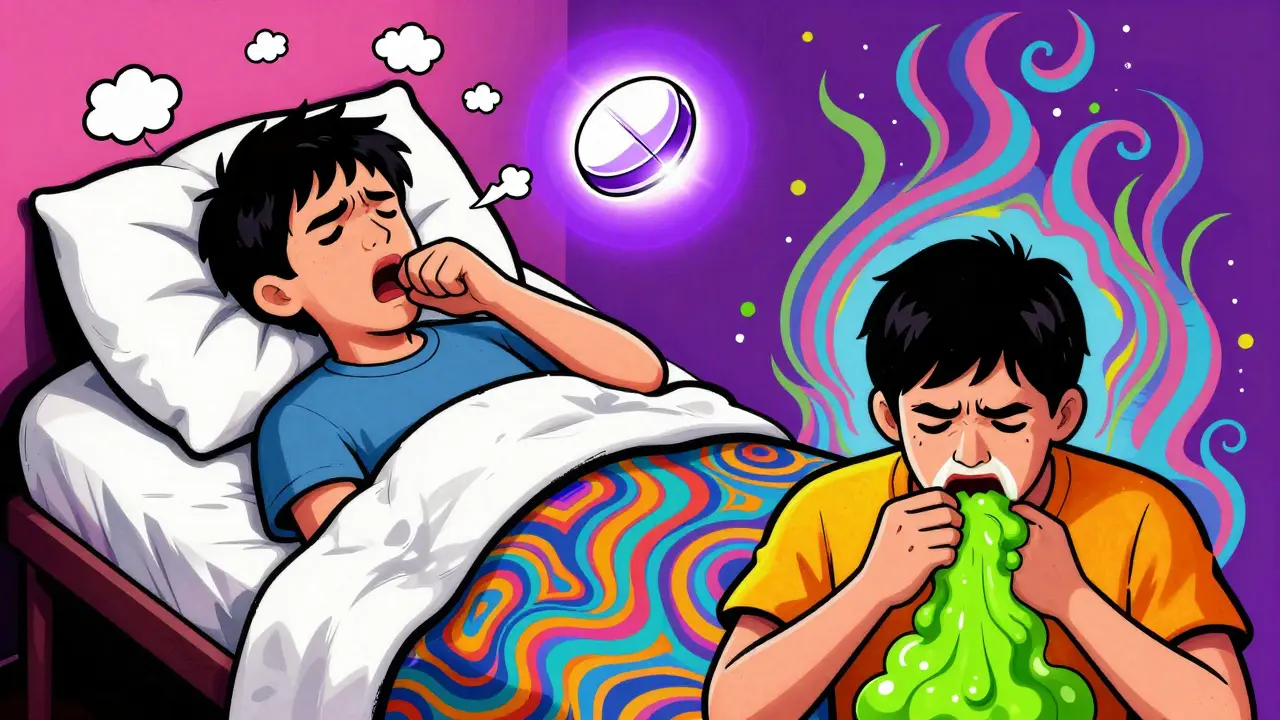
The dangerous combo: why multi-symptom cough medicines often backfire
Pharmacies love selling combo products. “Cough, cold, and congestion relief” in one bottle. Sounds convenient, right? But here’s the problem: most of them mix a suppressant (dextromethorphan) with an expectorant (guaifenesin). That’s like giving someone both a brake and an accelerator at the same time.
Why does that matter? Because your cough type changes. You might start with a dry cough from a viral infection. Then, after a day or two, your body starts producing mucus. If you’re still taking a combo product, you’re now suppressing a cough that should be clearing mucus. That’s when complications happen.
Reddit threads are full of stories like this: “I used Robitussin DM for my phlegmy cough for 3 days before realizing I should’ve used the chest congestion version - no wonder I felt worse.” That’s not rare. Pharmacists say 40% of OTC cough medicine consultations are because someone picked the wrong product.
The FDA even issued a safety alert in 2021 about these combo products being used in kids under 6. Why? Because parents think “more ingredients = better.” But the truth is, you don’t need every symptom treated at once. Just treat the one you have.
How to tell what kind of cough you have - the simple test
You don’t need a doctor to figure this out. Just ask yourself two questions:
- When you cough, does anything come up? Mucus? Phlegm? Clear or colored spit?
- Is your cough dry, scratchy, and doesn’t seem to produce anything?
If you’re coughing up mucus - even a little - you need an expectorant. Guaifenesin. Mucinex. Something with guaifenesin as the main ingredient.
If you’re coughing with nothing coming out, and it’s keeping you awake or making your chest sore - then a suppressant like dextromethorphan is the right call.
The CDC has a free 3-question tool online. Studies show 68% of people who use it correctly identify their cough type. That’s way better than guessing.

What to avoid - and when to see a doctor
There are red flags you shouldn’t ignore.
- Don’t use cough suppressants if your mucus is yellow, green, or bloody. That’s a sign of infection. Suppressing the cough lets bacteria sit in your lungs.
- Don’t give these to kids under 4. The FDA says no OTC cough or cold medicine for kids under 4. For kids 4-6, only use if a doctor says so.
- Don’t take dextromethorphan if you’re on an MAOI antidepressant. It can cause serotonin syndrome - a rare but dangerous reaction.
- Don’t use guaifenesin if you’re dehydrated. It won’t work, and you’ll waste your money.
See a doctor if your cough lasts more than 10 days, gets worse, or comes with fever, shortness of breath, or chest pain. That’s not just a cold. That could be bronchitis, pneumonia, or something else.
What’s new in 2026 - and what’s changing
The OTC cough medicine market is changing. Consumers are moving away from combo pills. Sales of single-ingredient products are up 17% since 2020. People are learning: simpler is better.
In March 2023, Mucinex launched a new version called MoistureLock - it’s designed to release hydration slowly, helping guaifenesin work longer. And the FDA is working on new labeling rules. By 2024, expect to see pictograms on bottles: a stop sign for suppressants, a lung with a drain for expectorants. Pilot studies show this could cut consumer confusion by 35%.
Meanwhile, researchers are testing a new dextromethorphan formula with naloxone - meant to block misuse. High doses of dextromethorphan can cause hallucinations or dissociation. It’s not common, but it happens. This new version could make abuse harder.
Bottom line: match the medicine to the cough
Here’s the truth: OTC cough medicines are tools. Not magic pills. They don’t cure colds. They just help you feel better while your body heals.
Use a suppressant for a dry, tickly cough that won’t let you sleep.
Use an expectorant for a chesty, phlegmy cough that won’t clear.
Drink water with expectorants. Skip suppressants if you’re coughing up mucus. Avoid combo products unless you’re sure you need both.
And if you’re ever unsure? Look at the active ingredients. Don’t trust the brand name. Don’t trust the color of the bottle. Read the label. Find dextromethorphan or guaifenesin. That’s all you need to know.
Your cough is your body’s way of telling you something. Listen to it. Then treat it right.
Ryan Pagan
January 31, 2026I used to grab whatever cough stuff had the biggest bottle until I got pneumonia from suppressing a phlegmy cough. Seriously. Guaifenesin + water saved my life. Now I read labels like they’re sacred texts. No more guessing.
Sheryl Dhlamini
February 1, 2026OMG YES. I took Delsym for my chest cold last winter and felt like I was drowning in my own lungs. I didn’t know the difference until my roommate yelled at me to stop taking the ‘sleepy cough medicine’ and switch to Mucinex. Best wake-up call ever.
Laia Freeman
February 2, 2026so like… guaifenesin needs water?? like… a LOT?? i thought it was just magic fairy dust in a pill 😭 i’ve been wasting money for years
Megan Brooks
February 4, 2026It’s fascinating how something so simple-drinking water with an expectorant-is overlooked. We treat medicine like a vending machine: insert dollar, get relief. But the body isn’t a machine. It’s a system. And systems need balance. Guaifenesin isn’t a cure-it’s a facilitator. It needs hydration to do its job. That’s not pharmacology. That’s biology. And we forget that.
Our culture wants quick fixes. But healing isn’t fast. It’s patient. It’s consistent. It’s drinking eight glasses when you’re too tired to move. It’s choosing the right tool, not the loudest brand.
Maybe that’s why so many people feel worse after taking combo meds. They’re not treating symptoms-they’re fighting their own bodies.
The FDA’s pictogram idea? Brilliant. Visual language cuts through the noise. A stop sign for suppression. A drain for expulsion. Simple. Clear. Human.
We don’t need more pills. We need more awareness.
DHARMAN CHELLANI
February 5, 2026lol this is basic. everyone knows this. why is this even an article? you just read the label. duh.
LOUIS YOUANES
February 6, 2026Let’s be real-this whole thing is a corporate scam. Dextromethorphan was originally a research chemical. Guaifenesin? A byproduct of industrial solvents. The FDA approved them because they’re cheap, not because they’re brilliant. And now we’re told to trust ‘Mucinex’ like it’s a saint? Please. The real solution? Honey. Steam. Rest. Everything else is just profit wrapped in a plastic bottle.
And don’t even get me started on ‘MoistureLock.’ That’s just marketing jargon for ‘we added a timer.’ You’re still just drinking water. The pill doesn’t hydrate you. Your glass does.
Stop buying into the myth. Your body doesn’t need chemical choreography. It needs sleep. And silence. And maybe a humidifier.
Kacey Yates
February 6, 2026the fact that people still buy combo meds is wild. i once took one for a dry cough and ended up with a wet cough i couldnt clear for weeks. i swear if i hadnt read this thread i wouldve kept blaming myself. read the active ingred. thats it. no more guessing.
Robin Keith
February 7, 2026And yet… we live in a world where a child can be given a syrup that contains dextromethorphan, and the parent believes they’re doing the right thing… because the bottle says ‘for cough relief’… and the label is printed in Comic Sans… and the color is blue… and the child’s grandmother used it in 1978… and now… now… we are trapped in a cycle of inherited ignorance… a pharmacological inheritance… passed down like a family recipe… that kills… slowly… silently…
What is a cough, really? Is it disease? Or is it the soul’s protest against the body’s surrender? When we suppress it… are we silencing the truth? When we force it out… are we forcing the body to speak… even when it’s exhausted?
Perhaps… the real medicine… is not in the bottle… but in the quiet… the listening… the refusal to rush… to fix… to numb…
But then… what do I know? I’m just a man… with a cough… and too much time… to think about it.
Keith Oliver
February 8, 2026You people are overthinking this. It’s literally one sentence: if you’re coughing up junk, use Mucinex. If you’re coughing air, use Delsym. Done. Stop writing essays. I’ve been treating my own coughs since I was 12. You don’t need a PhD to read a label. Just don’t be lazy.
Andy Steenberge
February 8, 2026Thank you for this. So many people don’t realize that coughing isn’t a problem to be eliminated-it’s a process to be supported. The body isn’t broken. It’s working. And our job isn’t to shut it down, but to help it work better.
Hydration isn’t optional with guaifenesin. It’s the engine. No water? No results. It’s not a pill-it’s a partnership.
And combo products? They’re like giving someone a hammer when they need a screwdriver. Convenient? Maybe. Effective? Never.
Read the active ingredients. Ignore the branding. Your body will thank you.
kabir das
February 9, 2026why do people even need to read this? just dont take anything. let your body heal. everything is a scam anyway. you dont need medicine for a cold. just sleep. and drink tea. and stop being weak.