
9 Dec 2025
- 8 Comments
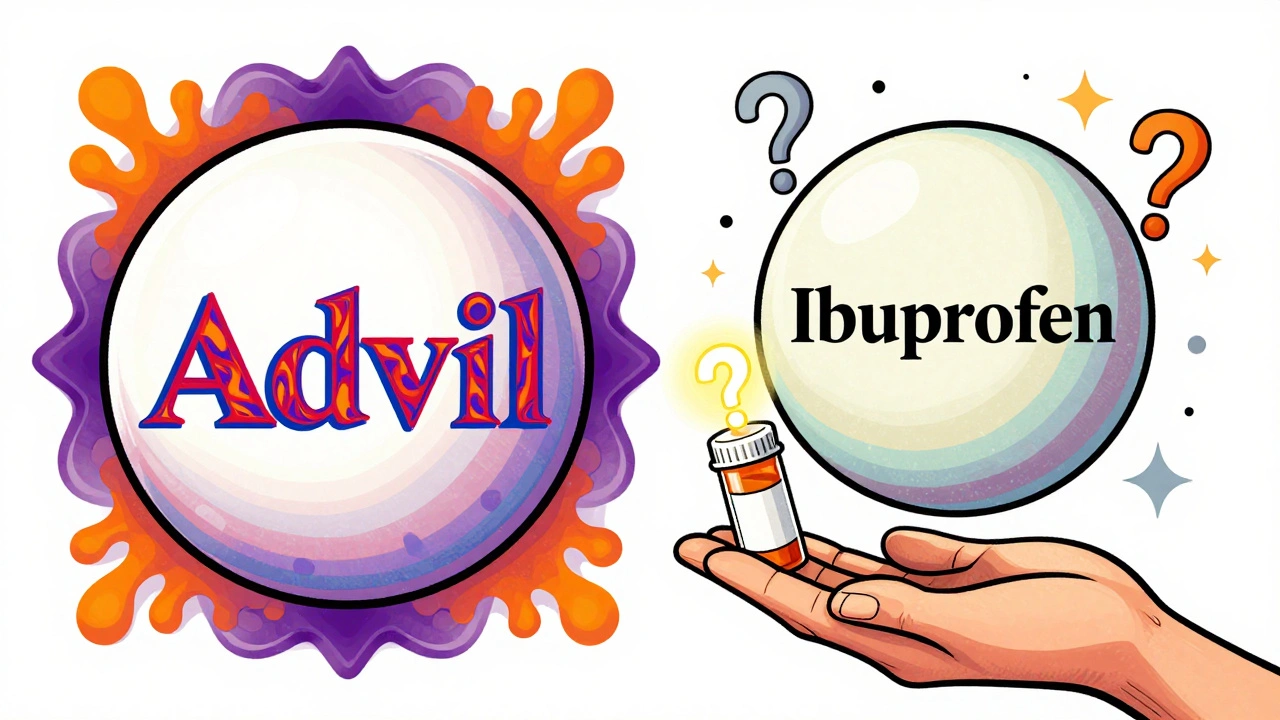
Two pills. Same active ingredient. Same dosage. Same manufacturer. One says ibuprofen. The other says Advil. You take both. But your body reacts differently. Not because of chemistry - because of labeling.
Why a Generic Label Feels Like a Weaker Medicine
You’ve probably seen the sticker on your prescription bottle: "Generic equivalent to [Brand Name]." It’s meant to reassure you. Save money. Same thing. But for many people, that label triggers doubt. Is this really as strong? Will it even work? This isn’t just a feeling - it’s a documented psychological phenomenon called the labeling effect. A 2019 study in the European Journal of Public Health gave 72 people identical placebo pills. Half were told they were getting a brand-name drug. The other half were told they were getting a generic. Over seven days, 54% of the people who thought they were on the generic version stopped taking the pill before the study ended. Only 33% of those who thought they were on the brand-name version did. Same pill. Different outcome - purely because of the label. Even more telling: those who believed they were taking the generic reported higher pain levels - 1.2 points higher on a 10-point scale - even though the pills contained zero active ingredient. Their minds told them it wouldn’t work. And so, it didn’t.Placebo Power in a Generic Bottle
This isn’t about being gullible. It’s about how our brains process expectations. When you see a familiar brand name like Tylenol or Lipitor, your brain has learned to associate that label with relief, safety, and effectiveness. That’s the placebo effect - and it’s real. It doesn’t need chemicals to work. Just belief. A 2016 study tested this head-on. Researchers gave people either real ibuprofen or a sugar pill. But here’s the twist: some sugar pills were labeled as brand-name, others as generic. The brand-name placebo worked almost as well as the real drug. Pain dropped by 3.0 cm on a visual scale. The generic placebo? Only 1.8 cm. The difference? Not chemistry. Just the label. Even side effects were worse with the generic label. Nearly half the people who thought they were taking the generic reported nausea or dizziness - even though the pill was sugar. Meanwhile, only 28% of those who thought they were taking the brand-name version felt the same. The label didn’t just affect how well the pill worked - it changed how their body responded to it.Real-World Consequences: Adherence Crashes
The World Health Organization says only about half of people stick to their chronic medication plans. For conditions like high blood pressure, diabetes, or depression, that’s deadly. And the labeling effect makes it worse. In Australia, where generic drugs make up over 85% of prescriptions, pharmacists report patients refusing to refill - not because of cost, but because they think the generic won’t work. One patient told a pharmacist, "I used to take the blue pill. Now I get the white one. I don’t feel the same. Something’s off." The problem isn’t the drug. It’s the perception. A 2023 Kaiser Family Foundation survey found only 56% of Americans believe generics are as good as brand-name drugs - down from 62% five years ago. That’s not because generics got worse. It’s because the stigma got louder. For people with lower health literacy, the drop in adherence is even steeper. In the 2019 study, those with low health literacy were 67% more likely to quit taking the generic pill than those with high health literacy. The label didn’t just confuse them - it scared them.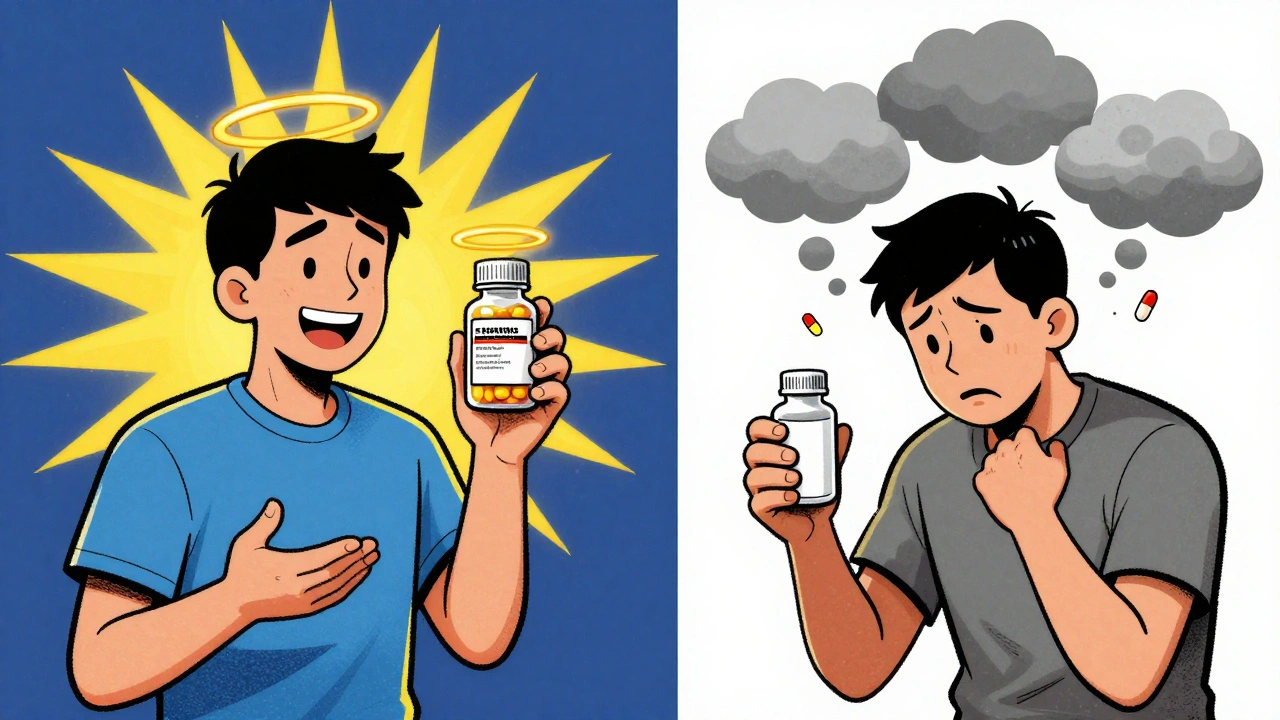
When the Label Itself Is Dangerous
The labeling effect isn’t just psychological. Sometimes, the actual text on the bottle is misleading. A 2020 study analyzed 31 generic drugs and found that 100% had differences in their printed information compared to the original brand-name version. In 12.9% of cases, those differences could lead to life-threatening mistakes. For example, one generic version left out a warning about dangerous interactions with alcohol. Another omitted dosage limits for elderly patients. Why? Because generic manufacturers aren’t required to mirror the brand’s full label. They only need to match the active ingredient. The rest - warnings, instructions, even font size - can vary. That’s legal. But it’s confusing. And when patients switch from brand to generic and suddenly see new warnings or different wording, they assume the drug changed. It didn’t. But their trust did.Who’s Trying to Fix This?
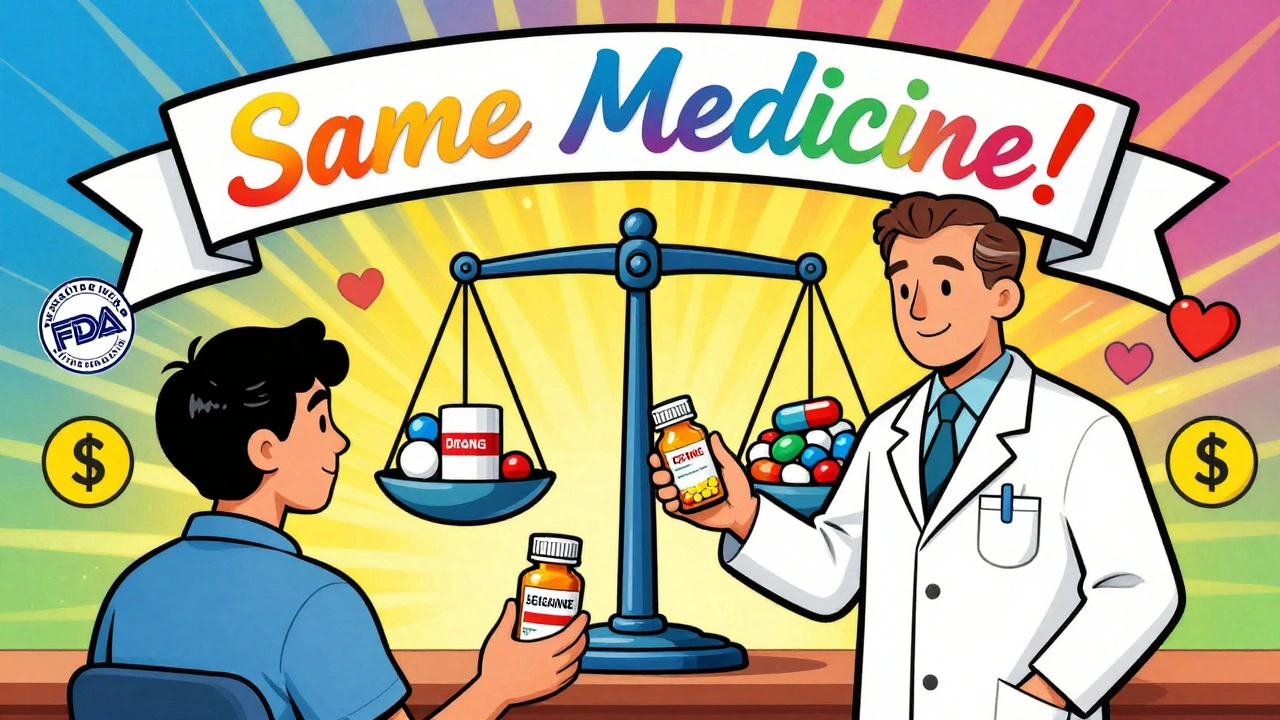
The FDA, health systems, and patient advocates are waking up to this problem. In 2020, the FDA launched "It’s the Same Medicine," a campaign showing side-by-side images of brand and generic pills with the tagline: "Same active ingredient. Same safety. Same effectiveness." The results? A 28% drop in patient concerns after six months in 12 healthcare systems. A 2023 trial added a simple phrase to generic labels: "Therapeutically equivalent to [Brand Name]." Discontinuation rates fell from 52% to 37%. Just five extra words. That’s all it took to rebuild trust. Some hospitals now train pharmacists to say: "This is the exact same medicine as the brand, just cheaper. We use it here every day. It works just as well." That kind of direct, confident language makes a difference.What You Can Do - Whether You’re Taking or Prescribing
If you’re a patient:- Ask your pharmacist: "Is this the same medicine as the brand?" Not "Is it generic?" The wording matters.
- Don’t assume a change in how you feel means the drug is weaker. Talk to your doctor before stopping.
- Look up the active ingredient. If it’s the same, it’s the same.
- Don’t just hand out the generic. Explain it. Use phrases like: "This is the exact same medicine your doctor prescribed, just without the brand name."
- Avoid saying: "We’re switching you to a cheaper option." Say: "We’re switching you to the same medicine, at a lower cost."
- When a patient says, "This doesn’t work like the other one," don’t dismiss it. Ask: "What’s different for you?"
The Bigger Picture: Saving Billions - and Lives
Generics save the U.S. healthcare system $373 billion a year. That’s money that could pay for cancer treatments, mental health services, or insulin for millions. But if patients stop taking them because they think they’re weaker, those savings vanish. Dr. Randall Stafford from Stanford warns that ignoring the labeling effect could cost up to $15 billion annually in lost savings - not because drugs are ineffective, but because people stop using them. The science is clear: a pill labeled "generic" doesn’t work worse. But your brain might think it does. And that’s the real problem.Is There a Future Without the Labeling Effect?
The future might not have "generic" on the bottle at all. The Duke-Margolis Center predicts that within five years, high-risk medications will carry labels like: "FDA-approved equivalent to [Brand Name]." No mention of "generic." Just equivalence. The Generic Pharmaceutical Association is spending $50 million on education to reframe the narrative. And the FDA is drafting new guidelines to standardize how generics are labeled - not to change the drug, but to change the message. It’s not about hiding the truth. It’s about delivering it in a way that doesn’t hurt trust.Bottom Line: It’s the Same Medicine
The pill in your hand doesn’t care what you call it. But your body does. Your brain does. Your perception does. You’re not crazy for thinking the generic doesn’t work. You’re just human. And that’s why the system needs to change - not the medicine. The next time you pick up a prescription, remember: the difference isn’t in the tablet. It’s in the label. And that’s something we can fix - together.Do generic drugs have the same active ingredients as brand-name drugs?
Yes. By law, generic drugs must contain the same active ingredient, strength, dosage form, and route of administration as the brand-name version. The FDA requires them to be bioequivalent - meaning they work the same way in your body. The only differences are in inactive ingredients (like fillers or dyes) and packaging.
Why do some people feel generic drugs don’t work as well?
It’s not the drug - it’s the label. Studies show that when people believe they’re taking a generic, they’re more likely to report less pain relief, more side effects, and higher rates of stopping the medication - even when the pill is identical to the brand-name version. This is called the labeling effect, and it’s driven by subconscious beliefs shaped by marketing, cost assumptions, and past experiences.
Are generic drugs less safe than brand-name drugs?
No. Generic drugs go through the same rigorous testing for safety and effectiveness as brand-name drugs. The FDA inspects manufacturing facilities for both types equally. Any differences in side effects are usually due to inactive ingredients - which can vary between brands - not the active ingredient. Serious safety issues are extremely rare and not linked to the "generic" label itself.
Can the labeling on generic drugs be misleading?
Yes. While the active ingredient must match, generic manufacturers are allowed to use different wording for warnings, instructions, and indications. Some labels omit details that appear on the brand-name version - a practice called "skinny labeling." In rare cases, this can cause confusion or missed safety information. A 2020 study found nearly half of generic labels had differences that could affect patient safety.
What can I do if I think my generic medicine isn’t working?
Don’t stop taking it. Talk to your doctor or pharmacist. Ask if the generic has the same active ingredient as your previous prescription. Sometimes, switching between different generic manufacturers can cause minor differences due to inactive ingredients. If you’re still unsure, ask if you can try the brand-name version again - but only if cost isn’t a barrier. Often, the issue isn’t the drug - it’s your perception of it.
Is it true that generics are cheaper because they’re lower quality?
No. Generics are cheaper because they don’t have to pay for the original research, marketing, or branding costs. The active ingredient is identical, and manufacturing standards are the same. The savings come from competition - not compromise. In fact, many generic drugs are made in the same factories as brand-name versions.
Ben Greening
December 9, 2025The labeling effect is a fascinating illustration of how deeply psychology influences physiological outcomes. It’s not just about placebo-it’s about cultural conditioning, brand loyalty, and the unconscious weight we assign to corporate logos. The fact that identical pills produce divergent results based solely on packaging speaks volumes about the power of narrative in medicine.
What’s concerning is how this phenomenon disproportionately affects vulnerable populations with lower health literacy. The system isn’t broken because generics are inferior-it’s broken because we’ve failed to communicate their equivalence effectively.
I’ve seen patients refuse refills simply because the pill color changed. Not the dosage. Not the manufacturer. The color. That’s not pharmacology. That’s marketing psychology.
The FDA’s "It’s the Same Medicine" campaign is a step in the right direction, but it needs to be institutionalized-not just a campaign, but a mandatory part of pharmacist counseling protocols.
Pharmacists should be trained to say: "This is the exact same molecule, just without the advertising budget." Simple. Clear. Unemotional.
And yet, we still let pharmaceutical companies profit from fear. The same companies that spent billions branding their drugs now profit from the very confusion they created.
This isn’t just a medical issue. It’s an ethical one.
Nikki Smellie
December 10, 2025Are you aware that the FDA allows generic manufacturers to use different inactive ingredients-some of which are known endocrine disruptors? The active ingredient may be identical, but the excipients? Not regulated the same way. And who’s monitoring long-term effects of these additives when switched repeatedly? No one. Not even the FDA tracks cumulative exposure.
And let’s not forget: many generics are manufactured in China and India under conditions that would be illegal in the U.S. The FDA inspects less than 2% of foreign facilities annually. So yes, the pill may have the same active ingredient-but is it safe? Or are we just trusting a label that says "equivalent" while the bottle contains undisclosed contaminants?
My cousin switched to a generic antidepressant and developed tremors. The doctor dismissed it. "It’s all in your head." But the label changed. The pill shape changed. The coating changed. And suddenly, her nervous system rebelled.
This isn’t placebo. This is negligence.
They’re not just hiding the truth-they’re hiding the toxins.
Raj Rsvpraj
December 11, 2025What a pathetic, Western obsession with branding! In India, we’ve been using generics for decades-no one cares what the label says. If the medicine works, it works. If it doesn’t, you go to another pharmacy. We don’t need corporate logos to tell us what’s effective. You people have been conditioned to worship Big Pharma like it’s religion.
And now you’re surprised that a label affects perception? Shocking. The real problem is your weak minds, not the pills. Your entire healthcare system is built on marketing, not science. In India, we don’t pay $10 for a pill that’s identical to one that costs $1. We pay for the medicine-not the branding.
Stop blaming the label. Blame yourselves for being so easily manipulated by advertisements. Your entire culture is a commercial product. Even your pain is branded.
Maybe if you stopped watching TV commercials for pills, you wouldn’t need a psychology lecture to understand that a pill is a pill.
Aileen Ferris
December 12, 2025so like… the generic one is just the brand name but like… less fancy? like a generic cereal vs. cheerios? but like… why does it feel different then? i swear my head hurts more when i take the white one 😭
Rebecca Dong
December 14, 2025OMG I KNEW IT. I KNEW THE GENERIC WASN’T WORKING. I’ve been saying this for YEARS. I switched to the generic for my anxiety med and I felt like I was drowning in slow motion. My heart was racing. I couldn’t breathe. I thought I was having a panic attack-but it wasn’t me. It was the pill. The white one. The one with the stupid label. I went back to the brand and boom-peace. I’m not crazy. I’m not imagining it. The system is lying to us. And now they’re trying to gaslight us with "It’s the same medicine"? NO. IT’S NOT. MY BODY KNOWS. I’M NOT THE ONLY ONE. WE NEED A CLASS ACTION.
They’re replacing our medicine with filler. I read somewhere that generics use talc and dyes that trigger inflammation. That’s why I get migraines. That’s why I’m exhausted. They don’t care. They just want to save money. And we’re the guinea pigs.
Someone please start a petition. I’m not taking this anymore.
Michelle Edwards
December 14, 2025I just want to say-you’re not alone if you’ve felt this way. I used to panic every time my pharmacy switched my blood pressure med to generic. I’d stare at the pill, wondering if it was "good enough." But after talking to my pharmacist, I learned the truth: same active ingredient, same FDA standards, same results in clinical trials.
I started keeping a little journal: "Day 1: Took generic. Felt fine." "Day 3: Still fine. No dizziness." Slowly, my brain caught up.
It’s not magic. It’s just trust. And trust takes time.
If you’re worried, ask your doctor to help you track your symptoms. Sometimes the change isn’t the pill-it’s the stress of switching. Give yourself grace. And if you’re still unsure? Try the brand again. No shame in that. Your health matters more than the price tag.
You’re not weak for feeling this. You’re human.
Sarah Clifford
December 15, 2025so like… i took the generic for my migraines and i felt like a zombie for a week. then i switched back to the blue pill and boom-back to normal. no cap. the white one is cursed. the pharmacist said it’s the same but… bro. my brain knows the difference. why would they even make a fake version? it’s like buying a nike shirt that says "sneaker" instead of nike. you know it’s not the same. same fabric? maybe. but the soul? gone.
Neelam Kumari
December 17, 2025How is it possible that in 2024, people still believe a label changes chemistry? You people are so easily manipulated by marketing that you’d rather pay three times more for the same molecule because it has a logo on it. Your brain is a marketing target, not a thinking organ.
In India, we don’t have this problem-because we don’t have the luxury of believing in fairy tales. We take what works. We don’t cry over pill colors. We don’t blame the medicine when our minds are weak.
And now you want to change the label? Instead of fixing your ignorance, you want to hide the word "generic"? That’s not progress. That’s cowardice.
The problem isn’t the label. The problem is you. Stop outsourcing your critical thinking to pharmaceutical ads. And for god’s sake-stop paying extra for placebo branding.