
1 Dec 2025
- 9 Comments
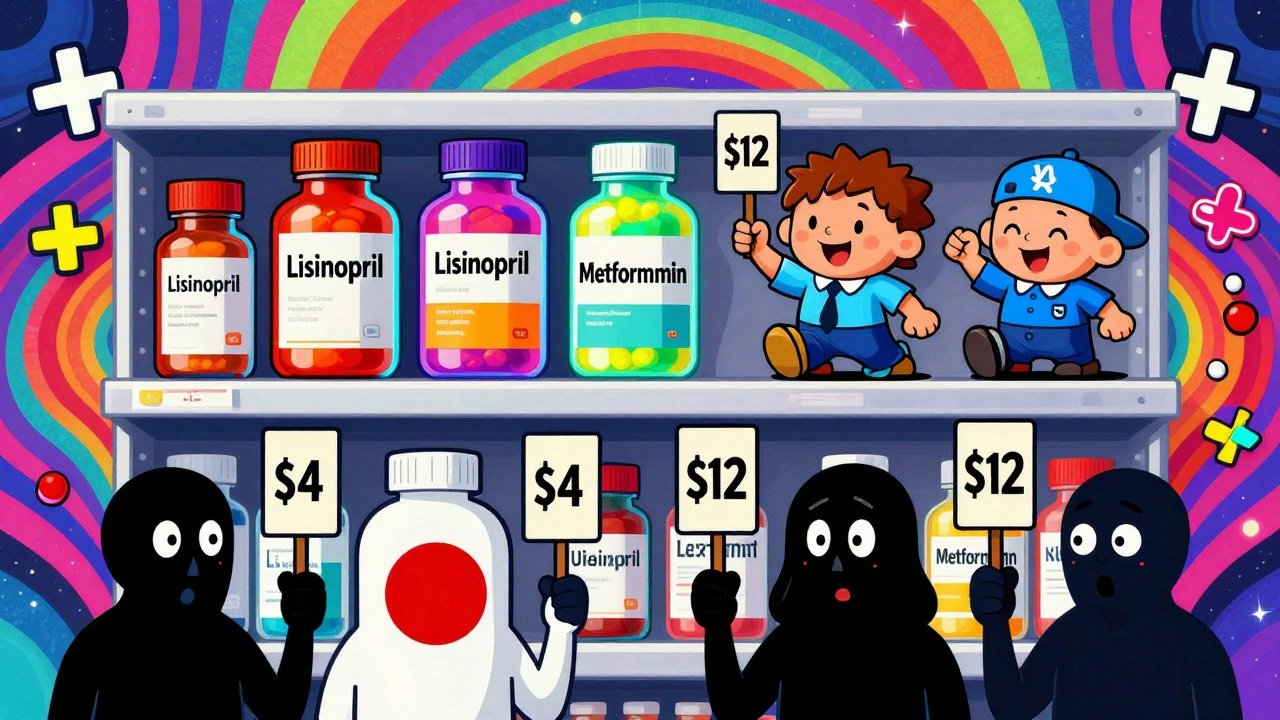
When you walk into a pharmacy in the U.S. and see a $6 bottle of generic lisinopril, it’s easy to think you’re getting a bargain. But here’s the twist: you are getting a bargain-compared to almost every other developed country. While Americans pay some of the highest prices in the world for brand-name drugs, the opposite is true for generics. In fact, U.S. generic drug prices are 33% lower than the average in 33 other wealthy nations, according to a 2022 RAND Corporation study for the U.S. Department of Health and Human Services.
Why U.S. Generic Drugs Are Cheaper
The reason is simple: competition. In the U.S., when a brand-name drug loses patent protection, dozens of companies rush to make copies. The FDA approved 773 generic drugs in 2023 alone. Each new competitor drives prices down. When just one or two generics enter the market, prices drop to about 35-40% of the brand’s original price. With three or more, they crash to 15-20%. That’s why a 30-day supply of generic metformin can cost as little as $4 at Walmart, and why 93% of all generic prescriptions in the U.S. cost under $20. Compare that to countries like France or Japan, where governments tightly control prices and often limit the number of generic manufacturers allowed to sell. Fewer competitors mean slower price drops. In Canada, even after generics enter, prices stay higher because the system doesn’t encourage the same level of price wars. In the U.S., it’s a race to the bottom-and consumers win.The Brand-Name Problem
But here’s the catch: generics make up 90% of prescriptions in the U.S., but they account for only about 20% of total drug spending. The other 80%? That’s all brand-name drugs-and those are where the U.S. pays the most in the world. A 2023 report from the Office of the Assistant Secretary for Planning and Evaluation found that U.S. brand-name drug prices are more than four times higher than in other OECD countries. For example, the diabetes drug Jardiance costs $204 per month under Medicare’s negotiated price, while the same drug sells for just $52 on average in 11 other countries. Stelara, a psoriasis treatment, costs $4,490 in the U.S. versus $2,822 abroad. Why? Because the U.S. doesn’t negotiate prices like other countries do. In Germany, France, and Japan, the government sets a maximum price before a drug even hits the market. In the U.S., drugmakers set their own list prices, and insurers and pharmacy benefit managers (PBMs) negotiate discounts behind closed doors. That’s why the list price in the U.S. is 2.78 times higher than the global average-but the net price after rebates is actually 18% lower than in Canada, the U.K., and Germany, according to a 2024 University of Chicago study.How Medicare’s New Negotiations Change the Game
Starting in 2022, Medicare gained the legal right to negotiate prices for the most expensive drugs. The first 10 drugs selected included Jardiance, Stelara, and Farxiga. The negotiated prices were a big win for taxpayers-but they still lag behind international benchmarks. In nine out of the ten cases, every other country on the list paid less than Medicare did. This isn’t because Medicare is weak. It’s because the U.S. system is built differently. Other countries set prices before launch. Medicare negotiates after the drug has already been on the market for years, often after brand-name companies have already recouped their R&D costs and made massive profits. That means Medicare is bargaining from a weaker position. Still, the results matter. The 10 negotiated drugs are expected to save Medicare Part D $14 billion over the next decade. And more drugs are coming. By February 2025, another 15 drugs will be selected for negotiation. If this program expands, it could start closing the gap-especially if the U.S. starts using international prices as a benchmark, as some lawmakers are pushing for.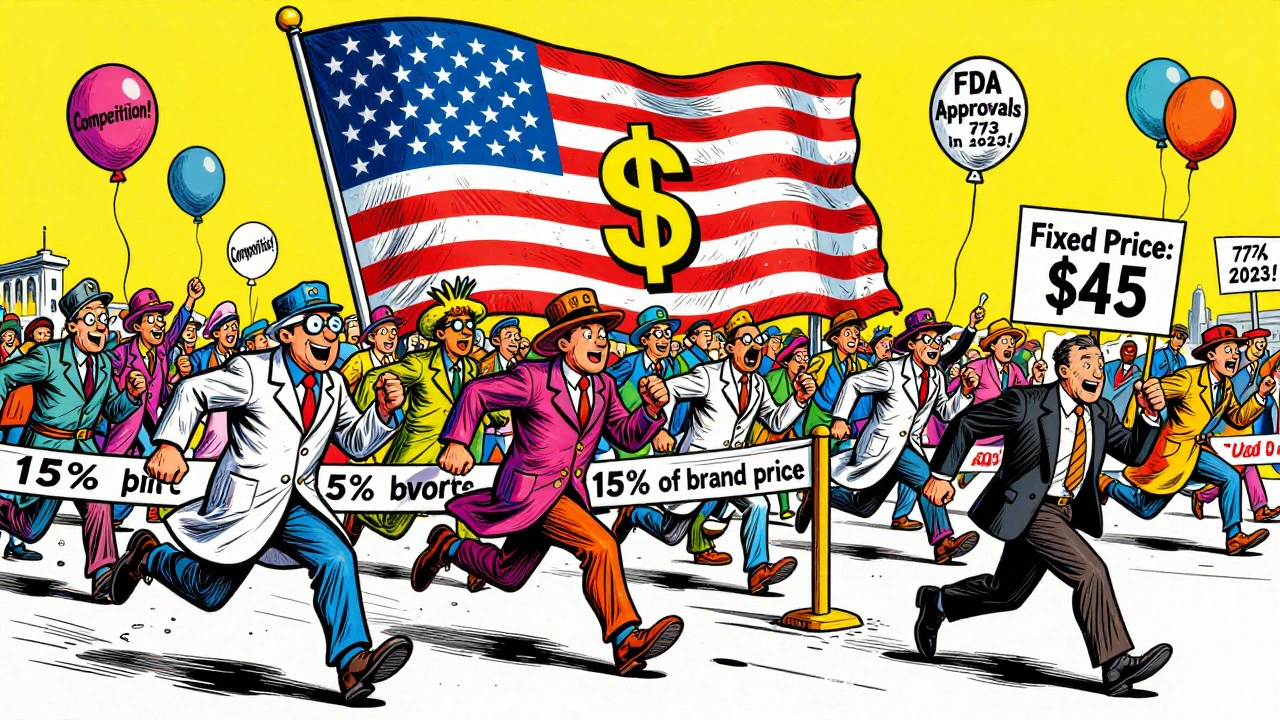
Why Other Countries Pay Less
It’s not magic. It’s policy. In France, the government sets a single price for each drug, generic or brand. In Japan, the Ministry of Health reviews prices every two years and cuts them if they’re too high. In the U.K., the NHS has a national formulary and refuses to pay for drugs that don’t offer good value. These systems are designed to control costs from the top down. The U.S. system is designed to let the market decide-which means prices can skyrocket if there’s no competition. That’s why you’ll sometimes see a generic drug suddenly jump in price: because one manufacturer stopped making it, and the remaining few raised prices. The FDA has documented cases where a generic drug had only one supplier-and the price doubled overnight. That’s why the number of manufacturers matters more than the country. A generic drug made by six U.S. companies will be cheaper than one made by two companies in Germany-even if the German company is state-subsidized.What This Means for You
If you take mostly generic medications, you’re already paying less than people in most other rich countries. A 30-day supply of generic atorvastatin (Lipitor) costs $12 in the U.S. versus $45 in Canada and $68 in Germany. Generic insulin? $25 in the U.S. under the Inflation Reduction Act, compared to $120 in the U.K. and $200 in Australia. But if you’re on a brand-name drug-especially for cancer, autoimmune disease, or rare conditions-you’re paying a premium. The U.S. is essentially subsidizing global drug innovation. Drugmakers argue that high U.S. prices fund research for new medicines. Critics say other countries are free-riding. The truth? Both are right. The U.S. pays more so that new drugs get developed. But the system doesn’t always reward that fairly.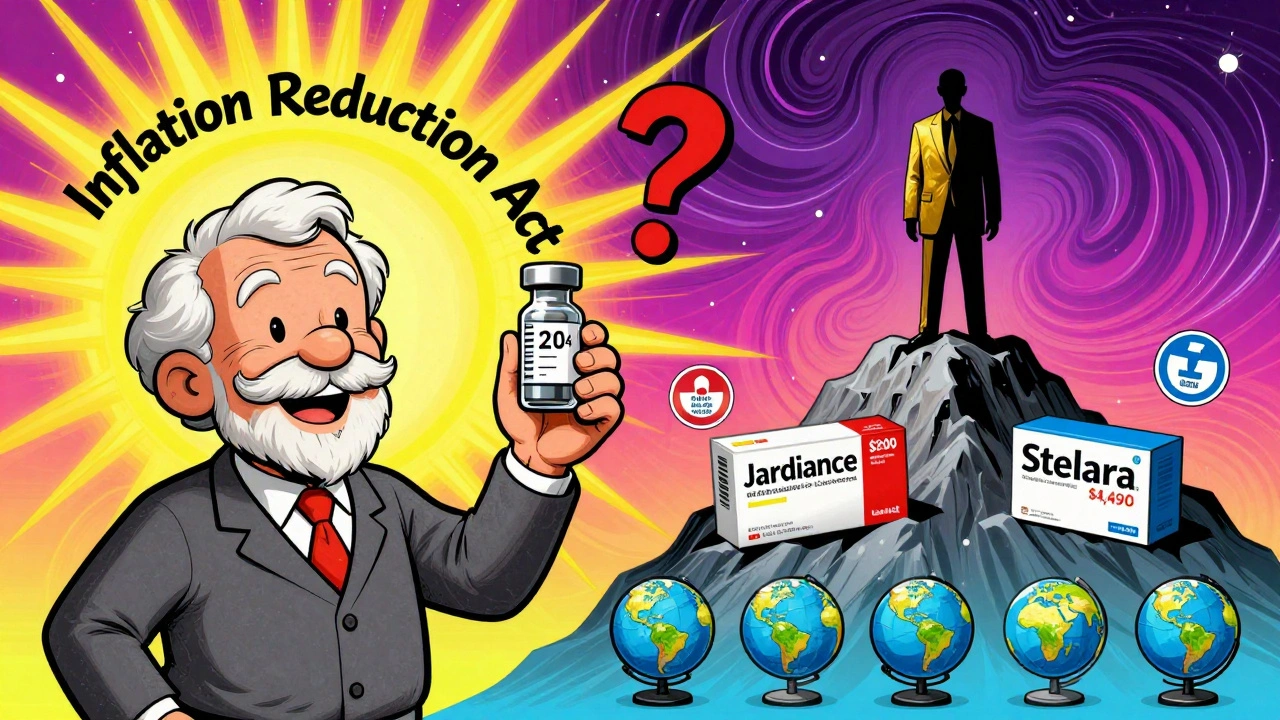
The Future of Drug Pricing
The big question is whether the U.S. will start aligning its prices with the rest of the world. Some experts, like Dr. Dana Goldman from USC, argue that the U.S. already has the best generic system on the planet. Others, like RAND’s Andrew Mulcahy, warn that the brand-name pricing crisis is getting worse. New policy tools are emerging. The FDA is accelerating generic approvals. Medicare is negotiating. And in 2025, a new executive order pressured Pfizer to cut prices by selling directly to consumers-raising fears that drugmakers might raise prices overseas to make up for lost U.S. profits. One thing is clear: the gap between U.S. generic prices and global prices isn’t an accident. It’s the result of market structure, regulation, and competition. And for the 90% of Americans who take generics, that’s a good thing. For the 10% who rely on expensive brand drugs? That’s where the real fight is.How to Save on Medications Right Now
- Always ask for the generic. Even if your doctor prescribes a brand, you can request the generic version. It’s the same drug, just cheaper. - Use pharmacy discount cards. GoodRx, SingleCare, and Blink Health often offer prices lower than insurance copays for generics. - Check mail-order pharmacies. Many insurers offer 90-day supplies at lower prices. A 90-day supply of metformin can cost under $10. - Know your Medicare options. If you’re on Medicare Part D, compare plans annually. The cheapest plan one year might not be the best the next. - Ask about patient assistance programs. Most brand-name drugmakers offer free or low-cost programs for low-income patients. The bottom line? You’re already paying less for generics than most of the world. But if you’re on a brand-name drug, you’re not alone-and you have options.Why are generic drugs cheaper in the U.S. than in other countries?
The U.S. allows many manufacturers to produce generic drugs once a patent expires. This intense competition drives prices down. In contrast, countries like France and Japan limit the number of generic makers or set fixed prices, which slows price reductions. With three or more U.S. generic competitors, prices often drop to just 15-20% of the original brand price.
Are U.S. drug prices really the highest in the world?
For brand-name drugs, yes. The U.S. pays over four times more than other wealthy nations for originator drugs. But for generics, the U.S. pays 33% less than the OECD average. Overall, U.S. drug spending is high because brand-name drugs dominate total costs-even though they make up only 10% of prescriptions.
Does Medicare negotiate drug prices lower than other countries?
No, not yet. Medicare’s first 10 negotiated prices were still higher than prices in 11 other countries, including Australia, Japan, and the U.K. The U.S. negotiates after drugs have been on the market for years, while other countries set prices before launch. This puts Medicare at a disadvantage.
Why do some generic drugs suddenly become expensive?
When a generic drug has only one or two manufacturers, and one exits the market, the remaining ones can raise prices. This happened with drugs like doxycycline and nitrofurantoin. The FDA tracks these cases and encourages new manufacturers to enter, but supply chain issues and low profit margins sometimes discourage competition.
Can I buy cheaper drugs from other countries?
Technically, importing prescription drugs from Canada or other countries is illegal under U.S. law, though enforcement is rare for personal use. Some people use verified international pharmacies, but there’s no guarantee of safety or quality. The safest approach is to use U.S. discount programs like GoodRx or ask your doctor about patient assistance programs.
alaa ismail
December 3, 2025Man, I always thought the U.S. was getting ripped off on meds, but this actually makes sense. Generics are dirt cheap here-like, I got my blood pressure stuff for $4 at Walmart last week. Meanwhile my cousin in Germany pays triple for the same pill. Guess the free market works better for generics than we give it credit for.
Still weird how brand names are insane though. Like, why does my friend with cancer pay $5K a month? That’s not innovation, that’s exploitation.
ruiqing Jane
December 4, 2025It’s not just about competition-it’s about transparency. In the U.S., we have real-time price data from GoodRx, pharmacy chains, and online tools that let consumers shop around. No other country has that level of consumer empowerment for generics. The FDA’s approval speed and market entry rules create a dynamic ecosystem where manufacturers are incentivized to undercut each other-sometimes to the point of near-zero margins.
That’s why a 30-day supply of levothyroxine can cost $4 here and $48 in Canada. It’s not magic. It’s market mechanics. And honestly? We should be proud of that system-even if the rest of the drug industry is broken.
Allan maniero
December 5, 2025It’s fascinating, really, how the structural differences between healthcare systems produce such divergent outcomes. In the UK, the NHS operates as a monopsonist-essentially the sole buyer of pharmaceuticals-which gives it immense bargaining power, but also creates a static pricing environment where innovation is discouraged through low reimbursement rates.
In contrast, the U.S. generic market is a chaotic, hyper-competitive arena where dozens of small manufacturers vie for shelf space, and the only constant is downward price pressure. The downside? Fragile supply chains, occasional shortages, and the occasional price spike when a single manufacturer exits the market-but the upside is that 93% of prescriptions are under $20. That’s not a bug, it’s a feature of a system designed for volume, not control.
And while I agree that brand-name pricing is a moral crisis, we shouldn’t confuse the two. The U.S. doesn’t have a broken generic system-it has a broken brand-name system. Fixing the latter won’t hurt the former. In fact, it might even strengthen it by freeing up capital and attention from rent-seeking behavior.
Zoe Bray
December 5, 2025From a pharmacoeconomic standpoint, the U.S. generic pharmaceutical market exemplifies perfect competition in practice: homogeneous product, numerous independent sellers, low barriers to entry, and perfect information dissemination via digital platforms such as GoodRx. The FDA’s Abbreviated New Drug Application (ANDA) pathway facilitates rapid market entry, resulting in price elasticity that is significantly higher than in regulated-price jurisdictions such as France or Japan, where centralized pricing committees impose rigid cost ceilings that suppress competitive dynamics.
Conversely, the brand-name segment operates under a monopolistic framework characterized by patent thickets, PBM rebate opaque negotiations, and lack of price transparency, leading to significant deadweight loss. Medicare’s negotiation provisions, while incremental, represent the first structural intervention into this asymmetry since the Medicare Modernization Act of 2003. However, the use of international reference pricing as a benchmark remains politically contentious despite its empirical validity.
Girish Padia
December 7, 2025U.S. is just cheating. Everyone else pays fair prices, but America acts like it’s above the rules. Why should we pay more for medicine so you can have cheap generics? It’s not fair. Other countries are getting robbed while you guys get free rides. Stop pretending this is a ‘market system’-it’s just greed with a smile.
Sandi Allen
December 8, 2025THEY’RE LYING. EVERYTHING YOU JUST SAID IS A LIE. THE FDA IS IN BED WITH BIG PHARMA. THE ‘COMPETITION’? IT’S A SCAM. THEY LET A FEW COMPANIES IN, THEN THEY MAKE THEM ALL OWN EACH OTHER THROUGH BACK-DOOR DEALS. I’VE SEEN THE DOCUMENTS. THE $4 METFORMIN? IT’S MADE IN CHINA WITH TOXIC INGREDIENTS. THEY’RE KILLING US WITH CHEAP DRUGS SO WE DON’T NOTICE THE REAL POISON-THEY’RE HIDING THE COST IN INSURANCE PREMIUMS AND TAXES!
AND DON’T TELL ME ABOUT ‘INTERNATIONAL BENCHMARKS’-EVERY OTHER COUNTRY IS A SOCIALIST DICTATORSHIP THAT STEALS OUR INNOVATION. THEY DON’T PAY-THEY STEAL. AND NOW THEY WANT TO BRING THAT HERE. YOU THINK MEDICARE NEGOTIATION IS A WIN? IT’S THE FIRST STEP TO NATIONALIZING DRUGS. THEY’RE COMING FOR YOUR INSULIN NEXT.
STOP TRUSTING THE SYSTEM. CHECK YOUR MEDICATION BATCH NUMBERS. ASK YOUR PHARMACIST IF IT’S MADE IN THE U.S. THEY WON’T TELL YOU THE TRUTH.
John Webber
December 10, 2025huh. so generics are cheap here? weird. i always thought we got ripped off. but wait-so if the u.s. pays more for brand names, does that mean other countries are just freeloading? like, they get the drugs we paid to develop? that seems kinda sketchy. also, why do some generics go up in price outta nowhere? someone should fix that. and why does walmart have the best prices? is it because they’re a big store? idk. someone explain pls.
Shubham Pandey
December 10, 2025Generics cheap here. Brands crazy expensive. Other countries: opposite. That’s it.
Elizabeth Farrell
December 12, 2025What I love about this breakdown is how it separates the two problems we’re actually facing: one is a triumph of market efficiency, and the other is a failure of moral accountability.
For the 90% of us taking generics, the U.S. system is working better than almost any other country. We have access to life-saving meds at prices that are laughably low compared to the rest of the world. That’s not an accident-it’s the result of deliberate policy choices that prioritize access over profit control.
But for the 10%-the people with chronic illnesses, rare diseases, or autoimmune conditions-this system is devastating. They’re the ones paying the price for our savings. And that’s not sustainable. We can’t celebrate the success of generics while ignoring the suffering caused by unregulated brand-name pricing.
The real win isn’t just Medicare negotiation-it’s creating a system where innovation is rewarded without exploitation. Maybe that means capping brand-name prices based on international benchmarks, or requiring drugmakers to disclose R&D costs transparently. Maybe it means tying patent extensions to actual clinical innovation, not minor tweaks.
Let’s not throw out the baby with the bathwater. We have an incredible generic system. Let’s fix the broken part without breaking the good one. And for anyone struggling with costs right now-please, use GoodRx, ask for samples, call patient assistance programs. You’re not alone, and help is out there. You deserve to live without financial ruin because of a prescription.