
1 Dec 2025
- 9 Comments
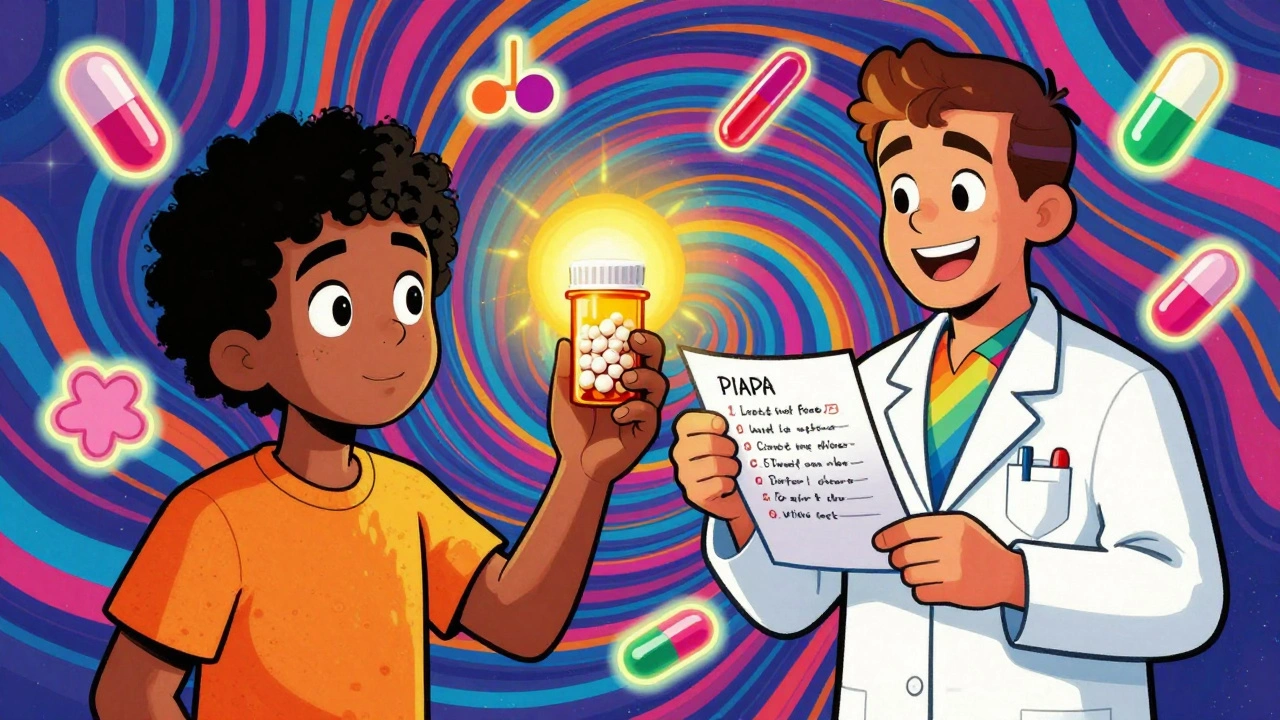
Every year, millions of people take the wrong dose, mix dangerous drugs, or get pills they never asked for - not because of malice, but because the system expects them to stay silent. Medication safety isn’t just about doctors prescribing right or pharmacists filling correctly. It’s about you - the person swallowing the pill - knowing what’s in your hand and having the power to stop a mistake before it happens.
You’re the Last Line of Defense
Think about it: your doctor spends 7 minutes with you. The pharmacist has 12 patients waiting. The nurse is rushing between rooms. But you? You’re the one who takes the medicine every day. You see how it looks, how it tastes, how your body reacts. That’s why experts say you’re the final safety checkpoint in 83% of near-miss errors. A woman in Ohio caught her child’s antibiotic dose was 10 times too high because the label said "5 mL" but the syringe looked wrong. She asked. The pharmacy admitted it was a misprint. That’s not luck - that’s active participation. And you don’t need a medical degree to do it.Seven Simple Things You Can Do Right Now
You don’t need to memorize drug names or learn pharmacology. Just focus on these seven actions. Do them every time you get a new prescription, refill, or change in treatment.- Know your meds by name and why you’re taking them. Don’t just say "the blood pressure pill." Say "Lisinopril 10 mg, taken daily to lower blood pressure." If you can’t say it, ask. This alone cuts error risk by 35%.
- Understand your dosing schedule. "Take once daily" doesn’t mean "whenever I remember." Is it morning? With food? At bedtime? Write it down. Skipping doses or doubling up causes 28% more hospital visits for people with chronic conditions.
- Know the side effects. If you feel dizzy, nauseous, or unusually tired after starting a new drug, don’t assume it’s "just part of getting older." Write down what you feel and when. Early reporting catches 63% of serious reactions before they become emergencies.
- Check the pill before you swallow it. Does it look like the last bottle? Same color? Same shape? Same imprint? If it looks different, ask. One in five dispensing errors are caught this way.
- Ask about changes. If your doctor adds, removes, or changes a dose - even slightly - say, "Why this change?" You might catch a duplicate drug, a dangerous interaction, or a typo. Patients who question changes catch 15% of prescription errors that staff miss.
- Tell them everything you take. That ginseng supplement? The turmeric capsule? The OTC painkiller you take for headaches? All of it. Over-the-counter drugs and supplements cause 22% more dangerous interactions than people realize.
- Participate in medication reconciliation. Every time you move between care settings - from hospital to home, ER to clinic - someone should review your full list. Ask: "Can we go over all my meds together?" This reduces errors by half.
What Works - and What Doesn’t
Not all advice is created equal. Some programs help. Others just make you feel like you should’ve known better. The "Ask Me 3" program asks patients three questions: What is my main problem? What do I need to do? Why is it important? Patients using this method see 31% fewer errors than those who just get a discharge paper. Why? Because it turns passive listening into active understanding. On the flip side, handing someone a 10-page discharge sheet with tiny print? That’s useless. Studies show 63% of hospital instructions are written at a 12th-grade reading level - but 36% of U.S. adults read at a basic or below-basic level. If you can’t read it, you can’t use it. Digital tools help - but only if they’re simple. Apps like MyMedSchedule get 4.2-star ratings, but 37% of negative reviews say, "Too many steps to check my pills." Elderly users, especially, need voice-guided tools, large buttons, and printed backups. Don’t assume tech fixes everything.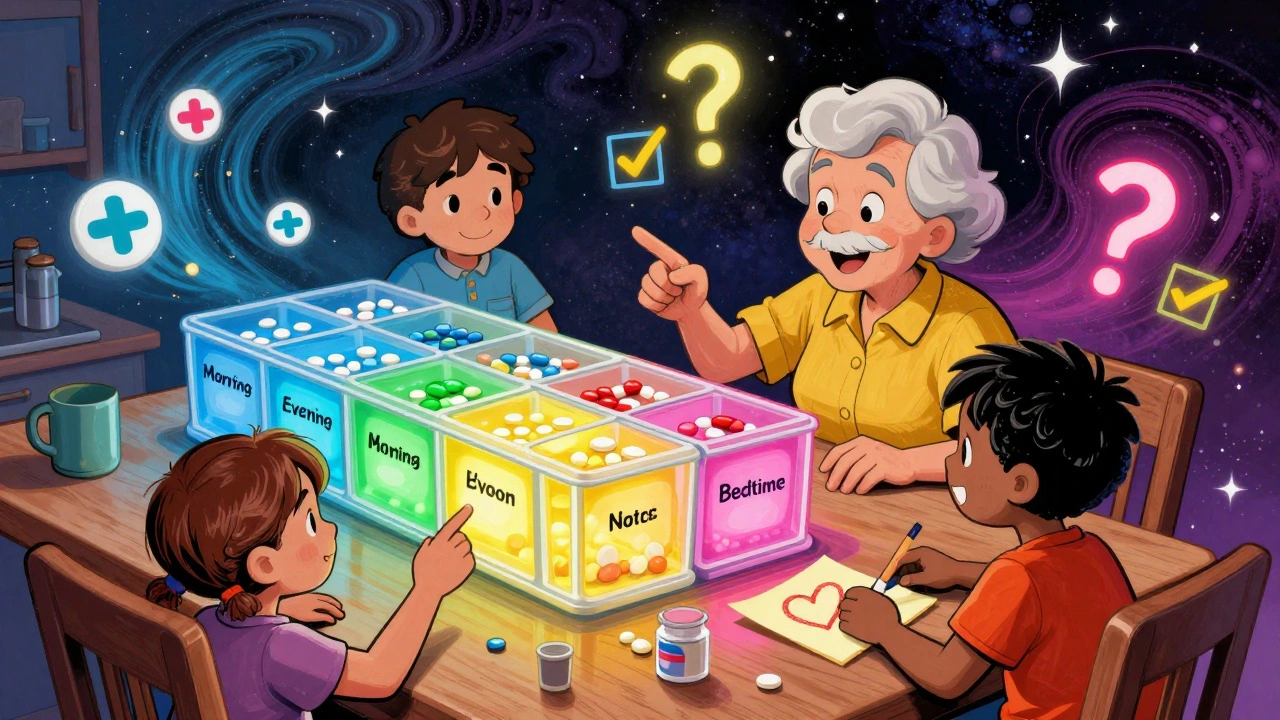
Barriers Are Real - And They’re Not Your Fault
You might feel embarrassed asking questions. You might think, "They know better than me." But here’s the truth: patients who speak up are often labeled "difficult" - even when they save lives. One man in Florida noticed his new diabetes pill was a different color. He asked. The nurse said, "It’s the same drug, just a generic." He trusted her. Two days later, he had a severe reaction. Turns out, the generic had a different inactive ingredient he was allergic to. He wasn’t wrong. The system failed him. Health literacy matters. If you struggle with numbers, reading, or understanding medical terms - you’re not alone. 88 million U.S. adults have trouble with basic health information. That’s not a personal failing. It’s a system design flaw. The solution? Teach-back. Instead of asking, "Do you understand?" providers should say, "Can you show me how you’ll take this?" This simple trick boosts safety behavior adoption from 31% to 67%. If your provider skips it, ask for it.Who’s Responsible When Things Go Wrong?
Some doctors and nurses worry that putting safety on patients shifts blame. And they’re right - to a point. A 2022 study found that 62% of patients who caught errors were dismissed, ignored, or told they were "overreacting." That’s not empowerment. That’s gaslighting. The truth? Safety is a team sport. You’re not supposed to fix broken systems. You’re supposed to be a partner in them. Hospitals should train staff to welcome questions. Pharmacies should offer free medication reviews. Clinics should give everyone a printed, simplified list. But until those systems change, you still have power. You can still ask. You can still check. You can still say, "This doesn’t look right."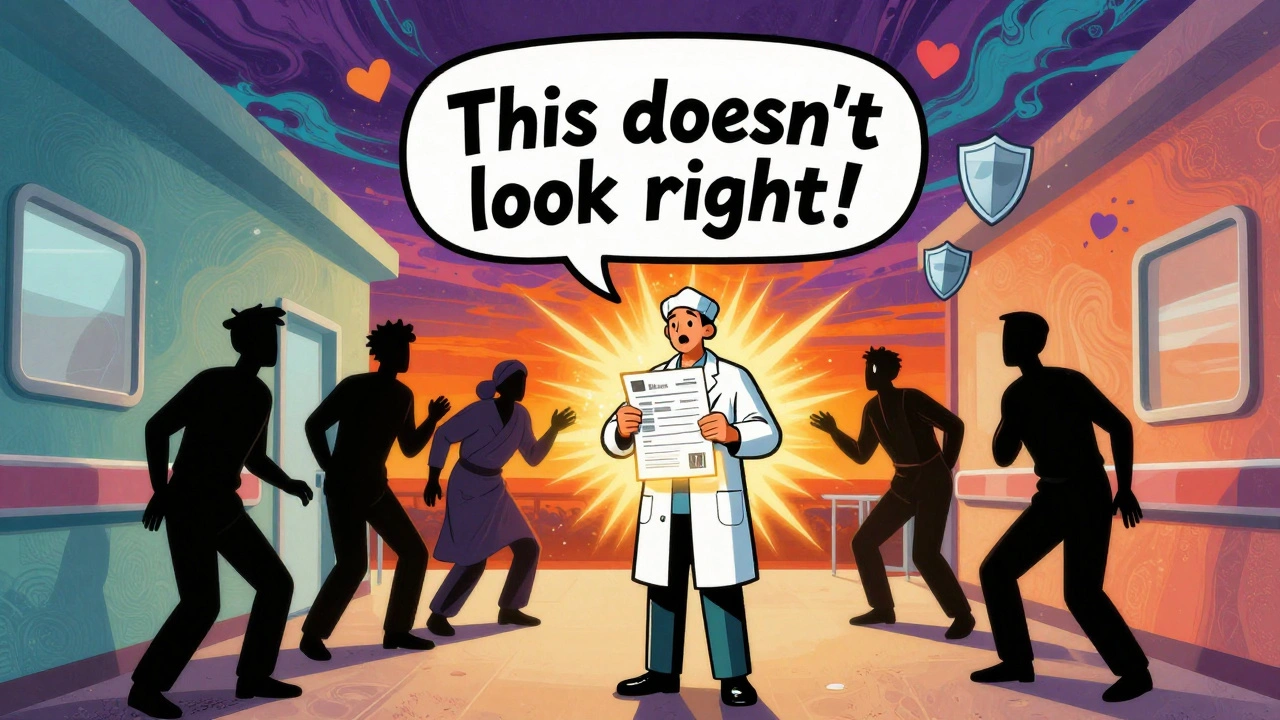
Where to Start Today
You don’t need to overhaul your life. Just start small.- Write down every medication you take - including vitamins and herbs - on one piece of paper. Keep it in your wallet.
- Next time you pick up a prescription, hold the bottle and compare it to your list. Does it match?
- Ask your pharmacist: "What’s the most important thing I should watch for with this medicine?"
- Use the Universal Medication Schedule: take pills at four times a day - morning, noon, evening, bedtime. No more "every 8 hours" confusion.
- If you’re over 65 or have trouble reading, ask for a printed copy with big font. You’re entitled to it.
It’s Not Just About You
When you speak up, you don’t just protect yourself. You protect others. A patient who questions a wrong dose might stop a chain of errors that could have affected someone else. A family member who learns how to check pills can help a parent or spouse avoid a hospital stay. The World Health Organization wants to cut preventable medication harm by 50% by 2027. That’s not a dream. It’s a goal - and it only works if patients are part of the plan. You’re not a burden. You’re not a bother. You’re the one who knows your body best. And that makes you essential to your own safety.What should I do if I think I got the wrong medication?
Stop. Don’t take it. Call your pharmacy or doctor immediately. Compare the pill to your written list. Take a photo of the pill and the label. Most pharmacies will replace it without question if there’s a mismatch. Your safety comes first - never apologize for asking.
Can I trust generic medications?
Yes - but only if you check. Generics have the same active ingredient as brand names, but the fillers, color, or shape can change. That’s why you need to look at the pill. If it looks different, ask your pharmacist: "Is this the same drug?" Don’t assume. Even small changes can cause reactions in sensitive people.
What if my doctor gets upset when I ask questions?
You have the right to ask. If your provider reacts defensively, it’s a red flag. Try saying, "I’m not questioning your expertise - I just want to make sure I understand so I don’t make a mistake." If they still dismiss you, consider finding a new provider. Your life is worth more than their ego.
How can I help an elderly parent stay safe with their meds?
Start by creating a simple, printed list of all their meds - name, dose, time, reason. Use a pill organizer with labeled compartments. Visit the pharmacy together and ask for a free medication review. Avoid apps with too many steps - opt for voice reminders or a large-print calendar. Check their pills weekly. If they’re confused, don’t assume it’s aging - it could be a bad interaction.
Do I need to keep a list even if I only take one or two pills?
Yes. Even one pill can interact with something new. A blood thinner could clash with a new OTC painkiller. A diabetes drug might not work right if you start a supplement. Always keep a list - even if it’s just two lines. It saves time, prevents mistakes, and helps in emergencies.
parth pandya
December 3, 2025so i just got my new blood pressure med and the pill looked totally different from last time... i didnt say anything cause i thought maybe it was just a new batch... turns out it was a mixup and i almost took double dose. learn from my dumb ass.
Myson Jones
December 3, 2025Thank you for sharing this. I’ve worked in healthcare for over two decades, and I can tell you-patients who ask questions are the ones who save lives. Not because they’re doctors, but because they’re present. The system doesn’t reward vigilance; it rewards speed. But you? You can choose to slow down. And that choice matters more than any algorithm or barcode.
When my mother started her new heart medication, she wrote down every pill, every time, every side effect. She didn’t wait for the doctor to ask-she brought the list. That’s not being difficult. That’s being responsible. And it’s not just for the elderly. It’s for everyone.
We need to stop framing patient advocacy as an extra chore. It’s a core part of care. And if your provider reacts with annoyance? That’s not your problem. That’s theirs.
I’ve seen nurses cry because they were too rushed to double-check. I’ve seen pharmacists apologize after dispensing the wrong drug because they were behind by ten patients. None of them wanted to hurt anyone. But systems don’t care about intentions. They care about structure.
So keep your list. Ask the question. Take the photo. Use the big-font printout. You’re not being a burden. You’re fixing a broken pipe while everyone else waits for someone else to fix it.
And if you’re helping someone else? Even better. One person asking a question can prevent a cascade of errors that might reach a stranger in the next room.
This isn’t about blame. It’s about belonging. You belong in this conversation. Always.
Albert Essel
December 3, 2025Excellent breakdown. I especially appreciate the emphasis on medication reconciliation-it’s one of the most underutilized safety nets in modern medicine. I work as a clinical coordinator, and I’ve seen how easily med lists get lost in transitions. One patient came in with 17 medications listed on a napkin. We found three duplicates, two contraindications, and a drug she’d been taking for ten years that was discontinued in 2018. All because no one asked her to review it.
The ‘Ask Me 3’ model is gold. Simple, human, and effective. Hospitals that implement it properly see real drops in readmissions. The problem isn’t patient ignorance-it’s provider complacency. We’ve trained people to nod and smile instead of engage.
Also, the point about generics is critical. I had a patient allergic to a dye in one generic version of metformin. The brand-name version didn’t have it. She didn’t know to ask. We didn’t think to tell her. That’s on us.
Printed lists. Big fonts. Voice reminders. These aren’t ‘special accommodations.’ They’re basic accessibility. And if you’re over 65, you’re not ‘old’-you’re statistically more likely to be on five or more drugs. That’s not a lifestyle choice. It’s a reality. Design for it.
And for anyone who thinks this is ‘too much work’-imagine waking up in the ICU because a pill looked different and you didn’t check. That’s the cost of silence.
Charles Moore
December 4, 2025I’ve been on a cocktail of meds for anxiety, thyroid, and high blood pressure for six years. I used to just swallow them and hope for the best. Then I had a panic attack after starting a new antidepressant and realized-I didn’t even know what it was supposed to do. So I started writing everything down. On a sticky note. In my phone. On my fridge. Now I carry a laminated card in my wallet.
And you know what? The pharmacist remembers me now. She smiles when I walk in. She says, ‘Hey, you’re the one who asks good questions.’ That’s not a compliment-it’s a sign the system is working.
It’s not about being ‘difficult.’ It’s about being consistent. One person, one list, one question at a time. That’s how change happens.
Also, if you’re helping an elderly parent? Don’t just assume they’re ‘forgetful.’ Ask them to show you how they take their pills. You’d be shocked how many people are taking them wrong-twice in the morning, or skipping days because they ‘forgot’ they already took one.
You’re not a burden. You’re the bridge between the system and the person who actually lives it.
Gavin Boyne
December 6, 2025Oh wow, so now I’m supposed to be a part-time pharmacist, nurse, and detective just to not die from my own prescription? Let me get this straight: the system is designed so that the person who’s already sick, stressed, and probably confused is now responsible for catching the mistakes of people who get paid to know this stuff?
That’s not empowerment. That’s a scam. A beautiful, well-written, emotionally manipulative scam.
And don’t get me started on ‘Ask Me 3.’ Sounds like a corporate slogan designed to make doctors feel good while they rush out the door. Meanwhile, I’m sitting there holding a pill that looks like a tiny blue rock and wondering if I should Google the imprint or just pray.
Here’s the truth: if your job is to keep people from dying, then YOU should be the one double-checking. Not me. Not my 78-year-old mom. Not the guy on disability who can’t read the tiny print.
But hey, at least I can feel good about being ‘proactive’ while the real problem-understaffed, underpaid, overworked healthcare workers-gets ignored.
Thanks for the guilt trip, article. I’ll go take my pills now. And maybe I’ll write a letter to the CEO of my hospital. Oh wait-I can’t afford to send one.
Rashi Taliyan
December 7, 2025My grandmother almost died because she took two different blood thinners-she didn’t know they were the same thing under different names. The pharmacy gave her one, the doctor prescribed another. She trusted them both. She didn’t know how to ask. She thought it was her fault when she got dizzy and collapsed.
I cried for three days. Not because she was sick. Because the system made her feel invisible.
Now I make printed lists for all my relatives. I take them to the pharmacy. I hold their hands when they talk to the doctor. I tell them: ‘It’s not your job to be perfect. It’s their job to be clear.’
And if someone rolls their eyes? I say, ‘Then I’ll find someone who won’t.’
Because love doesn’t wait for permission to speak up.
Kara Bysterbusch
December 7, 2025As someone who has navigated the labyrinth of chronic illness for over a decade, I can attest: this is not just advice-it is survival architecture. The language of medicine is deliberately obfuscated, and the burden of deciphering it is unfairly placed upon the vulnerable.
Yet, within this flawed system, the act of holding a pill in your palm and asking, ‘Is this right?’ becomes a radical, quiet rebellion. It is not mere diligence-it is dignity.
I keep my medication list in three places: my wallet, my phone, and taped to the inside of my medicine cabinet. I use voice-to-text to log side effects because typing with tremors is exhausting. I ask for the ‘Universal Medication Schedule’ because ‘every 8 hours’ is a cruel joke when your body doesn’t keep perfect time.
And when providers bristle at my questions? I smile and say, ‘I’m not here to challenge you-I’m here to collaborate.’ And somehow, that phrase, spoken with calm conviction, disarms more defensiveness than any clinical protocol ever could.
Let us not mistake empowerment for burden. We are not asking for more-we are asking for what was always owed: clarity, respect, and the right to be seen as partners, not patients.
And if the system resists? Then let it. We will keep writing our lists. We will keep asking. We will keep holding the pill.
Jim Schultz
December 8, 2025Wow. Just... wow. Let me get this straight: you’re telling me that after spending $200,000 on medical school, a pharmacist can’t be trusted to count pills correctly, so now the patient-someone who’s probably stressed, confused, and possibly on six different drugs-is supposed to become a pharmaceutical auditor?!
And let’s not forget the ‘Ask Me 3’ program-because nothing says ‘patient-centered care’ like reducing complex medical decisions to a corporate slogan with a 31% improvement rate. That’s not a solution. That’s a PR stunt.
Also, ‘generic drugs are fine if you check them’? Really? So the solution to a broken supply chain is to make patients become pill-identification experts? Next, we’ll be asking them to calibrate IV pumps and read EKGs.
And don’t even get me started on the ‘you’re not a burden’ pep talk. You’re not a burden? Then why does every single provider I’ve ever met treat me like I’m wasting their time when I ask if my meds interact?!
This article reads like a corporate brochure written by someone who’s never had to wait six months for a specialist appointment while juggling three prescriptions, two insurance denials, and a kid with autism.
Stop putting the burden on the patient. Fix the system. Or shut up.
Myson Jones
December 10, 2025Jim, I hear you. I really do. I’ve been on the other side of that frustration too-when you’re exhausted, overwhelmed, and the system feels like it’s built to fail you.
But here’s what I’ve learned: fixing the system takes time. And in the meantime, people are getting hurt. Not because they’re careless-but because the system doesn’t protect them.
That woman in Ohio? She didn’t ask because she wanted to be ‘difficult.’ She asked because her child was crying and the syringe didn’t match the label. She acted because she loved him.
And yes, the system should’ve caught it. It didn’t. So she did.
That’s not blame-shifting. That’s damage control.
And you’re right-we need better staffing, better training, better tech. But we can’t wait for perfection to start doing what’s right.
Maybe the next time you’re in the pharmacy, you hold the bottle. You ask the question. You don’t wait for someone else to fix it.
Because sometimes, the only thing between a mistake and a disaster… is someone who refuses to look away.