
18 Dec 2025
- 14 Comments
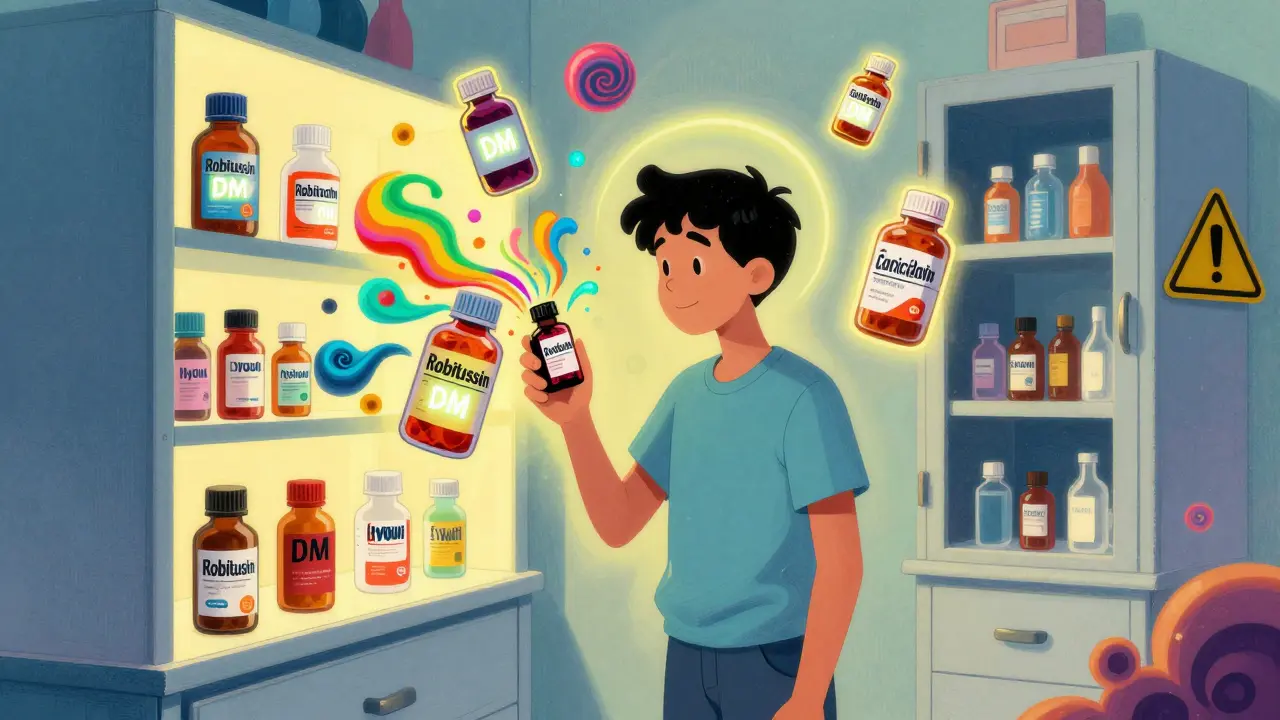
It starts with a cold. A stuffy nose, a scratchy throat, maybe a lingering cough. You grab a bottle of cough syrup from the cabinet-something you’ve used before, something labeled OTC, something your mom kept around the house. You read the label: Take 10 mL every 4 to 6 hours as needed. Simple. Safe. But for some, that label doesn’t mean safety. It means a shortcut. A cheap, easy way out. And that’s how dextromethorphan, or DXM, turns from a cough suppressant into a street drug.
What DXM Actually Does (When Used Right)
Dextromethorphan is a synthetic compound, first approved by the FDA in 1958. It’s not a narcotic. It doesn’t relieve pain. It doesn’t make you feel euphoric-at least, not at the right dose. When taken as directed, DXM works by quieting the cough reflex in your brainstem. It’s in over 70 OTC products, from Robitussin DM to NyQuil, DayQuil, Coricidin, and Tylenol Cold. You’ll see “DM” on the label. Or “Tuss.” Or “Cough Suppressant.” That’s DXM. The recommended dose? 15 to 30 milligrams every 4 to 8 hours. That’s about one or two teaspoons. At that level, it does its job: stops the cough. No high. No hallucinations. Just relief.How Abuse Starts: The Jump from Medicine to High
The problem isn’t DXM itself. It’s the dose. When someone takes 240 mg-or 500 mg, or even 1,500 mg-they’re not treating a cough. They’re chasing a trip. Teens and young adults are the most common abusers. Why? Because it’s cheap. Because it’s legal. Because it’s sitting right there in the medicine cabinet. According to the National Institute on Drug Abuse, about 3% of teens admit to abusing OTC cough medicines to get high. That’s one in 30. And it’s not just teens. Adults too. Especially those who’ve tried other drugs and are looking for something easier to get. The high doesn’t come from the sugar or the flavoring. It comes from DXM itself-when it floods the brain. At high doses, DXM acts like a dissociative, similar to ketamine or PCP. That’s why users call it “the poor man’s PCP.”The Four Plateaus: What Happens When You Take Too Much
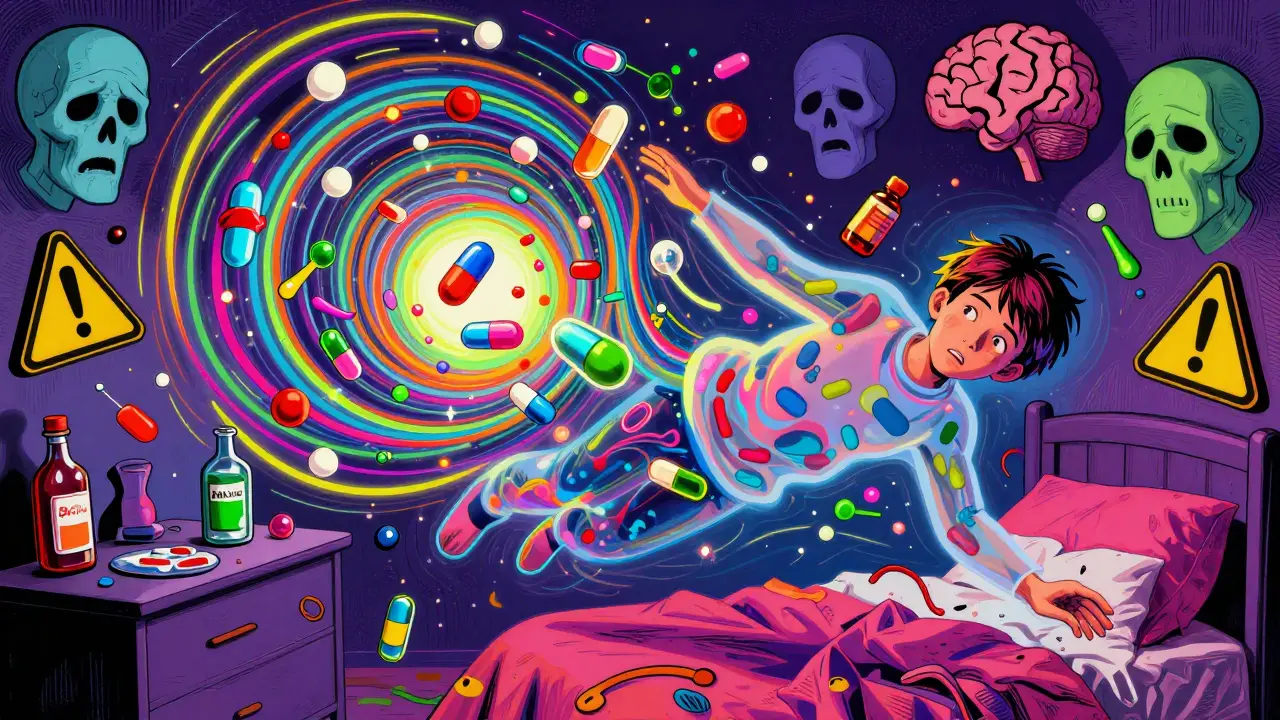
DXM abuse isn’t random. There are predictable stages-called plateaus-that users aim for, based on how much they take.- First plateau (100-200 mg): Mild euphoria, slight dizziness, warmth, mild visual changes. Feels like a buzz.
- Second plateau (200-400 mg): More intense. Distorted time, blurred vision, numbness, feeling detached from your body. Some call this “the float.”
- Third plateau (400-600 mg): Strong dissociation. Out-of-body experiences. Hallucinations. Confusion. Loss of motor control. Users often can’t walk straight.
- Fourth plateau (600+ mg): Near-complete detachment from reality. Delirium. Amnesia. Risk of seizures, coma, or death. This is where people end up in the ER.
How People Take It: Robo Tripping, Robo Shake, and Extraction
You won’t find someone just drinking one bottle. They go big.- Robo tripping: The most common method. Drink multiple bottles of cough syrup at once. Some users consume 8, 10, even 15 bottles in a single session. That’s 1,500 mg or more of DXM.
- Robo shake: A more advanced trick. Drink a huge amount of syrup, then force yourself to vomit. The idea? Keep the DXM absorbed through the stomach lining while getting rid of the sugar, alcohol, and other ingredients that cause nausea. It’s brutal on the body.
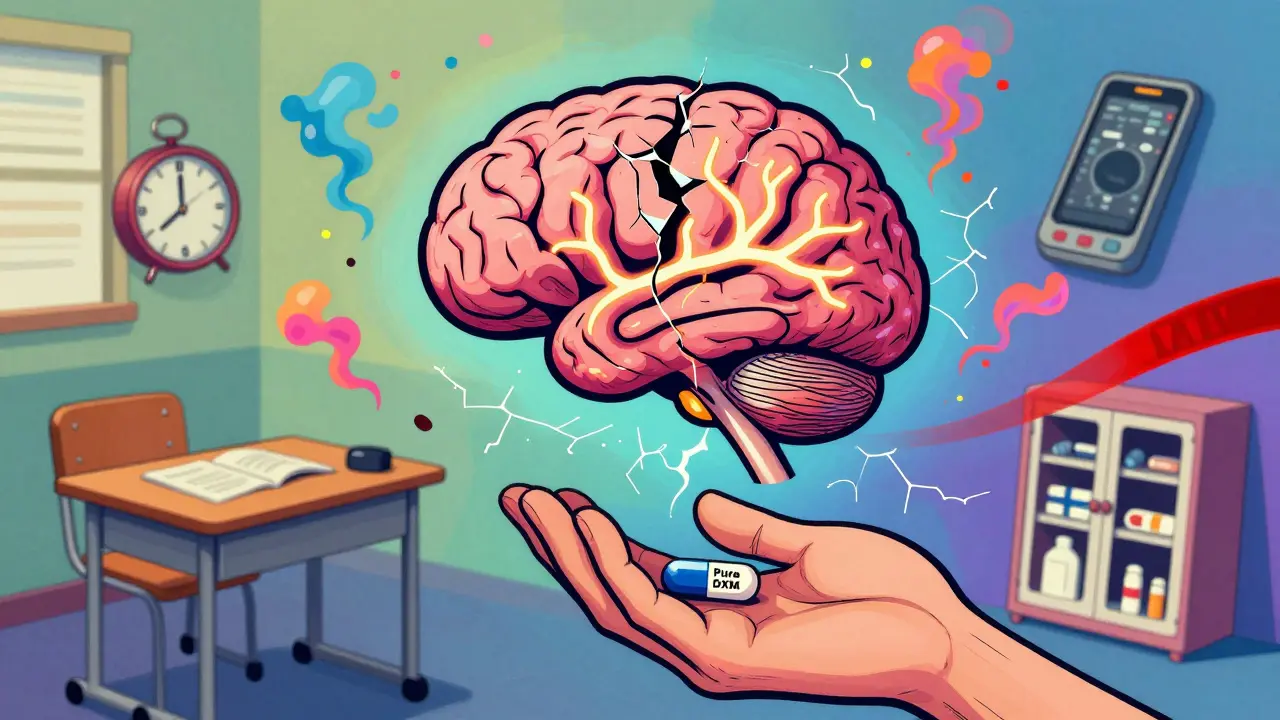
- Chemical extraction: Some users don’t even drink the syrup. They find online guides that show how to extract pure DXM powder from the liquid. They then swallow it in capsules, or even snort it. This is far more dangerous. Pure DXM has no buffer. No warning. One wrong measurement and you overdose.
The Real Danger: What Happens When You Combine It
DXM alone is risky. But when mixed with other substances? That’s when people die.- Alcohol: Combining DXM with alcohol increases the risk of respiratory depression. Your breathing slows. Stops. You pass out. You don’t wake up.
- SSRIs or antidepressants: This can trigger serotonin syndrome-a life-threatening spike in body temperature, heart rate, and blood pressure. Seizures. Organ failure.
- MDMA (ecstasy): The combination can cause hyperthermia. Your body overheats. Muscles break down. Kidneys fail. Death can happen within hours.
- Decongestants like pseudoephedrine: Found in many cold syrups, this raises blood pressure dangerously when combined with DXM. Heart attacks. Strokes.
Matt Davies
December 19, 2025Man, I remember my cousin doing robo shakes back in high school. Said it felt like floating through a kaleidoscope while listening to dubstep on repeat. He’d come back looking like a zombie who’d lost a fight with a washing machine. Scary stuff. But hey, at least he didn’t mix it with alcohol. Smart kid, I guess.
Alex Curran
December 20, 2025DXM’s dissociative effects are well-documented in pharmacology journals. At high doses, it’s an NMDA receptor antagonist-same mechanism as ketamine. The problem isn’t the drug, it’s the lack of dosage control. People treat it like candy because it’s OTC. But pure DXM powder? That’s playing Russian roulette with your brainstem.
Mahammad Muradov
December 21, 2025This is why America is falling apart. Kids can walk into any gas station and buy a chemical that turns them into drooling hallucinators. No one’s held the manufacturers accountable. No one’s held the parents accountable. We let them sell poison on the same shelf as aspirin. Shameful.
Dikshita Mehta
December 22, 2025In India, we don’t have this problem because cough syrups are sold behind the counter and require a prescription if they contain DXM. Also, most brands don’t even include it anymore. The government banned high-dose OTC formulations after a spike in teen overdoses in 2015. Maybe the US should look at models from other countries instead of pretending this is just a ‘teen phase’.
Allison Pannabekcer
December 23, 2025I used to work in a pharmacy. Saw it all. A 14-year-old girl buying 12 bottles of Coricidin HBP every Friday. Her mom didn’t even notice. We’d try to talk to them, but most kids just shrugged and said, ‘It’s not like I’m doing coke.’ And honestly? They’re right-it’s worse. Coke doesn’t rot your memory. DXM does. And nobody talks about that.
holly Sinclair
December 25, 2025It’s fascinating how society pathologizes drug use while ignoring the structural reasons behind it. DXM abuse isn’t about rebellion or thrill-seeking-it’s about a generation starved of meaning, connection, and safe ways to dissociate from a world that feels increasingly hostile. The fact that a cough suppressant becomes a spiritual escape hatch tells us more about our collective trauma than any policy paper ever could. We’ve built a world where the only accessible transcendence comes from a plastic bottle labeled ‘for colds.’
Lynsey Tyson
December 26, 2025My brother went through this. Took it for months. Thought he was ‘just chillin’. Ended up in therapy. Now he says the worst part wasn’t the trips-it was the guilt. Like, he knew it was dumb, but he couldn’t stop. And no one talked about it. Not his friends, not his family. Just silent. Maybe we need more open conversations instead of judgment.
Andrew Kelly
December 27, 2025Let me guess-this is another liberal panic piece dressed up as ‘public health.’ DXM isn’t dangerous. It’s the media that’s dangerous. Every time someone gets sick from it, they blame the drug, not the kid who drank 15 bottles while listening to trap music. If you can’t control your intake, that’s not a drug problem-that’s a personal responsibility problem. Stop infantilizing adults.
Edington Renwick
December 28, 2025And yet, here we are. Another generation of kids turning their brains to mush because they’re bored. No one teaches them how to be alone anymore. No one teaches them how to sit with discomfort. So they chase dissociation like it’s a solution. It’s not. It’s just a slow suicide with better marketing.
Jedidiah Massey
December 29, 2025DXM = NMDA antagonist. Ketamine analog. Microdosing = therapeutic potential. Macro-dosing = neural chaos. The real tragedy? The DEA won’t classify it because of ‘medical utility’-but the ‘utility’ is literally just suppressing coughs. Meanwhile, pure DXM powder is sold on Alibaba for $15/100g. It’s not a loophole. It’s a national failure. :/
Anna Sedervay
December 30, 2025One must contemplate the epistemological rupture that occurs when a pharmaceutical compound, originally designed for symptomatic relief, becomes a sacrament for the disaffected youth of late-stage capitalism. The commodification of dissociation-via mass-produced, sugar-laden elixirs-is not merely a pharmacological anomaly, but a semiotic collapse of societal values. One wonders whether the FDA’s approval of DXM in 1958 was an act of foresight-or hubris.
Sarah McQuillan
December 31, 2025Why do we care so much about DXM but not about how kids are getting addicted to TikTok? At least DXM is a physical substance you can ban. But algorithms? That’s the real drug. And nobody’s doing anything about it. Also, I’m pretty sure most of these ‘overdoses’ are just teens pretending to be high so they can skip school. #FakeNews
Emily P
January 1, 2026I once took 100mg just to see what it felt like. Felt like my brain was underwater. Didn’t enjoy it. Didn’t do it again. Just… weird. Why do people keep doing this? It’s not fun. It’s just scary.
bhushan telavane
January 2, 2026In India, we have a saying: ‘Don’t drink the medicine if you’re not sick.’ Simple. No need for laws or panic. Just common sense. Maybe the West needs to go back to basics.