

24 Dec 2025
- 11 Comments
Many people take Ginkgo Biloba to support memory, focus, or circulation. It’s one of the most popular herbal supplements in the U.S., with millions using it every year. But if you’re also on a blood thinner-whether it’s warfarin, aspirin, clopidogrel, or a newer drug like apixaban-you need to pause and ask: is this safe?
Why Ginkgo Biloba Raises Concerns
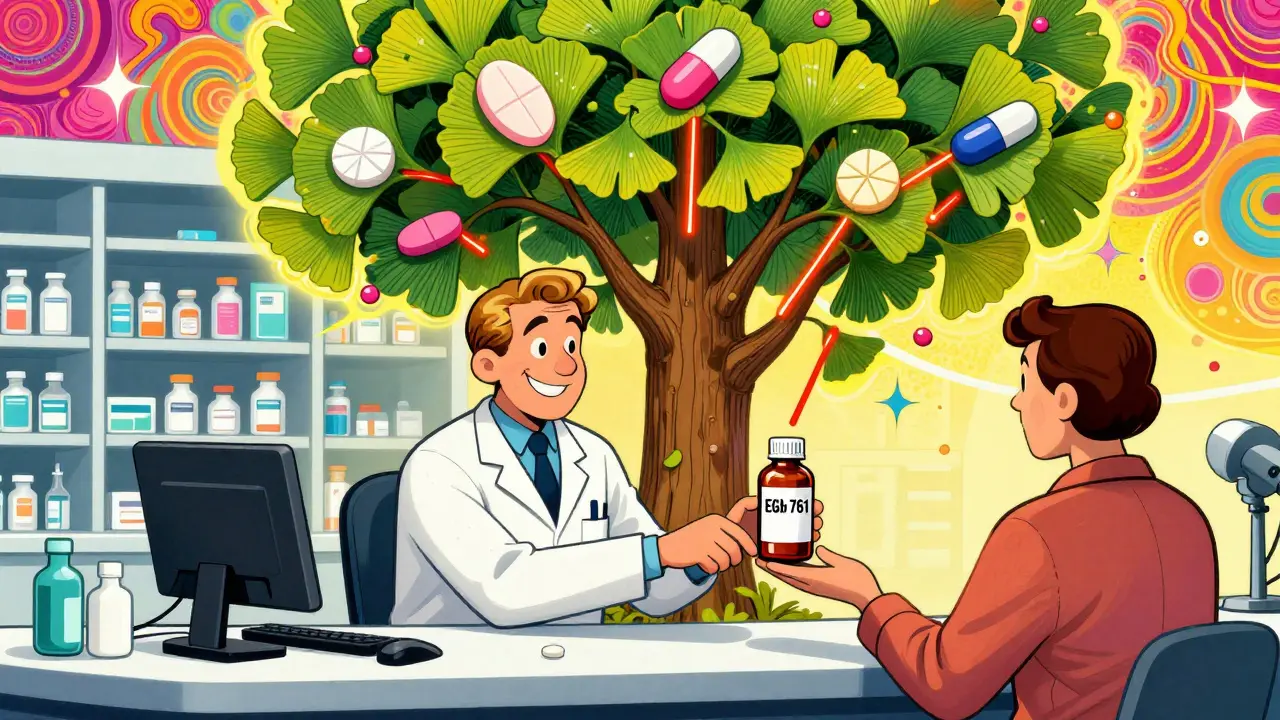
Ginkgo Biloba comes from the leaves of a tree that’s been around for over 270 million years. It’s been used in traditional Chinese medicine for centuries, but modern extracts like EGb 761 are standardized and sold globally. The most common form contains 24% flavonol glycosides and 6% terpene lactones-these are the compounds believed to affect blood flow. The issue isn’t that Ginkgo makes your blood thick. It’s the opposite. Some research suggests it may interfere with platelet function, which are the cells in your blood that help clots form. If you’re already on a medication that thins your blood, adding something that might reduce clotting even further could increase your risk of bleeding.The Evidence Is Mixed
Here’s where it gets confusing. Some studies say Ginkgo is fine. Others say it’s dangerous. A 2008 review of clinical trials found no significant increase in bleeding when Ginkgo was taken with aspirin or warfarin. These were controlled studies using high-quality, standardized extracts. But then there are case reports-real people who had serious bleeding events after taking Ginkgo with blood thinners. One man had a brain bleed after combining Ginkgo with warfarin. Another had uncontrolled bleeding after surgery because he didn’t stop taking Ginkgo beforehand. The key difference? The bad outcomes usually involved non-standardized supplements. That means the product didn’t have consistent levels of active ingredients. Some brands might have too much, some too little, and some might even be contaminated. That’s why experts say the problem isn’t Ginkgo itself-it’s the lack of quality control in the supplement market.Which Blood Thinners Are Most Risky?
Not all blood thinners are the same. And not all interact with Ginkgo the same way.- Warfarin (Coumadin): This is the big one. Ginkgo may interfere with how your body breaks down warfarin through the CYP2C9 enzyme. Even small changes can make your INR levels climb, increasing bleeding risk. The Mayo Clinic and GoodRx both list this as a high-risk interaction.
- Aspirin: Studies show mixed results. Some found no effect. Others saw a slight increase in bleeding time. The risk is lower than with warfarin, but still present.
- Clopidogrel (Plavix): This antiplatelet drug works similarly to how Ginkgo might. Combining them could theoretically reduce your blood’s ability to clot. The PLOS ONE study found a 2.6% interaction rate in prescriptions.
- DOACs (apixaban, rivaroxaban, dabigatran): These newer drugs don’t rely on the same liver enzymes as warfarin, so the interaction is less likely. But there’s still not enough data. Case reports exist. So caution is advised.
What Do Experts Actually Recommend?
There’s no universal rule. But here’s what major institutions say:- Mayo Clinic: Says Ginkgo may raise bleeding risk with aspirin, clopidogrel, or warfarin. Advises talking to your doctor.
- Cleveland Clinic: Lists blood thinners as a direct contraindication-meaning don’t take Ginkgo if you’re on one.
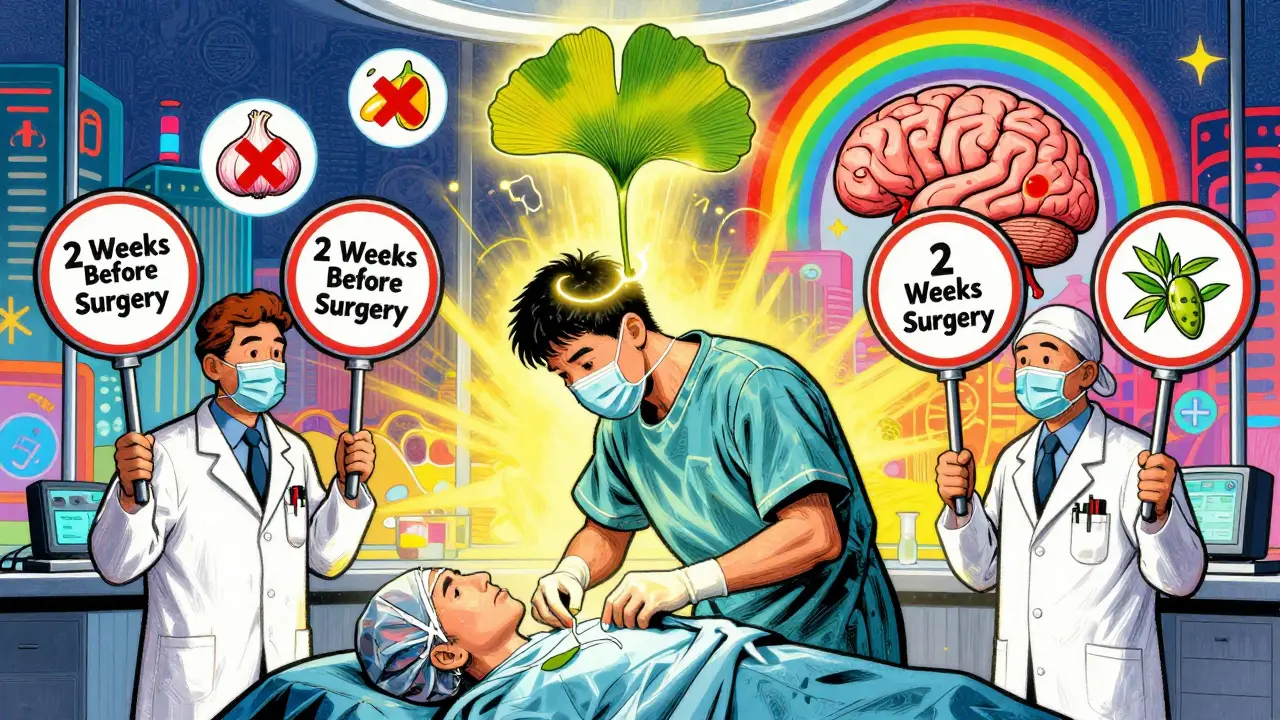
- American Society of Anesthesiologists: Recommends stopping Ginkgo at least two weeks before any surgery.
- GoodRx (2024): Says avoid Ginkgo entirely with warfarin. Use caution with others.
- American College of Chest Physicians: Says routine discontinuation isn’t needed because evidence is weak.
What Should You Do?
Don’t guess. Don’t assume it’s safe because it’s "natural." Here’s what to do:- Check your meds. Make a list of everything you take-prescriptions, supplements, even over-the-counter pain relievers like ibuprofen. Many people don’t realize NSAIDs also increase bleeding risk.
- Talk to your pharmacist. They see drug interactions every day. Ask: "Is Ginkgo safe with my current blood thinner?"
- Be honest with your doctor. If you’re already taking Ginkgo, don’t hide it. Many patients don’t mention supplements because they think it’s "not medicine." But it can affect your treatment.
- Stop before surgery. Whether it’s a dental extraction or heart surgery, stop Ginkgo at least 2 weeks before. That’s the safest window.
- Choose quality. If you do take it, pick brands that say "EGb 761" on the label. That’s the standardized extract used in most clinical studies.
What About Other Supplements?
Ginkgo isn’t alone. Several other herbs and supplements can also thin your blood:- Garlic (especially raw or in high doses)
- Danshen (Chinese herb used for heart health)
- Evening primrose oil
- Fish oil (in doses over 3,000 mg/day)
- Green tea extract (in concentrated forms)
The Bottom Line
Ginkgo Biloba isn’t inherently dangerous. But when paired with blood thinners, the risk isn’t theoretical-it’s real enough that hospitals now have electronic alerts for this combo. The FDA has received dozens of reports of possible bleeding events linked to Ginkgo over the last 15 years. While causality isn’t proven in every case, the pattern is clear enough to warrant caution. If you’re considering Ginkgo for memory or circulation, ask yourself: is the benefit worth the risk? For most people on blood thinners, the answer is no. There are safer ways to support brain health-exercise, sleep, managing blood pressure, and eating a balanced diet. You don’t need a supplement to do that. And if you’re already taking Ginkgo? Don’t quit cold turkey. Talk to your doctor. They can help you decide whether to stop, switch, or keep going-with eyes wide open.Can I take Ginkgo Biloba with aspirin?
Some studies show no significant interaction, but others suggest a slight increase in bleeding risk. Because aspirin already affects platelets, combining it with Ginkgo could make bleeding more likely, especially if you’re older or have other risk factors. Most experts recommend caution and suggest talking to your doctor before combining them.
Is Ginkgo Biloba safe with warfarin?
No. Warfarin is highly sensitive to changes in how your body processes it. Ginkgo can interfere with the CYP2C9 enzyme, potentially increasing warfarin’s effect and raising your INR. This can lead to dangerous bleeding, including brain hemorrhages. The Mayo Clinic and GoodRx both classify this as a high-risk interaction. Avoid combining them unless under strict medical supervision.
How long before surgery should I stop Ginkgo Biloba?
Most guidelines, including those from the American Society of Anesthesiologists, recommend stopping Ginkgo Biloba at least two weeks before any surgical procedure. This gives your body time to clear the supplement and reduces the risk of excessive bleeding during or after surgery. Don’t wait until the day before-start planning ahead.
Do all Ginkgo supplements have the same effect?
No. The only standardized extract studied in most clinical trials is EGb 761. Many over-the-counter products don’t contain this exact formulation and may vary in strength or contain impurities. Non-standardized supplements are more likely to cause unpredictable effects, including bleeding risks. Look for "EGb 761" on the label if you choose to take it.
What are the signs of bleeding from Ginkgo and blood thinners?
Watch for unusual bruising, nosebleeds that won’t stop, bleeding gums, blood in urine or stool, or sudden headaches (which could signal brain bleeding). If you’re on a blood thinner and start noticing any of these, stop Ginkgo immediately and contact your doctor. Don’t wait-it could be serious.
Can I take Ginkgo if I’m not on blood thinners?
For healthy people not on blood thinners, Ginkgo is generally considered safe at standard doses. However, it’s still a potent herbal extract. If you have a bleeding disorder, are scheduled for surgery, or take other supplements like garlic or fish oil, you should still talk to your doctor before starting it. "Natural" doesn’t mean risk-free.
Katherine Blumhardt
December 25, 2025OMG I took ginkgo for months with my baby aspirin and never thought twice 😅 just last week my gums started bleeding like crazy during brushing-now I’m terrified. Doc said to stop it immediately. So glad I saw this post.
sagar patel
December 25, 2025Ginkgo biloba interferes with platelet aggregation. This is basic pharmacology. Combining it with anticoagulants is reckless. No need for case reports when the mechanism is well understood.
Bailey Adkison
December 26, 2025Oh please the 'natural doesn't mean safe' trope again. You people act like aspirin is some lab-made devil drug while ginkgo is innocent fairy dust. Both are chemicals. Both affect coagulation. If you're gonna be paranoid about supplements, at least be consistent. Also stop calling warfarin 'Coumadin' like it's 1998.
Michael Dillon
December 28, 2025Let me get this straight-you’re telling me I can’t take a tree leaf extract because some guy had a brain bleed? Bro, I’ve seen more dangerous stuff in my cereal box. The real danger is Big Pharma scaring people into thinking herbs are villains so they keep buying pills with 17 ingredients they can’t pronounce. I’ve been on Plavix for 5 years and take ginkgo daily. No issues. Maybe your doctor just doesn’t like you getting healthy without them.
Sophie Stallkind
December 28, 2025Thank you for this comprehensive and meticulously referenced analysis. The distinction between standardized extracts and unregulated supplements is critical and often overlooked by consumers. I will be sharing this with my patients who request herbal alternatives for cognitive support. The emphasis on consulting pharmacists and discontinuing prior to surgery is particularly valuable.
Winni Victor
December 29, 2025So let me get this straight-I can’t take ginkgo because some dude had a brain bleed? What about the 10 million people who take it and don’t turn into human pincushions? This article reads like a fear-mongering ad for Big Pharma. Next they’ll say sunlight causes cancer because one guy got melanoma. Wake up, sheeple. Natural doesn’t mean dangerous. It means unpatentable.
Terry Free
December 31, 2025Wow. So the FDA has 'dozens' of reports. That’s like… what? 0.0001% of users? Meanwhile, Tylenol kills 200 people a year and nobody’s banning it. You want to scare people? Talk about real risks. Like how your blood thinner is probably made in a factory in China with no oversight. But sure, blame the ginkgo. Classic.
Lindsay Hensel
December 31, 2025This is precisely the kind of balanced, evidence-based guidance our community needs. The tension between clinical data and anecdotal reports is real, but the precautionary principle remains sound-especially for vulnerable populations. I appreciate the inclusion of specific brand names and surgical guidelines. A model for public health communication.
Linda B.
December 31, 2025Did you know that the FDA doesn’t regulate supplements at all? That means every bottle of ginkgo could be laced with synthetic blood thinners or worse-government mind-control chemicals disguised as flavonoids. They want you to think it’s 'natural' so you don’t question why your INR keeps spiking. The real story? They’re testing new anticoagulants on unsuspecting supplement users. EGb 761? Probably a cover for a classified DARPA project.
Christopher King
January 1, 2026Think about it-ginkgo trees survived the asteroid that killed the dinosaurs. They’ve been around for 270 million years. And now some lab-coated guy in a white room says *we* know better than evolution? That’s not science. That’s arrogance. You think your warfarin is safer? It’s a synthetic molecule designed in a corporate lab by people who’ve never seen a tree. The ginkgo has already won. It’s the ultimate survivor. And you’re scared of a leaf?
Justin James
January 2, 2026Look, I’ve read every study on this. The 2008 review was funded by a supplement manufacturer. The case reports? All from ERs where people were already on three other meds, drank 12 beers a day, and didn’t tell anyone they were taking ginkgo. The real issue isn’t ginkgo-it’s the complete lack of regulation in the supplement industry. No batch testing. No quality control. No transparency. So you get a bottle labeled EGb 761 that actually contains ground-up rubber bands and caffeine. That’s the danger. Not the herb. The system. And until the FDA actually enforces labeling laws, this whole conversation is just noise. Also, I’ve been taking ginkgo for 12 years. My INR is stable. My brain is sharper than ever. And I buy only from companies that publish third-party lab reports. So don’t blame the plant. Blame the crooks selling it.