
8 Jan 2026
- 13 Comments
Opioid Driving Safety Calculator
This tool helps you determine if you're safe to drive after taking opioids. Remember: individual reactions vary, and these guidelines are based on medical recommendations. Always consult your doctor for personalized advice.
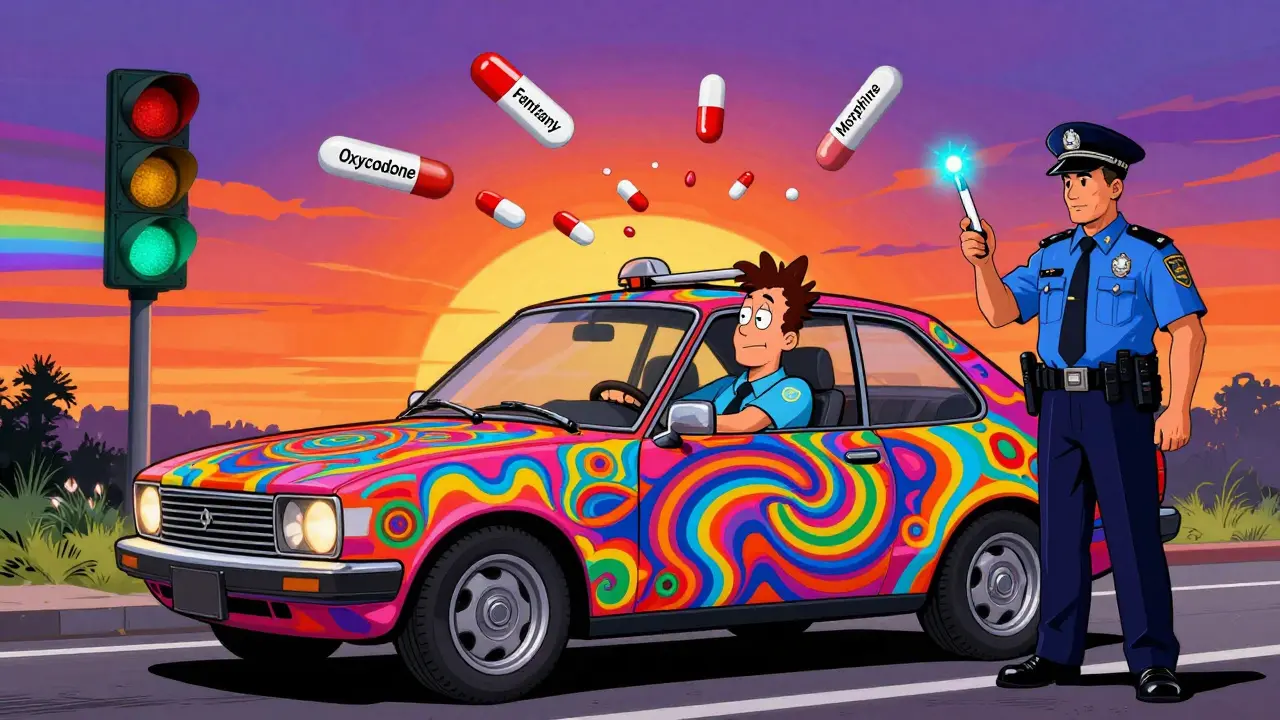
Driving while taking opioids isn’t just risky-it’s legally dangerous, even if you’re following your doctor’s orders. Many people assume that because their medication is prescribed, it’s safe to drive. That’s a deadly myth. Opioids-whether it’s oxycodone, hydrocodone, fentanyl, or morphine-slow your reaction time, blur your vision, and make judgment calls harder. And in many places, you can still get arrested for it, even if you feel fine.
How Opioids Actually Affect Your Driving
Opioids don’t just make you sleepy. They mess with your brain’s ability to process what’s happening around you. The National Institute on Drug Abuse says these drugs can cause drowsiness, dizziness, and impair thinking and decision-making. Studies show that driving under opioid influence can double your risk of a crash.Think about it: if you’re on a 5mg dose of oxycodone twice a day, you might feel normal after an hour. But your brain isn’t. Reaction times drop. You miss traffic lights. You drift between lanes. You don’t notice a car braking ahead until it’s too late. Unlike alcohol, where you might smell it or see slurred speech, opioid impairment is quiet. You don’t stumble. You don’t slur. You just drive poorly-and don’t realize it.
One driver in Sydney told a local news outlet he took his prescribed tramadol before heading to work. He got pulled over for weaving. He was confused. "I didn’t drink. I’m not high. I’m just in pain." He failed the field sobriety test. His blood test showed tramadol. He lost his license for six months. He wasn’t abusing it. He was following his prescription.
It’s Illegal-Even With a Prescription
In Australia, driving under the influence of any drug, including prescription opioids, is illegal under state road safety laws. You don’t need to be "high" to be charged. If a blood or saliva test finds opioids in your system, you can be fined, lose your license, or even face jail time.This isn’t just Australia. In the U.S., 16 states have zero-tolerance laws: any trace of a controlled drug in your system equals a DUI. Five other states have "per se" laws-meaning if you have a certain amount of a drug in your blood, you’re automatically guilty. Canada treats opioid impairment the same as alcohol impairment under its Criminal Code.
And here’s the twist: some doctors don’t warn you. A 2022 survey of over 1,200 chronic pain patients found that 63% didn’t know driving on opioids could lead to a DUI. Pharmacists sometimes say, "It’s fine if you feel okay." But that’s not the law. The law doesn’t care how you feel. It cares what’s in your blood.
What the Law Actually Says (And How They Prove It)
Police don’t use breathalyzers for opioids. They use a two-step process. First, a Standardized Field Sobriety Test-walking in a straight line, standing on one foot, following a pen with your eyes. If you fail, they’ll ask for a saliva or blood sample.Oral fluid tests are now used in 47 U.S. states and increasingly in Australia. The Dräger DrugTest 5000, approved in 2023, can detect fentanyl, oxycodone, and other opioids in under 10 minutes. That’s a big shift. Ten years ago, testing was slow and expensive. Now, it’s fast. And it’s everywhere.
But here’s the problem: there’s no universal "legal limit" for opioids like there is for alcohol (0.05% in Australia, 0.08% in most U.S. states). Why? Because opioids affect people differently. Someone on a high dose for cancer pain might test positive but be fine to drive. Someone new to the drug might be dangerously impaired on a tiny dose. That’s why some states rely on officer judgment, not numbers. And that’s why you can get arrested even if you’re taking your meds exactly as prescribed.
Real People, Real Consequences
Reddit threads are full of stories like this:- "Took my 10mg oxycodone for back pain. Drove to the pharmacy. Got pulled over. Failed the test. Lost my job."
- "My pharmacist said it was okay. My doctor didn’t mention driving. Now I have a criminal record. I can’t travel to the U.S. anymore."
- "I was on 30mg morphine daily. Felt fine. Drove to my kid’s soccer game. Got arrested. My license was suspended for a year. I had to pay $12,000 in legal fees."
These aren’t addicts. These are people managing chronic pain. They followed instructions. And still got punished. Why? Because the law doesn’t distinguish between "therapeutic" and "abusive" use when it comes to driving. It only sees the drug in your system.
What You Should Do Instead
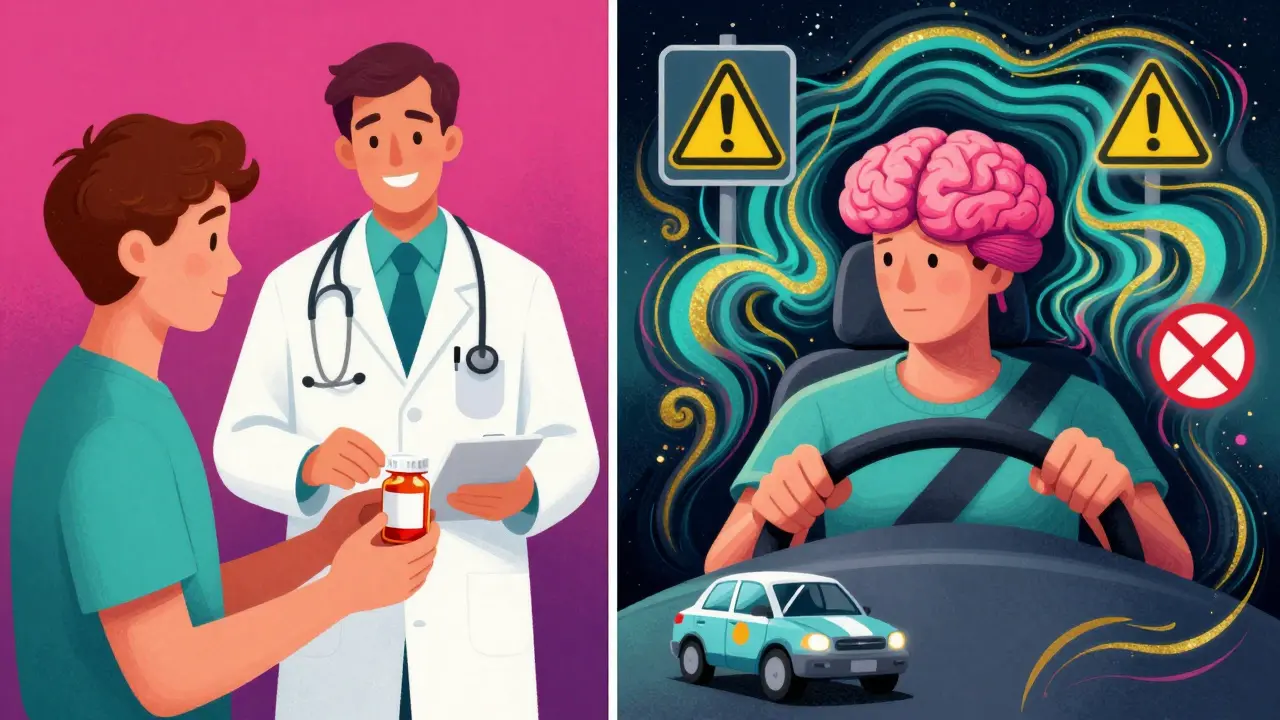
If you’re prescribed opioids, here’s what actually works:- Ask your doctor: "Can I drive on this medication?" Don’t assume. Ask specifically about your drug and dose.
- Check the label: Since 2020, the FDA requires all opioid prescriptions to include a "Do Not Drive" warning. If it’s not there, ask why.
- Wait at least 3-4 hours after an immediate-release dose. For extended-release pills (like OxyContin), wait 6-8 hours. Your body needs time to process it.
- Plan ahead: Use public transport, ride-shares, or ask a friend. Don’t gamble with your license-or your life.
- Never mix with alcohol or sedatives: That’s when the risk skyrockets. Even a glass of wine with oxycodone can be deadly behind the wheel.
California’s Office of Traffic Safety says it plainly: "If you’re taking a drug that can impair you, plan for a sober driver. Always wear your seatbelt-it’s your best defense against someone else who’s impaired."
What’s Changing-and What’s Coming
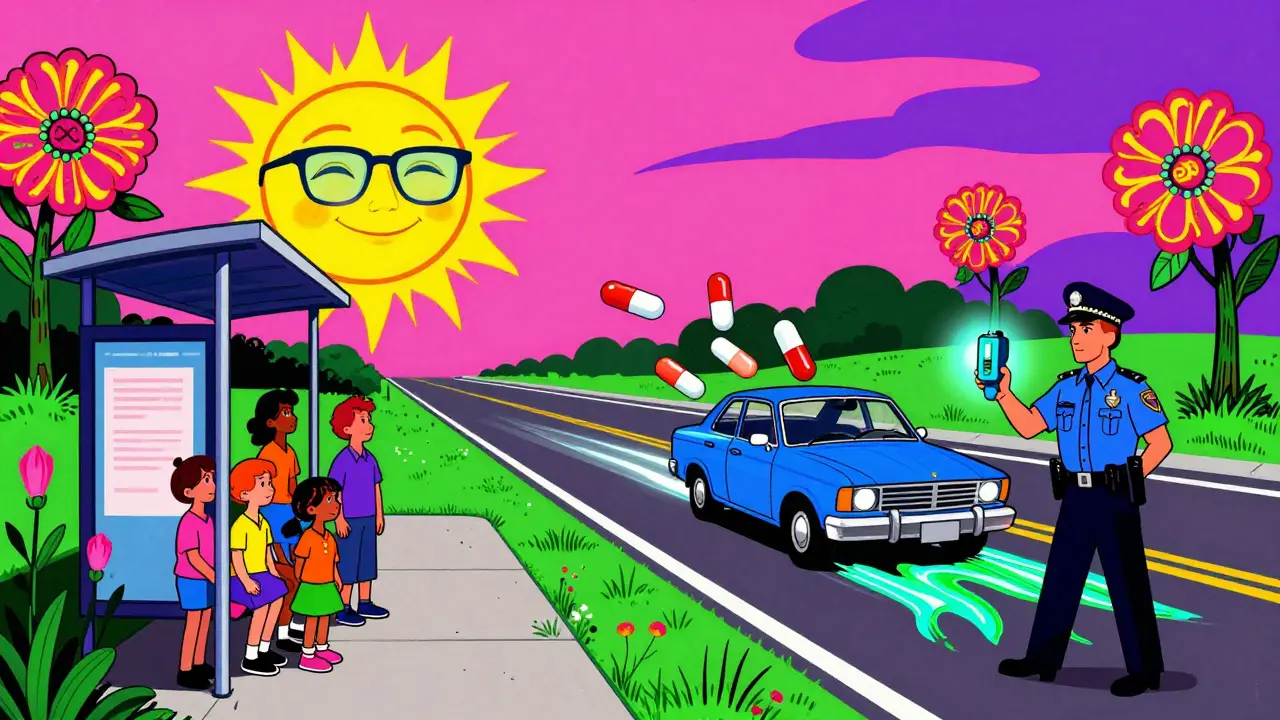
In 2024, seven more U.S. states are considering per se laws for opioids. Australia is expanding roadside saliva testing. The National Highway Traffic Safety Administration is training 5,000 new Drug Recognition Experts by 2025. The goal? Catch more impaired drivers before they kill someone.But there’s a darker side. Fentanyl is now showing up in pills people think are oxycodone. It’s 50 to 100 times stronger. One pill can kill. And it’s showing up in roadside tests more than ever. Between 2020 and 2023, fentanyl-related impaired driving cases jumped 262%.
Companies like UPS now require employees to report opioid prescriptions. They conduct medical reviews. Result? A 37% drop in medication-related incidents. That’s proof that clear policies save lives.
When in Doubt, Don’t Drive
The safest choice isn’t complicated. If you’re on opioids, don’t drive. Not even for a quick trip. Not even if you "feel fine." Your brain is still slowed down. Your reflexes are dulled. The law doesn’t care how you feel. And neither does a speeding truck.There’s no shame in calling a friend, booking an Uber, or taking the bus. What’s shameful is risking your life, your license, and maybe someone else’s, because you didn’t ask the right questions.
Chronic pain is real. So is the danger of driving on opioids. You don’t have to choose between managing your pain and staying safe. You just have to plan ahead.
Can I drive if I’m taking opioids as prescribed?
No. Even if your doctor prescribed it, driving while impaired by opioids is illegal in Australia and most countries. The law doesn’t care if you’re following instructions-it only cares if the drug is in your system and if it affects your ability to drive safely. Many people have lost their licenses, faced fines, or been jailed for driving on prescribed opioids.
How long should I wait after taking opioids before driving?
Wait at least 3-4 hours after taking an immediate-release opioid like oxycodone or hydrocodone. For extended-release versions like OxyContin or MS Contin, wait 6-8 hours. But this isn’t a guarantee. Everyone reacts differently. If you feel drowsy, dizzy, or mentally foggy, don’t drive-even if it’s been hours.
Can I get a DUI from a prescription opioid I’ve taken correctly?
Yes. In Australia and many U.S. states, having any detectable amount of an opioid in your system while driving can lead to a DUI charge-even if you took it exactly as prescribed. Law enforcement doesn’t assess intent. They test for presence and impairment. Many people have been charged this way and didn’t realize the risk until it was too late.
Do pharmacies warn patients about driving on opioids?
Some do, but many don’t. A 2022 survey found that 63% of chronic pain patients weren’t warned by their pharmacist or doctor about driving risks. Always ask. Don’t rely on them to bring it up. The warning label on your medication says "Do Not Drive," but if you’re unsure, call your doctor or pharmacist and ask directly.
Are there tests that can prove I’m not impaired?
No. There’s no reliable test to prove you’re not impaired by opioids like there is for alcohol. Blood tests show presence, not impairment. Even if your level is "low," you can still be charged. Police rely on field sobriety tests and officer judgment. The burden is on you to prove you weren’t impaired-which is nearly impossible in court without expert testimony.
What should I do if I’ve been charged with driving on opioids?
Get legal help immediately. Contact a lawyer who specializes in drug-impaired driving cases. Bring your prescription records, dosage history, and any communication with your doctor. While having a prescription doesn’t guarantee dismissal, it can help build your defense. Also, consider reaching out to the Substance Abuse and Mental Health Services Administration (SAMHSA) helpline at 1-800-662-4357 for support and resources.
Jenci Spradlin
January 10, 2026bro i took my oxycodone for a herniated disc and drove to the store. felt fine. got pulled over. cop said my eyes were glassy. i cried. they took my license. my pharmacist said "it’s fine if you don’t feel high." turns out the law don’t care how you feel. just that the drug’s in your blood. now i take ubers. no shame in that.
Micheal Murdoch
January 11, 2026There’s a real human cost here that gets lost in legal jargon. People aren’t trying to break the law-they’re trying to live. Chronic pain isn’t a choice. But the system treats them like criminals because they took a pill their doctor gave them. We need harm reduction, not punishment. The real failure isn’t the driver-it’s the system that doesn’t warn people clearly, doesn’t offer alternatives, and doesn’t measure impairment, just presence. That’s not justice. That’s negligence dressed up as law.
RAJAT KD
January 12, 2026This is why we need better education. In India, doctors rarely warn about driving. People assume if it’s prescribed, it’s safe. That’s dangerous thinking. I’ve seen friends lose jobs over this. It’s not about blame-it’s about awareness. Call your doctor. Ask. Don’t wait for the crash.
Johanna Baxter
January 12, 2026so i took my tramadol to go to my mom’s funeral and got arrested. i didn’t cry at the service. i cried in the holding cell. they took my car. my license. my dignity. i didn’t even know it was illegal. now i take the bus. and i hate it. but i’d rather hate the bus than hate myself for killing someone.
Aron Veldhuizen
January 13, 2026Let’s be brutally honest: this isn’t about safety. It’s about control. The state doesn’t trust you to make your own decisions. They’d rather criminalize your pain than fix a broken healthcare system that leaves you with no choice but to drive on meds. This isn’t law-it’s authoritarianism wrapped in a safety blanket. And don’t tell me "it’s for your own good." I’m not a child.
Elisha Muwanga
January 13, 2026As a veteran, I’ve seen too many good people ruined by bureaucracy. Opioids saved my spine after two deployments. But now I can’t drive to my kid’s soccer game without risking prison? The VA didn’t warn me. My doctor didn’t warn me. The pharmacy didn’t warn me. So who’s at fault? The system. Not me. And I’m tired of being punished for surviving.
Chris Kauwe
January 15, 2026Per se laws are necessary. Opioid impairment is statistically equivalent to DUI. The absence of a blood alcohol threshold doesn’t negate the risk-it just makes enforcement harder. We need standardized biomarkers, not subjective sobriety tests. Until then, zero tolerance is the only rational policy. Your pain doesn’t override public safety. Period.
Jacob Paterson
January 16, 2026Oh look, another person who thinks their prescription is a magic get-out-of-jail-free card. 🤦♂️ You didn’t read the label? You didn’t Google it? You didn’t ask? Honey, the internet exists. So does your doctor’s phone number. If you’re too lazy to read the fine print, don’t be surprised when the law catches up. Your ignorance isn’t a defense. It’s a liability.
Angela Stanton
January 16, 2026so i got my first DUI on oxycodone and now i’m in a 12-step program for "medication misuse" 😭 i never thought i was addicted... i just wanted to walk without screaming. now i have a criminal record and my therapist says i have "behavioral dependency". idk anymore. 🥲 #painwarrior #notaddicted
Heather Wilson
January 17, 2026The real issue isn’t the law-it’s the medical community’s failure to communicate. A 2022 survey of 1,200 patients revealed that 63% were never warned about driving risks. That’s not negligence; it’s malpractice. Doctors are bound by the Hippocratic Oath to do no harm. Ignoring the legal consequences of prescribing opioids is a direct violation. Hospitals should be required to provide mandatory counseling with printed materials, signed receipts, and follow-up calls. Anything less is institutional betrayal.
Ian Long
January 17, 2026I get both sides. I’m on long-term opioids for fibromyalgia. I’ve lost friends to crashes. I’ve also seen people lose everything just because they drove to the pharmacy. But here’s the thing-we’re not enemies. The law is the problem, not the patient. We need a middle path: drug recognition training for cops, standardized impairment tests, and mandatory patient education. Not punishment. Prevention. Compassion without compromise.
Pooja Kumari
January 19, 2026i just want to say… i’m so sorry you’re all going through this. i had to stop driving after my surgery. i felt so alone. like no one understood. then i found this subreddit. and i cried. for like an hour. i just wanted to say… you’re not alone. and if you need to vent… i’m here. always. 💕
Jerian Lewis
January 19, 2026Don’t drive. It’s that simple. You want to feel better? Fine. But you don’t get to risk other people’s lives because you’re too lazy to call an Uber. The law is clear. The science is clear. Your feelings? Irrelevant. Stop making it about you. Start thinking about the family you could kill.