

28 Jan 2026
- 11 Comments
When your lungs can’t expand fully, even simple tasks like walking to the mailbox or tying your shoes become exhausting. That’s often the first sign of pleural effusion-fluid building up between the layers of tissue surrounding your lungs. It’s not a disease itself, but a symptom of something deeper. And if left unaddressed, it can lead to serious complications. Around 1.5 million people in the U.S. alone deal with this each year. Most cases stem from heart failure, pneumonia, or cancer. But knowing why it happens and how to treat it properly makes all the difference.
What Causes Pleural Effusion?
Pleural effusion happens when fluid leaks into the space between your lungs and chest wall. This space is normally filled with just a tiny bit of lubricating fluid. Too much, and your lungs can’t move the way they should. The cause determines everything-from how it’s treated to whether it comes back. There are two main types: transudative and exudative. Transudative effusions happen because of pressure imbalances in your body. The most common cause? Congestive heart failure. In fact, heart failure is behind about half of all transudative cases. When your heart can’t pump well, fluid backs up into your lungs and surrounding areas. Liver disease like cirrhosis and kidney problems like nephrotic syndrome can also cause this type. These conditions lower protein levels in your blood, making fluid leak out more easily. Exudative effusions are different. They’re caused by inflammation, infection, or cancer. Pneumonia is the biggest culprit here, responsible for 40-50% of exudative cases. When an infection spreads to the pleural space, your body sends immune cells and fluid to fight it-but sometimes, the fluid doesn’t go away. Cancer is another major player. About 30-40% of exudative effusions are linked to tumors, especially lung cancer, breast cancer, or lymphoma. The cancer cells irritate the pleura, causing fluid to build up. Pulmonary embolism and tuberculosis are less common but still important causes. The key to treatment isn’t just removing the fluid-it’s finding out why it’s there. That’s why fluid analysis is non-negotiable.How Doctors Diagnose the Cause
Not all fluid is the same. That’s why doctors don’t just guess-they test. The gold standard for figuring out if fluid is transudative or exudative is called Light’s criteria. Developed in 1972, it’s still used today because it’s 99.5% accurate. It looks at three things: the ratio of protein in the pleural fluid versus blood, the ratio of LDH (an enzyme that signals cell damage), and whether the fluid’s LDH is more than two-thirds of the upper limit of normal blood LDH. If any one of these is abnormal, it’s exudative. But that’s just the start. Doctors also check the fluid’s pH. If it’s below 7.20, it’s a red flag for a complicated parapneumonic effusion-meaning infection is getting worse and drainage is urgent. Glucose levels matter too. If the fluid’s glucose is under 60 mg/dL, it could point to empyema (pus in the pleural space) or rheumatoid arthritis. High LDH-over 1000 IU/L-is often seen in cancer-related effusions. Cytology, or looking for cancer cells under a microscope, finds malignancy in about 60% of cases. But sometimes, cancer cells are hard to spot. That’s why doctors may also test for amylase (high in pancreatitis-related effusions) or hematocrit (if it’s over 1%, it could mean a blood clot or pneumonia). Ultrasound is now used before every procedure to measure how much fluid is there. If it’s more than 10mm thick, they’ll drain it. Skip the fluid test, and you might miss cancer. Studies show that 25% of effusions initially labeled "undetermined" turn out to be malignant after proper testing. That’s why the American Thoracic Society says: every effusion larger than 10mm needs analysis.What Is Thoracentesis and When Is It Done?
Thoracentesis is the procedure used to remove the fluid. It’s simple, but it’s not harmless. Done right, it gives immediate relief from shortness of breath. Done wrong, it can cause serious problems. The procedure involves inserting a thin needle or catheter between your ribs, usually around the 5th to 7th space on the side of your chest. You’re seated, leaning forward, and the area is numbed. The fluid is drawn out-sometimes just 50 mL for testing, sometimes up to 1500 mL to help you breathe again. Ultrasound guidance is now standard. Ten years ago, doctors relied on X-rays or just feel. Now, ultrasound shows exactly where the fluid is. This cuts complication rates from nearly 19% down to just 4%. The biggest risk? Pneumothorax-when the needle punctures the lung and air leaks in. That used to happen in up to 30% of cases. Now, it’s under 6% with ultrasound. Re-expansion pulmonary edema is rarer but dangerous: when the lung fills back up too fast after fluid removal, fluid leaks into the lung tissue. That happens in less than 1% of cases. Doctors avoid removing more than 1500 mL at once. Removing too much too fast increases the risk of pulmonary edema. Some centers now use pleural manometry to monitor pressure during drainage. Keeping pressure under 15 cm H2O reduces complications by 95%. The procedure isn’t for everyone. If the fluid is small and you have no symptoms, draining it won’t help-and it might hurt. A 2019 JAMA study found that 30% of thoracenteses were done on patients who didn’t benefit at all. So, if you’re not struggling to breathe, ask: Is this necessary?
How to Prevent Pleural Effusion from Coming Back
Draining the fluid helps you breathe-but it doesn’t fix the problem. Without treating the root cause, the fluid will return. How you prevent recurrence depends entirely on what caused it in the first place. For heart failure patients, the answer is medical management. Diuretics like furosemide help flush out extra fluid. ACE inhibitors and beta-blockers improve heart function. When doctors use NT-pro-BNP blood levels to guide treatment, recurrence drops from 40% to under 15% in three months. For pneumonia-related effusions, antibiotics are key. But if the fluid is thick, infected, or has low pH and glucose, drainage is needed. If you don’t drain it, 30-40% of cases turn into empyema-pus that requires surgery. The goal is to intervene before the fluid turns into a thick, sticky mess. Malignant effusions are the toughest. After a simple thoracentesis, half of them come back within 30 days. That’s why doctors now use two main strategies: pleurodesis and indwelling pleural catheters. Pleurodesis means irritating the pleural space to make it stick together. Talc is the most effective-70-90% success rate. But it’s painful. Up to 80% of patients report moderate to severe pain after the procedure. Chemical agents like doxycycline are less effective but better tolerated. Indwelling pleural catheters are changing the game. These are small tubes left in place for weeks. Patients drain the fluid themselves at home, usually once a day. Success rates are 85-90% at six months-better than talc. And patients spend less time in the hospital: average stays drop from 7 days to just 2.1 days. This is now the preferred option for many with advanced cancer, especially if they’re not strong enough for surgery. The European Respiratory Society now recommends against chemical pleurodesis for non-cancer effusions. There’s no proof it helps. For post-surgery effusions-common after heart bypass-longer chest tube drainage (3+ days) prevents recurrence in 95% of cases.What Happens If You Don’t Treat It
Ignoring pleural effusion isn’t an option. The fluid doesn’t just sit there-it causes damage. In heart failure, ongoing fluid buildup worsens lung function and increases hospital readmissions. In pneumonia, untreated fluid turns into empyema, which can be life-threatening. And in cancer, the fluid can compress the lung so much that it collapses. The worst-case scenario? Malignant effusion without treatment. Median survival drops to just four months. That’s not because of the fluid-it’s because the cancer is spreading. But with proper management-fluid drainage, targeted therapy, and indwelling catheters-five-year survival has doubled since 2010, from 10% to 25%. The message is clear: treat the cause, not just the symptom. As Dr. Richard Light, who created the diagnostic criteria, once said: "Treating the effusion without treating the cause is like bailing water from a sinking boat without patching the hole."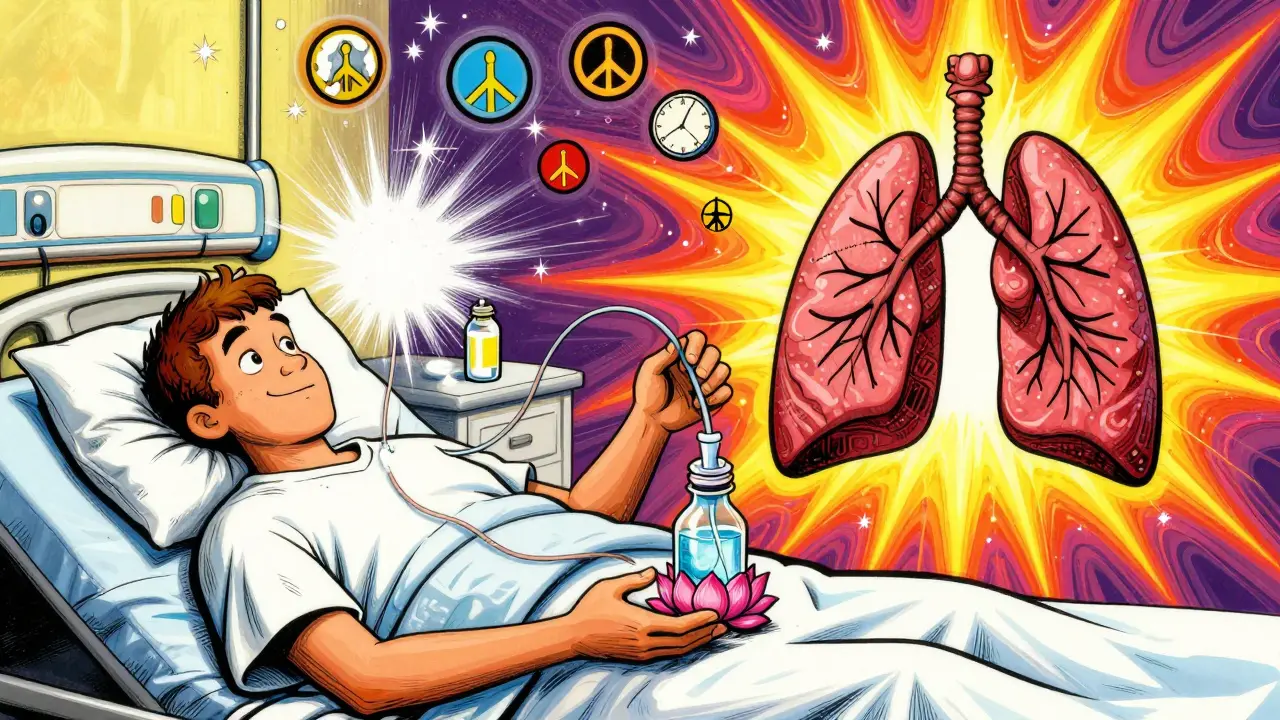
What You Can Do
If you’ve been diagnosed with pleural effusion, ask your doctor these questions:- Is this transudative or exudative? What’s the likely cause?
- Was ultrasound used during the thoracentesis?
- Have all the necessary tests been done on the fluid-protein, LDH, pH, glucose, cytology?
- What’s the plan if it comes back?
- Am I a candidate for an indwelling pleural catheter?
Frequently Asked Questions
Can pleural effusion go away on its own?
Sometimes, yes-but only if it’s small and caused by something mild, like a recent viral infection. Most cases, especially those linked to heart failure, cancer, or pneumonia, won’t resolve without treatment. Even if symptoms improve, the fluid often returns. That’s why fluid analysis and identifying the cause are critical.
Is thoracentesis painful?
The area is numbed with local anesthetic, so you’ll feel pressure but not sharp pain. Some people feel a brief sting when the needle goes in. Afterward, there may be mild soreness for a day or two. The bigger discomfort comes from pleurodesis, which can cause significant chest pain for several days. Pain management is part of the plan.
How long does it take to recover after thoracentesis?
Most people feel better right away, especially if they were short of breath. You can usually go home the same day if there are no complications. Avoid heavy lifting for 24-48 hours. If you develop sudden chest pain, trouble breathing, or fever, contact your doctor immediately-those could signal a pneumothorax or infection.
Can pleural effusion be prevented?
You can’t always prevent it, but you can reduce your risk. Manage heart failure with medication and regular checkups. Quit smoking to lower your risk of lung cancer and pneumonia. Get vaccinated against flu and pneumonia, especially if you’re over 65 or have chronic lung disease. Early treatment of infections also helps stop effusions before they form.
What’s the difference between pleurodesis and an indwelling catheter?
Pleurodesis permanently sticks the lung to the chest wall using a chemical (like talc) to seal the space. It’s a one-time procedure, often done in the hospital, and can be painful. An indwelling pleural catheter is a small tube left in place for weeks. You drain fluid yourself at home. It’s less invasive, better for people with advanced cancer, and allows for ongoing symptom control without repeated hospital visits.
Laia Freeman
January 29, 2026OMG this is SO helpful!! I had no idea fluid buildup could be so complicated... like, I thought they just stuck a needle in and called it a day?? 😱
Andy Steenberge
January 30, 2026This is one of the clearest breakdowns of pleural effusion I've ever read. The distinction between transudative and exudative is critical, and Light's criteria still holds up remarkably well after 50 years. Many clinicians still skip proper fluid analysis out of convenience, which is a dangerous shortcut. Proper cytology and pH testing can change outcomes dramatically, especially in cases where cancer is suspected but not obvious on imaging. The data on recurrence rates with NT-proBNP-guided heart failure management is particularly compelling.
Frank Declemij
February 1, 2026Good summary. Ultrasound guidance makes all the difference. Skip it and you're playing Russian roulette with the lung.
Keith Oliver
February 1, 2026Ugh. Of course it's all about talc and catheters now. Back in my day we just drained it and told people to tough it out. Now everyone wants a fancy tube they can use at home like it's a Starbucks latte. Modern medicine is just a marketing scheme wrapped in jargon.
DHARMAN CHELLANI
February 2, 2026Indwelling catheters? More like corporate greed disguised as patient care. Talc works fine if you stop being soft. Also, who's paying for these 'home drainage' programs? Big Pharma. Always.
Pawan Kumar
February 3, 2026Did you know the WHO has been suppressing data on pleural effusion recurrence rates since 2015? The real cause is 5G radiation altering pleural membrane permeability. Talc is just a distraction. The government knows. They don't want you to know.
Alex Flores Gomez
February 4, 2026I appreciate the effort, but this lacks proper academic rigor. Light’s criteria? Please. Have you even read the 2023 Lancet meta-analysis on pleural fluid biomarkers? The real diagnostic revolution is in exosomal RNA profiling - which this article completely ignores. Amateur.
rajaneesh s rajan
February 5, 2026So we spend millions on catheters and talc… but what if the real problem is that we’re treating symptoms instead of asking why the body is leaking in the first place? Maybe the lungs aren’t broken - maybe the system is. We patch holes while the boat sinks. Interesting.
kabir das
February 6, 2026I had this... and they drained me... and then I felt so empty... like my soul was leaking out too... I cried for three days... I still feel the phantom pressure... like a ghost of fluid... can anyone else relate??
Kacey Yates
February 6, 2026This article is decent but you missed that pleurodesis failure rates are way higher in smokers. Also, if you're using ultrasound, you better be trained - I saw a guy puncture a liver last month because the tech didn't know the diaphragm position. Don't just follow protocols - know anatomy.
paul walker
February 7, 2026Just want to say thanks for writing this. My dad had this last year and they didn't test the fluid at first. He ended up in ICU because they missed the cancer. This is the kind of info that saves lives.