
1 Jan 2026
- 8 Comments
Metronidazole & Alcohol Safety Checker
Based on current evidence (2023-2024 studies), metronidazole does not cause dangerous disulfiram-like reactions with alcohol. This tool helps you assess your individual situation.
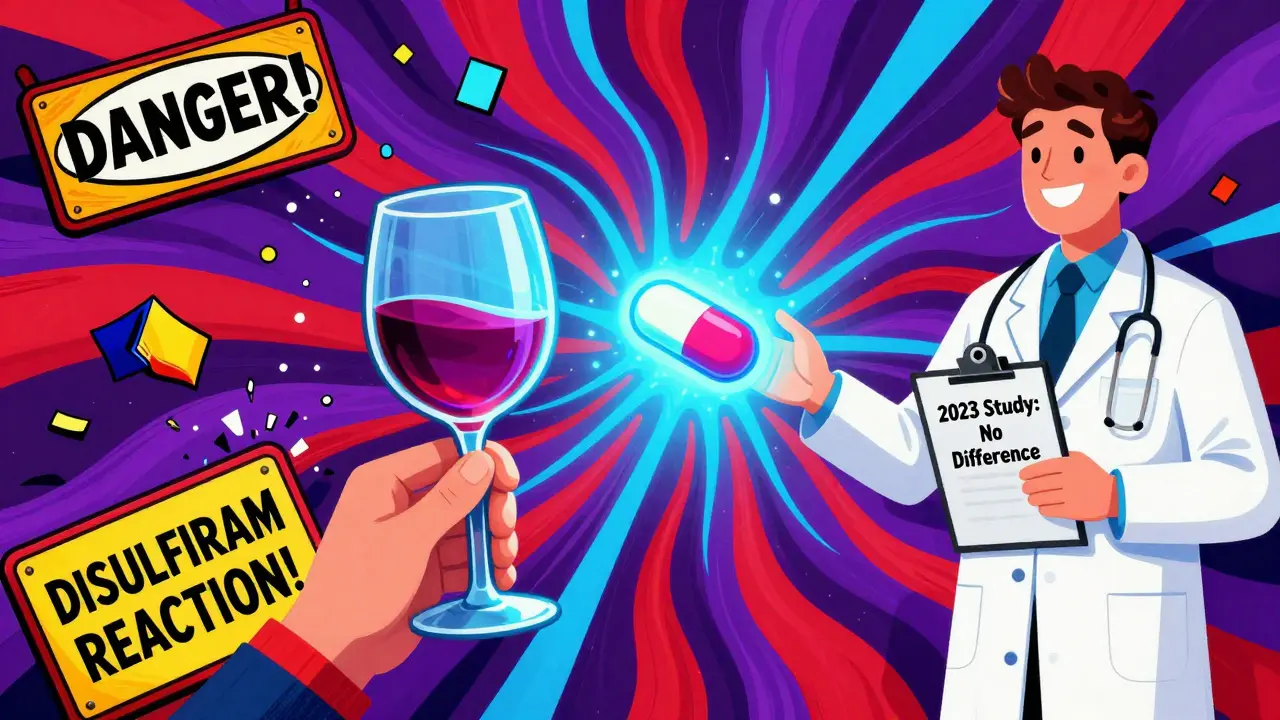
For decades, doctors have told patients: don’t drink alcohol while taking metronidazole. The warning is everywhere - on pharmacy labels, in patient brochures, even in dental offices. The reason? A scary-sounding "disulfiram-like reaction" that supposedly causes flushing, nausea, vomiting, rapid heartbeat, and low blood pressure. But what if that warning is based on a myth?
The Origin of the Warning
The story starts in 1964, when a single doctor, Saldivar, reported that one patient taking metronidazole for a parasitic infection suddenly lost interest in alcohol. The patient also reported feeling sick after drinking. That’s it - one case. No controls. No lab tests. Just an observation. Yet, that one report became the foundation for a global medical rule. By the 1970s, every medical textbook included the warning. Pharmacists started printing it on bottles. Patients were scared. And it stuck.What Is a Disulfiram-Like Reaction?
To understand why this warning exists, you need to know how disulfiram works. Disulfiram (brand name Antabuse) is a drug used to treat alcohol dependence. It blocks an enzyme called aldehyde dehydrogenase (ALDH). When you drink alcohol, your body turns it into acetaldehyde - a toxic substance. Normally, ALDH quickly breaks down acetaldehyde. But when disulfiram blocks ALDH, acetaldehyde builds up in your blood. That buildup causes the awful symptoms: pounding heart, sweating, vomiting, dizziness. It’s not just unpleasant - it’s dangerous. The theory was that metronidazole did the same thing. But here’s the problem: decades of research never proved it.The Science Has Changed
In 2023, a major study changed everything. Researchers from the U.S. looked at over 1,000 emergency room patients who had taken metronidazole and had alcohol in their system. They matched each of those patients with someone who had the same amount of alcohol in their blood - but hadn’t taken metronidazole. The results? Both groups had the same rate of symptoms: 1.98%. No difference. Not even close. The p-value was 1.00 - meaning the results were exactly what you’d expect by chance. Other studies back this up. A controlled trial with 12 healthy volunteers showed no increase in acetaldehyde levels after drinking alcohol while on metronidazole. Animal studies found that while acetaldehyde rose in the gut, it didn’t rise in the bloodstream - where it would cause real harm. Meanwhile, antibiotics like tinidazole and cefotetan do cause real, measurable spikes in acetaldehyde. Metronidazole doesn’t.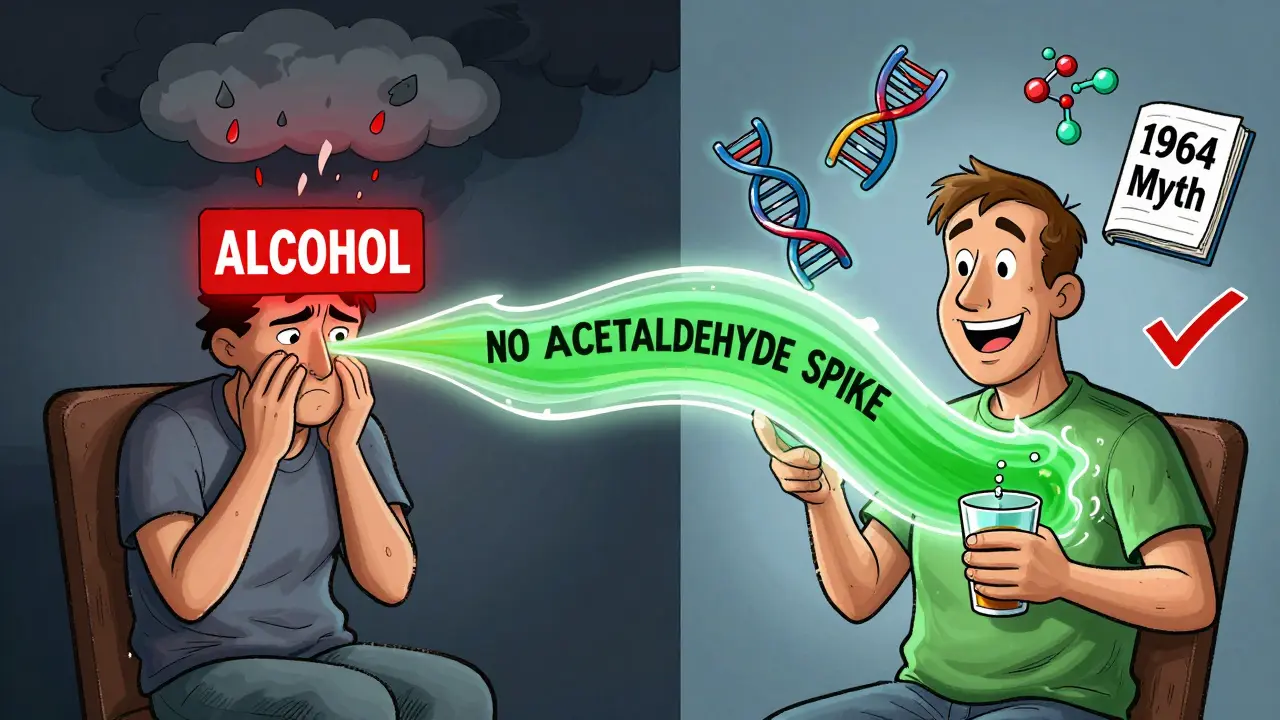
Why Do People Still Say It’s Dangerous?
Because fear is easier to teach than science. Most doctors were taught in medical school that metronidazole and alcohol don’t mix. That’s what they learned. That’s what they tell patients. Even when new evidence comes out, old habits die hard. A 2023 survey found that 89% of doctors still warn patients to avoid alcohol - even if they’ve read the new studies. There’s also a legal reason. If a patient drinks, gets sick, and sues, the doctor can be blamed for not giving the "standard warning." So, many choose caution - even if it’s not based on evidence.What About the Symptoms People Report?
Some patients swear they felt sick after drinking while on metronidazole. And they’re not lying. But correlation isn’t causation. Alcohol alone can cause nausea, flushing, and dizziness - especially if you drink on an empty stomach, are dehydrated, or have a low tolerance. Metronidazole itself causes nausea as a side effect. So when you combine two things that can make you feel bad, it’s easy to blame one for the other. A 2024 paper from Greece proposed a different explanation: serotonin. Metronidazole and alcohol both increase serotonin activity in the brain. Serotonin syndrome - a condition caused by too much serotonin - can cause flushing, nausea, rapid heartbeat, and confusion. Sound familiar? That might be what people are actually experiencing, not a disulfiram-like reaction.What About Other Antibiotics?
Not all antibiotics are the same. Tinidazole - a close cousin of metronidazole - does cause real disulfiram-like reactions. Studies show it can raise acetaldehyde levels 4 to 7 times higher than normal. Cefoperazone and cefotetan also carry proven risks. If you’re prescribed one of these, avoid alcohol. But metronidazole? The evidence doesn’t support the warning.
What Should You Do?
Here’s the bottom line:- If you’re taking metronidazole and want to have a drink - it’s unlikely to cause a dangerous reaction.
- If you’re prone to nausea, dizziness, or have a low tolerance for alcohol - skip it anyway. You don’t need to add risk.
- If you have alcohol use disorder or are in recovery - talk to your doctor. Even if the risk is low, the psychological trigger isn’t worth it.
- If you’re taking another antibiotic like tinidazole or cefotetan - don’t drink. The risk is real.
Why This Matters
This isn’t just about one drug. It’s about how medicine works. We cling to old warnings long after the science changes. Patients avoid effective treatments because they’re scared. Pharmacies stock alternatives that cost more. Healthcare systems waste millions. In the U.S. alone, an estimated $28 million is spent every year on unnecessary antibiotic switches just because of this myth. The American Gastroenterological Association now says metronidazole should not be avoided just because of alcohol concerns. Kaiser Permanente updated its guidelines in 2023 to say the same. But most patients still don’t know.What’s Next?
Researchers are running new trials. One at the University of Wisconsin is measuring acetaldehyde levels in real time as people drink alcohol while on metronidazole. Results are expected by the end of 2024. Until then, the evidence we have is clear: metronidazole doesn’t cause a disulfiram-like reaction. That doesn’t mean you should go out and binge drink while on antibiotics. Alcohol can interfere with healing, worsen side effects, and mess with sleep - all bad when you’re sick. But the fear of a life-threatening reaction? That’s not real. And it’s time we stopped telling people it is.Can I have one drink while taking metronidazole?
There’s no strong evidence that one drink causes a dangerous reaction with metronidazole. Most people won’t have any issues. But if you’re sensitive to alcohol, feel nauseous easily, or are recovering from an infection, it’s smarter to wait. The antibiotic is doing its job - don’t add stress to your body.
How long after metronidazole can I drink alcohol?
The traditional advice says 72 hours - based on how long it takes the drug to leave your system. But since there’s no proven interaction, you don’t need to wait that long. Metronidazole is mostly gone after 24 hours. If you’re concerned, waiting 12-24 hours is more than enough. There’s no medical reason to wait three days.
Does metronidazole make you drunk faster?
No. Metronidazole doesn’t affect how your body processes alcohol. You won’t get drunk faster or feel more intoxicated. But because both can cause nausea or dizziness, the effects might feel stronger together. That’s not a drug interaction - it’s just two things making you feel unwell at once.
Is it safe to use mouthwash or cough syrup with metronidazole?
Some mouthwashes and cough syrups contain alcohol - usually 7-25%. While the amount is small, there have been rare cases of reactions in children or sensitive individuals. If you’re worried, choose alcohol-free versions. It’s not because of a proven interaction - it’s because the risk, though tiny, isn’t zero. Better safe than sorry.
Why do some doctors still say to avoid alcohol?
Because they were taught to. Medical education moves slowly. Many doctors learned this warning in the 1980s or 90s and haven’t updated their knowledge. Also, there’s legal risk. If a patient gets sick and blames the doctor, the warning was given - so the doctor is protected. It’s not about science - it’s about liability.
What are the real side effects of metronidazole?
The most common side effects are nausea, vomiting, metallic taste in the mouth, headache, and dizziness. These are not caused by alcohol. They’re caused by the drug itself. If you feel bad while taking it, it’s likely the metronidazole - not the alcohol. Avoiding alcohol won’t fix these side effects. Taking it with food might help.
Are there better antibiotics than metronidazole?
Yes - but only if you need them. Metronidazole is very effective for bacterial vaginosis, C. diff, and certain parasitic infections. Alternatives like clindamycin or vancomycin exist, but they’re not always better. They might be more expensive, less effective, or cause different side effects. Don’t switch just because you want to drink. Talk to your doctor about what’s best for your condition.
LIZETH DE PACHECO
January 2, 2026This is such a needed reality check. I’ve seen so many people panic over one glass of wine while on metronidazole, and it’s just unnecessary stress. The real issue is how medicine clings to myths because it’s easier than updating textbooks. Kudos for laying out the evidence so clearly.
Austin Mac-Anabraba
January 2, 2026Let’s be honest - this isn’t about science. It’s about institutional inertia and liability avoidance masquerading as patient care. The disulfiram-like reaction myth was never rigorously validated, yet it became dogma because it’s convenient. Doctors don’t want to be sued; pharmacists don’t want to explain; patients don’t want to be wrong. So we perpetuate fear instead of facts. And now, $28 million a year is wasted on unnecessary antibiotic switches. That’s not just inefficient - it’s unethical.
Dusty Weeks
January 3, 2026so like... i had a margarita last week while on metronidazole and felt like i was gonna die? 🤢 maybe it was just the tequila?? idk but im not riskin it again lol
Bryan Anderson
January 5, 2026Thank you for this thorough breakdown. The serotonin hypothesis is particularly compelling - it explains why some people report symptoms without invoking a mechanism that simply doesn’t hold up under scrutiny. The fact that even reputable institutions like Kaiser Permanente have updated their guidelines is encouraging. Still, changing clinical practice will take time, especially when medical education remains so conservative.
Matthew Hekmatniaz
January 6, 2026I appreciate how this post doesn’t just debunk the myth - it contextualizes it. The fear around metronidazole and alcohol isn’t irrational; it’s a product of systems that prioritize caution over clarity. In many cultures, especially where alcohol use is stigmatized, this warning became a tool for control, not care. The real takeaway? Trust your body, but don’t let outdated warnings dictate your choices. Ask questions. Demand evidence. And if your provider still says ‘no alcohol,’ ask them why - and what paper they’re citing.
Liam George
January 7, 2026Wait… so you’re telling me the entire medical establishment has been lying to us for 60 years? And now you want us to just… drink? What’s next? They told us smoking was safe in the 50s. They told us thalidomide was fine for morning sickness. They told us vaccines cause autism. This is just another step in the Great Pharmaceutical Cover-Up. They don’t want you to know that metronidazole is a placebo with a side of corporate greed. The ‘serotonin theory’? That’s a distraction. The real danger is the acetaldehyde buildup - they just don’t measure it right because they’re paid off. Look at the funding sources. Look at the timeline. The 2023 study? Published right after the patent for a new antibiotic expired. Coincidence? I think not. 🕵️♂️
sharad vyas
January 9, 2026In India, we used metronidazole for giardia and drank tea with alcohol sometimes. No one got sick. Maybe the fear came from Western doctors who don’t understand how people live. If you are sick, rest. If you want to drink, drink little. But don’t make a rule for everyone based on one case from 1964. Science is not about fear. It is about truth.
Sally Denham-Vaughan
January 10, 2026OMG I’m so glad someone finally said this. I took metronidazole last year and had one beer after 12 hours. Felt fine. My doctor freaked out when I told her. She said, ‘But the label says NO!’ I said, ‘Yeah, but so does the label say not to breathe oxygen.’ 😂