

15 Dec 2025
- 13 Comments
Steroid Tapering Calculator
This calculator provides a safe tapering schedule based on your current steroid dose and duration of use. Adrenal insufficiency from sudden steroid withdrawal can be life-threatening. Follow these guidelines to minimize your risk.
Your tapering schedule:
Stopping corticosteroids like prednisone or dexamethasone suddenly can trigger a life-threatening condition called adrenal insufficiency. It’s not rare. It’s not just for people on high doses for years. Even someone who took 5 mg of prednisone for six weeks can end up in the ER with nausea, low blood pressure, and confusion - all because their body forgot how to make its own cortisol. This isn’t a side effect you can ignore. It’s a medical emergency that’s often missed - and it’s entirely preventable.
What Happens When You Stop Steroids?
Your body doesn’t make cortisol on its own when you’re taking synthetic steroids. The moment you start taking prednisone or hydrocortisone, your brain shuts down the signal to your adrenal glands. The hypothalamus stops releasing CRH. The pituitary stops releasing ACTH. Without that signal, your adrenal glands shrink. They lose their ability to produce cortisol - the hormone your body needs to handle stress, maintain blood pressure, regulate blood sugar, and keep your immune system in check. When you stop the pills abruptly, your body doesn’t snap back. It’s like turning off a faucet that’s been blocked for months. The pipes are collapsed. It takes time to reopen. That’s when symptoms hit - usually 24 to 72 hours after the last dose.Early Signs You’re Missing Cortisol
These symptoms don’t come out of nowhere. They creep in slowly, and they’re easy to blame on something else - the flu, stress, depression, even aging. But if you’ve been on steroids, these red flags mean something serious:- Severe fatigue that doesn’t improve with rest (seen in 85% of cases)
- Loss of appetite and unexplained weight loss (72%)
- Nausea, vomiting, or stomach pain (68%)
- Muscle weakness so bad you can’t climb stairs (65%)
- Mood changes - irritability, anxiety, or depression (58%)
- Dizziness when standing up, or feeling faint
Adrenal Crisis - When It Turns Deadly
If adrenal insufficiency isn’t treated, it can turn into an adrenal crisis. This is when your body can’t respond to stress - even minor stress like an infection or a fall. Your blood pressure plummets. You go into shock. You may become confused, have seizures, or lose consciousness. Mortality rates for untreated adrenal crisis reach 6%. That’s not a small risk. That’s a death sentence if you don’t act fast. The Cleveland Clinic’s 2023 protocol shows that patients who get IV hydrocortisone within an hour of collapse recover quickly - often within 30 to 60 minutes. But if you’re not recognized as having adrenal insufficiency, you might be treated for a UTI, food poisoning, or anxiety. That’s what happened to a 45-year-old woman in a 2023 case report. She was misdiagnosed for days after stopping dexamethasone for a past COVID infection. By the time they realized it was adrenal insufficiency, she was in septic shock.It’s Not Just Long-Term Use
For years, doctors thought you needed to be on steroids for months or years to risk adrenal suppression. That’s outdated. A 2023 study in Endocrine Abstracts found that even short courses - less than four weeks - can suppress your adrenal glands. So can low doses. Taking just 5 mg of prednisone daily for more than four weeks is enough to put you at risk. This is why so many people get caught off guard. They take steroids for a flare-up of asthma, eczema, or arthritis. They feel better. They stop cold turkey. They don’t think twice. Then, two weeks later, they’re too weak to get out of bed. Their doctor says, "It’s just post-viral fatigue." But it’s not.Tertiary vs. Secondary vs. Primary Insufficiency
There are three types of adrenal insufficiency, and they’re not the same:- Primary: Your adrenal glands are damaged - like in Addison’s disease. You need lifelong replacement.
- Secondary: Your pituitary gland doesn’t make ACTH. Usually due to a tumor or surgery.
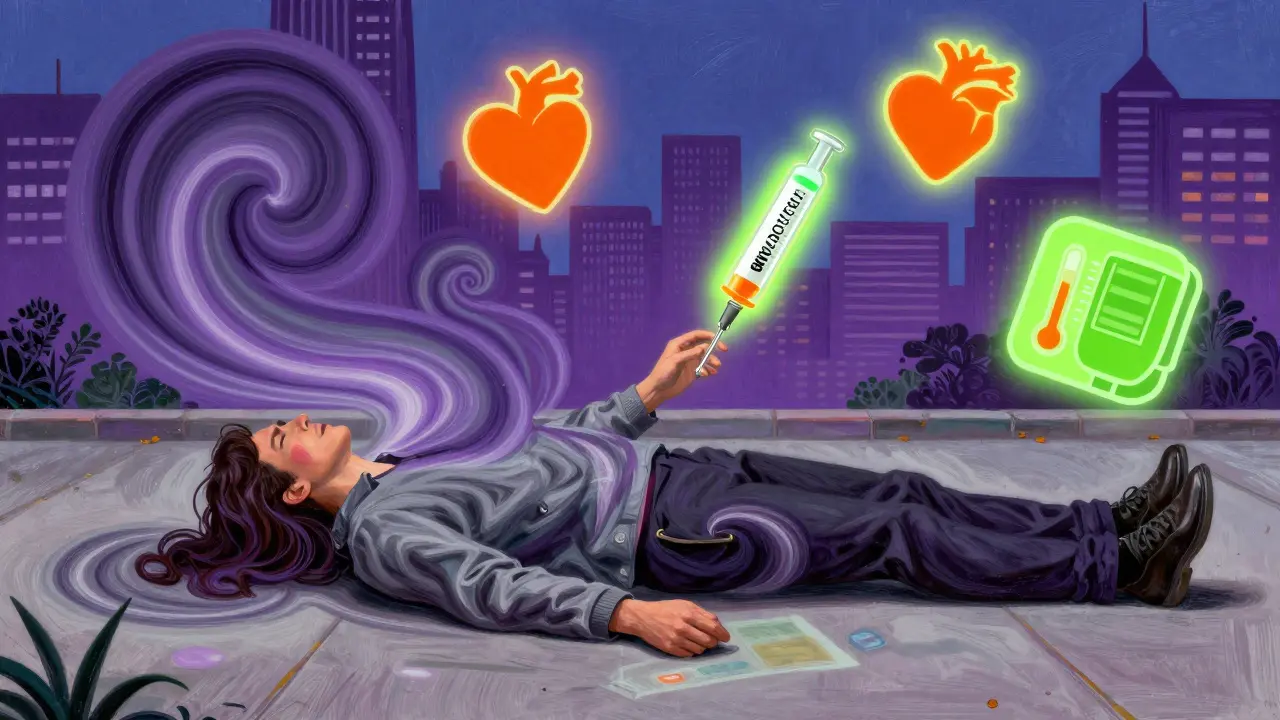
- Tertiary: Your hypothalamus stops making CRH. This is the one caused by steroid withdrawal. Your glands are still alive - they just forgot how to work.
How Doctors Diagnose It
If you’ve stopped steroids and have symptoms, your doctor should check your cortisol level. But here’s the catch: a single morning cortisol test isn’t always enough. The gold standard is the ACTH stimulation test. You get an injection of synthetic ACTH, and your cortisol levels are measured before and after. If your adrenal glands don’t respond, you have insufficiency. A key threshold: if your morning cortisol is below 5 μg/dL within 24 hours of your last steroid dose, you’re at high risk for withdrawal symptoms. If it’s above 10 μg/dL, you’re likely fine. This isn’t just theory - it’s backed by a 2024 study in CCJM Journal of 81 patients.How to Taper Safely
There’s no one-size-fits-all taper. But there are smart guidelines:- If you were on more than 20 mg of prednisone daily for over 3 weeks - get tested before stopping.
- For doses above 20 mg: reduce by 2.5-5 mg every 3-7 days.
- For doses between 5-20 mg: reduce by 1-2.5 mg every 1-2 weeks.
- If you were on steroids for more than 6 months, slow it down even more.
What You Need to Do Right Now
If you’re on steroids or just stopped them:- Ask your doctor: "Do I need a taper?" Don’t assume you’re safe just because you were on it for a short time.
- Get written instructions. Don’t rely on memory.
- Carry a medical alert card or bracelet that says "Adrenal Insufficiency" and lists your last steroid dose and date.
- Have an emergency hydrocortisone injection (like Solu-Cortef) on hand - and know how to use it.
- Teach a family member or roommate how to give the injection.
Why So Many People Miss This
A 2023 JAMA Internal Medicine study found that 47% of patients don’t follow their tapering plan. Why? They’re scared of side effects. They think they’re "cured." They don’t want to take pills longer than necessary. Or they just forget. But the real problem? Doctors don’t always warn them. A 2024 survey of primary care providers showed that only 31% routinely discuss adrenal insufficiency risks with patients starting steroids. The FDA has required warning labels on all systemic steroids since 2021. But warnings on a pill bottle aren’t enough. You need a conversation.
Real Stories, Real Consequences
One Reddit user, u/AdrenalWarrior, shared: "My doctors kept telling me it was just post-viral fatigue for six weeks after stopping prednisone for my asthma. Then I ended up in the ER with an adrenal crisis. Now I carry emergency hydrocortisone everywhere. I don’t ever want to go through that again." Another patient from the Adrenal Alternatives Foundation forum said: "I was diagnosed with depression because I was too tired to get out of bed. I didn’t realize my fatigue was my body shutting down. I lost 18 pounds in three weeks. No one connected the dots until I collapsed." These aren’t outliers. They’re the rule.What’s Changing in 2025
New tools are coming. Point-of-care cortisol tests - devices that give results in 15 minutes - are in phase 2 trials. AI algorithms are being trained to predict adrenal insufficiency risk by scanning your EHR for steroid use, symptoms, and lab trends. One 2024 study showed 92% accuracy. Also, genetic research is identifying seven specific gene variants linked to slower adrenal recovery. In the future, your taper might be personalized based on your DNA. But for now, the solution is simple: don’t stop steroids cold. Don’t assume you’re fine. Ask for a taper. Get educated. Carry your emergency shot.What to Do If You Think You’re in Crisis
If you’re dizzy, vomiting, confused, or have low blood pressure after stopping steroids - act fast:- Take your emergency hydrocortisone injection immediately (usually 100 mg IM or IV).
- Call 911 or go to the nearest ER.
- Tell them: "I stopped steroids recently and I think I’m having an adrenal crisis." Don’t let them dismiss it.
- Do not wait. Do not hope it gets better.
Final Thought
Corticosteroids save lives. But they can also kill if handled carelessly. Adrenal insufficiency from withdrawal isn’t a rare complication. It’s a predictable, preventable tragedy. You don’t need to be a medical expert to understand this. You just need to know the signs. You need to ask the right questions. And you need to carry the tools to save your own life.Don’t wait for a crisis to learn this lesson.
Dwayne hiers
December 16, 2025Adrenal suppression from short-term steroid use is vastly underrecognized in clinical practice. Even a 5mg/day course beyond 4 weeks can cause HPA axis suppression. The key is measuring morning cortisol <5 μg/dL post-withdrawal as a red flag. ACTH stimulation testing remains the gold standard-serum cortisol <18 μg/dL post-stimulation confirms insufficiency. Many ER docs still misdiagnose this as gastroenteritis or viral syndrome. We need better education at the primary care level.
Jonny Moran
December 16, 2025Man, I wish someone had told me this when I stopped my prednisone after that asthma flare. I thought I was just tired from the illness. Ended up in the ER with a BP of 82/50 and confusion. They thought I was drunk. Took three days to get the right diagnosis. Now I carry my Solu-Cortef everywhere. If you’re on steroids, ask for a taper plan. Don’t be the guy who learns this the hard way.
Daniel Wevik
December 17, 2025Let’s be clear: tertiary adrenal insufficiency is a pharmacologically induced iatrogenic condition. The HPA axis undergoes downregulation via glucocorticoid receptor feedback inhibition. Cortisol synthesis pathways atrophy due to ACTH deprivation. Recovery isn’t linear-it follows a biphasic pattern with initial cortisol rebound followed by prolonged adrenal hyporesponsiveness. Tapering isn’t optional. It’s physiological reprogramming. Ignoring it is negligence disguised as convenience.
Rich Robertson
December 17, 2025I’ve seen this too many times. A patient comes in after stopping steroids, says they feel like crap, and the doc says, 'It’s probably just stress.' But the signs are there-weight loss, orthostatic dizziness, nausea. It’s not depression. It’s not the flu. It’s your adrenal glands begging for help. I tell every patient on steroids: 'You didn’t cure your condition-you suppressed your body’s natural response.' Tapering is the responsible thing to do. Period.
Thomas Anderson
December 18, 2025Just stopped prednisone last week after 6 weeks for my eczema. Felt fine at first. Then Monday I couldn’t get out of bed. Nausea, shaky, dizzy when standing. Thought I was getting sick. Called my doc-she immediately said 'adrenal stuff' and told me to go to urgent care. They gave me a shot and told me to start tapering. Thank god I didn’t ignore it. If you’re on steroids, don’t be dumb. Ask about tapering before you stop.
Sarthak Jain
December 19, 2025bro i was on 10mg prednisone for 5 weeks for my psoriasis and i just stopped it last month… now i’m so tired all the time and my stomach hurts. i thought it was just my diet or stress. but now i’m reading this and holy sh*t. i think i might have this. should i go to the er? or just see my gp? also i dont have any emergency shot… should i ask for one? 😅
Sinéad Griffin
December 20, 2025AMERICA NEEDS TO STOP BEING LAZY ABOUT MEDICINE. 🇺🇸 You think you can just pop pills and flip a switch? NO. Your body isn’t a smartphone. If you’re on steroids, you DON’T just quit. You TAPER. You GET TESTED. You CARRY THE INJECTION. This isn’t 'medical advice'-it’s basic survival. If your doctor doesn’t tell you this, FIRE THEM. And if you’re reading this and you’re on steroids right now? STOP SCROLLING. CALL YOUR DOCTOR NOW. 🚨
Edward Stevens
December 21, 2025So let me get this straight. We’ve got a medical emergency caused by… doctors not telling patients how to stop taking the drugs they prescribed? Shocking. Absolutely shocking. The real tragedy here isn’t adrenal insufficiency-it’s the fact that this is still even a thing in 2025. We have AI predicting risk with 92% accuracy, but patients are still getting sent home with 'it’s just fatigue.' I’m not mad. I’m just disappointed.
Alexis Wright
December 22, 2025Let’s be honest: this isn’t about physiology. It’s about power. The pharmaceutical-industrial complex profits from chronic illness. Steroids are a Band-Aid. They mask symptoms. And when you stop? The system doesn’t care if you collapse-it’s already moved on to the next patient. The 'taper' is a concession, not a cure. The real solution? Stop prescribing steroids like candy. But we won’t. Because the system is designed to keep you dependent. And you? You’re just another statistic in the machine.
Rulich Pretorius
December 22, 2025There’s a quiet dignity in the body’s ability to heal itself-if we give it the chance. Adrenal recovery isn’t just about cortisol levels. It’s about patience, rest, and trusting the rhythm your body knows. I’ve seen people recover from tertiary insufficiency in 6 months with gentle tapering and stress reduction. No magic. No miracle drugs. Just time and care. We’ve forgotten how to listen to our bodies. This isn’t a failure of medicine-it’s a failure of attention.
Wade Mercer
December 23, 2025People who don’t taper are just being irresponsible. It’s not complicated. If you take steroids, you follow the plan. If you don’t, you deserve what happens. No sympathy. No excuses. This isn’t a debate. It’s basic accountability. If you can’t follow a simple medical instruction, don’t be surprised when your body breaks down. And stop blaming doctors. You were warned.
Tim Bartik
December 23, 2025YOOOOO I JUST STOPPED MY PREDNISONE 2 WEEKS AGO AND I’M FEELIN LIKE A ZOMBIE 😭 I THOUGHT I WAS JUST BROKE FROM THE FLU BUT NOW I’M READING THIS AND I THINK I MIGHT BE IN CRISIS?? I GOT A SHOT FROM MY DOCTOR BUT I DONT KNOW HOW TO USE IT 😳 SOMEONE PLZ TELL ME WHAT TO DO?? I’M SCARED
jeremy carroll
December 24, 2025Hey everyone, I’ve been through this. It’s rough, but you’re not alone. I was on steroids for 8 months and stopped cold-ended up in the hospital. Now I’m 10 months out, and I’m back to normal. Took time, rest, and a super slow taper. I carry my injection like a badge. It’s not a weakness-it’s wisdom. If you’re reading this and scared? You’re doing the right thing by learning. You’ve got this. One day at a time.