
Medications with Food: What You Need to Know About Interactions and Safety
When you take medications with food, the way your body absorbs and uses the drug can change dramatically. This isn’t just about stomach upset—it can mean the difference between your medicine working right or failing completely. Some drugs need food to be absorbed properly. Others become dangerous if taken with certain meals. It’s not a one-size-fits-all rule, and ignoring it can lead to serious side effects—or no effect at all.
Warfarin, a blood thinner that requires careful diet management, is a classic example. Eating more spinach, kale, or broccoli one week and less the next can send your INR levels flying or crashing. That’s why consistency matters more than avoidance. You don’t have to quit vegetables—you just need to keep them steady. Same with grapefruit, a fruit that blocks enzymes your liver uses to break down over 85 medications. Even one glass can make drugs like statins or blood pressure pills build up to toxic levels. And then there’s generic drugs, which are chemically identical to brand names but sometimes have different fillers that affect how fast they dissolve in your stomach. For drugs like levothyroxine or warfarin, even small changes in absorption can cause real problems.
It’s not just about what you eat—it’s about when. Taking antibiotics with dairy can block absorption. Some painkillers work better on an empty stomach. Others cause less nausea if taken with a light snack. Your body doesn’t treat every pill the same way. That’s why the label says "take with food" or "take on an empty stomach"—it’s not a suggestion, it’s science. And if you’re on multiple meds, the risk stacks up. A pill that’s fine alone might react badly when mixed with another drug and a bowl of oatmeal.
Most people don’t realize how often this happens. You’re not alone if you’ve ever taken a pill with coffee, swallowed a pill on the run, or skipped the food warning because "it’s just one time." But with medications with food, "just one time" can be enough to cause bleeding, dizziness, kidney stress, or even a heart rhythm problem. The good news? You don’t need to become a nutritionist. You just need to know the basics, check your labels, and ask your pharmacist when something feels off.
Below, you’ll find real-world guides on exactly how food affects your pills—from warfarin and vitamin K to why turmeric can turn your blood thinners into a hazard, and how to spot when your generic meds aren’t working like they used to. No fluff. No guesswork. Just what you need to take your meds safely, every single day.
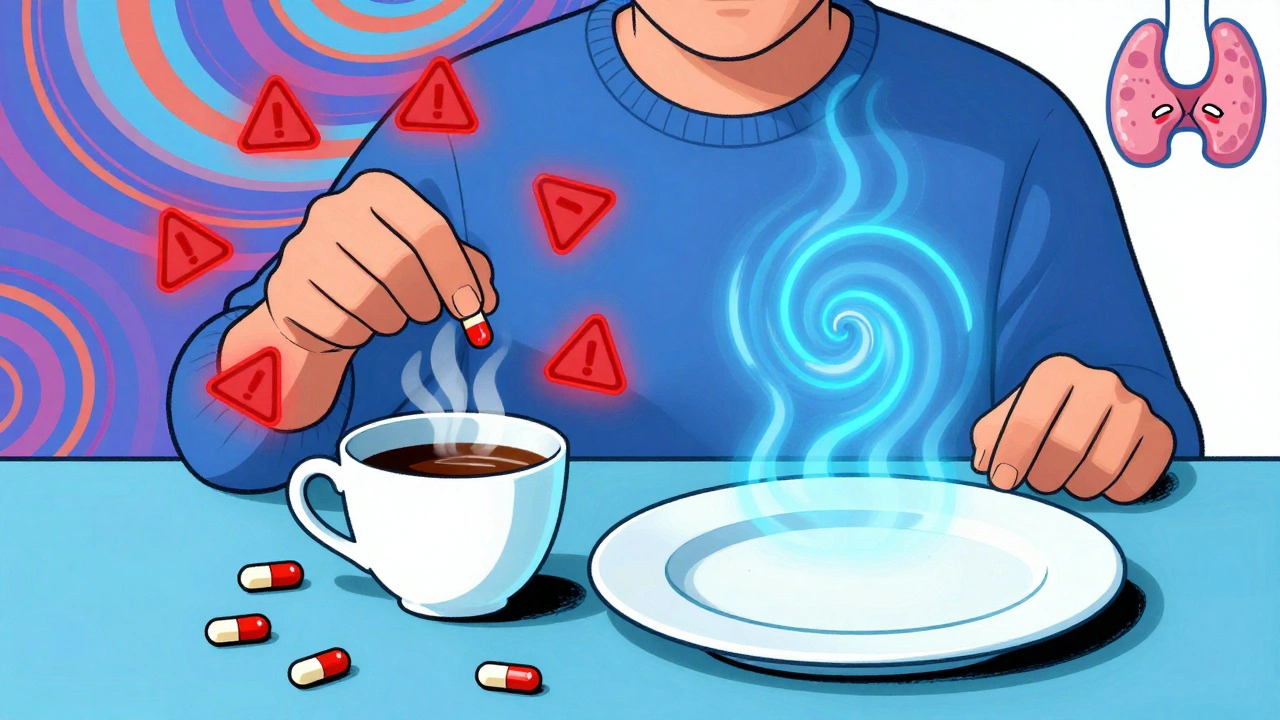
Taking Medications with Food vs Empty Stomach: When It Matters
Taking medications with or without food can make or break their effectiveness. Learn which drugs need an empty stomach, which need food, and why ignoring these rules can reduce results by up to 50% or cause serious side effects.