
28 Mar 2026
- 14 Comments
The Hidden Danger in Plain Sight
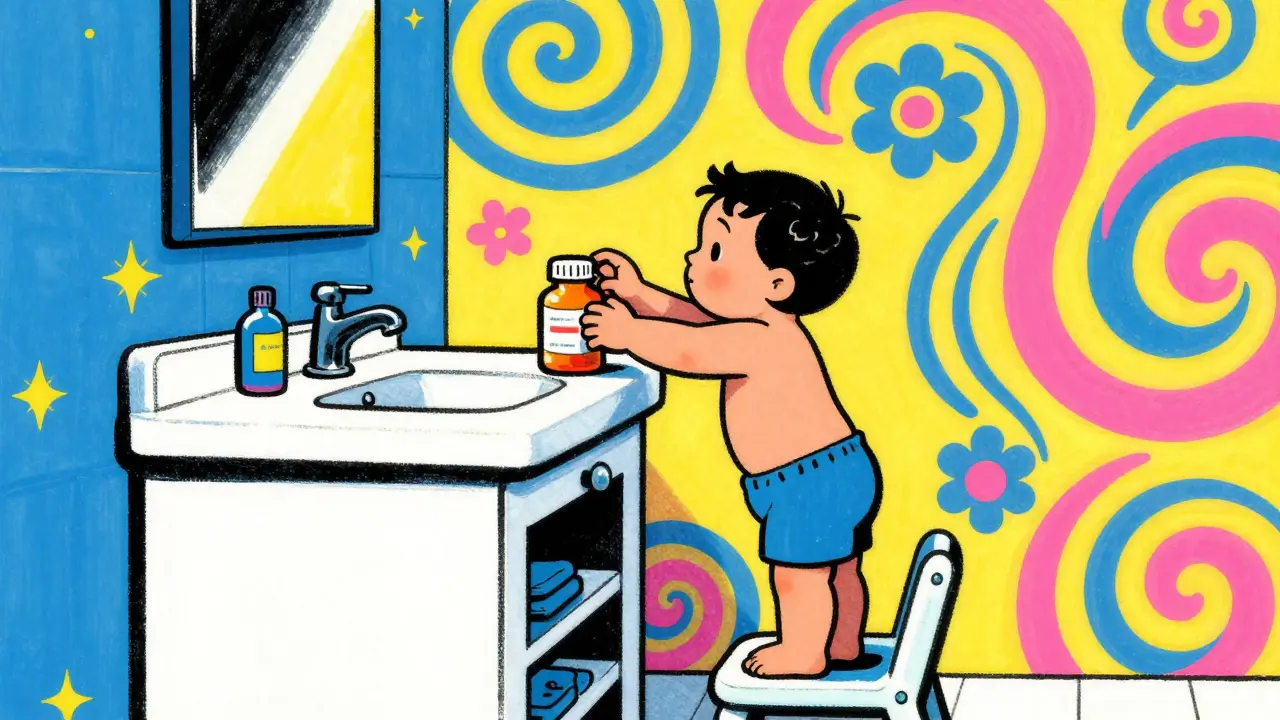
Every single day, hundreds of children rush through emergency departments because they found something they shouldn't have. It is not always toys or chemicals; often, it is medicine. In 2023 alone, reports indicated that nearly 60,000 young children under the age of five ended up in the ER after swallowing medication accidentally. Imagine the scene: you turn your back for a moment to answer the phone, grab a drink, or put down laundry, and your toddler has managed to open a bottle that was sitting on the counter. That split second of distraction costs families thousands of dollars and creates trauma that lasts long after the hospital visit.
We cannot simply rely on the colorful cap on the bottle or the knowledge that our child knows better than to touch the pills. Statistics from recent years show us that standard packaging fails much more often than we expect. A study from the mid-2020s revealed that half of the children tested could open safety caps within sixty seconds when left unsupervised. This means relying on those tiny tabs is like locking your front door with a flimsy latch-better than nothing, but completely inadequate for keeping a determined explorer out.
Understanding the Up and Away Rule
Health authorities have spent decades refining how we keep homes safe. One specific guideline that has gained massive traction is the "Up and Away" principle. This isn't just a catchy slogan; it is a precise instruction set for positioning medicines in your house. Up and Away Campaign refers to a public health initiative promoting safe medication storage by placing medications out of reach and out of sight. For this strategy to work, you need two conditions met simultaneously.
- Height Matters: Medicine should not be kept on nightstands, dressers, or bathroom counters. These spots are eye-level for toddlers who can pull up furniture to climb. You need a cabinet shelf that requires an adult to stretch or stand on a chair. Many experts suggest a minimum height of three feet above the floor, though higher is always safer.
- Invisibility Counts: Even high shelves can become accessible if a child climbs a chair. Keeping meds in opaque containers or behind cabinet doors hides them from view. When kids cannot see the colorful bottles, they lose interest. Visual cues trigger curiosity, so remove the visual reward entirely.
Beyond Child-Resistant Caps
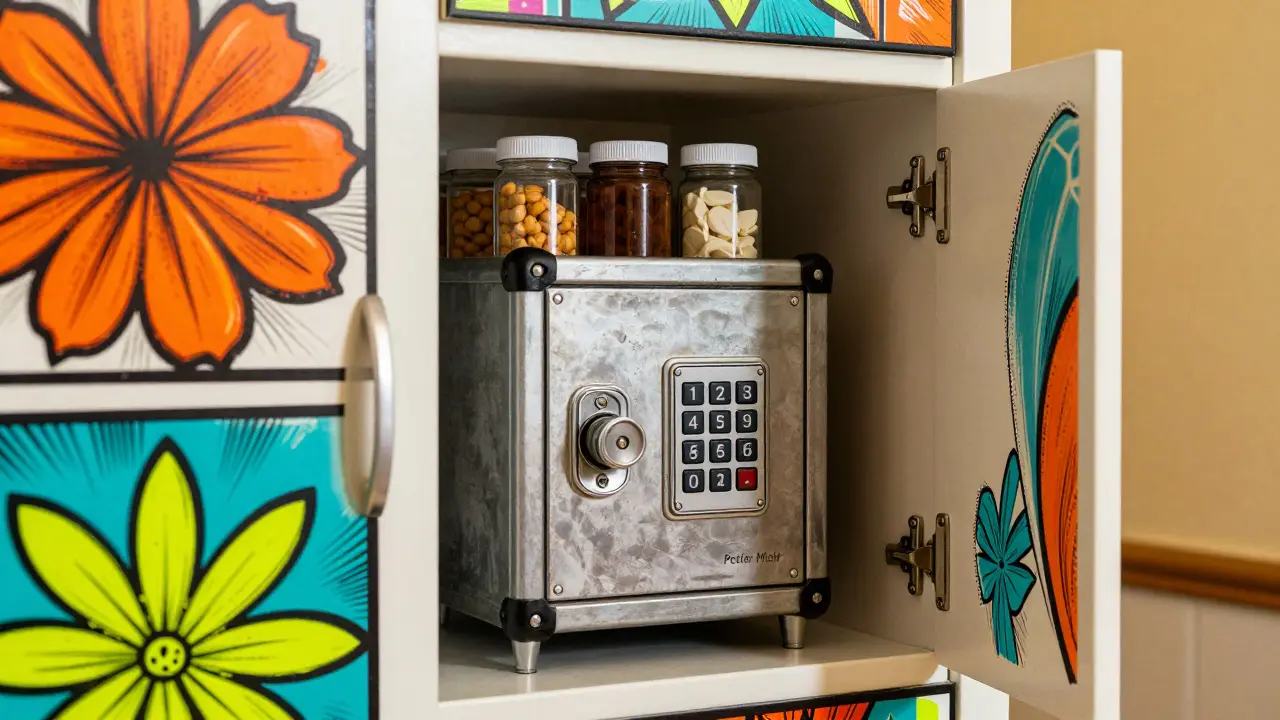
We tend to trust the manufacturer's design too much. Every prescription bottle comes with a special cap designed to pop open with pressure and twist. While helpful, testing protocols show these mechanisms fail frequently. The Consumer Product Safety Commission standards test older toddlers, but younger siblings might figure it out faster. To add a layer of security, consider Lockable Medication Cabinet as a secure storage solution using keys or biometric locks to prevent unauthorized access. These boxes act as a physical barrier that most children literally cannot open, regardless of their persistence or climbing skills.
Some modern lockboxes even use biometric scanners or keypad codes. If you have family members who struggle with memory issues, a keypad is easier than a key you might lose. The cost of these units ranges from cheap plastic latches to heavy-duty steel boxes. For the most dangerous medications like opioids or heart drugs, spending extra on a sturdy box is an investment in peace of mind. It is better to waste money on a box you rarely open than to pay for an ER visit.
| Storage Method | Safety Level | Access Speed | Recommendation |
|---|---|---|---|
| High Shelf Only | Moderate | Fast | Risk if child climbs furniture |
| Child-Resistant Bottle | Low-Moderate | Instant | Never rely on this alone |
| Keyed Lock Box | High | Medium | Best for home daily storage |
| Biometric Safe | Highest | Fast | Best for emergencies (e.g., EpiPen) |
Traveling with Little Ones
Safety habits often disappear when you leave home. Hotels do not have locked cabinets, and bathroom drawers are often empty or full of unknown liquids. The same rules apply to the road trip. Do not leave medicine in the glove compartment of your car; that space gets hot in summer and cold in winter, damaging the medicine, and it is too easy for a kid to get to.
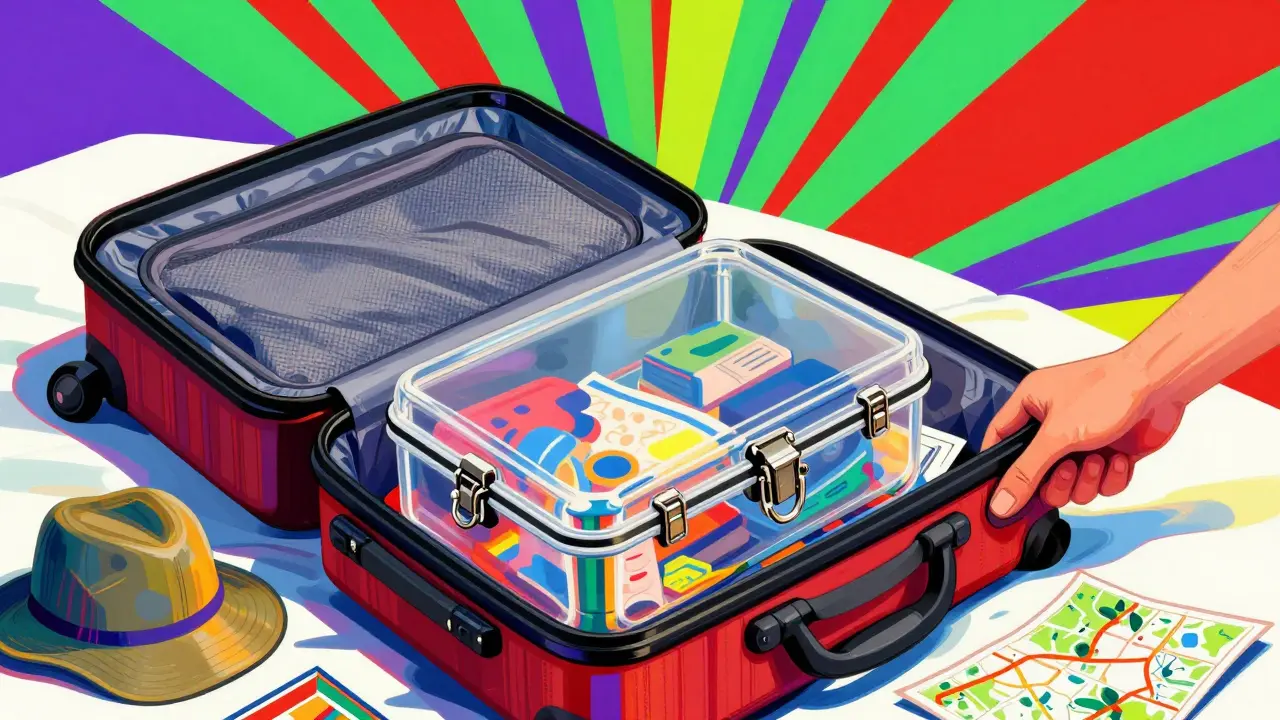
When staying overnight away from home, pack a dedicated "travel kit." Small lockable cases exist specifically for luggage. If you arrive at a hotel, immediately transfer the bottles to the room safe or your own locked bag. Never place bottles on the bedside table, even to sleep better. A simple rule of thumb is to never leave medication unsecured for more than two minutes at any time during administration or travel setup. Set up a routine where you take the med right there, then return the container to its secured location immediately.
Proper Disposal Protocols
You might have a drawer full of expired medicine or leftover antibiotics that your pet won't take. Flushing these down the toilet is no longer recommended due to environmental impact, and tossing them in regular trash poses a risk to sanitation workers. The safest way to dispose of unwanted meds involves mixing them with something unpleasant.
- Take the pills out of the bottle.
- Mix them with coffee grounds, kitty litter, or dirt.
- Place the mixture in a sealed container or bag.
- Throw that bag into your regular household trash.
- Cross out personal information on the label before discarding the empty bottle.
This method makes the medicine unrecognizable and unappealing to anyone who finds it in the garbage bin. Some local pharmacies still host "drop boxes" where you can drop off empty containers for free destruction. Checking with a local facility is always a good step.
Creating Household Safety Culture
Equipment helps, but behavior saves lives. Grandparents often forget these rules, thinking their grandchild behaves differently than their own did. Visits require communication. When you hand over the baby to another caregiver, explicitly remind them where the meds are stored. If they invite you into their home, politely explain that you prefer to store your own supplies in your bag rather than relying on their cupboards.
Teach your older children the danger conceptually without making the medicine look like candy. Avoid calling pills "treats" or sweets. Consistently enforce the boundary that medicine is for doctors and grown-ups only. If you demonstrate respect for safety procedures, they will likely mirror that behavior as they grow up.
Is the bathroom cabinet safe for medicine?
No, bathrooms are generally unsafe due to humidity and ease of access. Moisture degrades tablets over time, and bathroom vanity heights are perfect for curious toddlers to reach.
Should I tell my kids to stay away from medicine?
Yes, verbal warnings are essential backups to physical barriers. Teach children that medicine is not candy and belongs strictly to adults. However, never rely solely on warnings; physical locks are mandatory.
Where do I store emergency medicines like EpiPens?
Emergency meds need a balance between security and speed. Keep them in a high, locked container known by all responsible adults. Biometric safes allow quick access without needing to find a hidden key during a panic.
Can I store vitamins with prescription drugs?
Ideally, yes, treat everything as medicine. Vitamins come in similar bottles and can also cause poisoning. Store all ingestibles together in the same locked environment to avoid confusion.
What do I do if my child swallows a pill?
Contact a Poison Control center immediately. Do not wait for symptoms to appear. Have the medicine bottle handy to provide exact dosage and ingredient details to the medical operator.
Jonathan Sanders
March 29, 2026Honestly just hide the keys to the nuclear plant next to the aspirin bottle why not.
emma ruth rodriguez
March 30, 2026It is imperative that parents adhere to strict protocols regarding storage locations; furthermore, reliance on child-proof caps alone is statistically insufficient for ensuring domestic safety standards.
Beccy Smart
April 1, 2026Totally agree! 🙅♀️ Those caps are useless sometimes 😬 Kids are so smart now 🧠💊 Stay safe fam 👨👩👧👦💕
Rick Jackson
April 2, 2026The balance between accessibility for adults and security for children defines modern parenting anxiety quite well.
Kendell Callaway Mooney
April 3, 2026I keep my lockbox in the master closet so nobody else finds it even if they wander in there.
sanatan kaushik
April 3, 2026Stop trusting those plastic lids they don't work stop being lazy buy a safe box end of story.
Debbie Fradin
April 4, 2026Another day another article telling adults what to do since apparently reading isn't enough anymore.
Charles Rogers
April 5, 2026Most accidents happen because people lack basic foresight rather than missing equipment or hardware solutions entirely.
Angel Ahumada
April 7, 2026One must understand the philosophical implication of containment when considering the moral weight of negligence in domestic spaces without proper barriers
Adryan Brown
April 9, 2026We often overlook the psychological aspect of hiding medicines from curious little minds.
It is not just about height or locks but also about routine and consistency in behavior.
When parents normalize safety they pass that value down through generations of care.
Travel situations demand even more vigilance than home environments ever could.
Hotels frequently lack the necessary infrastructure for secure pharmaceutical storage units.
You must carry your own portable solution whenever you step outside your own front door.
Disposal methods are equally critical when medications expire or lose potency over time.
Flushing pills contaminates water sources which is a significant environmental hazard nowadays.
Mixing with unpalatable substances like coffee grounds renders waste less dangerous eventually.
Grandparents often forget these updated protocols because their own childhoods lacked risks.
Communication gaps between family members lead to preventable accidental exposure events.
Teaching children early creates boundaries that become second nature later on.
Emergency kits need biometric access to prevent delay during life threatening moments.
A locked cabinet is better than a high shelf because kids find ways to climb higher.
Ultimately peace of mind requires redundancy in security measures rather than singular trust.
Christopher Curcio
April 10, 2026Pediatric toxicology thresholds vary significantly by weight so ingestion volume matters immensely in risk assessment protocols.
Jonathan Alexander
April 11, 2026I almost lost it last year when we thought my son had taken a handful of vitamins it was pure panic mode.
dPhanen DhrubRaaj
April 12, 2026lock box works best simple solution no debate
Vikash Ranjan
April 13, 2026But then you leave them accessible during admin which defeats the purpose of hiding them away completely.