

4 Jan 2026
- 9 Comments
When you hear the word probiotics, you might think of yogurt commercials or a shelf full of colorful bottles at the health store. But here’s the real question: do they actually work for your gut? And if so, which ones, when, and why?
The short answer? Sometimes. Not all probiotics are created equal. Some strains, taken at the right dose and time, can make a real difference. Others? They might as well be sugar pills with a fancy label.
What Exactly Are Probiotics?
Probiotics are live bacteria and yeasts that are meant to help balance the trillions of microbes living in your gut. That’s not just a buzzword - your gut holds about 100 trillion microbes from over 1,000 different species. Most of them are harmless, some are helpful, and a few can cause trouble if they get out of balance.
The scientific definition, agreed on by experts worldwide, is simple: probiotics are live microorganisms that, when given in the right amount, give you a health benefit. This isn’t marketing fluff - it’s the standard set by the International Scientific Association for Probiotics and Prebiotics (ISAPP) since 2014.
Think of your gut like a garden. If you’ve got too many weeds (bad bacteria), your plants (good bacteria) can’t thrive. Probiotics are like planting new, healthy flowers to crowd out the weeds. But you can’t just toss any seeds in. You need the right kind.
What Does the Science Say About Probiotics?
There’s a lot of noise out there. But if you look at high-quality studies - randomized controlled trials, systematic reviews, meta-analyses - the evidence gets much clearer.
One of the strongest findings? Probiotics help reduce the risk of antibiotic-associated diarrhea. If you’ve ever been on antibiotics and ended up with watery, uncomfortable stools, you know this isn’t just annoying - it’s disruptive. A review of 12 studies involving nearly 1,500 adults and kids found that taking probiotics cut the risk of this side effect from 22% down to 12%. That’s a 45% drop. The strain most often linked to this benefit is Lactobacillus rhamnosus GG (LGG), taken at 10 billion CFU per day.
For kids with infectious diarrhea - think stomach bugs from school or travel - probiotics cut the duration by about a day. A Cochrane Review of over 12,000 children showed a 36% lower chance of diarrhea lasting more than 48 hours. That’s not a cure, but it’s a meaningful improvement.
Another area with solid support: ulcerative colitis, a type of inflammatory bowel disease. A 2020 review from the American Gastroenterological Association found that certain probiotics - especially E. coli Nissle 1917 and VSL#3 (a multi-strain blend) - can help maintain remission. But the same review found no benefit for Crohn’s disease. That’s important. One condition, one outcome. Not a blanket fix.
For irritable bowel syndrome (IBS)? The results are mixed. Some people swear by it. Others feel nothing. A few strains, like Bifidobacterium infantis 35624, show promise for bloating and abdominal pain, but results vary wildly depending on the person’s baseline microbiome. There’s no universal probiotic for IBS.
Not All Strains Are the Same - And That’s the Key
Here’s where most people get tripped up. You can’t say “probiotics help” and expect it to be true for every product. It’s like saying “medicines cure headaches.” Aspirin works. Tylenol works. But penicillin? Not so much.
Each probiotic strain has unique effects. For example:
- Lactobacillus rhamnosus GG (LGG): Proven for diarrhea in kids, antibiotic side effects
- Saccharomyces boulardii: A yeast strain, useful for traveler’s diarrhea and C. diff prevention
- Bifidobacterium infantis 35624: Shown to reduce bloating and pain in IBS
- E. coli Nissle 1917: Used for maintaining remission in ulcerative colitis
- Lactobacillus plantarum DSM 9843: Reduced pain and flatulence in IBS patients in a clinical trial
And don’t be fooled by labels like “10 billion CFU” or “15-strain blend.” If the strain isn’t named - if it just says “Lactobacillus acidophilus” without specifying LA-1, DDS-1, or NCFM - you don’t know what you’re getting. Different strains within the same species behave completely differently.
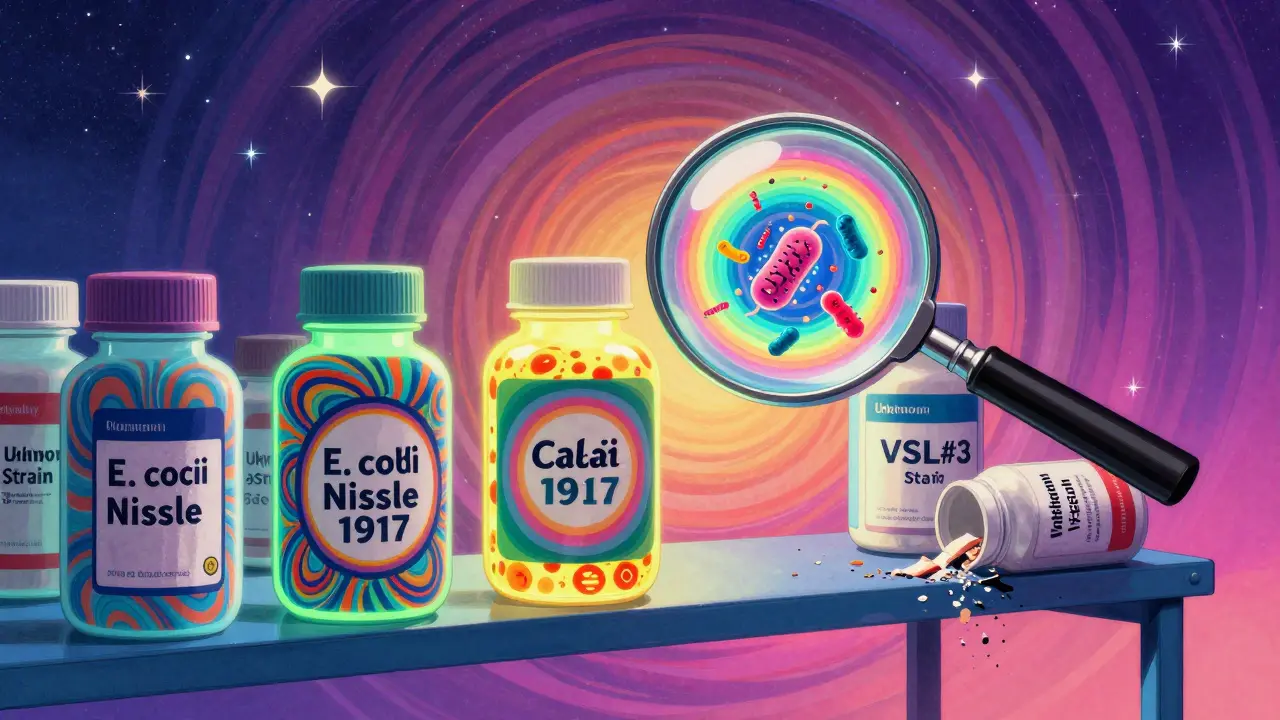
When and How to Take Them
Timing matters. If you’re taking antibiotics, take your probiotic at least two hours apart. Taking them together kills the probiotics before they can do their job. Continue taking them for at least a week after finishing your antibiotics.
For general gut health, daily use is common. But don’t expect instant results. Most people notice changes in bloating or transit time after 2 to 8 weeks. The first few days? You might feel gassy or bloated. That’s normal. Your gut is adjusting. If it lasts longer than a week, try switching strains.
Storage is another overlooked factor. Some probiotics need refrigeration - like VSL#3 or certain strains from Garden of Life. Others, like Saccharomyces boulardii, are shelf-stable. Check the label. If it doesn’t say, assume it needs to be kept cool.
What About the Market and Quality?
The global probiotic market is worth over $50 billion. That’s a lot of money chasing a lot of claims. And not all products deliver.
A 2019 test by ConsumerLab found that 30% of probiotic supplements contained fewer live organisms than advertised. Some had none at all. That’s not just misleading - it’s a waste of money.
How do you avoid this? Look for brands with third-party verification: USP, NSF International, or ConsumerLab. These groups test for potency, purity, and label accuracy. Brands like Culturelle (LGG), Seed, and Visbiome are frequently verified. Avoid products that don’t list specific strains or CFU counts.
Also, remember: yogurt and kefir aren’t always reliable probiotic sources. Many commercial yogurts are pasteurized after fermentation, killing the live cultures. Check for “live and active cultures” on the label.

Who Should Avoid Probiotics?
For most healthy people, probiotics are safe. But there are exceptions.
If you’re severely immunocompromised - say, after a transplant, on strong chemo, or with advanced HIV - there are rare case reports of probiotics causing bloodstream infections. It’s extremely uncommon, but real.
Also, avoid probiotics for acute pouchitis (inflammation after colon surgery) unless directed by a doctor. Studies show they can make it worse.
And if you’re pregnant or breastfeeding? The evidence is limited but generally supportive. Still, talk to your doctor before starting anything new.
What’s Next for Probiotics?
The future isn’t about one-size-fits-all bottles. It’s about personalization.
Companies like Viome and Thryve now offer microbiome testing and custom probiotic blends based on your gut profile. Early results are promising, but large-scale studies are still underway.
Researchers are also exploring probiotics for metabolic health. A 2024 study in Frontiers in Nutrition found certain strains improved insulin sensitivity and helped regulate blood sugar. This isn’t about weight loss - it’s about metabolic balance.
And in 2023, the FDA granted a qualified health claim to LGG for reducing the risk of acute infectious diarrhea in children. That’s a big deal. It’s one of the first times a probiotic strain got formal recognition from a major regulatory body.
But experts are clear: probiotics aren’t magic bullets. They’re tools. And like any tool, they work best when used correctly - for the right condition, with the right strain, at the right time.
Final Takeaways
- Probiotics can help with antibiotic-associated diarrhea and infectious diarrhea in children - if you pick the right strain (LGG or S. boulardii).
- They may help maintain remission in ulcerative colitis, but not Crohn’s disease.
- For IBS, results vary. Try one strain for 6-8 weeks before giving up.
- Always check the label: strain name + CFU count + third-party verification.
- Take probiotics 2+ hours away from antibiotics.
- Don’t expect miracles. They’re supplements, not cures.
- Stop if you have severe immune issues or worsening symptoms.
Probiotics aren’t the answer to every gut problem. But for some people, under the right conditions, they’re a small, science-backed step toward feeling better.
Do probiotics help with bloating?
Yes - but only for some people and only with specific strains. Bifidobacterium infantis 35624 and Lactobacillus plantarum DSM 9843 have shown consistent results in clinical trials for reducing bloating and abdominal pain in IBS. Other strains may do nothing. If you try one and feel no change after 6-8 weeks, switch or stop.
Can I get enough probiotics from yogurt?
Maybe - but not reliably. Many commercial yogurts are heat-treated after fermentation, killing the live cultures. Even those labeled “live and active cultures” often contain too few organisms or the wrong strains to have a therapeutic effect. For targeted benefits like diarrhea prevention or IBS relief, supplements with verified strains are more effective.
Are probiotics safe for long-term use?
For healthy adults, yes. Long-term use of well-studied strains like LGG and B. infantis has been shown to be safe in studies lasting up to two years. However, if you have a weakened immune system, a central line, or are critically ill, talk to your doctor first. There are rare cases of probiotics causing infection in vulnerable people.
Why do some people say probiotics didn’t work for them?
Because most people take the wrong strain, the wrong dose, or the wrong product. Many supplements don’t even contain the strains listed on the label. Others use generic blends without clinical backing. Also, if your gut microbiome is already balanced, adding more bacteria might not make a difference. Probiotics aren’t vitamins - they’re targeted therapies.
Should I take probiotics after antibiotics?
Yes - if you want to reduce the chance of antibiotic-associated diarrhea. Take LGG or Saccharomyces boulardii at least two hours after your antibiotic dose. Continue for 1-2 weeks after finishing your course. Studies show this cuts diarrhea risk by nearly half.
Are refrigerated probiotics better?
Not necessarily. Some strains are naturally heat-stable - like Saccharomyces boulardii - and don’t need refrigeration. Others, like VSL#3 or many Lactobacillus strains, lose potency quickly at room temperature. Check the label. If it says “keep refrigerated,” then yes - refrigeration matters. If not, shelf-stable options can work just as well.
Can probiotics help with weight loss?
Not directly. While some early studies show certain strains may influence metabolism or insulin sensitivity, there’s no strong evidence that probiotics cause weight loss on their own. Any effect is likely small and indirect - through improved digestion, reduced inflammation, or better gut hormone signaling. Don’t buy probiotics for weight loss.
Brendan F. Cochran
January 5, 2026Probiotics are just Big Pharma’s way of selling you sugar pills while you’re still hooked on their antibiotics. They don’t fix anything-they just make your poop smell nicer. I’ve taken every fancy supplement under the sun, and all I got was a bloated gut and a bigger bank account. Wake up, people.
jigisha Patel
January 5, 2026The scientific evidence presented is methodologically sound; however, the omission of strain-specific meta-analyses from the Cochrane Database (2021) and the failure to reference the 2023 EFSA opinion on probiotic efficacy thresholds significantly undermines the reliability of the conclusions drawn. One must exercise extreme caution when generalizing across heterogeneous populations.
Jason Stafford
January 7, 2026They don’t want you to know this-but the FDA approved LGG not because it works, but because the manufacturers bribed the reviewers. Every probiotic on the shelf is secretly engineered by the same five corporations that own the pharmaceutical industry. Your gut is being monitored. Your microbiome is being cataloged. And they’re selling you back your own bacteria-for $40 a bottle.
Justin Lowans
January 7, 2026This is one of the clearest, most balanced takes on probiotics I’ve seen in years. It’s refreshing to see science, not salesmanship, driving the conversation. The distinction between strain-specific effects and blanket claims is critical-and too often ignored. For anyone looking to navigate this space, this is the roadmap you need.
Stephen Craig
January 7, 2026Probiotics aren’t magic. They’re medicine. And medicine requires precision.
Connor Hale
January 8, 2026I tried probiotics for six months after antibiotics. Felt nothing. Then I switched to LGG for two weeks and suddenly my digestion felt… normal again. Not amazing. Just normal. Which, honestly, after years of bloating, felt like a win. Maybe it’s not about the supplement-it’s about finding the right match for your gut.
Abhishek Mondal
January 9, 2026Interestingly, you cite ISAPP guidelines-yet you fail to acknowledge that the ISAPP consortium has received funding from Danone, Chr. Hansen, and Nestlé-corporations that collectively control over 60% of the global probiotic market. This is not science. It is corporate co-optation dressed in academic language. The ‘evidence’ is manufactured.
Joseph Snow
January 9, 2026Third-party verification? Please. ConsumerLab is owned by the same parent company that owns the supplement industry’s trade group. They’re not testing for purity-they’re testing for compliance with the marketing brochure. If your probiotic doesn’t come from a doctor’s office, it’s a placebo with a label.
melissa cucic
January 11, 2026Thank you for the nuanced breakdown-especially the note on storage and strain specificity. I’ve been taking a shelf-stable blend labeled ‘15 strains’ for months, and I never checked if any were actually viable. Now I’m switching to Visbiome with verified CFUs and refrigeration. Small changes, big difference.