
26 Jan 2026
- 10 Comments
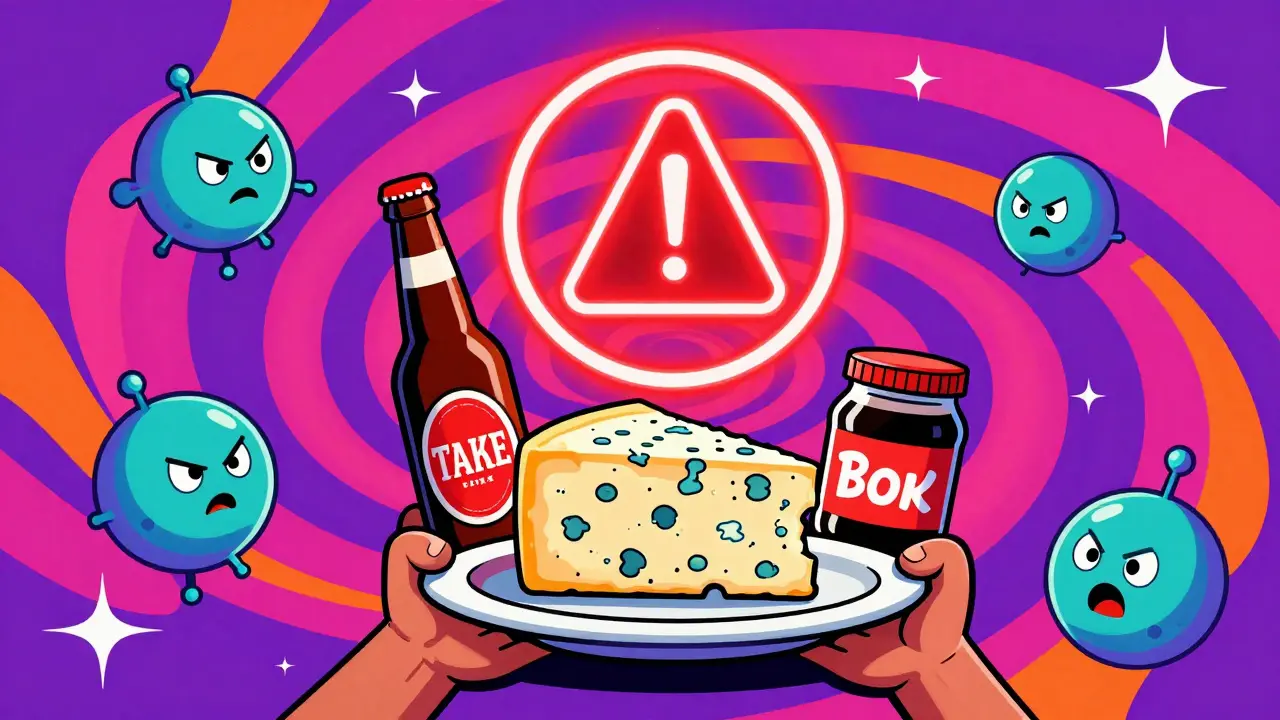
When you're on an MAOI antidepressant, your food choices aren't just about taste or health-they can be a matter of life or death. Monoamine oxidase inhibitors like phenelzine (Nardil), tranylcypromine (Parnate), and isocarboxazid (Marplan) work differently from SSRIs or SNRIs. They stop your body from breaking down excess tyramine, a compound found naturally in aged, fermented, or spoiled foods. When tyramine builds up, it can spike your blood pressure to dangerous levels-sometimes over 180 mmHg-in minutes. This isn't a mild headache or dizziness. It's a hypertensive crisis that can lead to stroke, heart attack, or death.
What Exactly Is Tyramine, and Why Does It Matter?
Tyramine is an amino acid that forms when proteins break down over time. It's not toxic on its own. Your body normally handles it with an enzyme called monoamine oxidase-A (MAO-A). But when you're on an irreversible MAOI, that enzyme is blocked. Tyramine floods your system, forcing your body to release huge amounts of norepinephrine. That's what causes your blood pressure to rocket. The old rule said: avoid anything aged, fermented, or cured. But food science has changed since the 1960s. Modern refrigeration, pasteurization, and shorter aging processes have cut tyramine levels in many foods dramatically. A block of cheddar cheese from 1970 might have had 80 mg of tyramine per 100 grams. Today’s properly stored commercial cheddar? Around 0.5 mg. That’s a 99% drop.Which Foods Are Still Dangerous?
Not all old warnings apply anymore. But some foods still carry serious risk. Here’s what you need to avoid:- Aged cheeses-especially those aged over 6 months. Think blue cheese, parmesan, cheddar, gouda, brie, camembert. Even if refrigerated, they can hit 20-50 mg of tyramine per 100g. Limit mature cheese to 150g every 3 days.
- Tap beer and unpasteurized beer-these are fermented in barrels and can contain 5-35 mg per 100g. Stick to pasteurized, bottled beer or wine. Limit to one 330ml serving per week.
- Dry fermented sausages-salami, pepperoni, chorizo. These can have 25-150 mg per 100g. Fresh sausage is fine if eaten immediately after cooking.
- Improperly stored meat or fish-if it’s been sitting in the fridge for more than 48 hours, tyramine can spike 10 to 100 times. Never eat leftovers during the first 4 weeks on MAOI. After that, only reheat and eat food stored at or below 4°C for no longer than 24 hours.
- Soy sauce and miso-these are high-risk. Soy sauce can contain 10-118 mg per 100g. Avoid entirely. Tofu is okay in small amounts-100g no more than twice a week.
- Overripe bananas and avocados-the pulp of ripe bananas is safe (under 1.5 mg per 100g), but avoid the peel and anything brown or mushy. Avocados are fine if eaten fresh, but skip them if they’re overripe.
What’s Actually Safe Now?
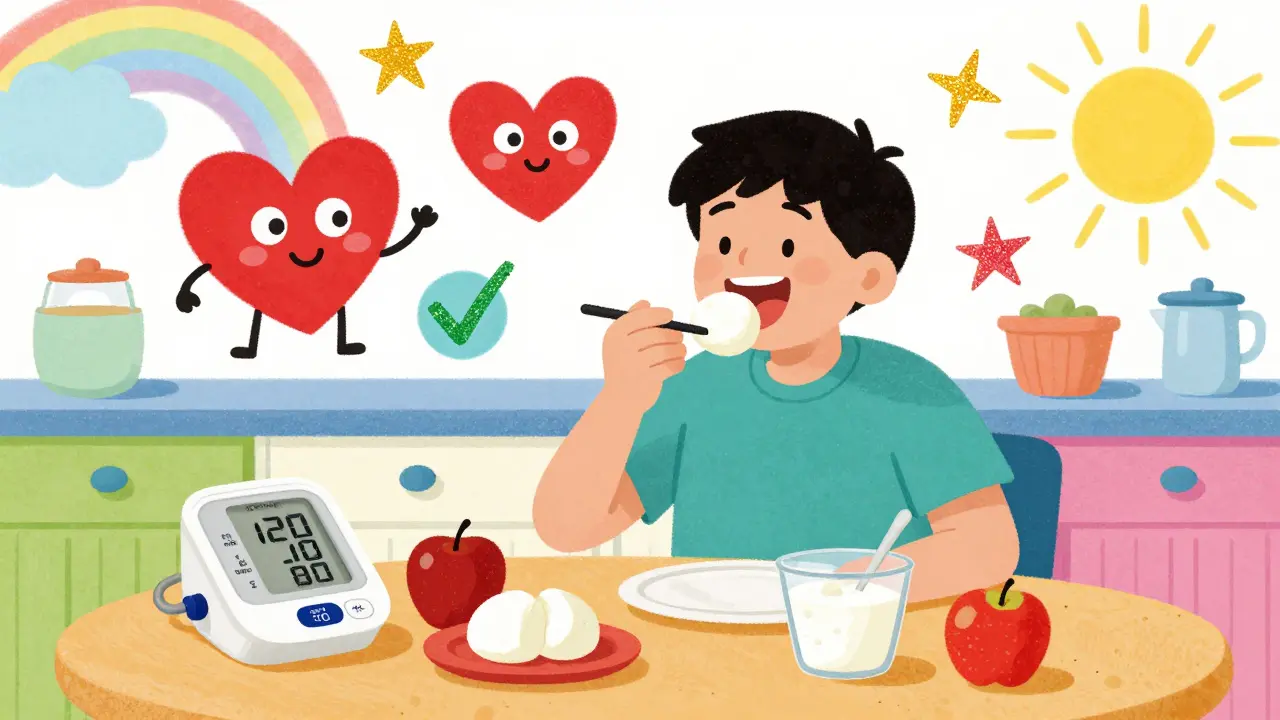
You don’t need to live on plain rice and boiled chicken. Many foods once banned are now considered low-risk:- Fresh cheeses-cottage cheese, ricotta, cream cheese, mozzarella (fresh, not aged), and processed cheese slices are safe.
- Fresh meat and poultry-as long as it’s eaten within 24 hours of cooking and stored properly at 4°C or below.
- Most fruits and vegetables-bananas (pulp only), apples, oranges, berries, spinach, carrots. Even chocolate is okay in small amounts-up to 30g.
- Pasteurized milk and yogurt-no problem.
- Instant coffee and tea-both are fine. Avoid coffee substitutes made from fermented grains.
The key is not the food itself, but how long it’s been stored and how it was processed. A slice of aged cheddar from the deli counter? Risky. A slice of fresh mozzarella from the dairy case? Safe.
Your Personal Safety Plan
A one-size-fits-all diet doesn’t work. Your sensitivity to tyramine depends on your genetics, liver function, and even your gut bacteria. Here’s how to build your own safety plan:- Start with a food diary. For the first 7 days on MAOI, write down everything you eat and drink. Note portion sizes and storage time.
- Monitor your blood pressure. Buy a home monitor. Check it before meals and again 2 hours after eating. If your systolic pressure jumps above 160 mmHg, stop eating and rest. If it hits 180 mmHg or higher, take 0.2-0.4 mg sublingual nifedipine (if prescribed) and call emergency services immediately.
- Carry an MAOI ID card. The Mayo Clinic recommends this. Write your name, medication, dose, and emergency contact. Keep it in your wallet or phone case.
- Never skip meals. Going too long without eating can make your body release stored tyramine. Eat small, regular meals.
- Be careful with over-the-counter meds. Decongestants like pseudoephedrine, some cough syrups, and even herbal supplements like St. John’s Wort can interact dangerously with MAOIs.
What About the New Patch? (Emsam)
If you’re on the transdermal selegiline patch (Emsam), your restrictions are lighter. At the 6 mg/24 hour dose, it mostly blocks MAO-B in the skin, not MAO-A in the gut. That means your body can still break down tyramine from food. You don’t need to avoid cheese or beer at this dose. But if your doctor increases your patch to 9 mg or 12 mg/24 hours, you’re back to the full MAOI diet. Always confirm your dose and restrictions with your prescriber. Don’t assume the patch means you’re free to eat anything.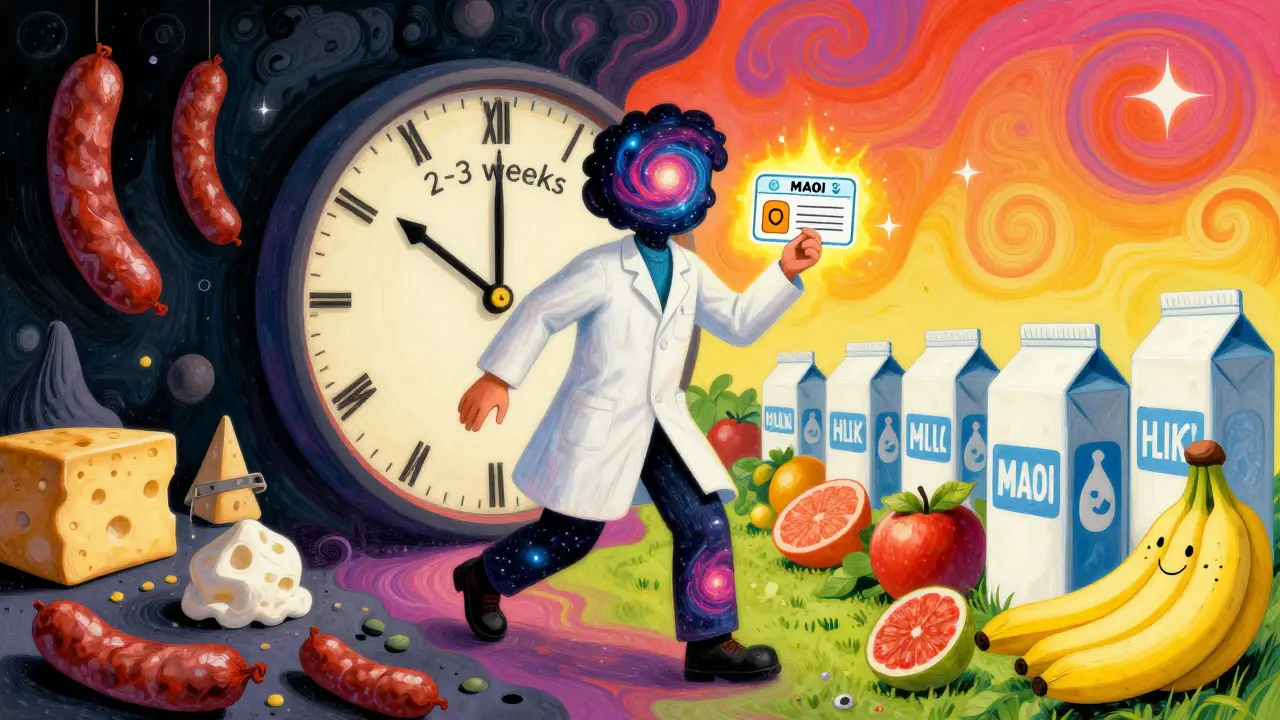
What Happens When You Stop?
The enzyme doesn’t bounce back overnight. It takes 2-3 weeks for your body to rebuild enough monoamine oxidase-A to safely process tyramine again. That means you must keep following the diet for at least 14 days after stopping your MAOI. Some doctors recommend 21 days, especially if you’ve been on it for months. Don’t switch to another antidepressant without waiting. Starting an SSRI too soon after an MAOI can cause serotonin syndrome-a different but equally dangerous condition.Why Do Doctors Still Prescribe MAOIs?
Because they work when nothing else does. For people with treatment-resistant depression-those who’ve tried four or more other antidepressants without success-MAOIs have a 50-60% response rate. That’s higher than SSRIs, which work in only 30-40% of these cases. They’re not first-line anymore. They’re the last line. And when they work, they can change your life. But they demand respect. You’re not being paranoid if you check the label on your cheese. You’re being smart.What’s Next?
Newer drugs are coming. Moclobemide, a reversible MAO-A inhibitor, is used in Europe and Australia. It doesn’t require strict dieting because it lets tyramine pass through the gut enzyme before binding. Clinical trials show even high tyramine loads cause only minor blood pressure spikes-12-15 mmHg, not 60-80. Genetic testing is also emerging. Some people have a slower version of the MAO-A enzyme (MAOA-L genotype). They’re more sensitive to tyramine. A pilot study at Massachusetts General Hospital found these individuals had 27% higher blood pressure spikes than others on the same dose. The future of MAOI therapy isn’t about blanket bans. It’s about personalized safety: knowing your dose, your food, your genetics, and your limits.Can I drink wine while on MAOIs?
Yes, but only in very small amounts. Pasteurized wine is safer than beer. Limit yourself to one 150ml glass per week. Avoid red wine if it’s unfiltered or homemade. Never mix wine with aged cheese or processed meats. Check the label-some organic wines have higher tyramine levels due to natural fermentation.
Is soy sauce completely off-limits?
Yes, avoid it entirely. Even small amounts can trigger a reaction. Tamari is not safer-it’s still fermented soy. Use coconut aminos or low-sodium liquid aminos as substitutes. Always check the ingredient list: if it says "fermented soy," skip it.
Can I eat leftovers after the first month?
Only if stored properly. Leftovers must be cooled within 2 hours of cooking and kept at 4°C or below. Eat them within 24 hours. Reheat thoroughly. Never eat food that’s been sitting in the fridge for more than 2 days. When in doubt, throw it out.
What should I do if I accidentally eat high-tyramine food?
Stay calm. Sit down and check your blood pressure immediately. If it’s below 160 mmHg, wait and monitor. If it’s above 160, check again in 30 minutes. If it reaches 180 mmHg or higher, take your prescribed sublingual nifedipine and call emergency services. Don’t wait for symptoms like headache or chest pain-high blood pressure can be silent until it’s too late.
Do I need to avoid caffeine?
Caffeine itself doesn’t interact with MAOIs. But large amounts can raise blood pressure on its own. Limit coffee to 2 cups per day. Avoid energy drinks, guarana, or caffeine pills. If you’re sensitive to caffeine, even tea can be too much.
Are there any foods that become dangerous only when combined?
Yes. Eating multiple moderate-tyramine foods in one meal can add up. For example, one slice of aged cheese (4 mg) plus a glass of beer (5 mg) plus a spoon of soy sauce (10 mg) could push you over 20 mg-close to the danger zone. Stick to one high-risk food per meal. Never mix cheese, beer, and soy together.
How long does it take for MAOIs to start working?
It usually takes 2-4 weeks before you notice improvement in mood. But the dietary restrictions start the day you begin the medication. Don’t wait to change your diet. The risk of a hypertensive crisis is highest in the first 2 weeks.
Can I take supplements while on MAOIs?
Avoid all supplements unless approved by your psychiatrist. Many contain tyramine, caffeine, or stimulants. Even vitamin B6, L-tryptophan, and 5-HTP can cause dangerous interactions. Always ask your doctor before starting anything new.
Conor Murphy
January 28, 2026Just started on Parnate last week and this post saved my life 🙏 I was about to grab a slice of blue cheese with my beer... thanks for the clarity. I'm already using the food diary and BP monitor. You're not alone in this.
Paul Taylor
January 29, 2026I've been on MAOIs for six years and let me tell you the biggest mistake people make is thinking the old rules still apply in full force like it's 1985. Modern refrigeration and pasteurization have changed everything but the fear hasn't caught up. I eat aged cheddar once a week and I've never had an issue as long as I'm not mixing it with soy sauce and tap beer which is just asking for trouble. The real danger is the combo not the single item. Also don't forget that even safe foods can turn risky if left out too long. I once ate leftover chicken that sat in the fridge for three days and my BP spiked to 170. Never again. Your liver and your gut microbiome matter more than you think.
Patrick Merrell
January 30, 2026Anyone who eats fermented soy on MAOIs is asking for a stroke. 🤦♂️ I've seen it happen. No excuses. No "but my soy sauce is organic" nonsense. It's still fermented. It's still dangerous. You think you're being clever but you're just a walking time bomb. This isn't a diet it's a survival protocol. Stop making it about your taste buds.
Conor Flannelly
February 1, 2026The science here is solid but what's missing is the emotional weight of living with this. It's not just about avoiding cheese or beer. It's about the loneliness of being the only one at dinner who can't share the charcuterie board. It's about reading labels for an hour just to eat a bowl of rice. I used to feel like a burden until I realized this isn't a restriction-it's a negotiation with my own biology. My gut bacteria changed over time. My liver metabolizes tyramine better now. I've gone from zero aged cheese to one small slice every ten days. That's not rebellion. That's adaptation. And yes I still carry my ID card. And yes I still check my BP. But I also laugh now. I eat chocolate. I drink tea. I live. And that's the real win.
Harry Henderson
February 2, 2026STOP BEING SO CAREFUL. You're not fragile. I've been on MAOIs for eight years and I eat salami, blue cheese, and red wine like it's nothing. I've checked my BP 100 times. I've never spiked above 150. If you're scared to live you're not healing-you're hiding. This isn't a prison. It's a tool. Use it or get out of the way.
astrid cook
February 2, 2026Harry you're going to end up in the ER and then we'll all have to suffer because someone was too "brave" to read the damn label. I've seen people die from this. It's not dramatic-it's quiet. One minute they're fine the next they're unconscious. You're not a hero you're a liability. And your attitude is exactly why people are scared to talk about this.
Andrew Clausen
February 2, 2026Correction: the post states "limit mature cheese to 150g every 3 days" but does not specify whether this is per serving or cumulative. This ambiguity could lead to dangerous overconsumption. Additionally the claim that "fresh sausage is fine if eaten immediately after cooking" is imprecise-"immediately" is undefined. Medical guidelines require quantifiable thresholds. Recommend citing FDA or EFSA thresholds for tyramine content per food item to prevent misinterpretation.
Anjula Jyala
February 3, 2026Tyramine bioavailability is modulated by gut microbiota composition and MAO-A polymorphisms. Individuals with MAOA-L genotype exhibit reduced enzymatic efficiency and are at significantly higher risk for hypertensive crisis even with low-dose tyramine exposure. Also soy sauce contains not only tyramine but also histamine which synergistically exacerbates vasoconstriction. Coconut aminos are not a perfect substitute due to higher glycemic load. Recommend low-FODMAP fermented alternatives like tamari-free liquid aminos derived from non-soy sources.
Kirstin Santiago
February 3, 2026Thank you for writing this. I was terrified at first but now I eat fresh mozzarella, apples, and even a little dark chocolate. I check my BP every morning. I don't obsess. I just pay attention. It's not perfect but it's mine. And I'm alive. That's enough.
Kathy McDaniel
February 5, 2026Just wanted to say I'm on Emsam 6mg and I had a glass of wine last night with my pizza... and I'm still here 😅 Also ate leftover chicken from yesterday and no drama. Maybe we're all just a little more resilient than we think? Thanks for the post!