
Medication Leaflets: What They Tell You and Why You Should Read Them
When you pick up a prescription, the small booklet that comes with it isn’t just paperwork—it’s your medication leaflets, official patient information guides that detail how a drug works, its risks, and how to use it safely. Also known as package inserts, these documents are required by law and packed with details most people never read. But skipping them is like driving without checking your mirrors. These leaflets don’t just list side effects—they explain what to do when things go wrong, how to avoid dangerous interactions, and when to call your doctor.
They’re not just for you—they’re for anyone helping you manage your meds. Caregivers, family members, and even pharmacists rely on them. For example, if you’re on levothyroxine, a thyroid hormone replacement that requires strict timing and diet control, the leaflet tells you not to take it with coffee, calcium, or iron. Miss that, and your dose could fail. Same goes for warfarin, a blood thinner where even small changes in vitamin K intake can cause bleeding or clots. The leaflet doesn’t say "avoid spinach"—it explains how much is safe and how to keep your INR stable.
These leaflets also flag hidden risks. Did you know that common antibiotics like azithromycin can trigger dangerous heart rhythms? That’s in the leaflet. So can SSRIs cause low sodium in older adults? Yes—and it’s right there, along with warning signs like confusion or falls. You won’t find that in ads or even on most pharmacy websites. The leaflet is the only place where the full picture is laid out without sugarcoating.
And it’s not just about danger. Leaflets tell you how to take your medicine right—whether that’s swallowing a pill on an empty stomach, using an inhaler properly, or knowing when to skip a dose. They explain why your pill looks different this time (it’s probably a generic), and what to do if you miss one. They even list what to do in an overdose.
What you’ll find in this collection are real, practical guides based on patient experiences and medical data. You’ll learn how to read FDA alerts tied to your meds, how to document safety warnings on your personal list, and how to spot when a generic might not work the same for you. You’ll see why some people react badly to switches in pills, how to handle nausea from drugs, and what to do when your meds make you dizzy or sweaty. Every post here ties back to one thing: medication leaflets are your first line of defense. Ignoring them costs lives. Reading them saves them.
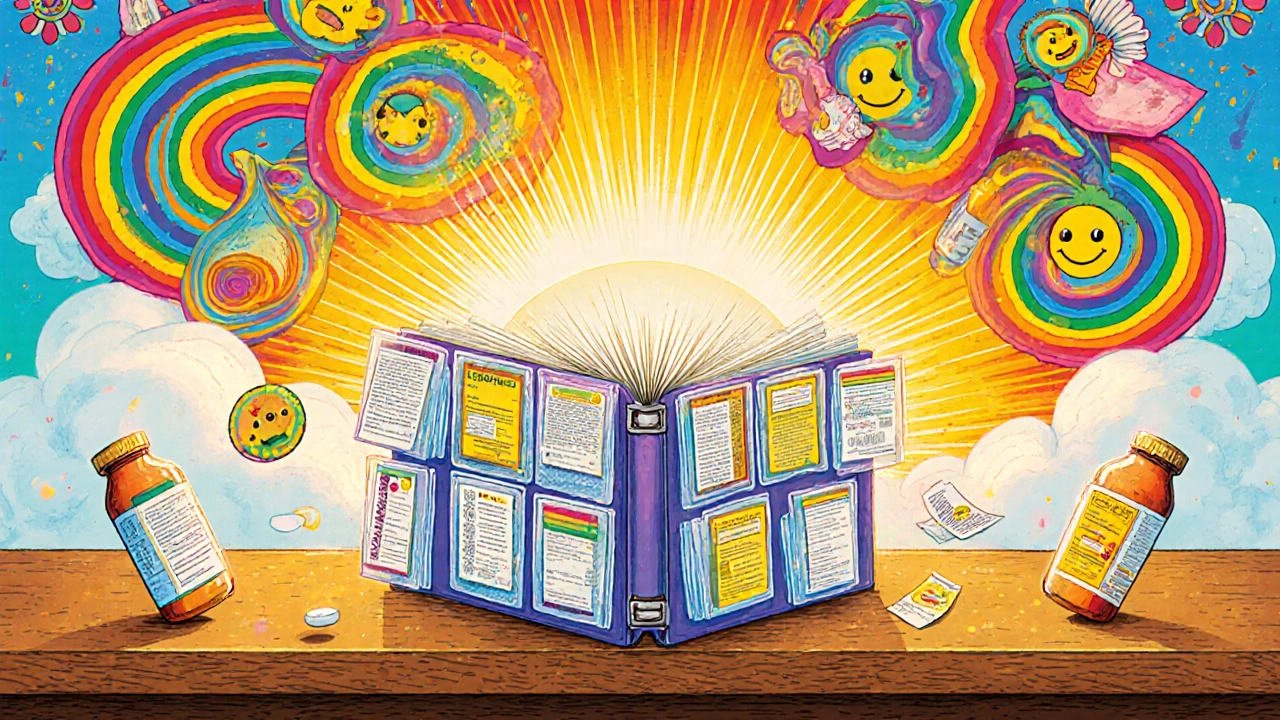
How to Store Prescription Labels and Leaflets for Future Reference
Learn how to safely store prescription labels and medication leaflets to prevent errors, avoid dangerous interactions, and ensure accurate care during doctor visits or emergencies. Simple steps for physical and digital organization.