
INR Levels: What They Mean, Why They Matter, and How Medications Affect Them
When your doctor talks about INR levels, a standardized measure of how long it takes your blood to clot. Also known as International Normalized Ratio, it's not just a number—it's a lifeline if you're on blood thinners like warfarin. Too low, and you risk clots that can cause strokes or heart attacks. Too high, and you could bleed internally without warning. This number doesn’t exist in a vacuum. It’s shaped by what you eat, what other meds you take, and even how consistently you take your dose.
Many people don’t realize that warfarin, a common anticoagulant used for atrial fibrillation, deep vein thrombosis, and artificial heart valves is one of the most finicky drugs out there. A single dose of antibiotics like azithromycin, a macrolide that can interfere with how your liver breaks down warfarin, can send your INR soaring. Even something as simple as eating more kale or spinach—foods high in vitamin K—can drop your INR. That’s why switching to a generic version of warfarin, as discussed in posts about generic medications, drugs that must meet strict bioequivalence standards but can still affect patients differently due to inactive ingredients, isn’t always safe without close monitoring. People with narrow therapeutic index drugs like warfarin often notice changes in how they feel after a switch, even if the label says it’s the same.
It’s not just about the pill. Your INR is pulled in every direction: alcohol, herbal supplements, even stress. One post shows how alcohol and medications, especially when mixed with anticoagulants, can increase bleeding risk and throw off liver function—and that’s just one piece. Another explains how medication safety alerts, critical notes you should keep on your personal drug list to prevent deadly errors for blood thinners can save lives. And if you’ve ever wondered why your INR jumped after starting a new antidepressant or painkiller, it’s because many drugs compete for the same liver enzymes that process warfarin. This isn’t guesswork. It’s science, and it’s personal.
You’ll find real stories here—not theory. People who learned the hard way that skipping a dose or grabbing a new OTC supplement can change their INR overnight. Others who figured out how to stabilize their levels by timing meals, tracking supplements, or switching to a different anticoagulant. This collection gives you the tools to understand what your numbers mean, how to talk to your doctor about them, and how to avoid the traps most patients don’t even know exist. What you read below isn’t just information—it’s your next step toward safer, smarter care.
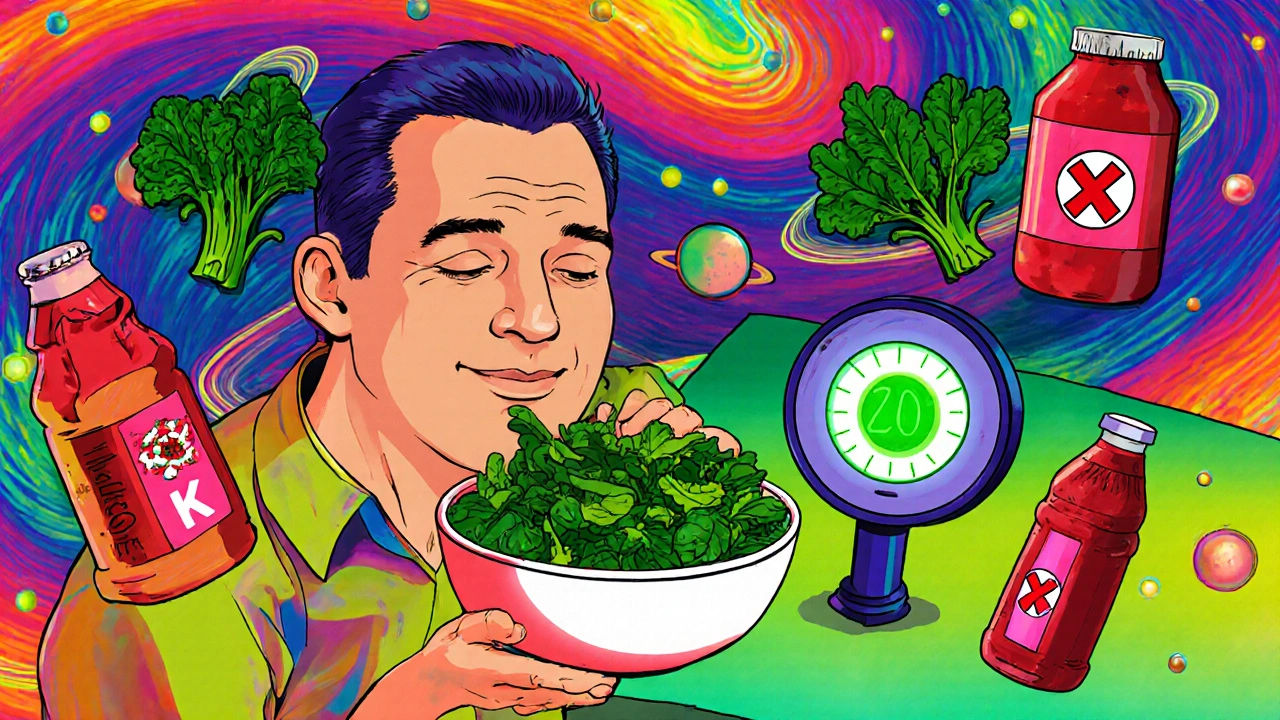
Warfarin Food Interactions: Complete Food List and Guidelines for Safe Use
Learn which foods affect warfarin, how to eat safely without giving up vegetables, and what to avoid to prevent dangerous bleeding or clotting. Keep your INR stable with consistent diet habits.