
Drug Food Interactions: What You Need to Know to Stay Safe
When you take a medication, it doesn’t just work in a vacuum—what you eat, drink, or supplement can change how it behaves in your body. This is called a drug food interaction, a reaction between a medication and something you consume that alters its effectiveness or safety. Also known as food-drug interactions, these aren’t just theoretical risks—they’ve sent people to the ER for bleeding, dizziness, organ damage, and worse. The truth is, most people don’t realize how common or dangerous these interactions can be until it’s too late.
Take warfarin, a blood thinner that requires careful diet management to keep INR levels stable. Eating a big bowl of kale one day and none the next can swing your INR from safe to life-threatening. It’s not about avoiding vegetables—it’s about consistency. The same goes for turmeric, a popular supplement that can spike bleeding risk when mixed with anticoagulants like Xarelto or warfarin. Real cases show INR levels jumping past 10 after just a few weeks of turmeric use. And then there’s alcohol, a substance that amplifies side effects of painkillers, antidepressants, and even antibiotics. Mixing alcohol with meds doesn’t just make you sleepy—it can cause liver failure, sudden drops in blood pressure, or deadly heart rhythms.
These aren’t rare edge cases. They’re everyday risks hiding in plain sight. A single pill bottle doesn’t tell you that grapefruit juice can turn your blood pressure med into an overdose. Or that calcium-rich foods can block your thyroid medicine from absorbing. Or that taking a sleep aid with a glass of wine could stop your breathing. The science is clear: what you put in your mouth matters just as much as what’s on your prescription label. You don’t need to become a nutritionist, but you do need to know the big red flags—especially if you’re on high-risk drugs like blood thinners, antidepressants, or heart meds.
Below, you’ll find real-world guides that cut through the noise. Learn exactly which foods to track with warfarin, why turmeric isn’t harmless even if it’s "natural," how alcohol quietly sabotages dozens of common prescriptions, and what steps you can take right now to protect yourself. No fluff. No theory. Just what works—and what could kill you if you ignore it.
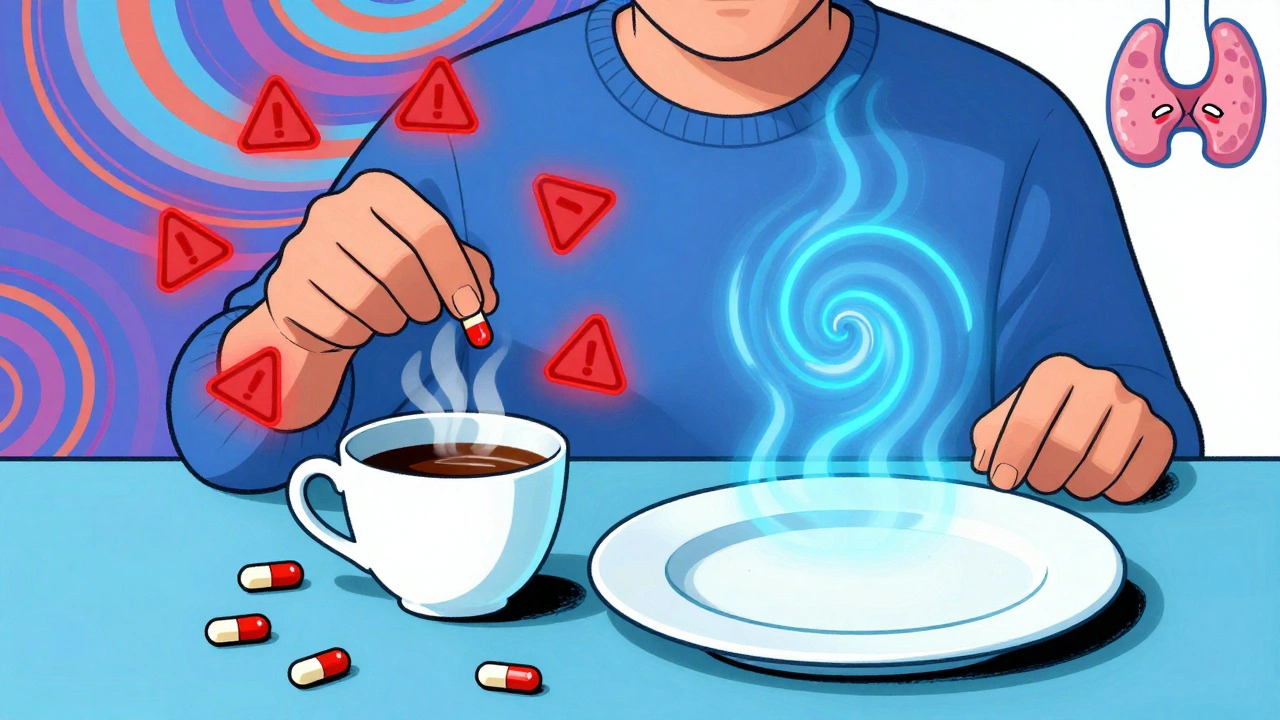
Taking Medications with Food vs Empty Stomach: When It Matters
Taking medications with or without food can make or break their effectiveness. Learn which drugs need an empty stomach, which need food, and why ignoring these rules can reduce results by up to 50% or cause serious side effects.