
21 Mar 2026
- 10 Comments
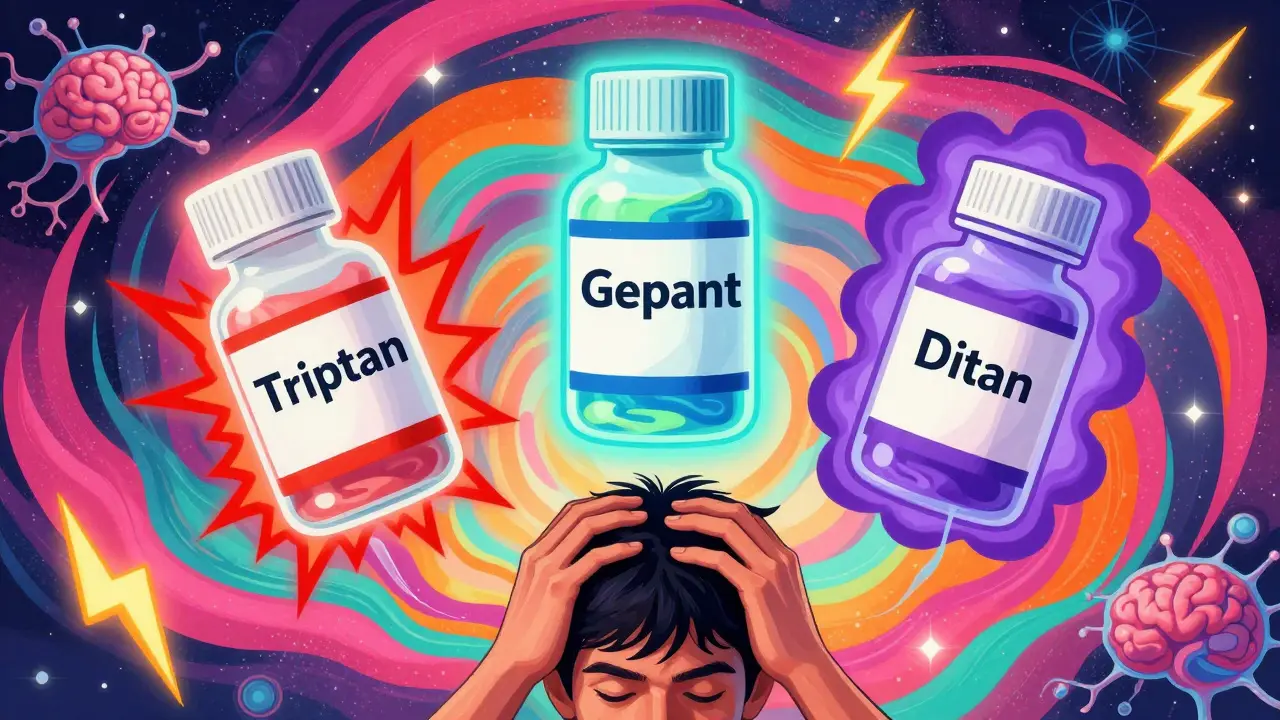
When a migraine hits, you don’t just want relief-you want it fast, without making things worse. But not all migraine meds are created equal when it comes to safety. Triptans, gepants, and ditans all treat acute attacks, but their side effect profiles are wildly different. Knowing which one carries the least risk for you could mean the difference between getting back to your day-or being stuck on the couch for hours.
Triptans: Fast Relief, But With a Cost
Triptans have been the go-to for decades. Sumatriptan, the first one approved in 1991, works by narrowing blood vessels around the brain and blocking pain signals. That’s why many people feel relief in under 30 minutes. But that same mechanism is also why they come with red flags.
Between 3% and 8% of users report chest tightness or pressure after taking a triptan. It’s not a heart attack, but it feels terrifying. Some people stop using them after that first scary experience. Other common side effects include tingling in the hands or face (8-15%), dizziness (7-14%), and fatigue (5-9%). If you use the injection form, 40% report pain at the injection site. Nasal sprays leave a bitter aftertaste for about a quarter of users.
Here’s the real catch: triptans are off-limits if you have heart disease, high blood pressure, uncontrolled diabetes, or a history of stroke. Even if you’ve taken them safely before, your risk can change over time. The American Academy of Family Physicians warns against using triptans within 24 hours of dihydroergotamine-combining them can dangerously constrict blood vessels.
Still, they’re effective. A 2021 review of 64 clinical trials found triptans reduced pain at two hours better than newer options. But nearly 60% of users report stopping them due to side effects. That’s a lot of people giving up on something that works, just because the side effects aren’t worth it.
Gepants: The Quiet Contender
Gepants-like ubrogepant (Ubrelvy) and rimegepant (Nurtec ODT)-work differently. Instead of squeezing blood vessels, they block a brain chemical called CGRP, which plays a big role in migraine pain. This means no vasoconstriction. No chest tightness. No risk for people with heart conditions.
Their safety profile is the cleanest of the three. Nausea affects only 4-6% of users. Drowsiness? Just 2-4%. One small risk: rimegepant has caused allergic reactions in 0.1% of users. That’s rare, but worth noting if you’ve ever had a weird reaction to a new pill.
They’re not perfect. Gepants take longer to work-usually 60 to 90 minutes-compared to triptans’ 30. And they’re more expensive. But if you’ve been scared off by triptans, or if you have high blood pressure or a history of heart issues, gepants are now the first-line recommendation from the American Headache Society.
One big plus: rimegepant is also approved for prevention. You can take it once a day to cut down on migraine frequency, or use it as needed. That flexibility makes it a standout. Long-term data is still growing, but two-year studies on rimegepant show it’s safe for ongoing use.
Ditans: Powerful, But Too Sedating
Lasmiditan (Reyvow) is the only ditan on the market. It targets a different serotonin receptor than triptans, so it doesn’t constrict blood vessels. That sounds great-until you feel the side effects.
In clinical trials, nearly 19% of people taking lasmiditan reported dizziness. That’s almost double the placebo group. Sedation hit 7.8%-nearly four times higher than placebo. People described feeling "out of it," "drunk without alcohol," or "like a zombie." One Reddit user wrote: "I couldn’t drive home. I had to sleep in the car for two hours."
The FDA requires a black box warning: don’t drive or operate machinery for at least eight hours after taking it. That’s not a suggestion. It’s a rule. And if you have a history of seizures or take other meds that lower your seizure threshold, you should avoid it entirely.
It’s not that lasmiditan doesn’t work-it does. But for most people, the trade-off isn’t worth it. Why take a drug that knocks you out for half a day when you just want to get through your workday? It’s become a niche option, used mostly when triptans and gepants fail.

How Do They Compare Side by Side?
Here’s what the data says about safety:
| Side Effect | Triptans | Gepants | Ditans (Lasmiditan) |
|---|---|---|---|
| Chest tightness or pressure | 3-8% | 0% | 0% |
| Dizziness | 7-14% | 1-3% | 18.8% |
| Sedation | 6-10% | 2-4% | 7.8% |
| Nausea | 5-12% | 3-6% | 5.0% |
| Cardiovascular risk | High (contraindicated) | Very low | Very low |
| Time to relief | 20-30 min | 60-90 min | 60-90 min |
| Driving restriction | None | None | 8 hours |
The numbers tell a clear story. Gepants win on safety. Ditans win on worst side effects. Triptans win on speed-but at the cost of tolerability.
Real People, Real Experiences
On Drugs.com, triptans average a 6.4/10. Many users say they work fast but can’t handle the chest pressure. One wrote: "Sumatriptan works within 30 minutes and gets me back to normal." Another: "Experienced severe chest pressure with first dose of Imitrex-never using it again."
Gepants score higher: 7.1/10. People like rimegepant because "no chest pressure like with triptans, just takes longer to work." That’s the trade-off: patience for peace of mind.
Lasmiditan? Only 5.8/10. Over 60% of negative reviews mention dizziness or sedation. One user said: "Felt completely out of it for 6 hours after taking Reyvow-can’t function at work." On Reddit, posts with "Reyvow made me feel drunk without alcohol" got over 140 upvotes. People aren’t exaggerating.

What Should You Do?
If you’ve never tried a migraine med before:
- Start with a gepant if you have heart issues, high blood pressure, or a family history of stroke.
- Try a triptan if you need fast relief and have no cardiovascular risks.
- Avoid ditans unless other options have failed and you can afford to be sedated for hours.
If you’ve tried one and stopped:
- Did triptans make your chest feel tight? Switch to a gepant.
- Did lasmiditan leave you too groggy? Go back to triptans-or try a gepant.
Side effects aren’t always the drug’s fault. Sometimes, what feels like dizziness or fatigue is just your migraine lingering. But if you’re consistently waking up worse than when you went to bed, it’s time to switch.
And if you’re on a triptan and feel fine? Keep using it. They’re still the most effective option for many. But if you’re on the fence, the safest bet today is a gepant.
What’s Next?
New options are coming. Zavegepant, an intranasal gepant, just finished phase 3 trials with fewer side effects than triptans. It might be available soon. Meanwhile, long-term safety data for gepants beyond two years is still being collected. But for now, the choice is clear: if safety matters most, gepants lead the pack.
Are gepants safer than triptans for people with heart problems?
Yes. Gepants do not constrict blood vessels, so they’re safe for people with heart disease, high blood pressure, or stroke risk. Triptans are strictly avoided in these patients because they can tighten arteries and trigger heart events.
Why does lasmiditan make people feel so sleepy?
Lasmiditan targets serotonin receptors in the brain that affect alertness and coordination. In clinical trials, nearly 8% of users reported sedation, and 19% felt dizzy. That’s why the FDA requires an 8-hour driving restriction. It’s not just drowsiness-it’s a neurological effect.
Can I take a gepant and a triptan together?
No. Combining them increases the risk of side effects without proven benefit. If one doesn’t work, wait at least 24 hours before trying another class. Always check with your doctor before switching.
Do any of these medications cause addiction?
None of these drugs are addictive. Unlike opioids or benzodiazepines, they don’t trigger reward pathways in the brain. But overusing any acute migraine med more than 10 days a month can lead to medication-overuse headaches. That’s why tracking your usage is important.
Is it true that some side effects are just the migraine itself?
Yes. Symptoms like fatigue, dizziness, and nausea are common during a migraine attack. That’s why doctors ask you to track what you felt before taking the med. If you were already feeling foggy or nauseous before dosing, it might not be the drug’s fault.
trudale hampton
March 21, 2026Man, I’ve been on sumatriptan for years and never had chest tightness, but my buddy swore he felt like he was getting a heart attack. Guess it’s one of those things where your body just reacts differently. I’ve been thinking about switching to a gepant just for peace of mind, though. No point risking it if you don’t have to.
Solomon Kindie
March 23, 2026So triptans are basically just vasoconstrictors with a side of anxiety and gepants are the chill cousin who shows up late but doesn’t make you feel like you’re dying. ditans? the guy who shows up drunk and says he’s fine to drive. i’m not even mad. the science checks out.
Allison Priole
March 24, 2026I switched from triptans to rimegepant after my third scary chest episode. Took me like 90 minutes to feel better, but I didn’t feel like my heart was going to burst out of my chest. And now I take it every other day just to keep the migraines from even starting. It’s not magic, but it’s the first thing that actually let me live my life instead of just survive it. Also, the ODT dissolves on your tongue like a little candy. Small wins.
Sandy Wells
March 25, 2026Anyone else notice how every article about migraine meds reads like a pharmaceutical ad? Gepants are safer? Sure. But they cost 5x more. And no one talks about insurance denials. Or how some of us have to pick between food and meds. This isn’t a clinical trial. It’s real life.
Chris Dwyer
March 27, 2026If you’re scared of triptans, start with a gepant. No judgment. I was terrified of the chest tightness too. But if you’ve tried both and still have attacks? Don’t give up. There’s a reason ditans exist. And yes, they knock you out-but sometimes, if you’re in bed already, being a zombie for a few hours beats screaming through the day. You’re not weak for needing help. You’re smart for trying options.
Desiree LaPointe
March 27, 2026Oh wow. So the ‘safe’ option is just slower and more expensive. And the ‘zombie’ drug is the one that actually works for some people. I’m shocked. Truly. Next up: a migraine med that makes you levitate. Maybe it’ll come with a free yoga class.
Jackie Tucker
March 28, 2026It’s funny how we treat migraine meds like they’re all interchangeable. You wouldn’t swap insulin for metformin and call it a day. But here we are, treating triptans, gepants, and ditans like they’re just different flavors of soda. The science is nuanced. The real world? Not so much. Most of us are just trying not to die while waiting for our next paycheck to cover the copay.
Thomas Jensen
March 28, 2026Anyone else think the FDA is just letting pharma companies test new drugs on us? I mean, they approved ditans knowing 19% get dizzy? And no one’s talking about how they’re marketing these like they’re candy. What’s next? A migraine vape? A migraine NFT? I swear, if I see one more influencer say ‘my migraine journey’ with a bottle of ubrogepant, I’m moving to Alaska.
matthew runcie
March 30, 2026My neurologist said if triptans work and you’re not at risk, keep using them. Gepants are great, but not always better. Just because something’s safer doesn’t mean it’s right for you. I’ve been on sumatriptan for 12 years. Still works. Still fine. No chest. No drama. Sometimes, the old way is still the best way.
shannon kozee
March 30, 2026One sentence: Gepants for safety, triptans for speed, ditans for when you’re already on the couch and don’t care if you stay there.