
22 Jan 2026
- 12 Comments
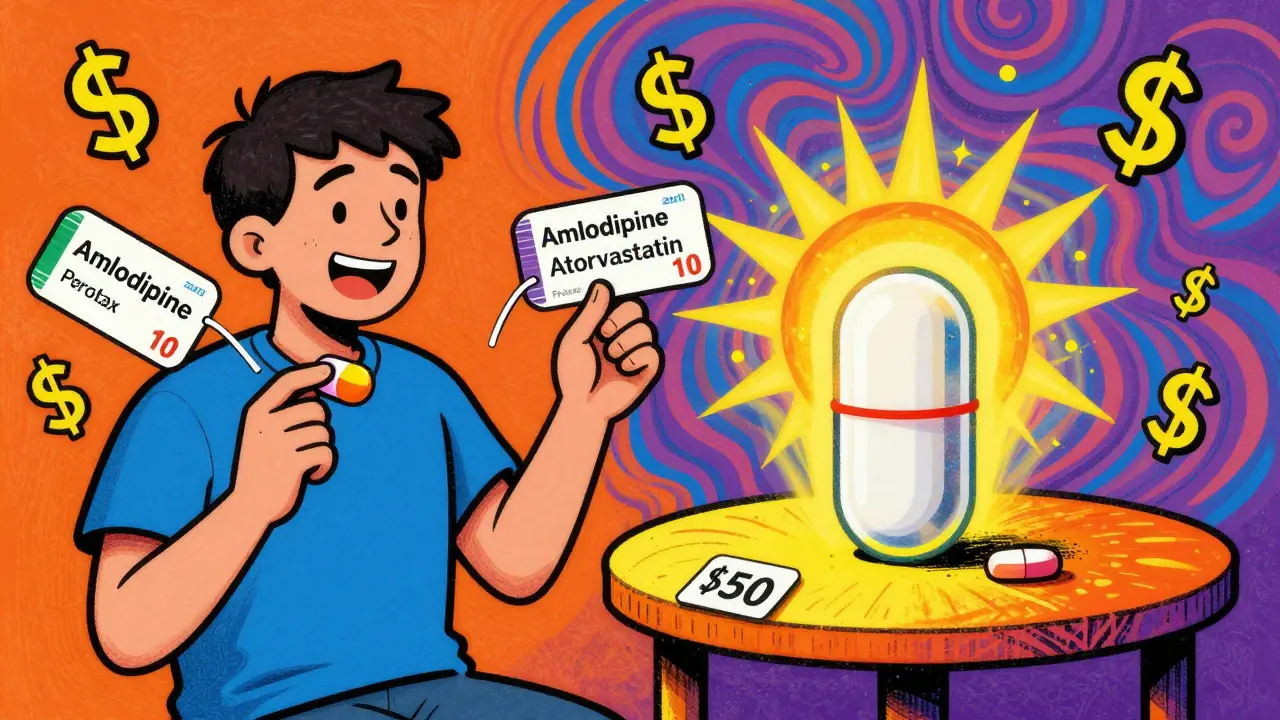
When you’re on multiple medications for high blood pressure, diabetes, or cholesterol, you might notice something strange: your insurance covers two separate generic pills for $10 each, but the generic combination pill that contains the exact same ingredients costs $50. Why? It’s not a mistake. It’s how insurance formularies work-and it can cost you hundreds a year if you don’t understand it.
What’s the Difference Between a Generic Combination and Two Individual Generics?
A generic combination drug is a single pill that contains two or more active ingredients, each already available as a standalone generic. For example, a combination pill might include amlodipine and atorvastatin-two drugs used together for high blood pressure and cholesterol. You can get each one separately, or you can get them in one pill. Both are generics. But your insurance may treat them completely differently. The FDA confirms that generic combination drugs are chemically identical to their brand-name versions and meet the same safety and effectiveness standards. So why the price gap? It’s not about the medicine. It’s about how insurers structure their formularies-lists of covered drugs-and where they place each product on those lists.How Insurance Tiers Decide What You Pay
Most insurance plans, including Medicare Part D and private plans, organize drugs into tiers. Tier 1 is the cheapest-usually preferred generics. Tier 2 and 3 are brand names or non-preferred generics. Tier 4 is for specialty drugs. Your copay depends entirely on which tier your drug lands on. Here’s the catch: insurers often place individual generic drugs in Tier 1 because they’re cheap and widely available. But a combination version of those same drugs might be placed in Tier 3 or even Tier 4-even if it’s a generic. Why? Because the combination drug might be made by a single manufacturer with no competition. These are called “single-source generics.” Without competitors, prices don’t drop the way they do for generics with five or more makers. The FDA says generic drugs usually cost 80-85% less than brand names. But single-source generics? Sometimes they’re only 30% cheaper. In 2019, 84% of Medicare Part D plan-product combinations covered only generics, up from 69% in 2012. That’s good news overall-but it doesn’t mean all generics are treated equally.Why Insurers Prefer Individual Generics (Even When It Costs You More)
Insurance companies aren’t trying to trick you. They’re following a logic based on cost control and administrative simplicity. Here’s how it works:- When you take two separate generics, the insurer pays for two low-cost items. Their pharmacy benefit manager (PBM) gets bulk discounts on each one.
- When you take a combination pill, even if it’s generic, the insurer has to negotiate with one manufacturer. If that manufacturer has no rivals, they can charge more.
- Some PBMs (like CVS Caremark or Express Scripts) actually encourage splitting pills because it gives them more control over pricing and rebates.
When the Combo Is Actually Cheaper
It’s not always the case that individual generics win. If the combination drug has multiple manufacturers producing it, prices drop fast. That’s when insurers put it in Tier 1-and you win. For example, when the combination of metformin and sitagliptin (Janumet) went generic, copays dropped from over $100 to under $15. The same happened with lisinopril-hydrochlorothiazide for blood pressure. These drugs became so cheap that insurers started pushing them as first-line treatments. The key? Check if the combination has generic competition. If it does, it’s likely cheaper. If it doesn’t, you might be better off with two separate pills.How to Find Out What Your Plan Covers
Most people don’t know how to read their formulary. But you don’t need a pharmacy degree to figure it out. Here’s how:- Log into your insurer’s website. Look for “Formulary” or “Drug List.”
- Search for each drug individually: the combination, and each component.
- Compare the copay for each. Don’t assume the combo is cheaper.
- If the combo is more expensive, ask your doctor if they can prescribe the two separate generics.
What to Do If Your Plan Won’t Cover the Combo
If your combination drug is cheaper but your plan won’t cover it, you can request a “coverage determination.” This is a formal appeal process. Your doctor fills out a form explaining why the combo is medically necessary-maybe because you have trouble swallowing multiple pills, or you forget doses. Standard requests take 72 hours. Expedited ones (for urgent cases) take 24 hours. You can also ask for a “step therapy exception” if your plan forces you to try the cheaper option first. But here’s the hard truth: only 42% of Medicare Part D plans make their formularies easy to find online. AARP’s 2023 review found most patients need help navigating this. Don’t be afraid to call your insurer’s pharmacy line. Ask: “Is the combination version of [drug name] covered? If not, why? And what’s the copay for the individual generics?”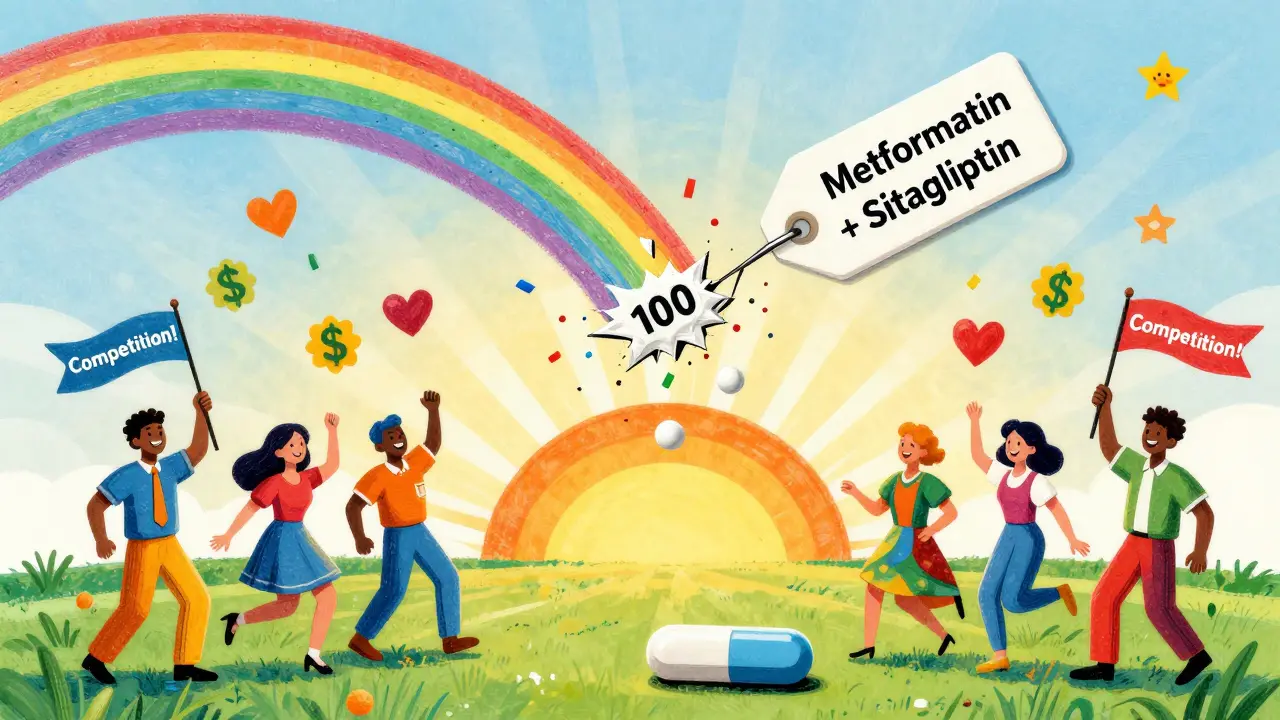
How the Inflation Reduction Act Changed the Game
Starting January 1, 2024, Medicare Part D eliminated the annual deductible and capped out-of-pocket spending at $2,000 per year. That’s huge. It means even if your combo drug is on a higher tier, you won’t pay more than $2,000 total for all your drugs. Plus, a federal court ruling in September 2023 banned “copay accumulator” programs. These programs used to stop manufacturer coupons from counting toward your out-of-pocket maximum. Now, if you get a coupon for a brand-name drug, it counts. That makes brand-name drugs more affordable-but it also makes insurers more likely to favor generics, since they’re already cheap.What’s Next for Generic Combinations?
The U.S. generic drug market is growing fast-projected to hit $219 billion by 2028. Combination drugs make up 15% of all prescriptions but 28% of top-selling drugs. As more patents expire, expect more generic combos to hit the market. The FDA’s Generic Drug User Fee Amendments (GDUFA) III, running through 2027, is speeding up approval of complex generics-including combos. That means more competition, lower prices, and better coverage. In the meantime, the biggest takeaway is simple: don’t assume the combo is better-or worse. Test it. Compare the copays. Ask your doctor to write two prescriptions if it saves you money. And always check your plan’s formulary before filling a new prescription.Frequently Asked Questions
Are generic combination drugs as safe as individual generics?
Yes. The FDA requires generic combination drugs to be bioequivalent to their brand-name counterparts, meaning they work the same way in your body. The same standards apply to each ingredient in the combo as they do to standalone generics. The only exception is for narrow therapeutic index drugs-where tiny differences in blood levels matter-but these are rare and closely monitored.
Why does my insurance cover two pills but not the combo?
It’s usually because the combination drug is made by only one manufacturer (a “single-source generic”), so there’s no price competition. Insurers prefer to cover two separate generics because they can negotiate lower prices with multiple suppliers. The combo may be priced higher even though it contains the same ingredients.
Can I ask my doctor to prescribe individual generics instead of the combo?
Absolutely. Many doctors are happy to do this if it saves you money. Just make sure you’re not adding extra complexity to your routine. If you’re already taking four or five pills a day, a combo might help you stay on track. But if you’re only taking two, splitting them could cut your monthly cost in half.
What if the combo is cheaper than the individual generics?
Then your plan should cover it in Tier 1. That usually happens when multiple manufacturers produce the combo, driving prices down. If your plan still won’t cover it, file a coverage determination request. It’s your right-and many of these appeals are approved, especially if you show the combo is significantly cheaper.
Do copay coupons work for generic combination drugs?
Yes-but only if the combo is a brand-name drug. Generic drugs rarely have manufacturer coupons because they’re already cheap. If you’re paying $50 for a generic combo, it’s likely because there’s no competition. In that case, coupons won’t help. But if you’re stuck with a brand-name combo, coupons can reduce your cost-and now, thanks to the 2023 court ruling, those coupons count toward your out-of-pocket maximum.
Gina Beard
January 23, 2026It’s wild how the system rewards complexity over simplicity. You’d think medicine would be about health, not invoice arithmetic.
Don Foster
January 25, 2026Insurers aren't evil they're just optimizing for profit margins like any capitalist entity and let's be real if you're not reading your formulary you're already losing
siva lingam
January 27, 2026so the combo costs 5x more but its still generic lol what a joke
Shelby Marcel
January 27, 2026i had no idea about this til i saw my bill last month. i was payin 60 for the combo then i asked my doc for separate ones and now its like 18. mind blown 😳
blackbelt security
January 28, 2026Knowledge is power. This post could save someone thousands. Share it with anyone on meds. You’re not just helping yourself-you’re lifting others up.
Patrick Gornik
January 28, 2026The pharmaceutical-industrial complex is a beautifully engineered machine of rent-seeking behavior wrapped in the velvet glove of regulatory compliance. Single-source generics? That’s not innovation-that’s regulatory arbitrage dressed in a lab coat. The FDA certifies safety, but the PBM’s spreadsheet decides your dignity. We’ve turned pharmacology into a game of Monopoly where the board is rigged and the players don’t even know they’re holding the dice.
And don’t get me started on copay accumulators-those were financial black holes disguised as cost-saving measures. Now that they’re banned, we’re seeing the first flickers of sunlight in a system designed to keep you in the dark. The Inflation Reduction Act didn’t fix the disease-it just gave you a better bandage.
But here’s the real kicker: the market doesn’t reward efficiency. It rewards scarcity. And if you can manufacture a pill that contains two generics but patent the *combination* as a novel formulation? Congrats-you’ve invented a monopoly with a pill press.
Meanwhile, patients are left playing pharmacy roulette, hoping their doctor remembers to write two scripts instead of one. This isn’t healthcare. This is economic theater with side effects.
Tommy Sandri
January 29, 2026While the financial implications are significant, it is also worth noting that adherence to medication regimens improves with simplified dosing. The psychological burden of managing multiple pills should not be underestimated in chronic disease management.
Luke Davidson
January 31, 2026My grandma takes six pills a day and forgets half of them. When we switched her to two combo pills? She actually started taking them. So yeah, sometimes the combo isn't about cost-it's about survival. Don't just chase the lowest price, chase the one that keeps you alive.
And if your doc says 'it's the same thing'-ask 'but which one makes me less likely to end up in the ER?' That's the real question.
Karen Conlin
January 31, 2026This is exactly why we need patient advocates in every clinic. I work with seniors and I’ve seen people pay $80 for a combo pill while the same drugs separately cost $12. They didn’t know. No one told them. And when they finally asked, their pharmacist looked away like it was awkward. We need to normalize asking: ‘Is there a cheaper way?’ It’s not rude-it’s your right.
Also, if your plan says ‘no’ to the combo but ‘yes’ to two generics, ask for a prior authorization form. Fill it out. Send it. Follow up. I’ve had 90% of these appeals approved when patients pushed back. The system hates paperwork, so it often folds. Don’t let them bury you in bureaucracy.
And if you’re a caregiver? Print this post. Give it to your mom. Your uncle. Your neighbor. This isn’t niche info-it’s life-saving.
asa MNG
February 2, 2026so i just found out my combo pill is like 50 bucks but the two seprate ones are like 10 each?? like wtf?? i thought generic meant cheap?? i feel so dumb 😭
also can someone send me a link to the formulary thing?? i dont even know where to look on my insurance site 😅
Sushrita Chakraborty
February 2, 2026While the economic rationale behind tiered formularies is understandable, the ethical implications warrant serious consideration. Patients, particularly those with limited health literacy, are often left navigating a labyrinthine system without adequate guidance. The disparity between cost and accessibility reflects a systemic failure in patient-centered care.
Moreover, the administrative burden placed on physicians to justify prescriptions-when the clinical equivalence is already established-represents an inefficient allocation of healthcare resources. The solution lies not merely in patient advocacy, but in structural reform of formulary design to prioritize therapeutic outcomes over financial convenience.
Patrick Gornik
February 2, 2026And now I see Luke Davidson’s comment about grandma’s adherence-brilliant. But here’s the twist: if the combo is cheaper and improves adherence, why isn’t it Tier 1? Because the PBM’s rebate structure doesn’t align with patient outcomes. It aligns with corporate profit. That’s not a flaw-it’s the feature.