
23 Mar 2026
- 9 Comments
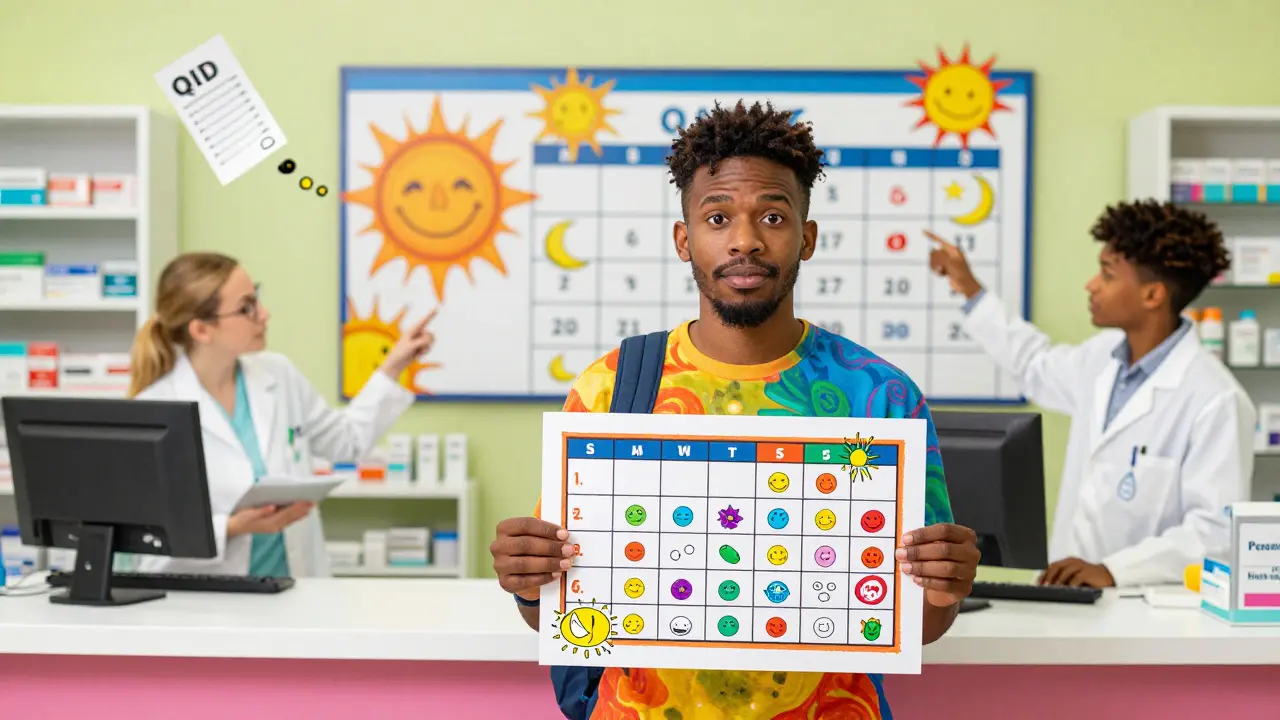
Getting your medication instructions in writing is one thing. Getting instructions you can actually understand is another. Too many people leave the pharmacy with a small paper slip full of medical jargon, tiny print, and confusing terms like "QID" or "take on an empty stomach." If you’ve ever stared at that slip and thought, "I have no idea what this means," you’re not alone. And you’re not wrong to ask for better.
There’s no law in the U.S. that forces pharmacies to give you clear, plain-language instructions with every prescription. But that doesn’t mean you don’t have rights. You do. And knowing how to ask - the right way - can change everything.
What You’re Entitled to Under Patient Rights
Every major healthcare organization in the U.S. agrees: patients have the right to receive information they can understand. The American Medical Association says you have the right to ask questions and get clear answers. AmerisourceBergen’s Patient Rights document says you can request education in a language you understand. Tennessee Oncology, Vivo Health Pharmacy, and even the federal Office of Personnel Management all say the same thing: information must be presented in a way that makes sense to you.
This isn’t just nice to have - it’s part of informed consent. If you don’t understand how to take your medicine, you can’t give real consent. That’s why these rights exist. You’re not asking for a favor. You’re claiming a basic part of your healthcare.
Why Most Written Instructions Fail
Most pharmacies give you a label or a one-page sheet that looks official but reads like a textbook. A 2022 analysis from the University of Florida found that even big pharmacy chains like CVS and Walgreens use instructions with reading levels between 6th and 11th grade. That might sound fine - until you consider that nearly half of American adults read at or below a 6th-grade level.
And it’s worse for older adults, people with learning differences, or those who aren’t native English speakers. A 2023 study in Health Affairs found patients given instructions below their reading level were over five times more likely to take their medicine correctly. That’s not a small gap - it’s a life-or-death divide.
Meanwhile, countries like Canada and the UK require all prescription labels to use plain language at a 6th-grade level or lower. The U.S. doesn’t. That means you’re stuck with a patchwork system. In California, pharmacists must give instructions "in a manner understandable to the patient." In other states? No such rule.
How to Ask - And Actually Get Results
Asking "Can you explain this?" often gets you the same paper again. You need a better approach. Here’s what works:
- Ask for the pharmacist - not the tech. Pharmacy technicians often don’t have the time or training to rewrite instructions. Pharmacists do. Say: "I’d like to speak with the pharmacist about my medication."
- Cite a specific right. Don’t say "I don’t understand." Say: "I’m exercising my right under the AmerisourceBergen Patient Rights document to receive education in a language I understand." Studies show this increases your chances of getting help by nearly 4 times.
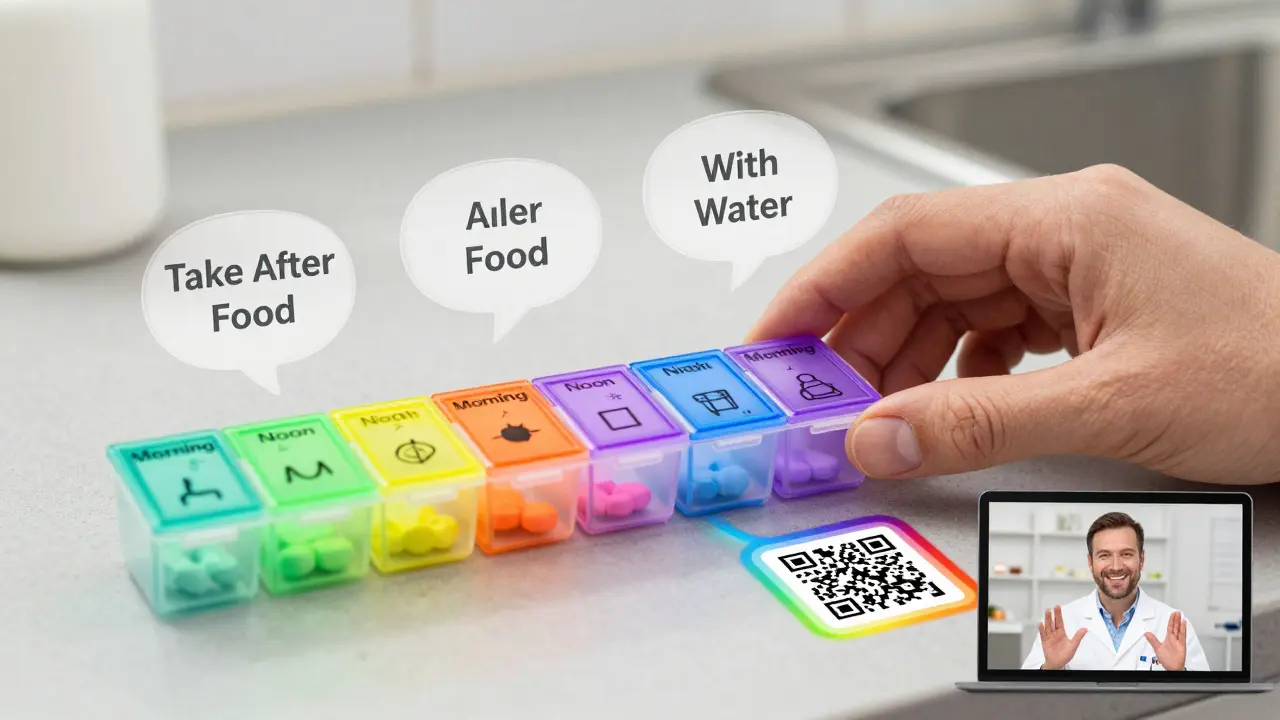
- Ask for a visual schedule. If you take multiple pills at different times, ask for a chart with pictures. A 2023 study in Annals of Internal Medicine showed visual schedules improved adherence by 42% for complex regimens.
- Use the read-back method. After they explain, say: "Can I repeat it back to make sure I got it right?" Then say what you think you’re supposed to do. This simple step cuts errors by 63%, according to Johns Hopkins Medicine.
- Say you’re documenting it. Tell them: "I’m writing this down for my medical records." Pharmacies are far more likely to provide clear, written instructions when they know you’re keeping a record.
Timing matters too. Ask during your first prescription - not when you’re picking up a refill. Pharmacists have more time to explain when it’s new.
What to Ask For
Don’t settle for vague answers. Be specific:
- "Can you give me a one-page summary with simple words?"
- "Can you show me a calendar or chart with when to take each pill?"
- "Can you explain what "take on an empty stomach" really means?"
- "Can you use pictures or symbols to show me what to do?"
- "Can you give me a version in [language] if I need it?"
Under Title VI of the Civil Rights Act, pharmacies must provide translation services if you ask. A 2023 CMS report found 92% of pharmacies will do it if you say: "I need medication instructions in [language] per federal law."
What’s Changing - And What’s Coming
Change is coming, even if it’s slow. In 2024, Walgreens announced all prescriptions will include scannable QR codes linking to video instructions in 20 languages by the end of the year. CVS now uses a system called "Medi-Simplify" that generates pictogram-based instructions in 78% of its pharmacies. The FDA is drafting new rules that would require standardized icons and plain language on all prescription labels.
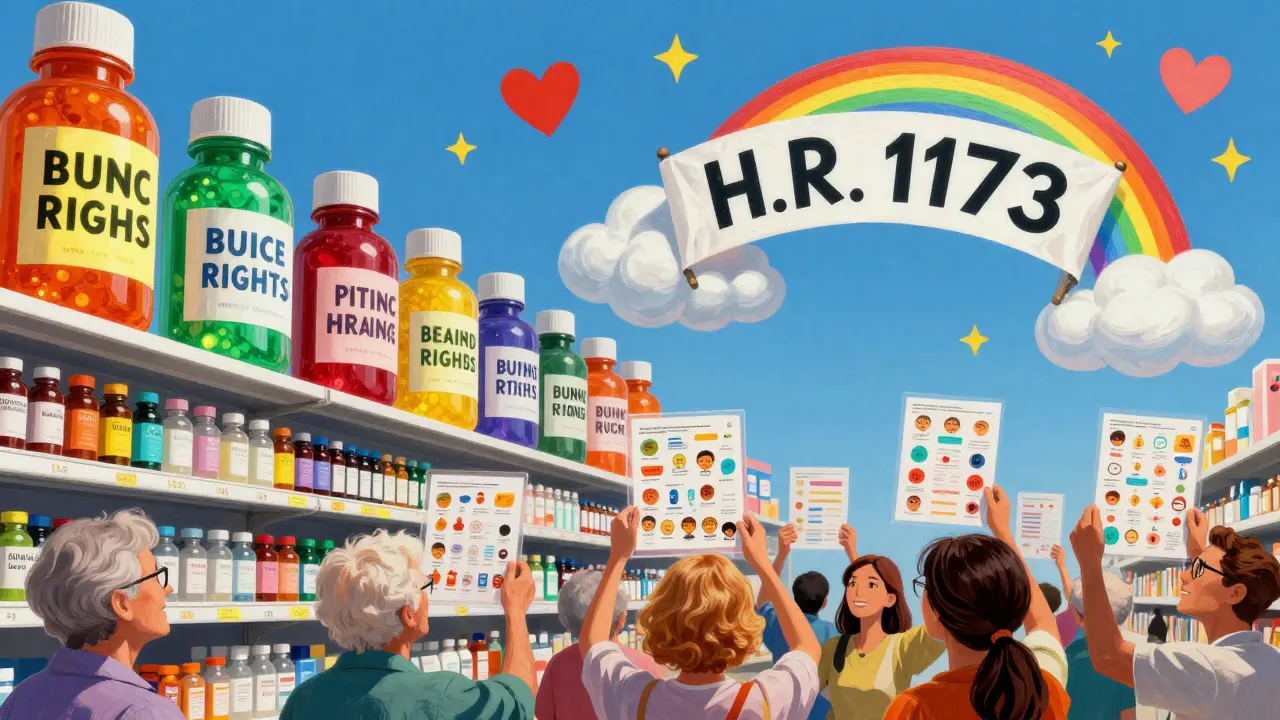
There’s also a federal bill in Congress - H.R. 1173 - that would require every prescription in the U.S. to come with a one-page, FDA-approved, easy-to-read instruction sheet. It has over 140 bipartisan supporters. If it passes, this won’t be a request anymore - it’ll be the law.
What to Do If You’re Refused
If a pharmacist refuses or dismisses you:
- Ask to speak with the pharmacy manager.
- Request a printed copy of their Patient Bill of Rights - most pharmacies have one posted or available on request.
- Call your doctor’s office. They can call in a request for clearer instructions.
- File a complaint with your state pharmacy board. They track complaints about patient communication.
Don’t be afraid to escalate. Your safety matters more than their convenience.
Tools to Help You
Several free tools exist to help you understand or create better instructions:
- Meds 2.0 - A digital platform used by over 1,200 U.S. pharmacies that generates personalized, plain-language guides.
- Medication Safety App - A free app from the Institute for Safe Medication Practices that lets you input your meds and generates a simple, printable schedule.
- Health Literacy Toolkit - Provided by the U.S. Department of Health and Human Services, this has templates for plain-language instructions you can print and bring to your pharmacy.
You can also ask your doctor if they can send a note to the pharmacy: "Please provide written instructions in plain language for this patient."
Why This Matters
Every year, poor medication understanding leads to over 125,000 preventable hospitalizations in the U.S. - and costs the system more than $500 billion. That’s not just numbers. That’s people. Your neighbor. Your parent. You.
When you ask for clear instructions, you’re not just helping yourself. You’re pushing the system to do better. And when you succeed, you’re not just getting a piece of paper - you’re getting control over your health.
Can I ask for my medication instructions in a language other than English?
Yes. Under Title VI of the Civil Rights Act of 1964, pharmacies that receive federal funding must provide language assistance when requested. Just say: "I need medication instructions in [language] per federal law." Most pharmacies will provide translated materials or arrange for an interpreter. If they refuse, ask to speak with the manager or file a complaint with your state pharmacy board.
What if the pharmacy gives me the same confusing paper again?
Don’t accept it. Politely say: "I already asked for this to be simplified. Can you please check if there’s a clearer version available?" If they still say no, ask for the pharmacy’s Patient Bill of Rights. Most have one. If it says you have the right to understandable information, point to that line. If they still refuse, call your doctor or file a complaint with your state’s pharmacy board. You have legal rights - don’t let them ignore them.
Is it okay to ask for pictures or charts instead of text?
Absolutely. Visual aids like calendars, color-coded pill boxes, or simple drawings of when to take each medicine are proven to improve adherence. A 2023 study found patients who received visual schedules were 42% more likely to take their meds correctly. Say: "Can you make a simple chart with pictures?" Many pharmacies now use these, especially for older adults or complex regimens.
Do I have to ask every time I refill a prescription?
No, but it’s smart to check. Some pharmacies keep your preferred format on file, especially if you’ve asked before. But policies change, staff change, and systems glitch. Always confirm: "Do you still have my simplified instructions on file?" If they say no, ask again - your safety isn’t a one-time request.
What if I’m not sure what I’m supposed to do?
Never guess. If you’re unsure whether to take a pill before or after food, with water or juice, or at a certain time - call your pharmacist or doctor. It’s better to ask twice than to risk a bad reaction. You can also use free tools like the Medication Safety App from the Institute for Safe Medication Practices to generate a clear, printable schedule based on your meds.
Chris Crosson
March 24, 2026I used to just stare at my prescriptions like they were ancient hieroglyphs. Then I started asking for the pharmacist directly and citing the Patient Rights doc. Game changer. They actually gave me a color-coded chart with pictures this time. No more guessing if I’m supposed to take it before or after tacos.
Also, I started using the Medication Safety App. It’s free, simple, and doesn’t make me feel dumb. Try it.
Rama Rish
March 26, 2026u just ask for it plain. no big deal. they dont like it but they do it. i got mine in hindi last time. they were shocked but gave it. easy.
Kevin Siewe
March 26, 2026It’s worth noting that asking for a visual schedule doesn’t just help you - it helps the pharmacist too. They’re often overwhelmed and appreciate when patients come prepared with clear requests. The read-back method is low-key brilliant. It turns a one-way lecture into a collaboration.
Also, if you’re unsure, calling your doctor’s office is way easier than you think. Most have a nurse line that can call in a clarification. No shame in asking.
Chris Farley
March 28, 2026Oh great, now we’re turning pharmacies into government customer service desks. Next they’ll be forcing us to have a therapist on staff just to explain what ‘QID’ means. This isn’t healthcare - it’s a daycare for adults who can’t read.
Why not just give everyone a pill dispenser with a voice box? ‘Take this. Don’t take this. Don’t eat grapefruit. Seriously.’
Meanwhile, Canada’s got a nationalized system. Guess what? They’re broke and waiting 6 months for a knee replacement. Maybe we should stop trying to coddle people and just let them learn to read.
Darlene Gomez
March 28, 2026I love how this post frames asking for clarity as a right - not a favor. That shift in language is everything.
When I had my first stroke, I couldn’t read my meds. My daughter had to call the pharmacy every time. We didn’t know about the read-back method until a nurse taught us. It saved my life.
And honestly? The visual charts? They’re not just for older folks. I’m 32, have ADHD, and I use a pill box with emojis now. 🟢 = morning, 🔴 = night. Simple. Human. Effective.
People think this is about ‘dumbing things down.’ It’s not. It’s about dignity. You don’t need to be smart to deserve to be safe.
Katie Putbrese
March 30, 2026Why are we letting people get away with not reading? This isn’t rocket science. You get a piece of paper. You read it. If you can’t, go to the library. Or use Google Translate. Stop making pharmacies into special needs assistants.
My grandma took 12 pills a day and never asked for pictures. She just did it. And she lived to 92. Maybe the real problem is people giving up too easily.
Also, Title VI? That’s for discrimination. Not for lazy people who don’t want to try.
Jacob Hessler
March 31, 2026all this talk about rights and charts is just woke nonsense. you want clear instructions? learn english. if you cant read, go to school. stop making everyone else do your work. i work at a pharmacy and we got 20 people a day asking for ‘simpler’ stuff. like its our job to babysit.
just take the pill. dont overthink it. your grandma didnt need a color coded chart and she lived longer than you.
Amber Gray
March 31, 2026OMG YES 😭 I got so mad at CVS last week they gave me the same tiny print again. So I said ‘I’m filing a complaint with the state board.’ They panicked and gave me a laminated card with pictures. I took a pic and posted it. Now my whole family uses it.
Also, QR codes? YES. Scan it and hear your meds in Spanish. I cried. 🥹
Donna Fogelsong
April 1, 2026They’re not just giving you instructions - they’re setting up a surveillance system. QR codes? Tracking your pill intake? That’s data collection disguised as ‘help.’
Did you know the FDA’s ‘plain language’ initiative is funded by Big Pharma? They want you to take the pills - not understand them. The ‘visual charts’? They’re designed to keep you compliant, not informed.
And don’t get me started on the ‘Medication Safety App.’ It’s probably synced to a government database. You think they’re helping you? They’re just making sure you don’t stop taking the chemicals.
Read the fine print. Always.