
Warfarin: What You Need to Know About Blood Thinners, Interactions, and Generic Switches
When you take warfarin, a prescription blood thinner used to prevent dangerous clots in the heart, legs, or lungs. Also known as Coumadin, it’s one of the most common yet tricky medications people take long-term. Unlike most drugs, warfarin doesn’t just work — it dances. One small change in your diet, another medication, or even a different batch of generics can throw off your entire balance. That’s why people on warfarin need regular INR monitoring, a blood test that measures how long it takes your blood to clot. If your INR is too low, you’re at risk for a stroke or clot. Too high, and you could bleed internally without warning.
Warfarin doesn’t play nice with other drugs. macrolide antibiotics, like azithromycin or clarithromycin, can spike warfarin levels, pushing you into dangerous territory. Even common painkillers, herbal supplements like garlic or ginkgo, and alcohol can interfere. That’s why mixing warfarin with other meds is one of the top reasons for ER visits. And here’s the kicker: switching from brand-name warfarin to a generic version isn’t always as simple as saving money. Because warfarin has a narrow therapeutic index, meaning the difference between a safe dose and a harmful one is very small, even tiny changes in how your body absorbs it can matter. Some people report feeling off after switching — not because the generic is bad, but because their body reacted to a new filler or coating.
You’re not alone if you’ve wondered whether you can skip a dose, cut back on greens, or swap your pill for something easier. But warfarin isn’t a drug you tweak on your own. It’s why doctors insist on consistent lab tests and why your medication list needs a clear safety alert — especially if you’re also taking insulin, opioids, or other high-risk meds. The posts below cover exactly these real-world issues: how generic versions affect warfarin, what foods to watch, how antibiotics mess with your INR, and why tracking every change matters. You’ll find practical advice from people who’ve been there — no fluff, no guesswork. Just what you need to stay safe, informed, and in control.
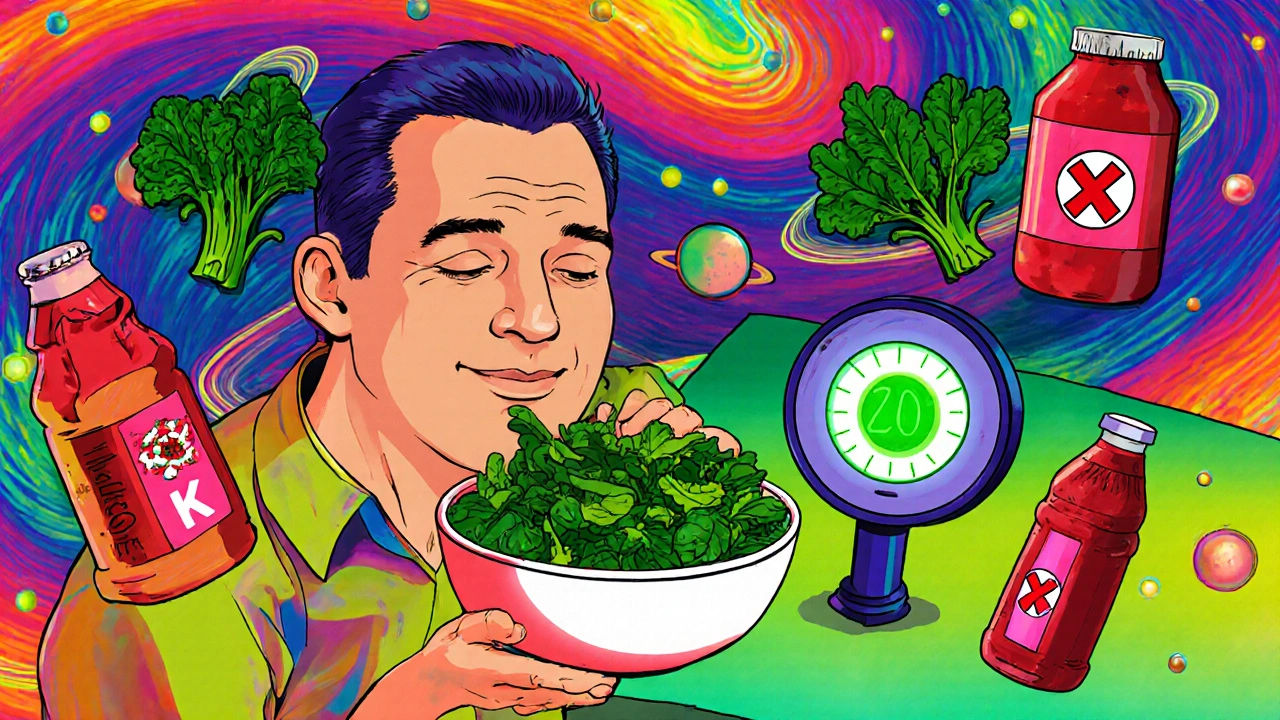
Warfarin Food Interactions: Complete Food List and Guidelines for Safe Use
Learn which foods affect warfarin, how to eat safely without giving up vegetables, and what to avoid to prevent dangerous bleeding or clotting. Keep your INR stable with consistent diet habits.