
Blood Thinner: What You Need to Know About Safety, Interactions, and Alternatives
When you take a blood thinner, a medication that prevents dangerous clots from forming in your veins or arteries. Also known as anticoagulant, it’s one of the most common yet risky drugs people take long-term. Whether you’re on warfarin, apixaban, or rivaroxaban, this isn’t a drug you can treat lightly. A small mistake—like skipping a dose, mixing it with alcohol, or switching to a generic version without checking—can lead to bleeding, stroke, or worse.
Warfarin, the oldest and most monitored blood thinner, is especially tricky because it interacts with vitamin K, antibiotics, and even herbal supplements. That’s why people on warfarin need regular blood tests. But newer options like apixaban, a direct oral anticoagulant that doesn’t require constant monitoring are changing the game. Still, even these aren’t foolproof. Some macrolide antibiotics, like azithromycin, can mess with your heart rhythm when taken with blood thinners, increasing the risk of dangerous QT prolongation.
And here’s something most people don’t realize: not all generic blood thinners are the same. While generics are supposed to be bioequivalent, drugs like warfarin have a narrow therapeutic index—meaning tiny differences in absorption can throw your levels way off. One person might switch from brand to generic and feel fine. Another might start bruising easily or have a clot. That’s why documenting your meds, including the exact brand or generic name, is critical. It’s not just about cost—it’s about control.
What you’ll find below isn’t just a list of articles. It’s a practical toolkit. You’ll see how to spot early signs of trouble, what to do when you’re on multiple meds, why some people react differently to generics, and how to avoid deadly interactions with alcohol or common painkillers. These aren’t theory pieces—they’re real-life guides from people who’ve been there, and doctors who’ve seen the mistakes.
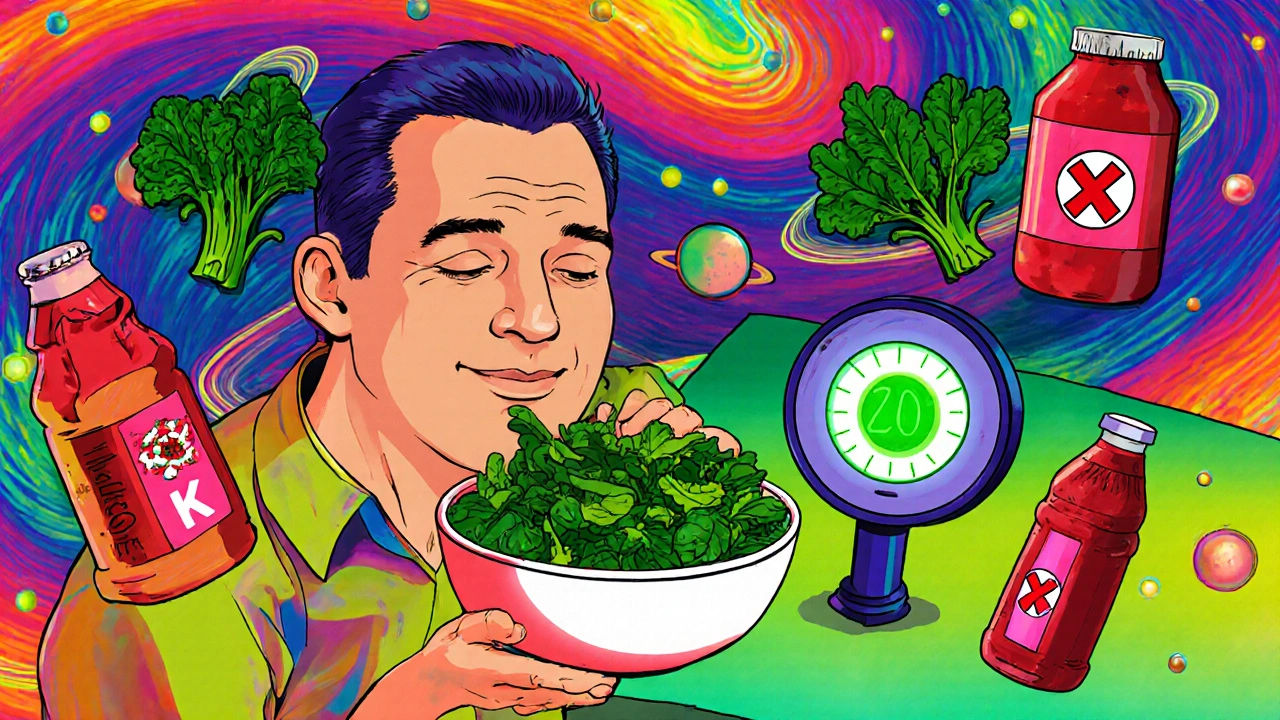
Warfarin Food Interactions: Complete Food List and Guidelines for Safe Use
Learn which foods affect warfarin, how to eat safely without giving up vegetables, and what to avoid to prevent dangerous bleeding or clotting. Keep your INR stable with consistent diet habits.