
20 Mar 2026
- 13 Comments
Every child deserves clear vision. But many kids with vision problems go undetected until it’s too late. That’s because they don’t know their sight is blurry. They don’t complain. They just adapt. By the time a parent notices their child squinting, sitting too close to the TV, or bumping into things, the window for easy correction may already be closing. That’s why pediatric vision screening isn’t optional-it’s essential. Screening isn’t about diagnosing complex eye diseases. It’s a simple, fast check to find kids who might be at risk for problems like amblyopia (lazy eye), strabismus (crossed or wandering eyes), or major refractive errors. If caught early, these issues can be fixed with glasses, patches, or even just time. Missed? They can lead to permanent vision loss. The science is clear: if you catch amblyopia before age 5, treatment works in 80-95% of cases. Wait until after age 8? Success drops to 10-50%. That’s not a small difference. It’s the difference between seeing clearly for life or struggling with poor vision forever.
When and How Often Should Kids Be Screened?
There’s no one-size-fits-all schedule, but experts agree on key checkpoints. The U.S. Preventive Services Task Force recommends at least one screening between ages 3 and 5. That’s the sweet spot. Before age 3, most kids aren’t ready for eye charts. After age 5, the brain’s ability to rewire its visual pathways starts to fade. The American Academy of Pediatrics (AAP) goes further. They recommend screenings at ages 8, 10, 12, and 15, with instrument-based screening starting as early as age 1. Why? Because some problems show up early and worsen slowly. A child who passes a screening at age 2 might develop a lazy eye by age 4. That’s why ongoing checks matter. School-entry screenings aren’t enough. Many states require them, but they’re often rushed, inconsistent, or done by non-medical staff. A well-trained pediatrician or nurse using the right tools does a far better job.What Tools Are Used? Two Main Approaches
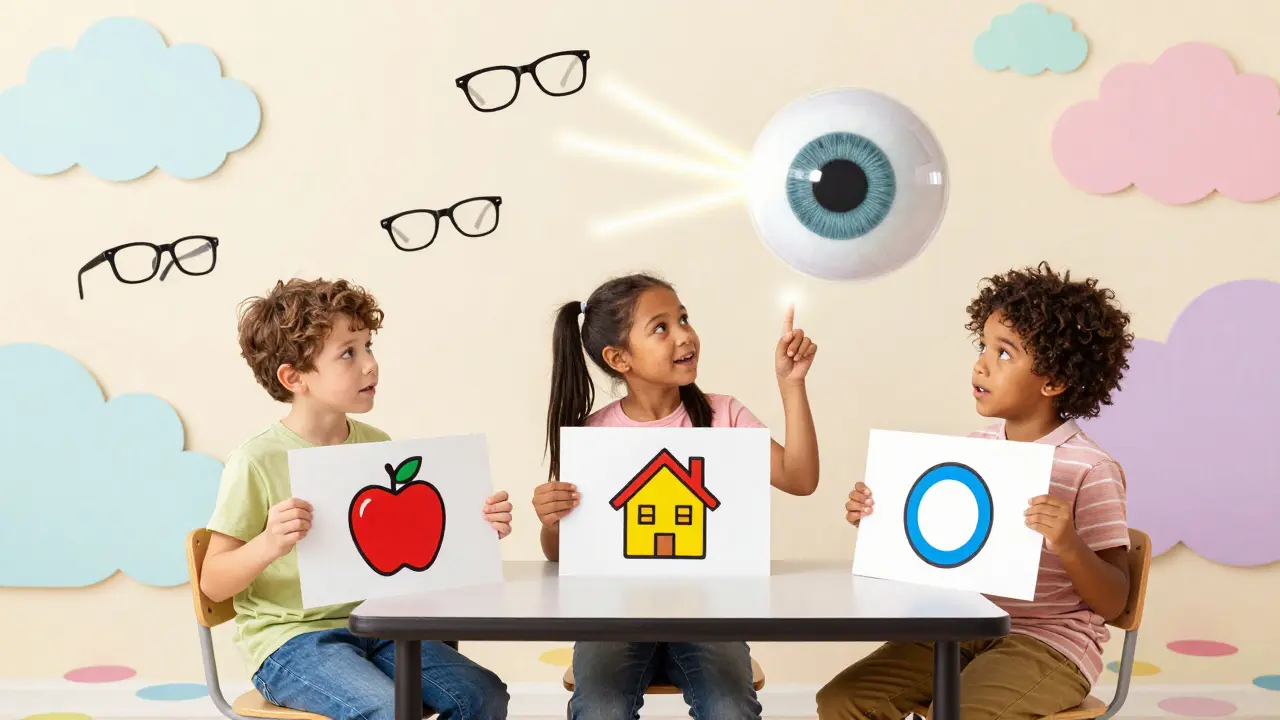
There are two ways to screen a child’s vision: by asking them to read symbols, or by using a device that measures how light reflects off their eyes. Optotype-based screening is the classic method. It uses charts with symbols like letters, numbers, or pictures (LEA symbols or HOTV letters). For a 3-year-old, they need to identify symbols on the 20/50 line. At age 4, it’s 20/40. By age 5, it’s 20/32. Each eye is tested separately, with an occluder covering the other. The chart must be at exactly 10 feet, and the lighting has to be just right. Too dim? Too bright? You’ll get false results. But here’s the problem: about 15-30% of 3-year-olds just won’t cooperate. They cry. They turn away. They point at random shapes. That’s why many clinics now use instrument-based screening. Devices like the SureSight, Retinomax, and the newer blinq™ scanner don’t need the child to say anything. They shine a light into the eye, measure how it reflects, and in under a minute, tell you if there’s a problem. The blinq™ scanner, cleared by the FDA in 2018, is especially accurate-it catches 100% of cases that need referral and misses very few false alarms.Which Method Is Better?
It’s not about which is “better.” It’s about which works for the child. Instrument-based tools win for speed and cooperation. They take 1-2 minutes. They work on toddlers, kids with developmental delays, or those who won’t sit still. Studies show they have a higher positive predictive value (68%) than traditional methods (52%) for kids aged 3-4. But optotype screening still has value. For kids who can follow instructions, it’s the gold standard. It doesn’t just detect blur-it shows how well they can see. A child might pass the machine test but still struggle with fine detail. That’s something a chart picks up. Experts like Dr. Graham E. Quinn, lead researcher of the Vision in Preschoolers (VIP) study, say: "No single test is perfect." The best approach? Use the device first. If it flags a problem, confirm with a chart. If the child is old enough and cooperative, start with the chart.What Problems Are We Looking For?
The big three are:- Amblyopia (lazy eye): One eye doesn’t develop normal vision because the brain ignores it. Often caused by unequal focus, strabismus, or cataracts.
- Strabismus (misaligned eyes): One eye turns inward, outward, up, or down. It’s visible to parents, but not always. Some kids have subtle, intermittent turns.
- Refractive errors: Severe nearsightedness, farsightedness, or astigmatism. A 4-year-old with +4.00 diopters of farsightedness might not show symptoms-but their vision is blurry enough to risk amblyopia.
What Happens If Screening Finds a Problem?
Screening isn’t a diagnosis. It’s a red flag. If a child fails, they need a full eye exam by a pediatric ophthalmologist or optometrist. This isn’t a referral to a general eye doctor. It’s to someone who specializes in children. The exam will check for:- Exact refractive error with cycloplegic drops (to relax the eye’s focusing muscles)
- Eye alignment and movement
- Health of the retina and optic nerve
- Presence of cataracts, tumors, or other rare causes
Why Do So Many Kids Fall Through the Cracks?
You’d think this would be easy. But it’s not. One study found 25% of screenings failed because the chart wasn’t lit properly. Another found 20% of false positives came from incorrect distance-screening at 8 feet instead of 10. Providers sometimes skip testing each eye separately. Or they don’t use the right chart for the age. Training matters. A 2-4 hour course can make a big difference. The National Center for Children’s Vision and Eye Health offers free online modules. Over 15,000 providers have completed them. There’s also a big equity gap. Hispanic and Black children are 20-30% less likely to get screened than white children, according to the National Survey of Children’s Health. This isn’t about access alone. It’s about awareness, trust, and systemic gaps in care.What’s Next? The Future of Screening
The blinq™ scanner is just the beginning. AI is now being used to analyze retinal images and predict vision risk before symptoms appear. Research published in JAMA Pediatrics in 2022 showed instrument-based screening works as early as 9 months. That’s groundbreaking. The AAP is expected to update its guidelines by 2025, possibly recommending screening for infants as young as 12 months. That could shift the entire model-moving from waiting until age 3 to catching problems in infancy. Meanwhile, funding is growing. The National Eye Institute has put $2.5 million into research to improve screening for diverse populations. Because vision shouldn’t depend on your zip code, your skin color, or your family’s income.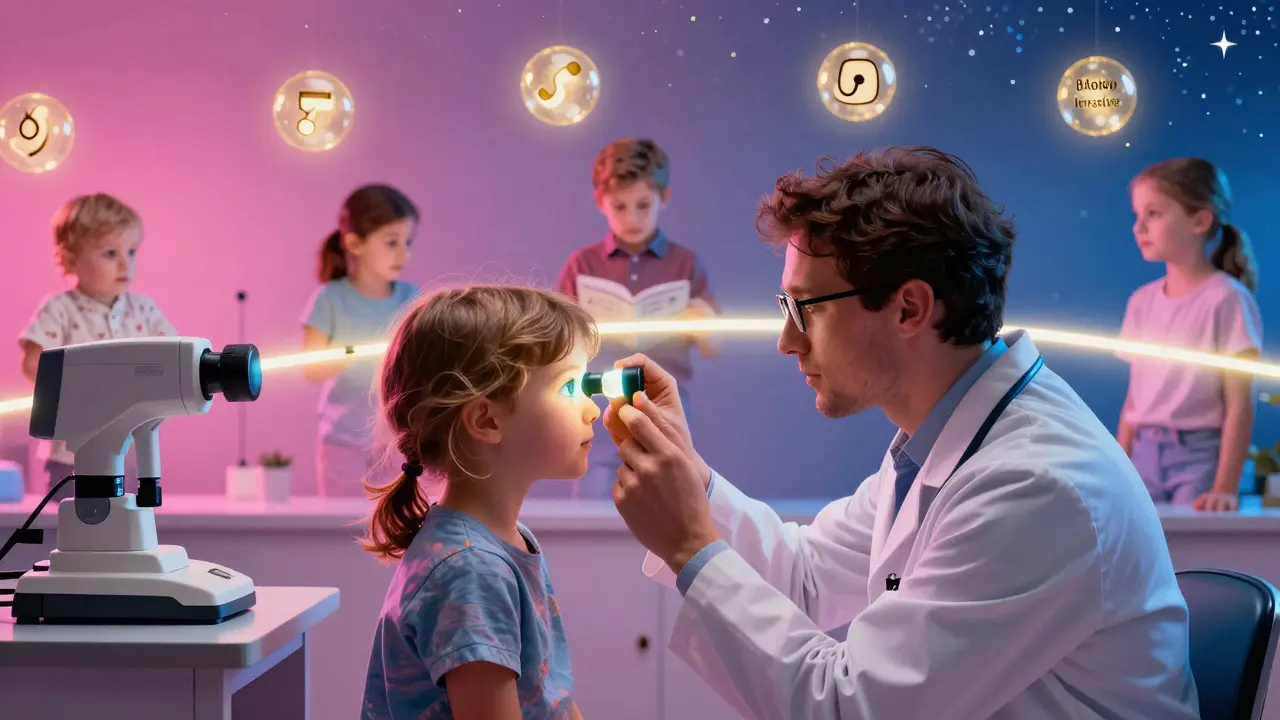
What Parents Can Do
You don’t need to be an expert. But you do need to ask.- Ask your pediatrician: "Is my child’s vision being screened today?"
- If they say no, ask why. Is it because they’re too young? Too old? Too quiet?
- Watch for signs: squinting, head tilting, closing one eye, rubbing eyes often, sitting too close to screens.
- If your child fails screening, don’t wait. Get a full eye exam within 4-6 weeks.
Cost, Access, and Policy
The good news? Most insurance plans cover pediatric vision screening under the Affordable Care Act’s Essential Health Benefits. Medicaid programs in 47 states require it during well-child visits. Equipment costs vary. A SureSight autorefractor runs $5,500-$7,000. The blinq™ scanner is cheaper at $3,500. For clinics serving hundreds of kids, the return on investment is clear. The USPSTF found every dollar spent on screening saves $3.70 in lifetime costs-preventing lost education, reduced job opportunities, and lifelong dependency. But money isn’t the biggest barrier. Awareness is. Many parents don’t know vision screening exists. Many providers don’t know how to do it right. That’s why training, consistency, and clear guidelines matter more than ever.Final Thought: It’s Not About Seeing Clearly Today. It’s About Seeing Clearly Forever.
A child doesn’t need perfect vision to pass a screening. They just need to avoid a preventable loss. A few minutes of screening today can change the trajectory of a child’s life-how they learn, how they play, how they see the world. Don’t wait for a sign. Don’t assume it’s fine. Ask. Screen. Refer. Repeat.What is pediatric vision screening?
Pediatric vision screening is a quick, non-invasive check to identify children at risk for vision problems like amblyopia, strabismus, or significant refractive errors. It’s not a full eye exam but a first step to catch issues early, before they cause permanent vision loss. Screening is typically done during routine pediatric visits using either eye charts or instrument-based devices.
At what age should children start getting vision screenings?
The first formal screening should happen between ages 3 and 5, according to the U.S. Preventive Services Task Force. However, the American Academy of Pediatrics recommends starting instrument-based screening as early as age 1, with follow-ups at ages 8, 10, 12, and 15. Screening before age 3 is possible with devices, but optotype charts (like LEA symbols) are only reliable once a child can cooperate, usually around age 3.
What’s the difference between optotype and instrument-based screening?
Optotype screening uses charts with symbols (letters, shapes) that the child must identify. It requires cooperation and is the gold standard for kids aged 5 and older. Instrument-based screening uses devices like autorefractors or photoscreeners (e.g., SureSight, blinq™) that measure how light reflects off the eye. These work without child response, making them ideal for toddlers and uncooperative children. Instrument-based tools are faster and more accurate for younger kids, but optotype screening provides more detailed visual function data.
What happens if a child fails a vision screening?
A failed screening means the child needs a comprehensive eye exam by a pediatric ophthalmologist or optometrist who specializes in children. This exam will determine if there’s a true vision problem and what kind-like amblyopia, strabismus, or a need for glasses. Treatment may include corrective lenses, patching, vision therapy, or, in some cases, surgery. Early intervention is critical-treatment is most effective before age 7.
Are vision screenings covered by insurance?
Yes. Under the Affordable Care Act, pediatric vision screening is included as an Essential Health Benefit. Most private insurance plans and Medicaid programs in 47 U.S. states cover it during routine well-child visits. No out-of-pocket cost should apply for the screening itself, though a follow-up exam may have separate costs depending on the plan.
Natali Shevchenko
March 21, 2026It’s wild how much we take vision for granted until it’s gone. I mean, think about it-kids don’t complain because they don’t know there’s another way to see. Their whole world is just… blurry, and they adapt. Like how you get used to the hum of a fridge until it stops and you realize you’ve been tuning it out for years. That’s what’s happening here. The brain doesn’t just fix it-it rewrites reality. And once that rewiring’s done? Good luck undoing it. That’s why screening isn’t just medical-it’s existential. We’re not checking eyes. We’re protecting perception itself. And yet, we treat it like an optional checkbox. We’re saving lives by making sure kids can see the sunset. Not the data. Not the screen. The actual, real, unfiltered sunset.
Johny Prayogi
March 21, 2026YES. 🔥 This needs to be mandatory in every pediatric visit. I had no idea my 4-year-old was squinting until we got the blinq™ scan-turned out she had +3.5 farsightedness. No symptoms. No complaints. Just… life as normal. Now she wears glasses and sees colors like she’s been living in grayscale. Mind blown. 🤯 If your doc doesn’t offer instrument screening, ask for it. It’s not extra-it’s essential.
Nicole James
March 22, 2026Wait… so you’re telling me… the government… is… NOT… telling parents… about this… because… they… want… children… to… grow… up… blind… so… they… can… be… easier… to… control…??
Think about it. Who profits from a population that can’t read? Who benefits from kids failing school because they can’t see the board? Who owns the patent on the blinq™ scanner? Who funded the ‘studies’? Who decided 3-5 is the ‘sweet spot’? What if the real reason we’re not screening at 12 months… is because… they’re… afraid… of… what… they’ll… find…?
And don’t even get me started on the ‘insurance covers it’ line. That’s just the placebo effect of capitalism. They’ll cover the scan… but not the follow-up. Not the glasses. Not the therapy. Just enough to make you feel better… while they quietly profit from lifelong dependency.
Nishan Basnet
March 23, 2026As someone from India, where pediatric eye care is often inaccessible, this article hits hard. In rural areas, kids with amblyopia are labeled ‘slow learners’-never tested, never helped. I once met a 7-year-old who couldn’t recognize his own mother from across the room. He thought she was a stranger. His parents thought he was shy. The truth? He saw nothing clearly. A $3,500 device like the blinq™ could’ve changed his life. This isn’t just medical-it’s moral. We need global equity here. Not just in the U.S., but everywhere. Vision is a right, not a privilege.
Bryan Woody
March 24, 2026Let me guess-you’re one of those people who thinks ‘screening’ means ‘waiting for a kid to cry at an eye chart.’
Newsflash: the kids who cry? They’re the lucky ones. At least they’re reacting. The silent ones? The ones who just stare blankly? Those are the ones who end up with permanent vision loss because no one thought to scan their eyes with a device that takes 45 seconds. The whole system is built on outdated assumptions. And yeah, I’ve seen it. I’ve done it. I’ve been the provider who skipped the second eye. I’ve used a dim chart. I’ve assumed ‘they’re fine.’ I’m not proud. But now? I use the blinq™ first. Always. Then the chart. And I tell every parent: if you’re not asking for this, you’re gambling with your kid’s future. No drama. No fluff. Just facts. And they work.
Chris Dwyer
March 26, 2026This is one of those topics that feels so obvious once you know it, but no one talks about it. I’m a dad of two. My youngest failed screening at age 3. We thought it was just ‘kids being kids.’ Turns out? She had a lazy eye and needed patching. We didn’t know. No one told us. And honestly? I don’t blame the pediatrician. They’re overworked. But this needs to be a standard part of every well-child visit. Like vaccines. Like hearing tests. Like checking for fever. We don’t wait for symptoms. Why do we wait for symptoms with vision? It’s not rocket science. It’s just… care. And care should be automatic.
Timothy Olcott
March 26, 2026Why are we spending millions on scanning babies’ eyes when we got kids in school who can’t read because they don’t have enough math teachers??
Also who the hell is blinq™? Sounds like a crypto scam. And why are we trusting some device made in China to decide if my kid needs glasses?? We used to just look at the chart. Now we got AI and sensors and all this fancy tech. What’s next? Drones dropping eye drops? I’m not saying this isn’t important-I’m saying we’re overcomplicating it. Let’s get back to basics. Teach parents to look for squinting. That’s it. Done.
Desiree LaPointe
March 27, 2026Oh, how quaint. A 2022 JAMA Pediatrics study… and a $3,500 device… as if this is the pinnacle of human progress.
Let’s be real. We’re not saving children’s vision. We’re monetizing their helplessness. The real ‘problem’ is that parents are too distracted by TikTok to notice their kid squinting. The real ‘solution’ is not a scanner-it’s a cultural reset. Stop giving children screens. Stop letting them stare at tablets at age 1. Stop normalizing digital overstimulation. Then we wouldn’t need to scan their eyes at all. We’d just… let them be. But no. We’d rather sell them a gadget than change our habits. How very… American.
Jackie Tucker
March 27, 2026How charming. Another article that assumes pediatricians care. As if they’re not too busy billing for appendectomies to notice a child’s subtle strabismus. And let’s not pretend the AAP guidelines are evidence-based. They’re just the consensus of people who attended the same conferences. The real data? It’s buried under layers of insurance bureaucracy and state-mandated checklists that no one follows. The truth? Screening works… if you’re wealthy, white, and live near a university hospital. Otherwise? You’re on your own. And don’t even get me started on ‘insurance covers it.’ That’s like saying ‘food stamps cover nutrition.’
Thomas Jensen
March 28, 2026So… the government is scanning kids’ eyes… but won’t scan their backpacks for drugs? Or their phones for social media? Or their parents’ homes for ‘toxic influences’?
Who’s behind this? Who owns the data? What happens when the AI flags a child as ‘high risk’? Will they be flagged in school? Will their insurance premiums go up? Will they be forced into ‘vision therapy’ programs that are just glorified babysitting? And what about the 15% of kids who get false positives? Are they being labeled ‘vision-impaired’ for life? Because that’s what this is. It’s not prevention. It’s surveillance.
matthew runcie
March 29, 2026Good stuff. I’ve seen this in my clinic. A 3-year-old who passed the chart test… but failed the device. Turned out she had astigmatism. Parents were shocked. Said she ‘sees fine.’ She did. She just didn’t know what ‘fine’ looked like. We fixed it. She started recognizing animals on flashcards. Smiled for the first time. No drama. No panic. Just… better vision. And it took 90 seconds. That’s all it takes. Sometimes the simplest things are the most powerful.
shannon kozee
March 30, 2026Ask your pediatrician. If they say no, ask why. If they say ‘too young,’ ask about instrument screening. If they say ‘we don’t have it,’ ask for a referral. It’s that simple. Don’t wait for a sign. Vision doesn’t wait.
trudale hampton
March 31, 2026My daughter failed at 3. Got glasses. Now she reads chapter books. I didn’t know she couldn’t see the board until she started saying ‘the letters are fuzzy.’ She didn’t say it earlier because she thought everyone saw that way. We’re not just fixing eyes. We’re giving kids back their curiosity. That’s the real win.